The Gaziantep Atatürk Memorial Museum is a memorial museum set in a traditional Antep house in Bey Neighbourhood, where Mustafa Kemal Atatürk was registered in the population records. Rather than a collection of masterpieces, it is arranged to keep alive, in a tangible place, the bond between Atatürk and the city. The house, donated to the Gaziantep Metropolitan Municipality by the Konukoğlu family, was converted into a museum in 2013 after a comprehensive restoration; thus the neighbourhood where Atatürk was counted as a fellow townsman gained a lasting site that carries this memory.
This article covers the house's architecture and its conversion into a museum, the special bond Atatürk formed with Gaziantep, the objects on display and a discovery guide for visitors. To consider the museum alongside the city's other specialist museums, the Museums of Gaziantep page is a good starting point.
From Antep House to Memorial Museum
The building that houses the museum is a traditional Antep house in Bey Neighbourhood, belonging to the Konukoğlu family. The family donated the house to the Gaziantep Metropolitan Municipality so that it could be turned into a museum; the municipality restored the structure and opened it as the Atatürk Memorial Museum in 2013. The choice of neighbourhood is no coincidence: because Atatürk's population record was in this neighbourhood, the memorial museum is given, in effect, its true on-site address.
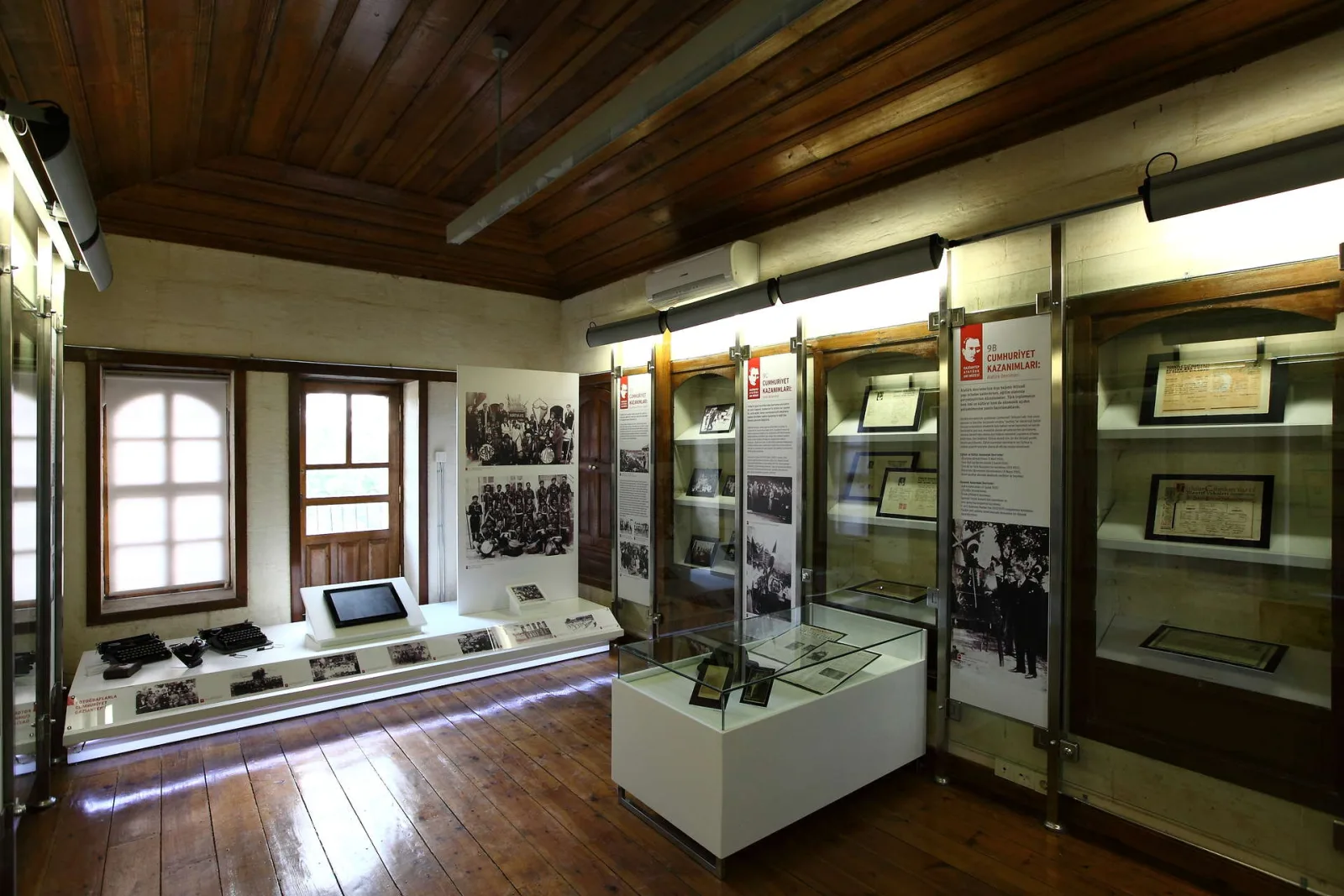
The structure bears the typical features of traditional Antep house architecture. The museum consists of two separate buildings facing a shared courtyard; of the total area, roughly 400 square metres is enclosed space and 220 square metres is open. Cut-stone walls, rooms opening onto the courtyard and traditional wooden details offer the visitor not only a memorial space but also an example of Gaziantep's domestic culture. In this way, as much as the objects it displays, the building itself keeps alive the everyday fabric of an Antep house.
Atatürk's Bond with Gaziantep
The fact that gives the museum its meaning is the special bond Atatürk formed with Gaziantep. Mustafa Kemal Atatürk came to Gaziantep on 26 January 1933; the city, known for its long resistance against the French occupation, welcomed him with great enthusiasm. Although Atatürk was born in Salonica, as a token of this bond he was registered in the population records of Gaziantep's Bey Neighbourhood. In this way the city added, to the title of "Gazi" it had earned through the Defence of Antep, the honour of counting the founder of the state as a fellow townsman.
This bond sets the museum apart from an ordinary house museum: what is told here is not some mansion Atatürk happened to stop at during a tour, but the symbolic kinship the city established by entering him into its own population records. You can read the full story of the Defence of Antep on the War of Independence and the Defence of Antep page, and the details of the relationship between Atatürk and the city on the Atatürk and Gaziantep page.
Objects You Must See
The Re-created Room and Personal Belongings
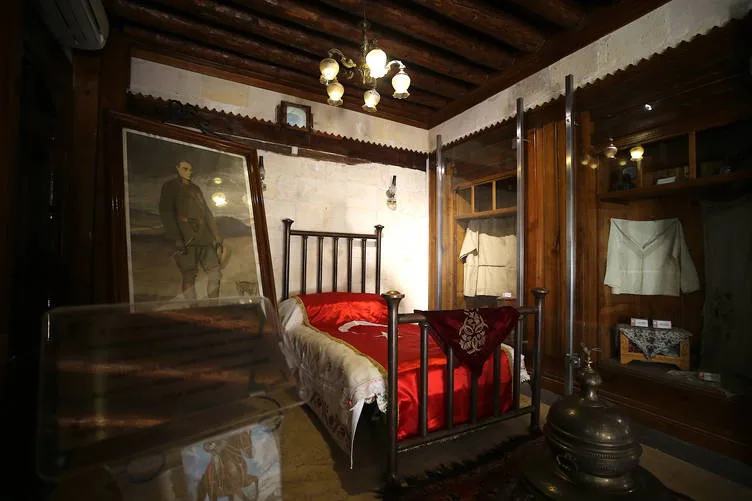
At the heart of the museum is a room re-created with original furnishings to reflect the period of Atatürk's stay. This arrangement gives the visitor a tangible sense of the time Atatürk spent in the city. Among the personal belongings on display, the cup from which he drank his coffee and the dining sets he ate from stand out; these everyday objects bring a historical figure out of the museum case and down to a human scale.
Atatürk's Bed
One of the museum's most striking pieces is the bed Atatürk used when he came to Gaziantep. This object was donated to the museum by Neyir Barlas. The bed exemplifies the basic logic of memorial museums: a piece of furniture that might seem ordinary on its own becomes a memorial object through the historical bond it carries, conveying the atmosphere of the period directly to the visitor.
The Population Record and Visit Photographs
In the documentary section of the museum, photographs of Atatürk's Gaziantep visit are displayed alongside a copy of his population registration document for the city. These documents make visible why the house was established in this neighbourhood and the official dimension of the bond between Atatürk and Gaziantep; they ground the museum's narrative in record rather than in legend.
That the museum was established in Bey Neighbourhood is not a preference but a necessity: Atatürk's population record was precisely in this neighbourhood. This fabric, known as "Atatürk's neighbourhood," places the memorial museum at its true historical address. So the visitor does not merely see the objects, but also walks the streets of the neighbourhood where Atatürk was counted as a fellow townsman.
A Visitor's Discovery Guide
- Read the building too: As much as the objects on display, the house itself is an exhibit; the shared courtyard, the cut-stone walls and the rooms opening onto the courtyard are typical examples of traditional Antep house architecture.
- Start with the documents: Study the copy of the population record and the visit photographs at the start of your tour; these documents explain most clearly why the museum was established in this neighbourhood.
- Pause in the re-created room: The room arranged with the bed, the cup and the dining sets makes the atmosphere of the period tangible; it is more meaningful to read the room as a whole rather than the objects one by one.
- Tour the neighbourhood: Consider the museum together with the fabric of Bey Neighbourhood, known as "Atatürk's neighbourhood"; the surrounding historic streets are a natural extension of the visit.
Summary and Cultural Value
The Gaziantep Atatürk Memorial Museum turns an Antep house into a memorial space for the bond the city formed with Atatürk. Passed to the municipality through the donation of the Konukoğlu family and opened as a museum in 2013, the house stands at its true historical address, in the Bey Neighbourhood where Atatürk was registered. With its re-created room, personal belongings, the bed donated by Neyir Barlas and the population registration document, the museum makes tangible the symbolic kinship between the founder of the state and a city that had earned the title of "Gazi" through its resistance. In this way the museum is one of the ways, among Gaziantep's museums, to read the city's recent history and identity at the most personal level. To follow the city's War of Independence years in a broader frame, the History of Gaziantep page is the natural continuation of this narrative.
Frequently Asked Questions
When did the Gaziantep Atatürk Memorial Museum open?
The museum opened in 2013, after the restoration of a traditional Antep house donated to the Gaziantep Metropolitan Municipality by the Konukoğlu family.
Why is the museum in Bey Neighbourhood?
Mustafa Kemal Atatürk had been registered in the population records of Gaziantep's Bey Neighbourhood. The museum was established in this neighbourhood, where Atatürk was counted as a fellow townsman, placing it directly at its historical address.
When did Atatürk come to Gaziantep?
Atatürk came to Gaziantep on 26 January 1933 and was welcomed with great enthusiasm by the city, known for its resistance against the French occupation.
What is on display in the museum?
On display are a room re-created with original furnishings reflecting the period of Atatürk's stay, the cup from which he drank his coffee and his dining sets, the bed donated by Neyir Barlas, photographs of his Gaziantep visit and a copy of his population registration document.
Where is the museum?
It is located in Bey Neighbourhood in the Şahinbey district, in the historic centre of Gaziantep.