The Defence of Antep is the epic resistance that the people of Ayıntap waged with their own means for roughly eleven months between 1920 and 1921, after their city fell under occupation in the aftermath of the First World War. Stretching from the spark lit by Şehit Kâmil to Şahin Bey's martyrdom at Elmalı Bridge, and from Karayılan's resistance to the sacrifice of thousands of civilians, this struggle earned the city the title "Gazi" and went down in history as one of the most formidable popular resistances on the southern front of the Turkish War of Independence.
This page tells the story of the Defence of Antep, together with the heroes who led it, the course of the siege and its outcome. For the full sweep of Gaziantep's thousands of years of history, see the History of Gaziantep page.
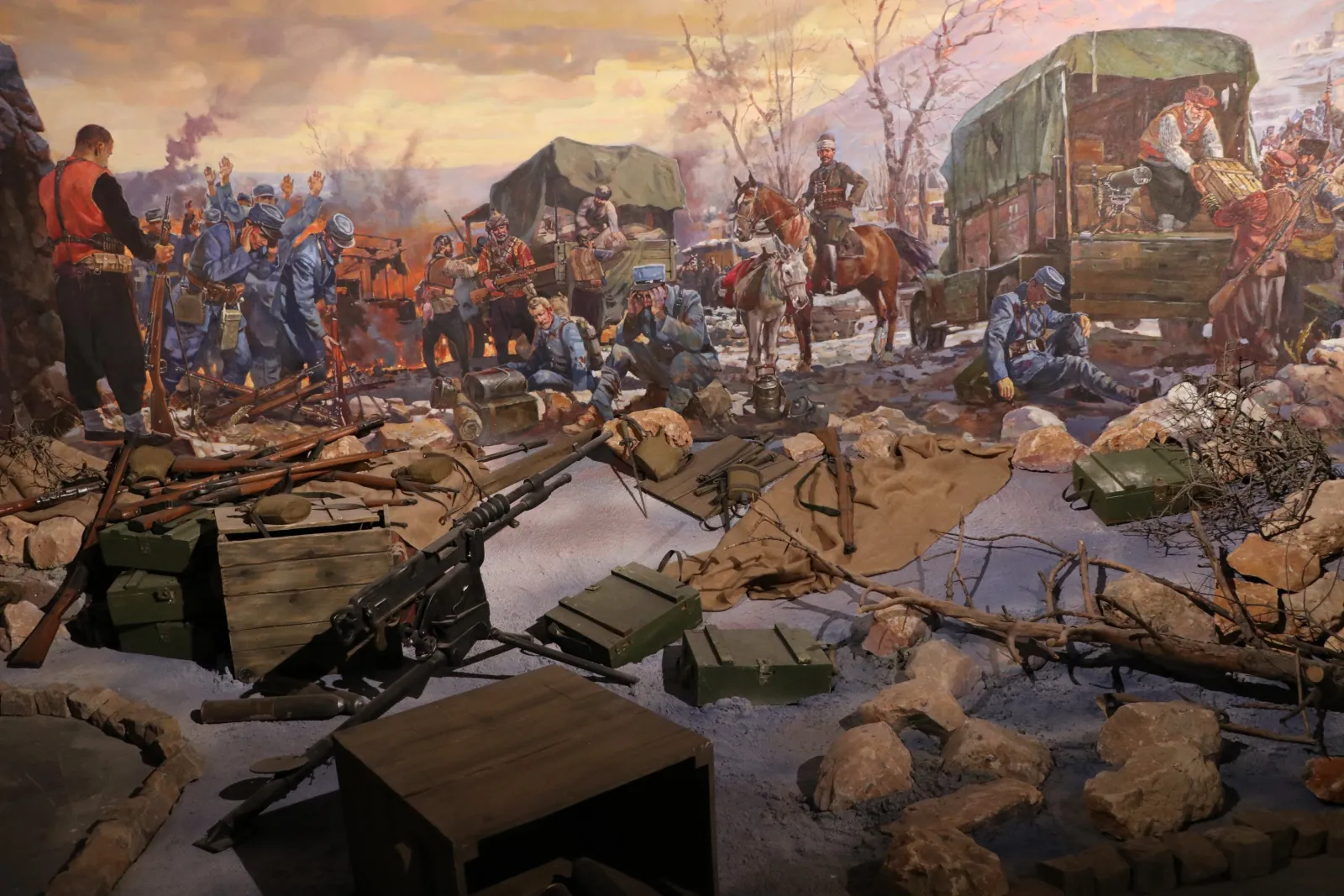
Occupation and the Birth of the Resistance
Following the Armistice of Mudros, signed at the end of the First World War, Antep was occupied first by British and shortly afterwards by French forces. The presence of Armenian legionnaires alongside the occupying troops, together with mounting pressure, steadily deepened the people's resentment. To organise the resistance, the Gaziantep Society for the Defence of Rights was founded in the city; mosques, markets and neighbourhoods were turned into a defensive network.
The event that lit the spark of the resistance came in the very first days of the occupation, when an ordinary family of Antep stood up to defend its honour.
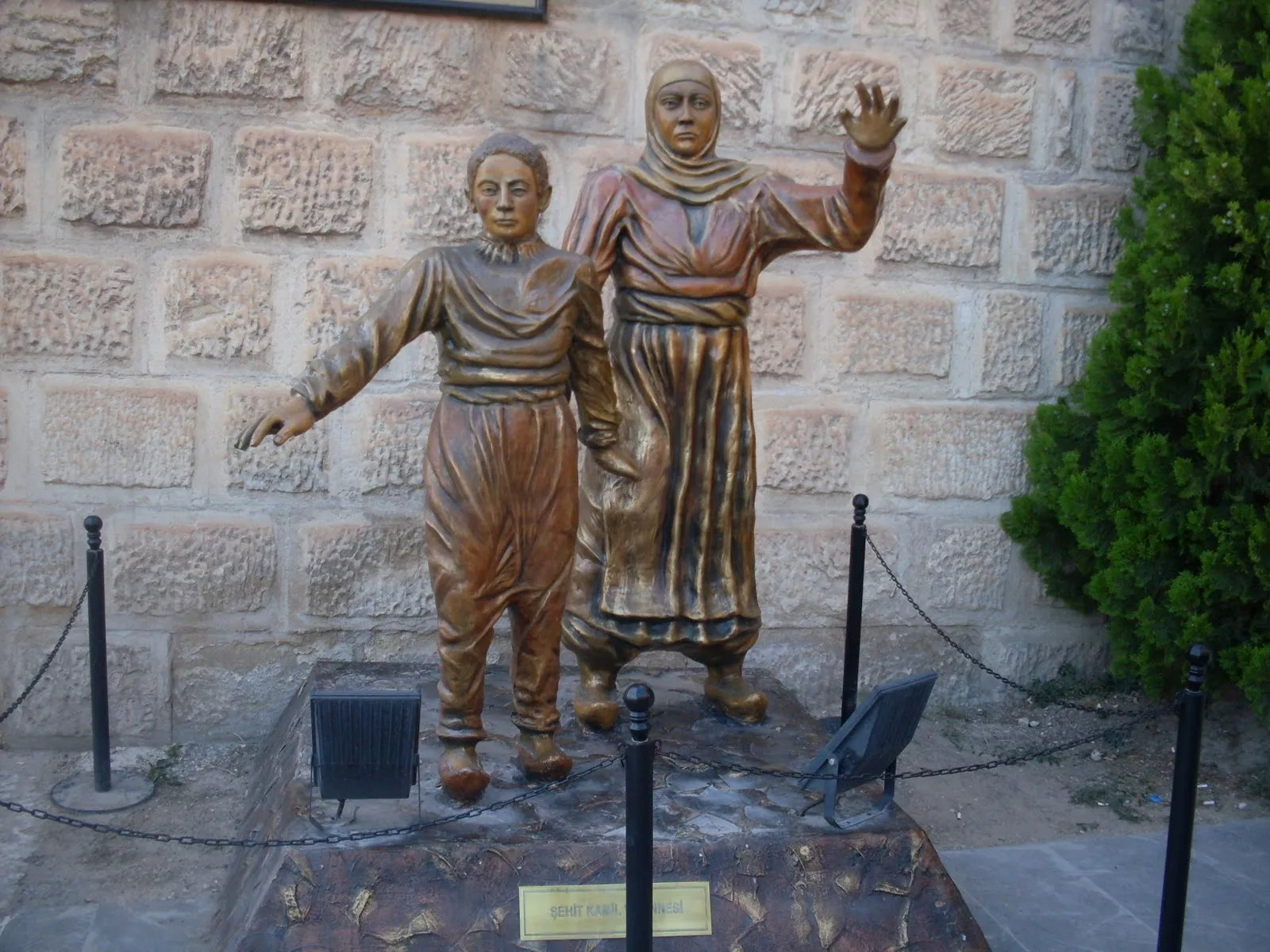
Şehit Kâmil — The Spark of the Resistance
Whose real name was Mehmet Kâmil and who came from a poor but patriotic family, this young man — then only around twelve years old — stood up on 21 January 1920 when, as he passed the military bakery with his mother, drunken French soldiers harassed her and tried to lift her veil. Striking at the soldiers with a stone he picked up from the ground, Kâmil was bayoneted and martyred while trying to protect his mother. This event is remembered as the first active act of defiance against the French in the city and as the spark that ignited the Antep resistance.
The event tipped over the people's pent-up rage; the city closed its shops for days in mourning, and on 22 January an immense funeral was held for Kâmil. Although the French command offered condolences and an apology, the martyr's father, Ökkeş Ağa, refused the hundred gold liras offered in compensation. His reply sums up the honour of Antep in a single sentence:
"I will not sell my son for money; my son died for his faith and his nation. Long live my people — they will avenge him."— Ökkeş Ağa, Şehit Kâmil's father, refusing the compensation offered
To keep the memory of this young martyr alive, Gaziantep named one of its central districts Şehitkamil; today his name is given to schools, streets and institutions, and is passed down from one generation to the next.
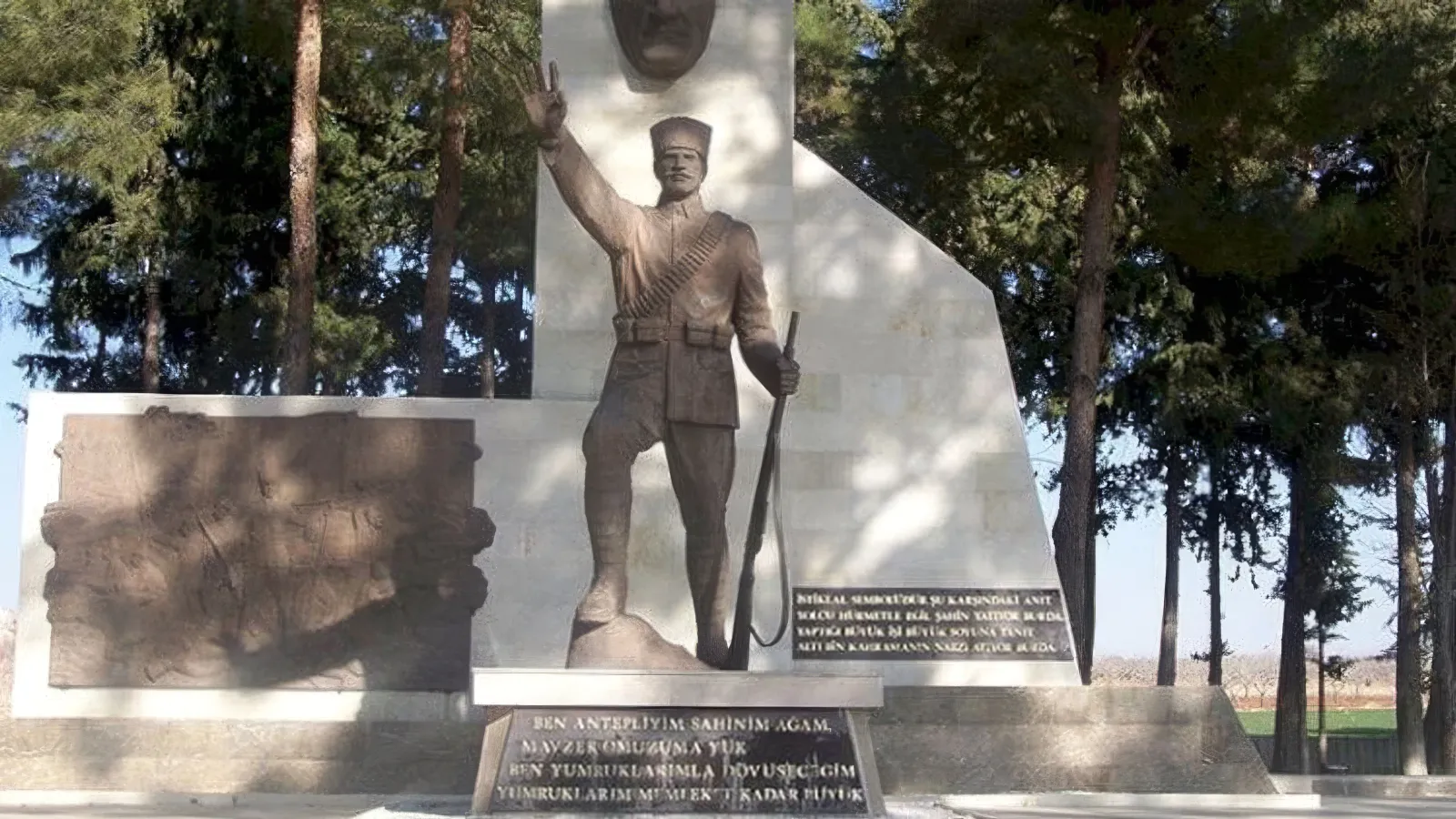
Şahin Bey — "None Shall Pass to Antep"
The best-known hero of the Defence of Antep is Şahin Bey, whose real name was Mehmed Said. As commander of the southern front, he was charged with holding the Kilis road, which linked Antep to the outside world and to its supply lines. His aim was to prevent the French units from getting provisions and ammunition through to the city.
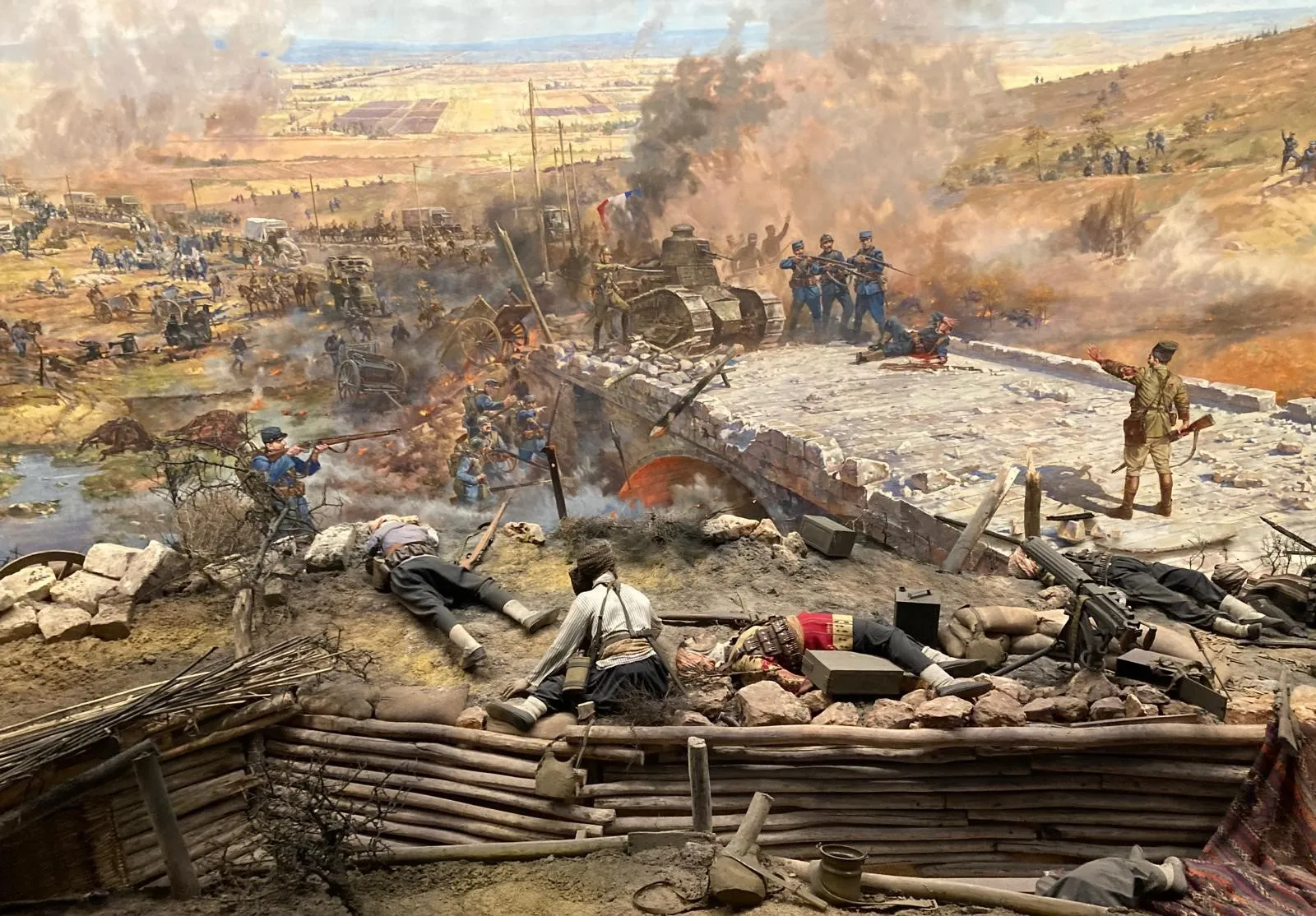
On 28 March 1920, at Elmalı Bridge on the Kilis road, he fought to the very last against a force vastly superior in numbers and equipment, and there he was martyred. Synonymous with his resolve to let the enemy pass nowhere, Şahin Bey became the emblematic figure of the Antep resistance; today one of Gaziantep's central districts bears his name.
Karayılan and the Popular Resistance
Karayılan (also recorded in the sources as Molla Mehmed) is among the legendary popular heroes of the Defence of Antep. Together with local leaders such as Boyno oğlu Memik Ağa, he inflicted heavy losses on the occupying forces in the Çatal Mazı and Karabıyıklı raids around the Antep-Maraş road; with the weapons, ammunition and animals he captured, he formed the backbone of the popular resistance in a setting where no regular army was present.
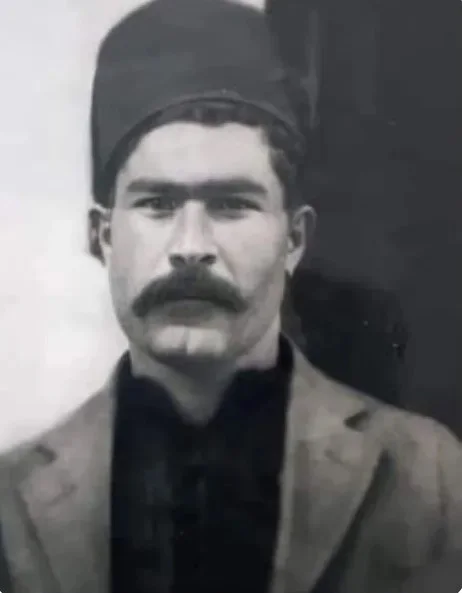
On 24 May 1920, he was martyred by a bullet to the heart at Sarımsaktepe while rushing to help a handful of Antep men who were trying to seize supply carts left behind by the enemy. His funeral was held amid tears at the Şeyh Mosque, then in use as a hospital, and the hill where he fell came to bear his name.
What was found on Karayılan when he was martyred is the very image of a plain life devoted not to worldly goods but only to his cause: a small Qur'an, four silver mecidiye coins, three hand grenades, a pistol, two cartridges, a pen and a few sheets of paper.
Historians hold differing views on Karayılan's true identity; in this respect he lives on as both a historical figure and a legend that embodies the collective courage of the Antep resistance.
Özdemir Bey and the Front Commanders
The Defence of Antep was not only a spontaneous popular resistance, but also an organised struggle backed by the Grand National Assembly in Ankara. In the military organisation of the city's defence, Kılıç Ali (Captain Asaf Bey) and Şefik Özdemir Bey, who later took over the command, played a decisive role; figures such as the gendarmerie first lieutenant Yusuf Rıza (Arslan Bey) also served in the defence. Seven neighbourhood fronts (Tabakhane, Şeyh Cami, Mağarabaşı, Şehreküstü, Aydınbaba, Musullu and Çınarlı Camii) were formed to direct the urban fighting, and the city was divided into twenty-seven districts of a hundred people each, organised almost street by street.
When the French demanded that the city surrender within two hours and pay a heavy indemnity, the front commander Özdemir Bey's reply laid bare the spirit of the resistance:
"These are not soldiers brought in from outside, but the true sons of Antep defending their homeland. If you insist on your demands, we have no choice but to keep fighting and to await an honourable death."— Özdemir Bey, in reply to the French ultimatum to surrender
What truly made this resistance unique, however, is that the struggle was waged by an entire people. In a city that even set up its own ammunition workshop under siege, women carried ammunition, tended the wounded and often stood shoulder to shoulder with the men in the trenches, while children carried messages. From the elderly to children, everyone rushed to fortify the fronts with whatever tools they had at hand, picks and shovels included. In this sense, the Defence of Antep was the defence not of an army, but of a whole city, women and children included.
Under siege, Antep made its own ammunition: the master hand of the workshop set up by militia lieutenant Lohanlı Mustafa Nureddin was the gunsmith Yusuf Usta. The hand grenades and specially made armour-piercing rounds produced there were effective enough to trap French tanks and bring them to a halt. In the Mağarabaşı clash, the marksman Zeynelabidin Efendi picked off the enemy from a mosque minaret. And the city held far more weapons than it surrendered: by one intelligence report there were nearly 26,000 weapons in Antep, and the people had hidden much of their armoury in their vineyards and gardens.
The Siege, the Famine and the "Gazi" Title
The clashes that intensified in April 1920 gradually turned into a long and gruelling blockade that encircled the city. For roughly eleven months Antep held out, cut off from the outside world; in the course of this the city gave more than 6,300 martyrs. The fiercest enemy, in time, became hunger: with the city cut off, flour ran out, the people tried to make bread from bitter almond kernels, and when even that was gone the bakeries closed. At one point only about 25 kilos of food were left for a population of 25,000; the people sent their final appeal out by carrier pigeon. The military ration ledgers of those days survive today under a name that captures the ordeal: "Açlığın Günlüğü" (The Diary of Hunger).
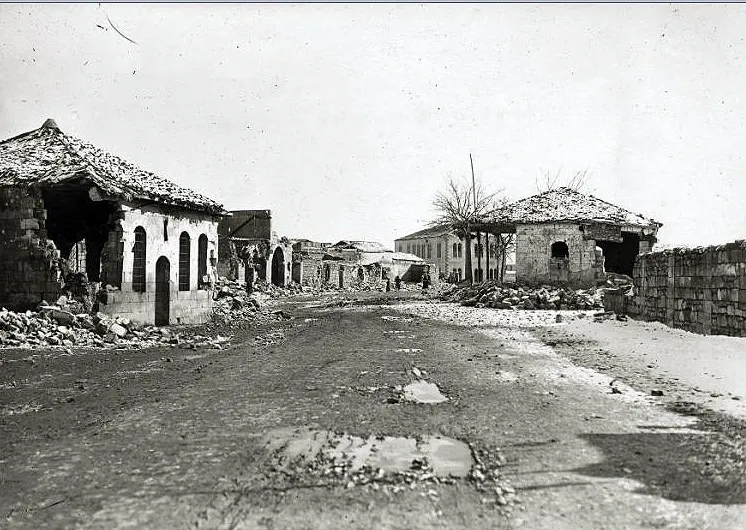
A militia officer in the besieged city summed up, in a single breath, why Antep surrendered:
"Neither cannon defeated us, nor rifle. Neither the enemy's strength drove us out, nor his munitions — nor his tanks, nor his aircraft. Only one thing crushed us, broke us, and drove us from our homeland with tears of blood in our eyes: hunger!"— Lohanlı Mustafa Nureddin, militia officer in the besieged city
The sacrifice lasted to the very end: the fighters who were to break out of the siege were told to leave their own food to those starving inside — "Leave your food to those who remain inside."
To honour this matchless resistance, the Grand National Assembly conferred the title "Gazi" on the city through Law no. 93, adopted on 6 February 1921 (published in the Official Gazette on 8 February); this decision was taken while the siege was still under way. The city finally suspended the fighting on 9 February 1921 — not by force of arms, but solely because of exhausted supplies and starvation. The people's spirit of resistance, however, was never broken. After the Treaty of Ankara of 20 October 1921 drew the Türkiye–Syria border, the French army evacuated the city; with the withdrawal of the last French soldier on 25 December 1921, Antep was reunited with the soil of the motherland, and the troops who entered the city that day found the people of Antep in tears of joy.
Antep thus went down in history as the only province whose entire population was honoured with the title "Gazi" and which carries that title in its name. The traces of this legacy can be seen today at the Panorama 25 December Museum, the Şahinbey Museum of the National Struggle, and at Gaziantep Castle crowning the hill above the city, with its Defence Museum inside.
Atatürk and the Defence of Antep
During the years of the National Struggle, Mustafa Kemal Atatürk followed the resistance of the people of Antep closely and praised their heroism at every opportunity. His 1933 visit to Gaziantep and the special bond he forged with the city are a separate story that goes beyond the scope of this page; for the details, the words Atatürk spoke about Antep and his honorary enrolment in the city, take a look at our Atatürk and Gaziantep page.
Timeline of the Defence of Antep
| 17 December 1918 | The British occupation of Antep began. |
| 25 October 1919 | The occupation passed to the French. |
| 21 January 1920 | The Şehit Kâmil incident — the first active act of defiance in the city. |
| 28 March 1920 | Şahin Bey was martyred at Elmalı Bridge. |
| 1 April 1920 | The in-city resistance (the "first bullet") began. |
| 24 May 1920 | Karayılan was martyred at Sarımsaktepe. |
| 11 August 1920 | The French ultimatum to surrender was rejected. |
| 6 February 1921 | The Grand National Assembly granted the city the title "Gazi" (Law no. 93). |
| 9 February 1921 | The city suspended the fighting — not by arms, but because of hunger. |
| 25 December 1921 | The last French soldier withdrew — the liberation of Antep. |
Sources
- Mustafa Can, "Antep'in İşgali ve Kurtuluşu" (The Occupation and Liberation of Antep), Millî Mücadele'nin Yerel Tarihi, Turkish Academy of Sciences (TÜBA), doi:10.53478/TUBA.978-625-8352-66-5.ch05.
- Lohânizade Mustafa Nureddin, Gazi Ayıntab — a period memoir by an eyewitness to the siege.
- Ali Nadi Ünler, Gaziantep Savunması (The Defence of Gaziantep).
Frequently Asked Questions
When and why did the Defence of Antep take place?
After Antep fell under French occupation in the wake of the First World War, the people resisted the occupation for roughly eleven months between 1920 and 1921. This resistance is an important part of the southern front of the Turkish War of Independence.
Who was Şehit Kâmil?
A young man whose real name was Mehmet Kâmil and who, on 21 January 1920, at around twelve years old, was bayoneted and martyred while protecting his mother from harassment by French soldiers. He is regarded as the spark of the Antep resistance; his name was given to the Şehitkamil district.
Who fired the first bullet in Antep?
The first bullet of the in-city resistance in Antep was fired by Körükçüzâde Ahmed Efendi, in front of the Tuz Han (Salt Han), during the clashes that broke out on 1 April 1920 — the moment regarded as the actual start of the armed resistance inside the city. (Clashes had already been taking place outside the city, on the Antep-Maraş road, since January 1920.)
How was Şahin Bey martyred?
Şahin Bey, whose real name was Mehmed Said, was the commander of the southern front. On 28 March 1920, at Elmalı Bridge on the Kilis road, he was martyred while fighting to deny the enemy passage.
How many martyrs were lost in the Defence of Antep?
According to the sources, more than 6,300 martyrs were lost during the roughly eleven-month defence; in recognition of this sacrifice, the entire population of the city was honoured with the title "Gazi".
Who was Karayılan?
A legendary popular hero known for his resistance around the Antep-Maraş road. Historians hold differing views on his true identity.
Was Antep taken by force of arms?
No. Antep resisted for roughly eleven months and was not defeated by arms; on 9 February 1921 it was forced to suspend the fighting solely because its supplies were exhausted and famine had set in.
When was Antep liberated?
After the Treaty of Ankara of 20 October 1921, the last French soldiers left the city on 25 December 1921; this date is commemorated as the liberation of Antep, and the "Panorama 25 December Museum" takes its name from that day.