Gaziantep Castle is a historic defensive structure that rises on a hill in the city centre, its walls and bastions commanding the old town below. Its origins reach back to a watchtower or stronghold of the Roman period; its present-day circular, walled and bastioned appearance, however, was acquired in the 6th century CE under the Eastern Roman (Byzantine) emperor Justinian I. Bearing the repair layers of the Seljuk, Ayyubid, Mamluk, Dulkadirid and Ottoman periods, and together with its symbolic place in the 1920–1921 Defence of Antep, the castle is regarded today as the emblem of Gaziantep.
This page deals with the castle itself — that is, the structure on the hill, its walls, its bastions and its historic layers. The Gaziantep Castle and Defence (Panorama) Museum located inside the castle is a separate subject; for that exhibition space, which recounts the city's defence through reconstructions, you may consult the relevant museum page.
Roman Origins: From a Watchtower to a Castle
Archaeological research has shown that the castle first emerged in the Roman period as a watchtower or stronghold and was enlarged over time. With its position commanding the plain along the bank of the Alleben Stream and the surrounding roads, the hill offered a natural site for a military observation point from the very outset. Under Roman rule (2nd–3rd centuries CE), this core structure was expanded and transformed into a castle.
The mound on which the castle stands points not only to the Roman age but to far older layers of settlement; the hill rises above a continuity of habitation thousands of years deep. To follow the city's Roman and earlier periods within a broader frame, you may turn to the History of Gaziantep page.
The Reign of Justinian I: Acquiring Its Walled, Bastioned Form
The castle acquired its present walled and bastioned form largely under the Eastern Roman (Byzantine) emperor Justinian I, in the 6th century CE (his reign lasting 527–565 CE). On account of the extensive defensive construction he undertook across the empire, Justinian is also referred to in the sources as the "Architect of Castles"; Gaziantep Castle, too, was overhauled as part of this great campaign of fortification.
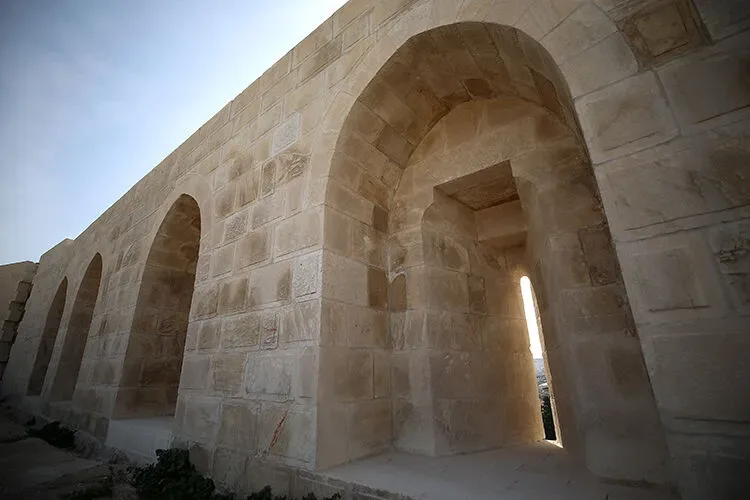
In the repair work of this period, in order to provide a level surface on the sloping ground of the hill, the southern part of the castle was furnished with substructures (foundations) made up of arched and vaulted galleries. Towers connected to one another by these galleries were built; the curtain walls were extended to the edge of the hill on the western, southern and eastern sides. In this way a scattered stronghold was transformed into an orderly castle enclosed by walls.
Plan and Bastions
In this state the castle has an irregular (non-uniform) circular plan; its diameter is roughly 100 metres and its circumference roughly 1,200 metres. This elliptical-circular enclosure, following the natural boundaries of the hill, allows the structure to be defended from every direction. The curtain walls are built of large blocks of stone.
The number of bastions (towers) standing along the walls is given in most sources, in their surviving form, as 12. The 17th-century traveller Evliya Çelebi also described Ayıntab and its "charming castle," which he visited on his pilgrimage journey, in his Seyahatnâme (Book of Travels); however, since a specific number of bastions attributed to him cannot be confirmed by reliable sources, no definite figure is given for it on this page.
Location: in the centre of Gaziantep, on a hill overlooking the Alleben Stream. Origin: a Roman-period watchtower/stronghold. Present form: the reign of Justinian I (527–565 CE). Plan: irregular circular, diameter roughly 100 m, circumference roughly 1,200 m. Later layers: Seljuk, Ayyubid, Mamluk, Dulkadirid and Ottoman repairs.
The Seljuk, Ayyubid, Mamluk and Ottoman Layers
After the Byzantine age, the castle was repaired as needed by the Islamic states that came to dominate the region, each period leaving its own mark on the structure. Under the Ayyubids (12th–13th centuries) the castle saw significant repairs; the Seljuk, Mamluk, Dulkadirid and Ottoman administrations likewise overhauled the structure continually. Many of these repairs have been documented by means of the inscriptions set into the walls.
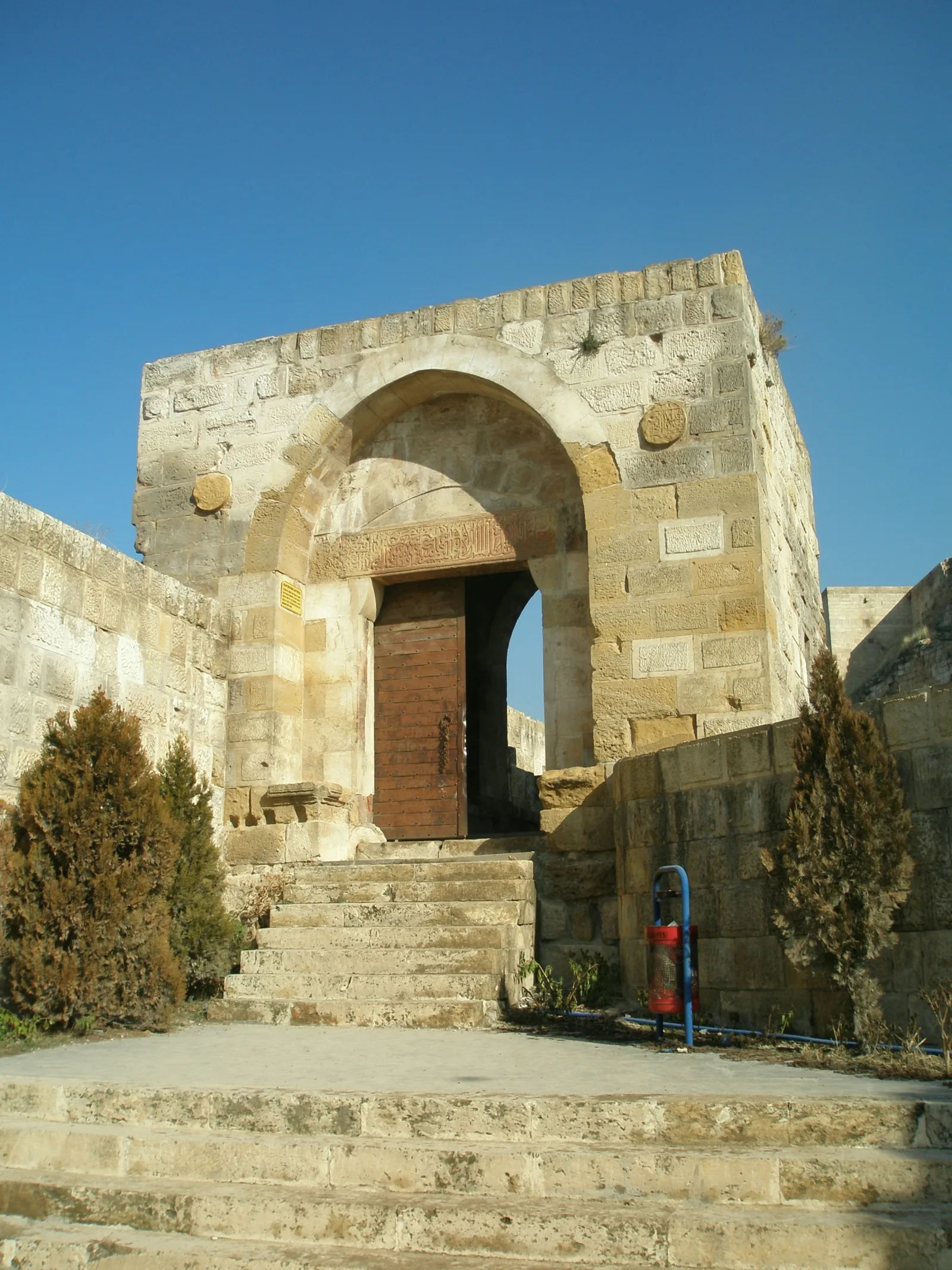
The castle was also reworked in the Mamluk period; the Mamluk sultan Qaitbay repaired the structure in 1481. One of the clearest examples of the traces left from the Ottoman period is the inscription above the main gate: from this inscription it is understood that the castle's main gate and the towers on either side of the castle bridge were rebuilt in 1557, during the reign of Süleyman the Magnificent. The castle can thus be read as the joint work not of a single age but of many overlapping periods.
Its Commanding Position over the Old Town and Its Place in the Defence of Antep
The castle rises right in the middle of the old town, on a hill that encircles from above the bazaars, caravanserais and neighbourhoods around it. This commanding position has, over the centuries, determined the structure's weight both military and symbolic; the castle is like a fixed point of reference on which the city stands.
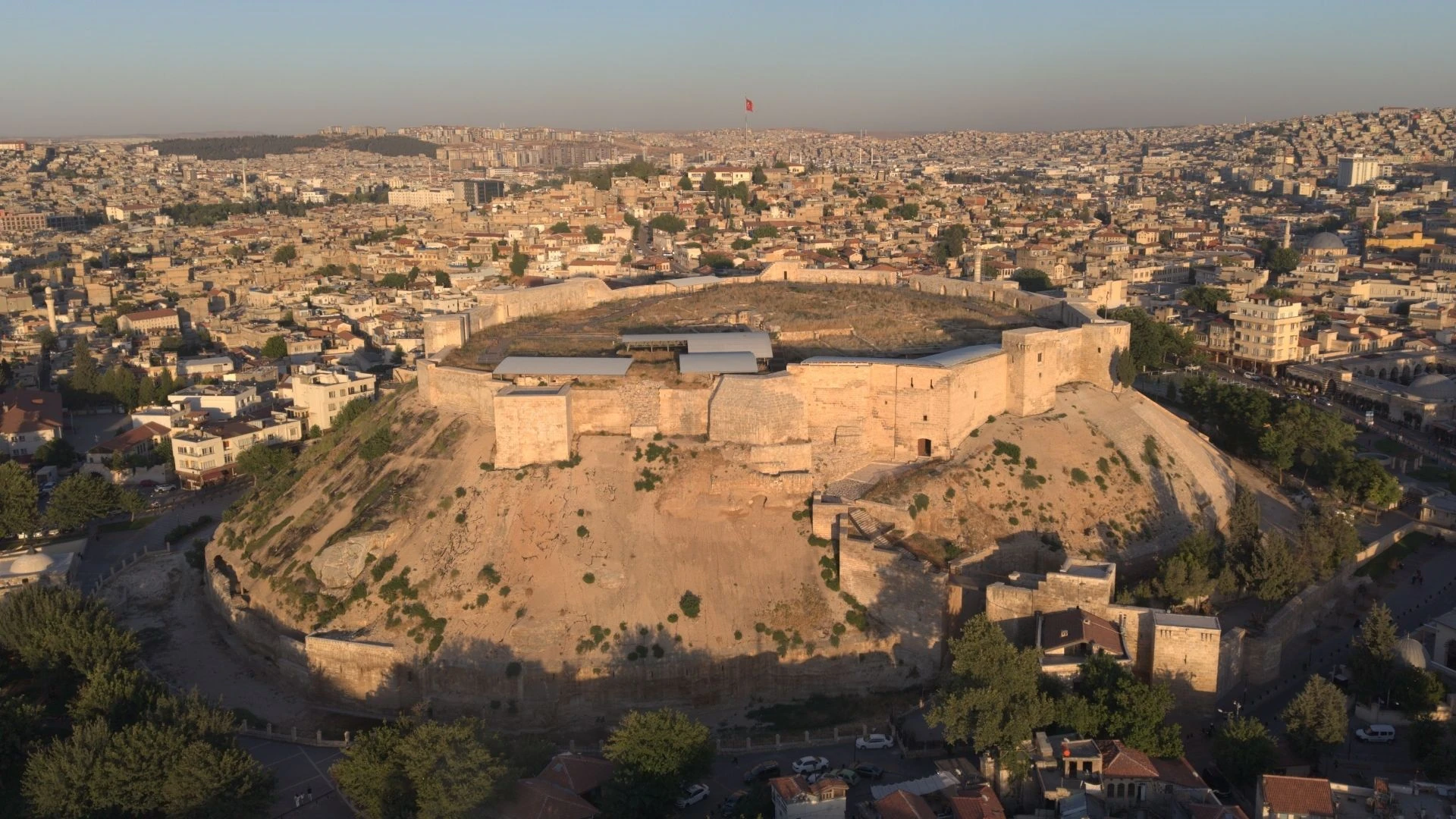
This symbolic weight reached its height during the 1920–1921 Defence of Antep. In this long siege and resistance, which took place in the early period of the Turkish War of Independence, the castle stood out as a centre in which the city's defence was made concrete and as a symbol of the resistance. Antep's struggle would be crowned by the title "Gazi" later conferred on the city. To follow this period of the city in detail, you may consult the The Defence of Antep page.
In the earthquakes of 6 February 2023 the castle was severely damaged: some of the bastions on the eastern, southern and south-eastern sides, along with the retaining wall beside the curtain wall, partly collapsed, and large cracks appeared in various sections. Restoration work on the structure was begun after the earthquake.
To see Gaziantep's similar defensive structures together, you may make use of the Castles category page; for the defence-themed exhibition inside the castle, you may visit the Gaziantep Castle and Defence Museum page.
Frequently Asked Questions
When and by whom was Gaziantep Castle built?
The castle's origins reach back to the Roman period, when it began as a watchtower or stronghold. Its present walled, bastioned form, however, was acquired in the 6th century CE under the Eastern Roman (Byzantine) emperor Justinian I (527–565 CE). Over the following centuries it was repaired in the Seljuk, Ayyubid, Mamluk, Dulkadirid and Ottoman periods, reaching its present appearance.
What is the plan of Gaziantep Castle and how many bastions does it have?
The castle has an irregular circular plan; its diameter is roughly 100 metres and its circumference roughly 1,200 metres. The number of towers along the curtain walls is given in most sources, in their surviving form, as 12.
What was done to the castle in the reign of Justinian I?
To provide a level surface on the sloping ground of the hill, the southern part of the castle was furnished with substructures (foundations) made up of arched and vaulted galleries. Towers connected by these galleries were built, and the curtain walls were extended to the edge of the hill on the western, southern and eastern sides. In this way the castle acquired an appearance close to its present walled, bastioned form.
From which periods are the repair inscriptions at Gaziantep Castle?
The Mamluk sultan Qaitbay repaired the castle in 1481. From the Ottoman-period inscription above the main gate, it is understood that the main gate and the towers on either side of the castle bridge were rebuilt in 1557, during the reign of Süleyman the Magnificent.
What was the role of Gaziantep Castle in the Defence of Antep?
With its position commanding the hill in the middle of the old town, the castle stood out during the 1920–1921 Defence of Antep as a symbol of the city's resistance and as a centre in which the defence was made concrete. This struggle came to be remembered through the title "Gazi" later conferred on Antep.
Are Gaziantep Castle and the museum inside the castle the same thing?
No. This page recounts the historic structure on the hill itself — its walls, its bastions and its layers. The Gaziantep Castle and Defence (Panorama) Museum located inside the castle, by contrast, is a separate exhibition space that recounts the city's defence through reconstructions, and is dealt with on its own page.