When Gaziantep joined the UNESCO Creative Cities Network as a City of Gastronomy in 2015, it became the first Turkish city to hold the title. The kebab is the most visible face of this cuisine — but it is not a single recipe so much as the shared name for dozens of distinct techniques that shift with the meat, the spice and the season.
What sets the Antep kebab apart begins with the meat itself. Mutton or lamb hand-chopped with a zırh — a wide, two-handled cleaver — yields a texture quite unlike machine-ground mince. The proportion of tail fat, the meat's relationship with ember heat, and a spice hand that usually stays in the background turn the kebab into a dish where the meat, not the seasoning, leads. In the same city the same meat may be a plain tenderloin in küşleme, a mince blended with coarsely chopped Antep pistachio in pistachio kebab, or a dough kneaded with bulgur in simit kebab.
This page gathers Gaziantep's kebabs into three thematic groups: the classic meat and grilled kebabs cooked all year round; the seasonal and fruit kebabs made only during the few weeks their fruit or mushroom is gathered; and the vegetable and pan kebabs that foreground greens in the meat or cook in a copper dish. For each variety's detailed recipe, history and technique, follow through to its own page.
Classic Meat and Grilled Kebabs
This group forms the core of the Gaziantep kebab: dishes made year-round, built either directly over embers or from a mince mixture. Most are TÜRKPATENT-registered and rest on the cut of the meat, its texture and the ember-grilling technique.
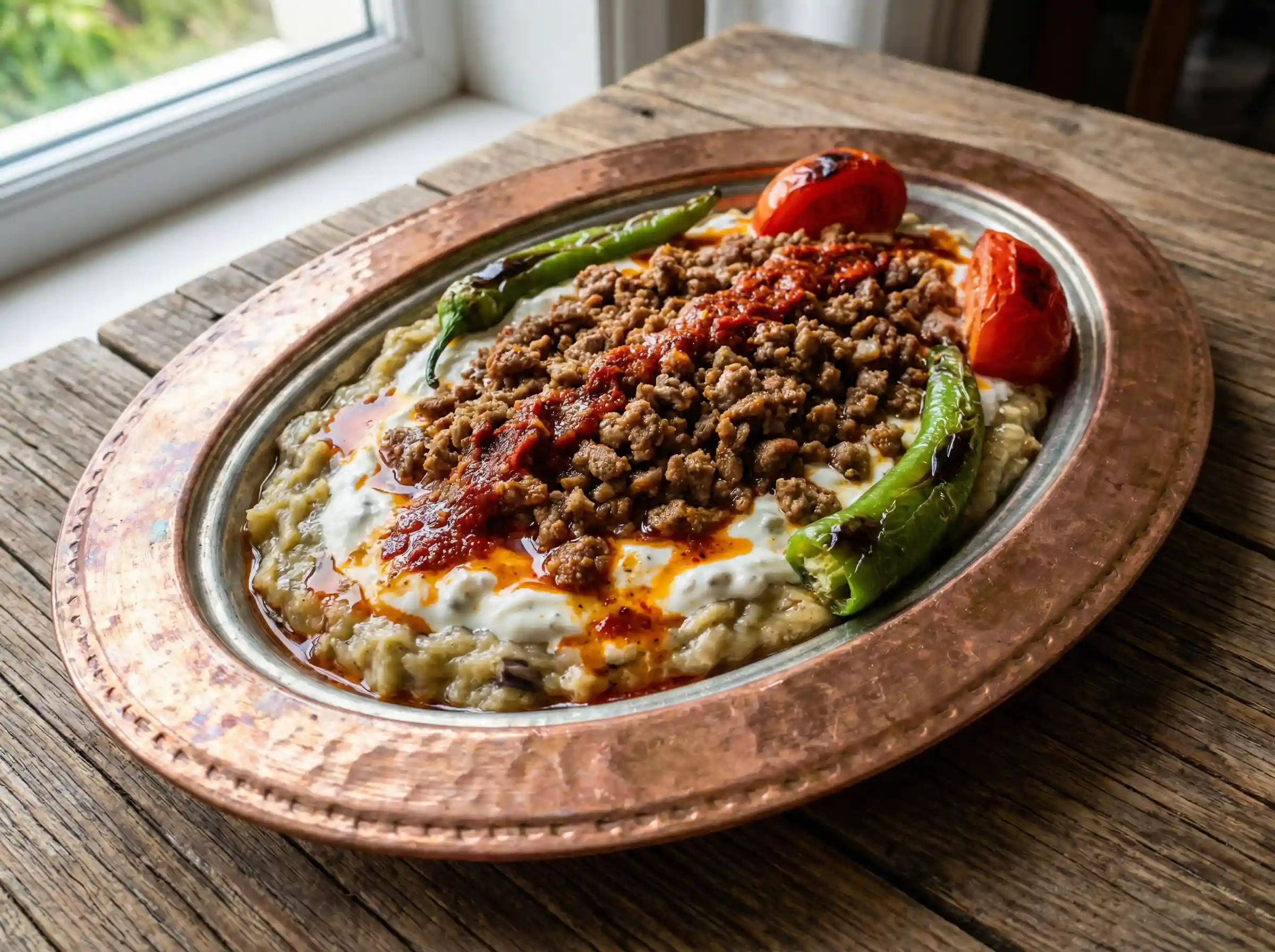
Grilled lamb mince set over a bed of smoked eggplant and garlicky yogurt, its name traced to a legend of Sultan Selim I. A registered dish.
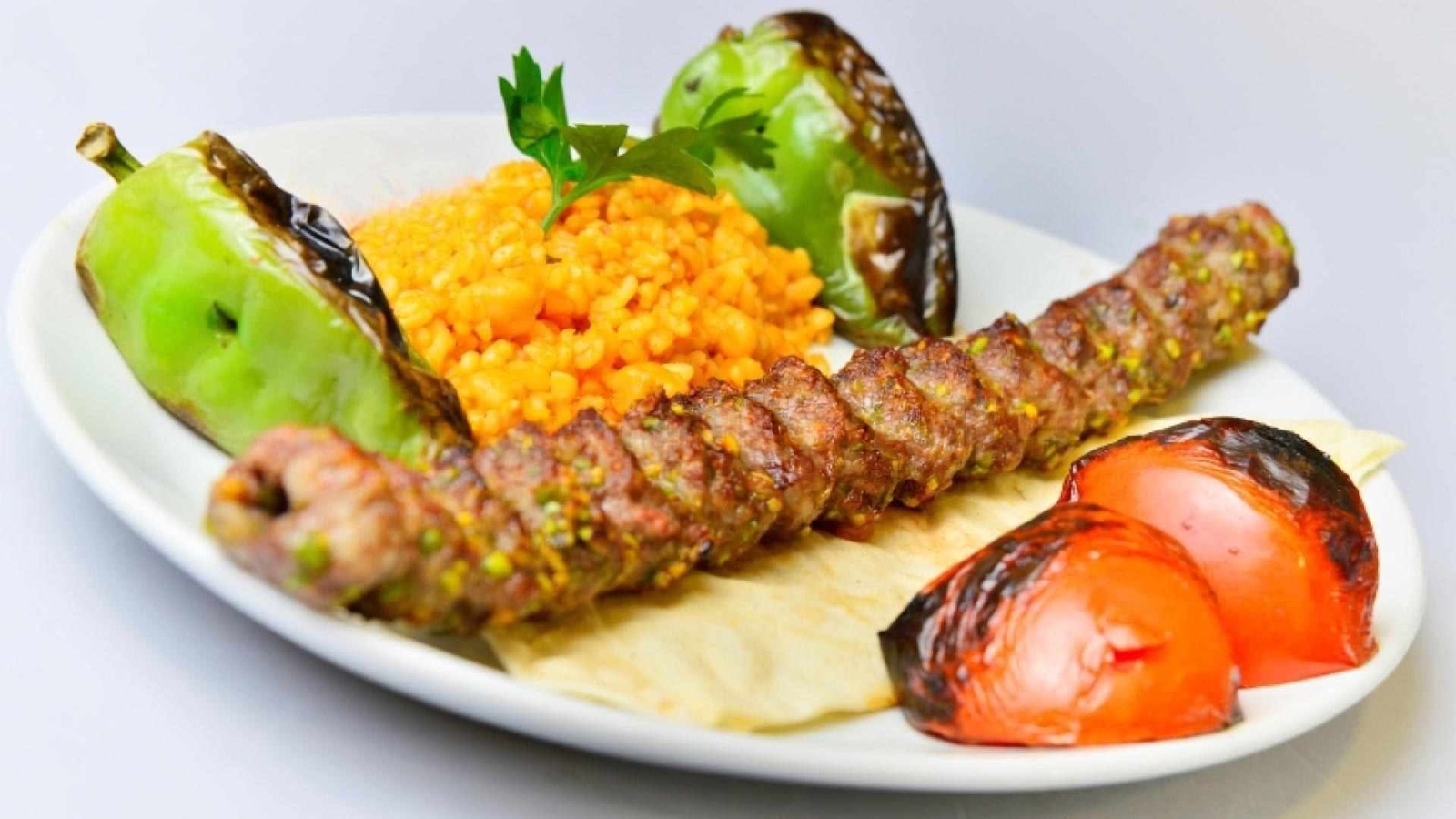
Fatty mince blended with coarsely chopped Antep pistachio and grilled on skewers, one of the cuisine's most aromatic kebabs.
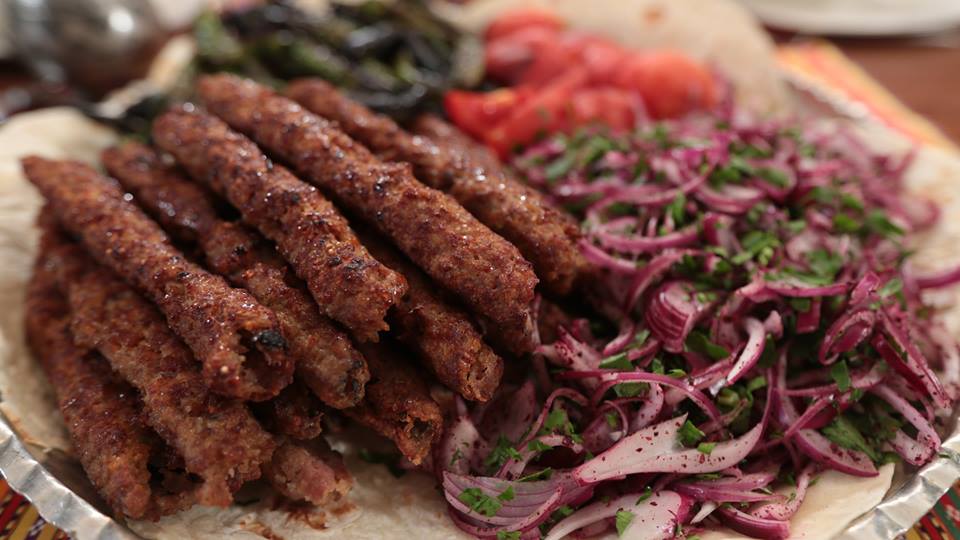
A registered kebab in which fine bulgur (simit) is kneaded with mince and moulded onto flat skewers before grilling.
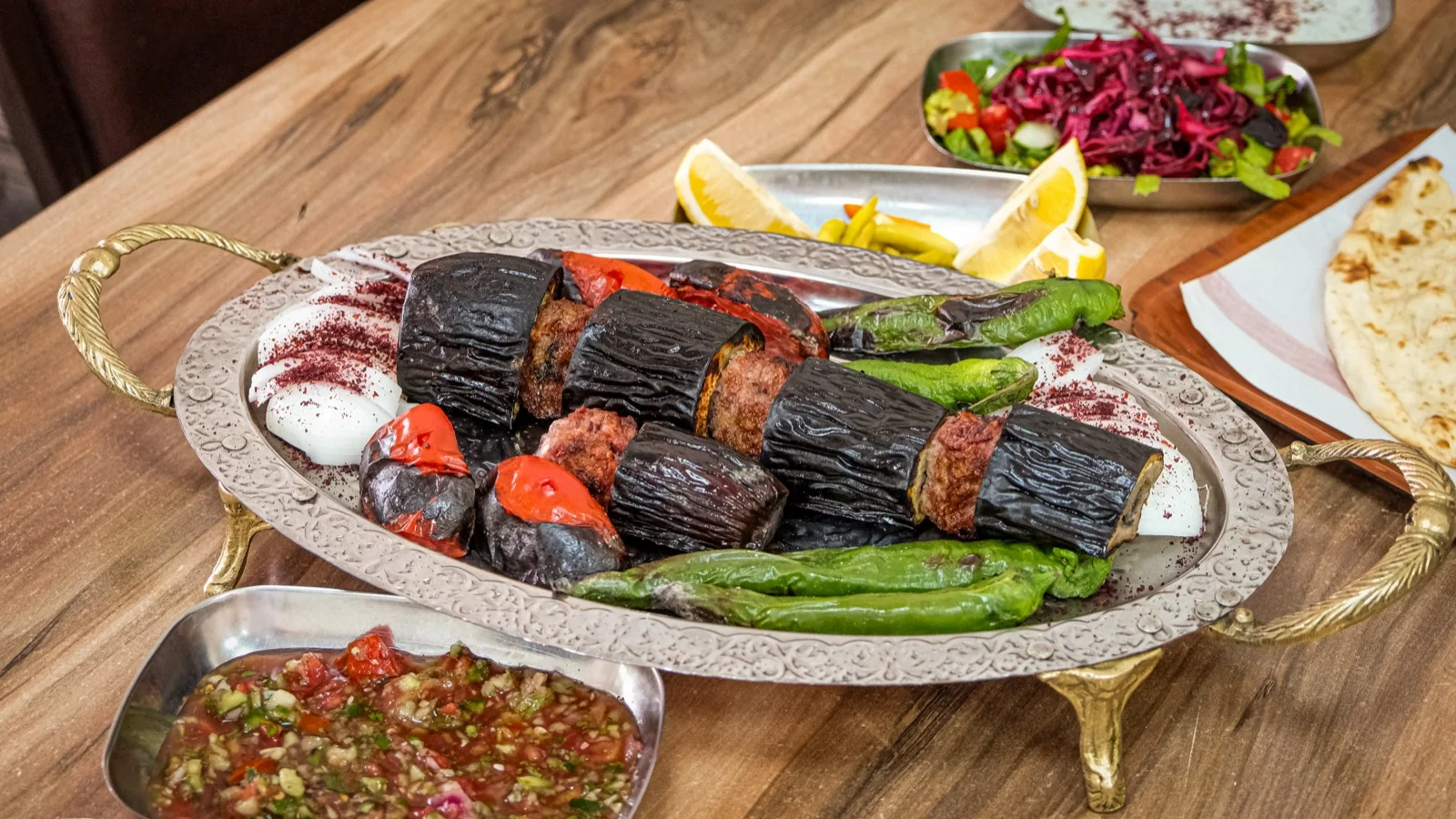
Char-softened eggplant slices and seasoned mince threaded alternately onto a skewer and grilled over charcoal (balcan kebab).
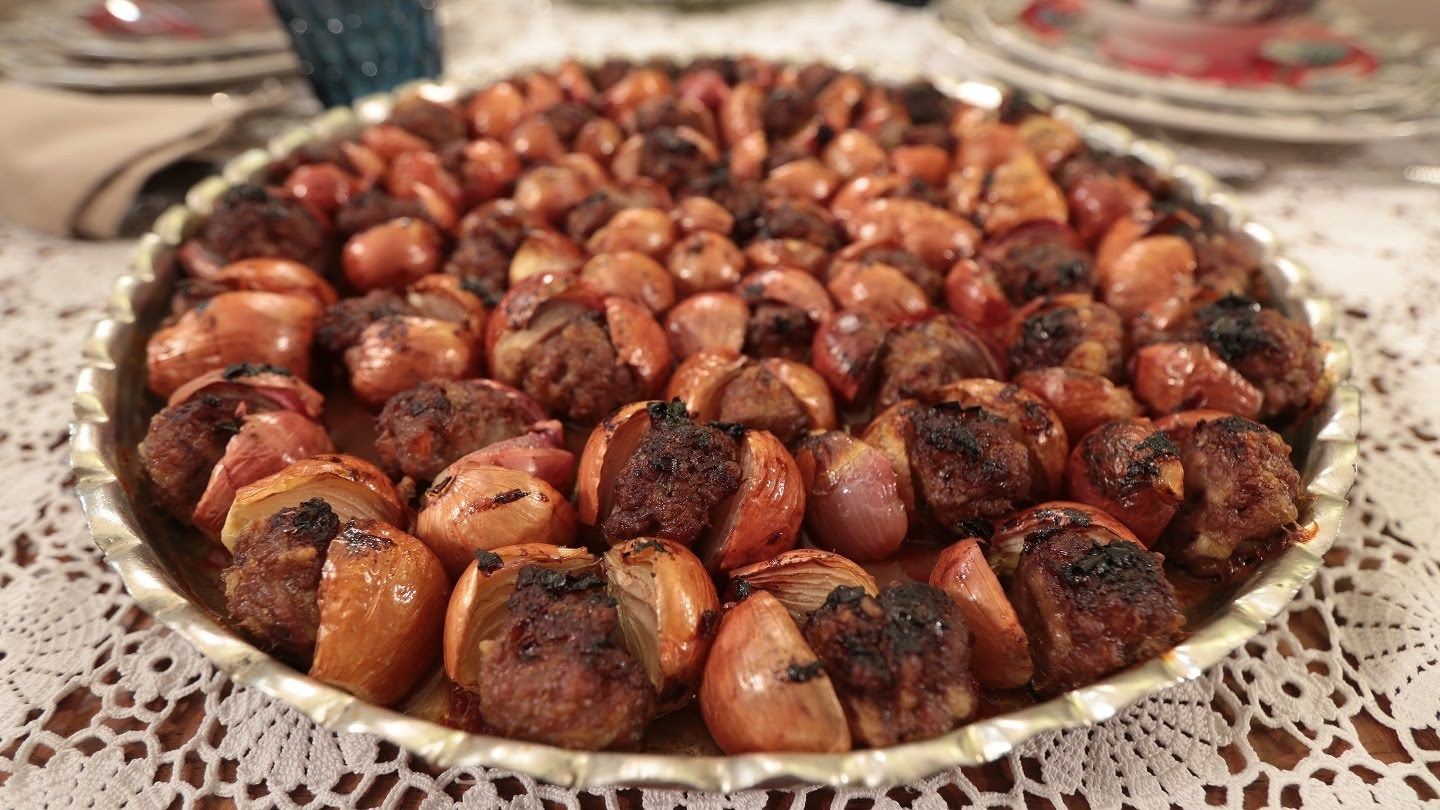
Small onions meeting fatty lamb mince and pomegranate molasses, a winter kebab.
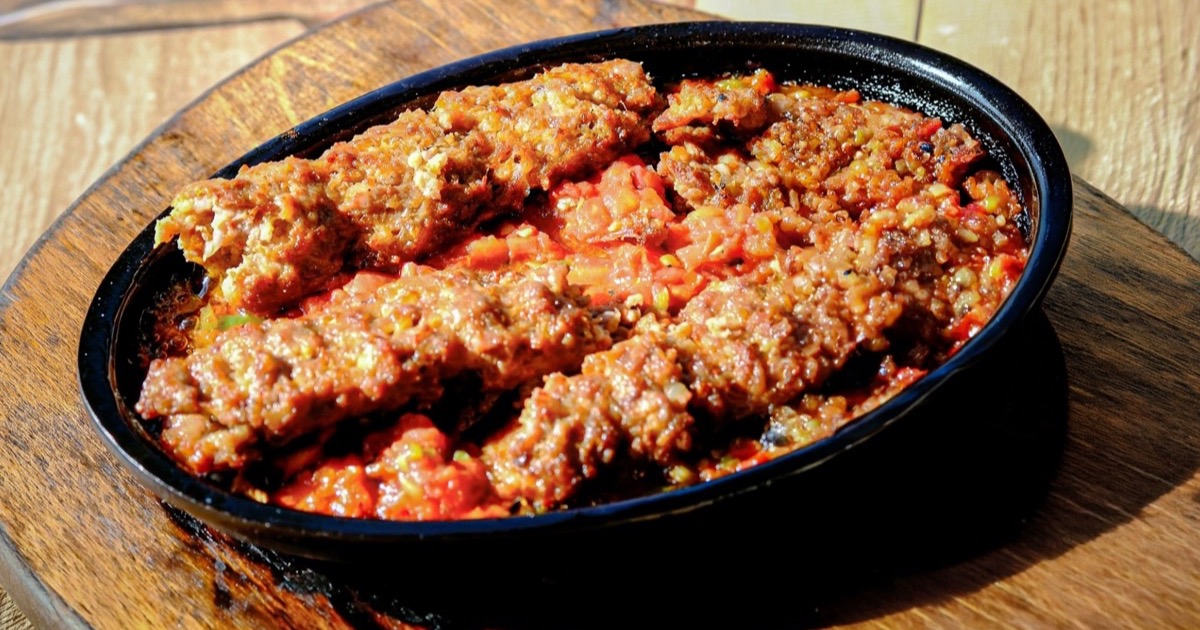
Grilled lamb laid over a char-grilled tomato and green-pepper paste, a registered kebab.
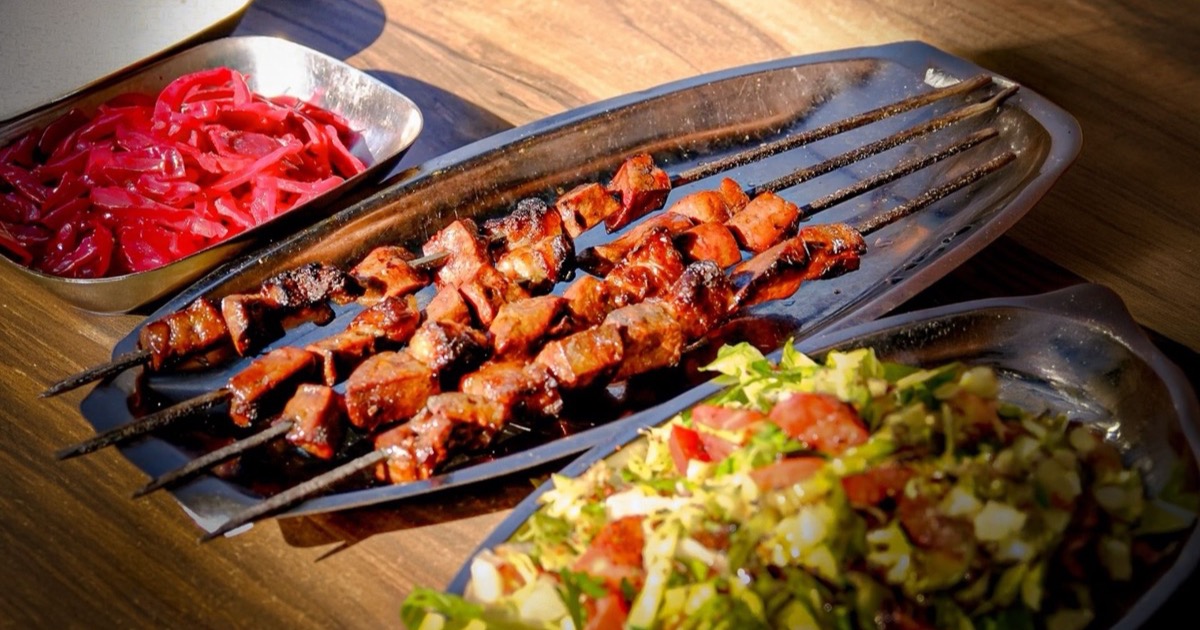
Lamb offal and tail fat threaded onto skewers without spice and cooked over embers, a morning kebab (cağırtlak).
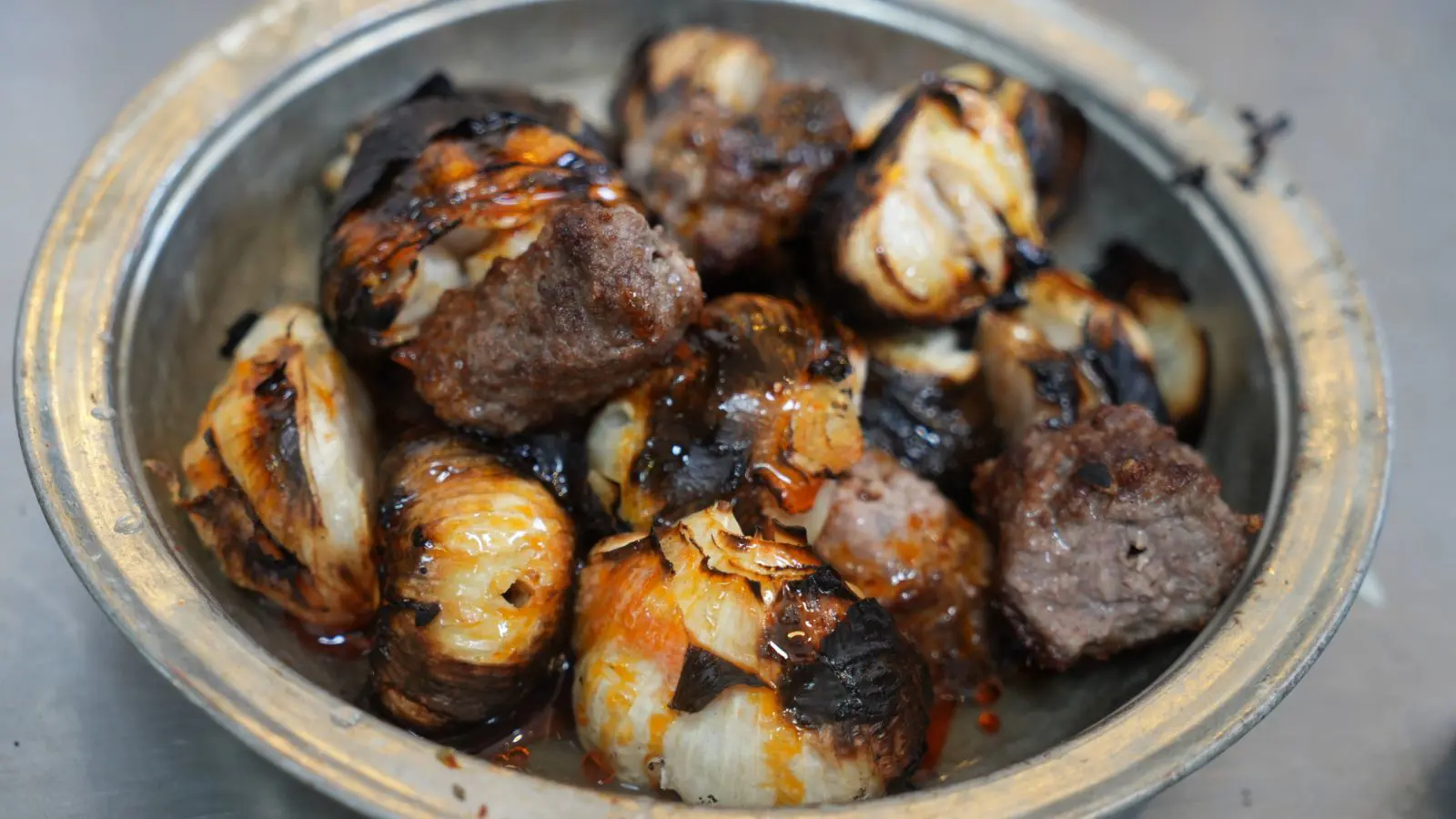
Fresh whole garlic heads cooked with zırh-chopped mince, made only a few weeks each year. A registered kebab.
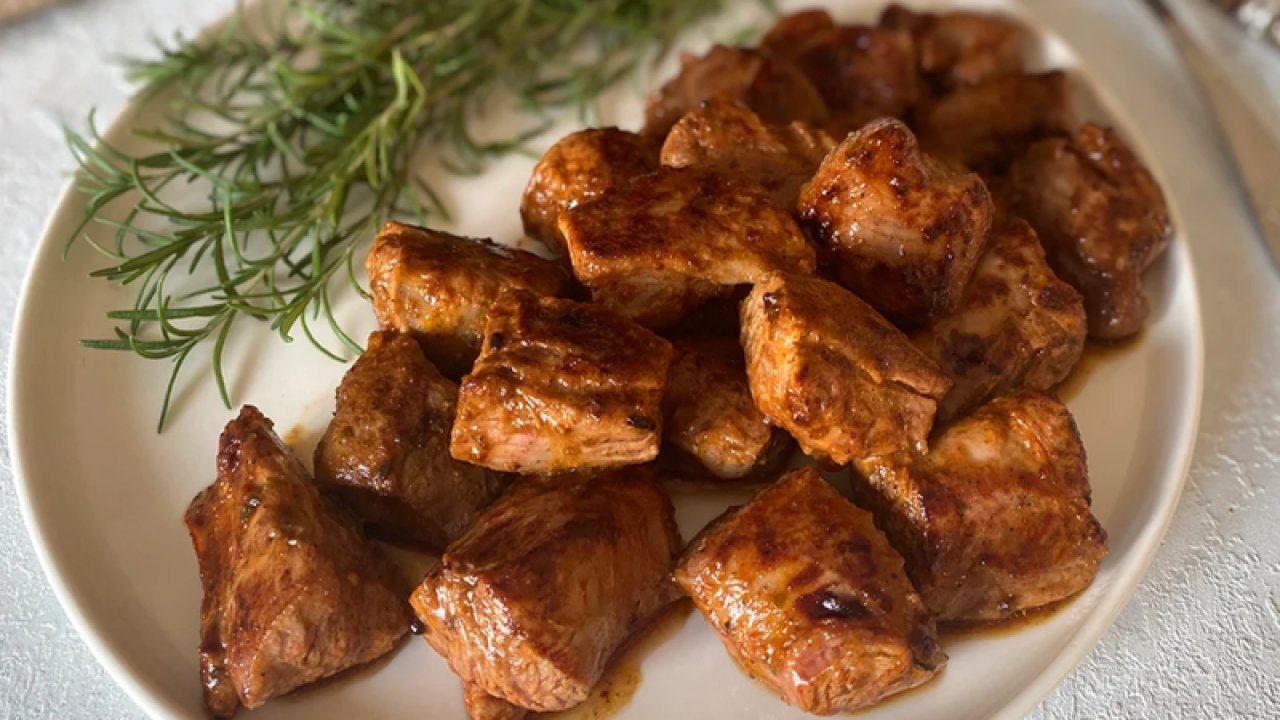
The fat-free tenderloin from beside the spine, grilled over embers with only salt and olive oil. A registered kebab.
Seasonal and Fruit Kebabs
Gaziantep's cuisine ties the kebab to the calendar; these dishes can be made only in the weeks their fruit or mushroom ripens. The fattiness of the meat is balanced against the tartness of the fruit, often finished with pomegranate molasses. Many carry a TÜRKPATENT Geographical Indication.
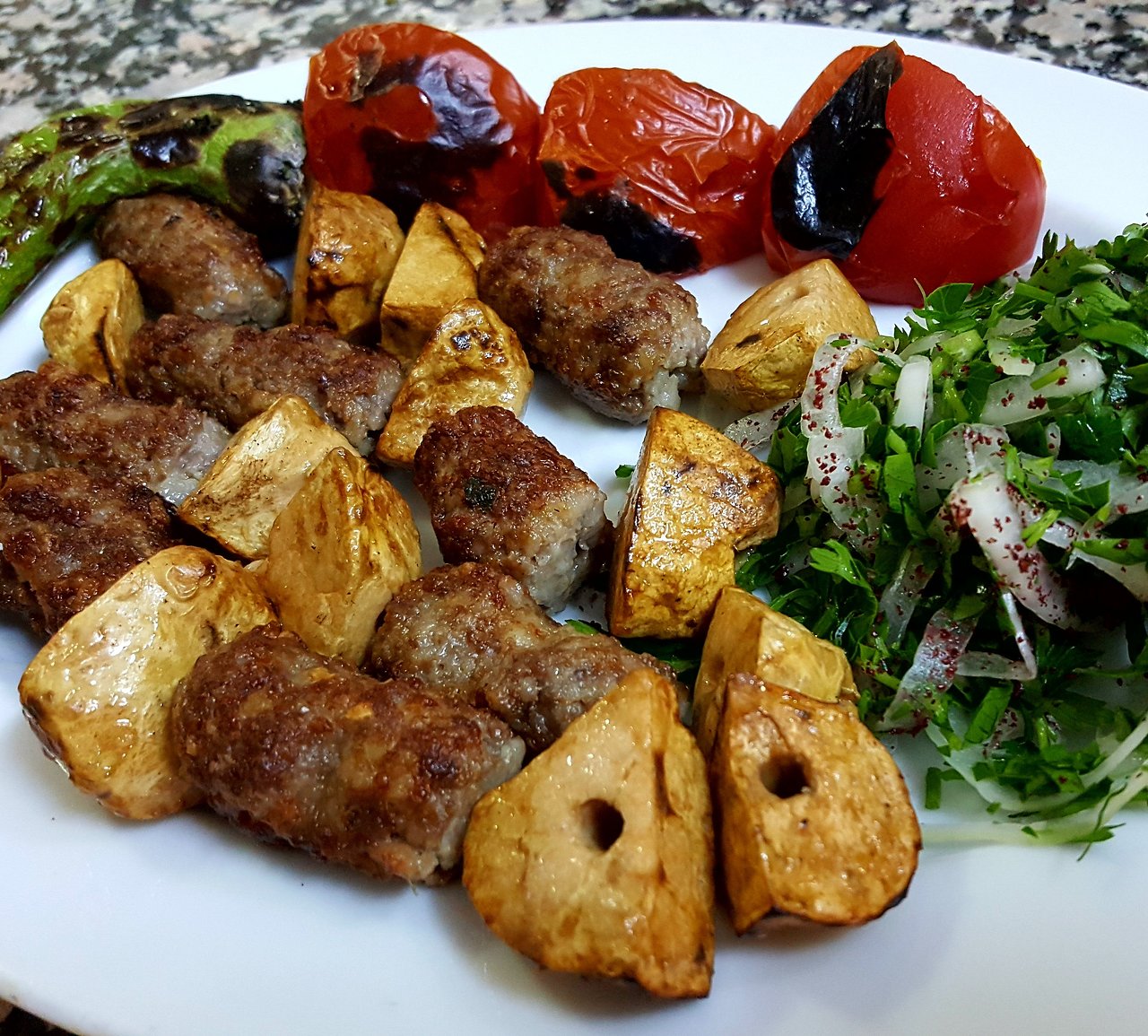
Wild spring keme (desert truffle, domalan) threaded with fatty lamb and cooked over embers, a seasonal kebab.
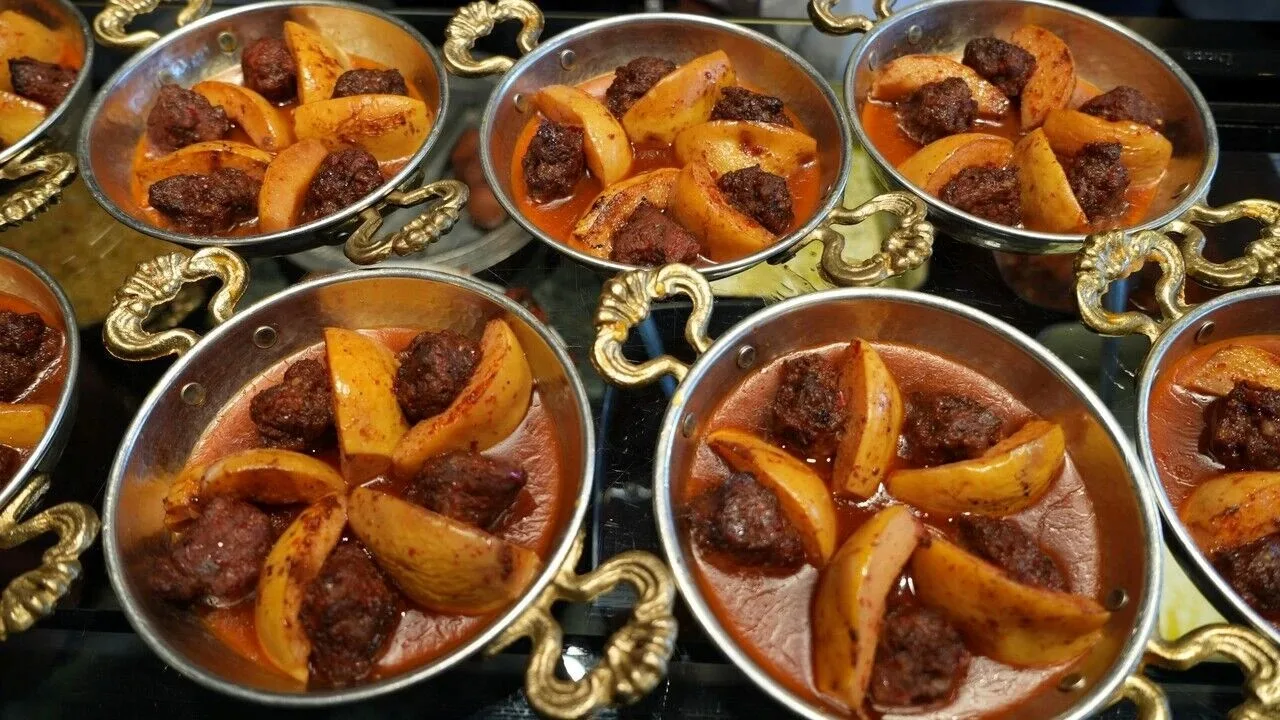
Autumn-ripened quince threaded with lamb, grilled over charcoal and finished with pomegranate molasses, a winter kebab.
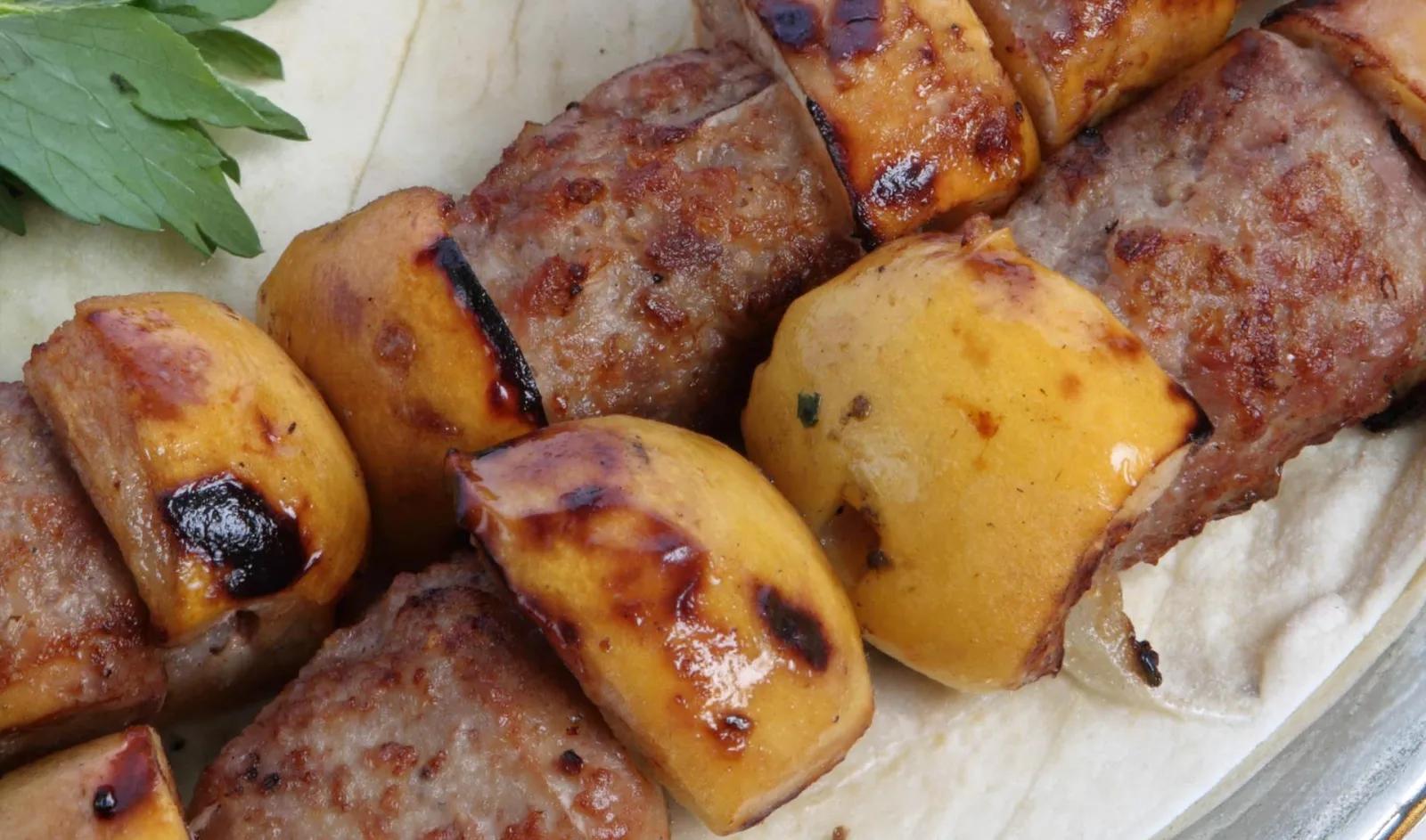
Sour winter apples threaded with fatty lamb mince and grilled over charcoal, or baked in a tray.
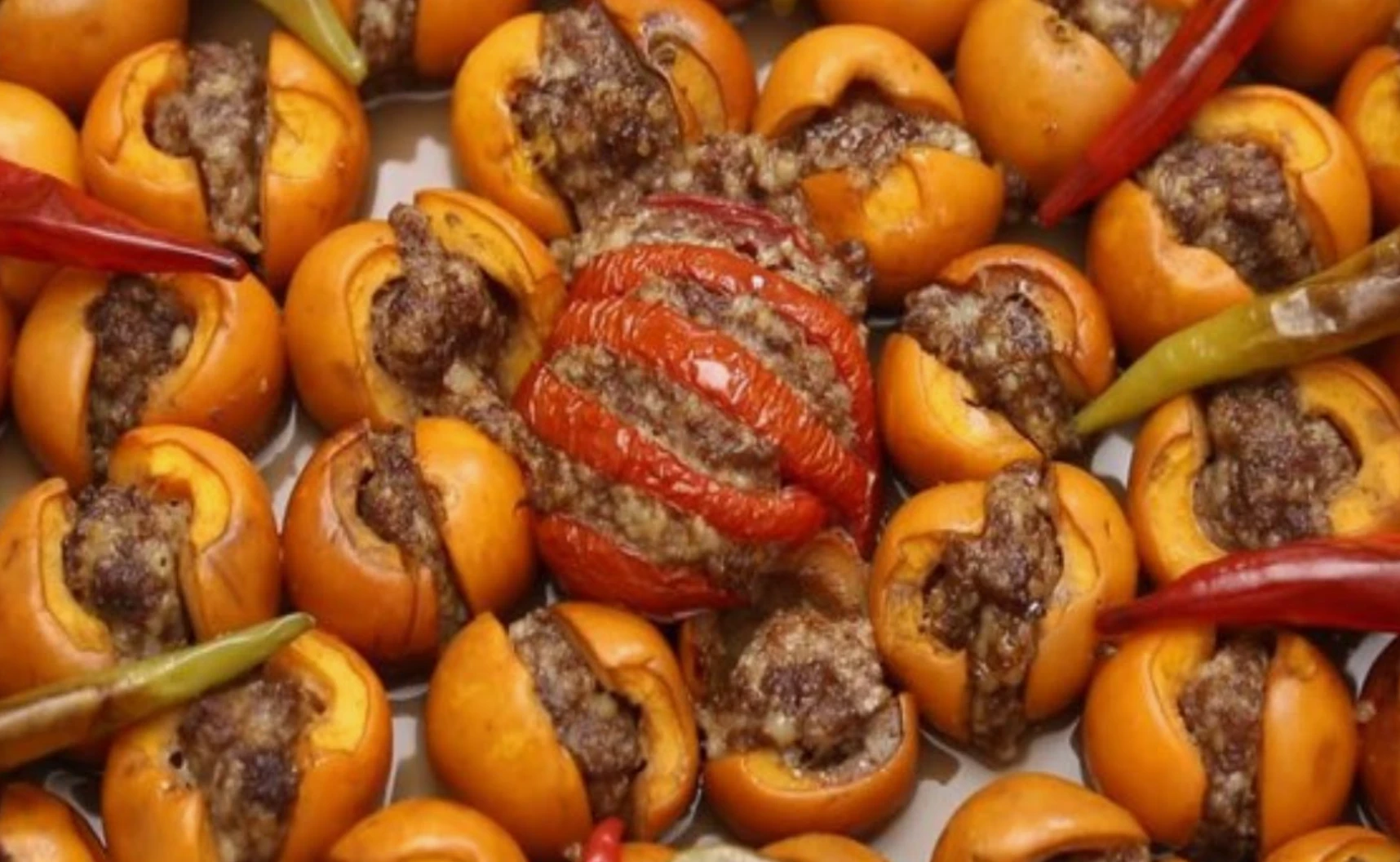
Tart late-spring loquats threaded with fatty lamb mince, a seasonal registered kebab.
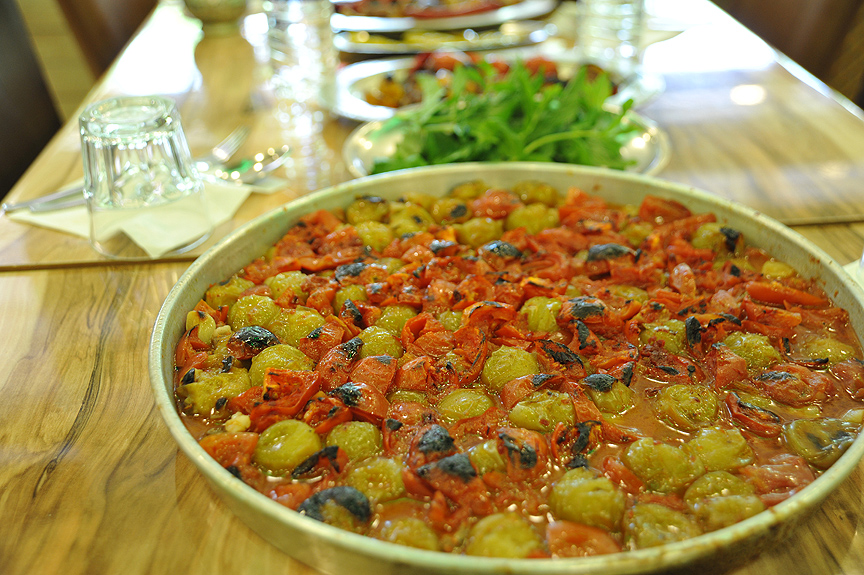
Unripe sour green plums cooked with lamb or meatballs in a copper pan, a seasonal spring dish.
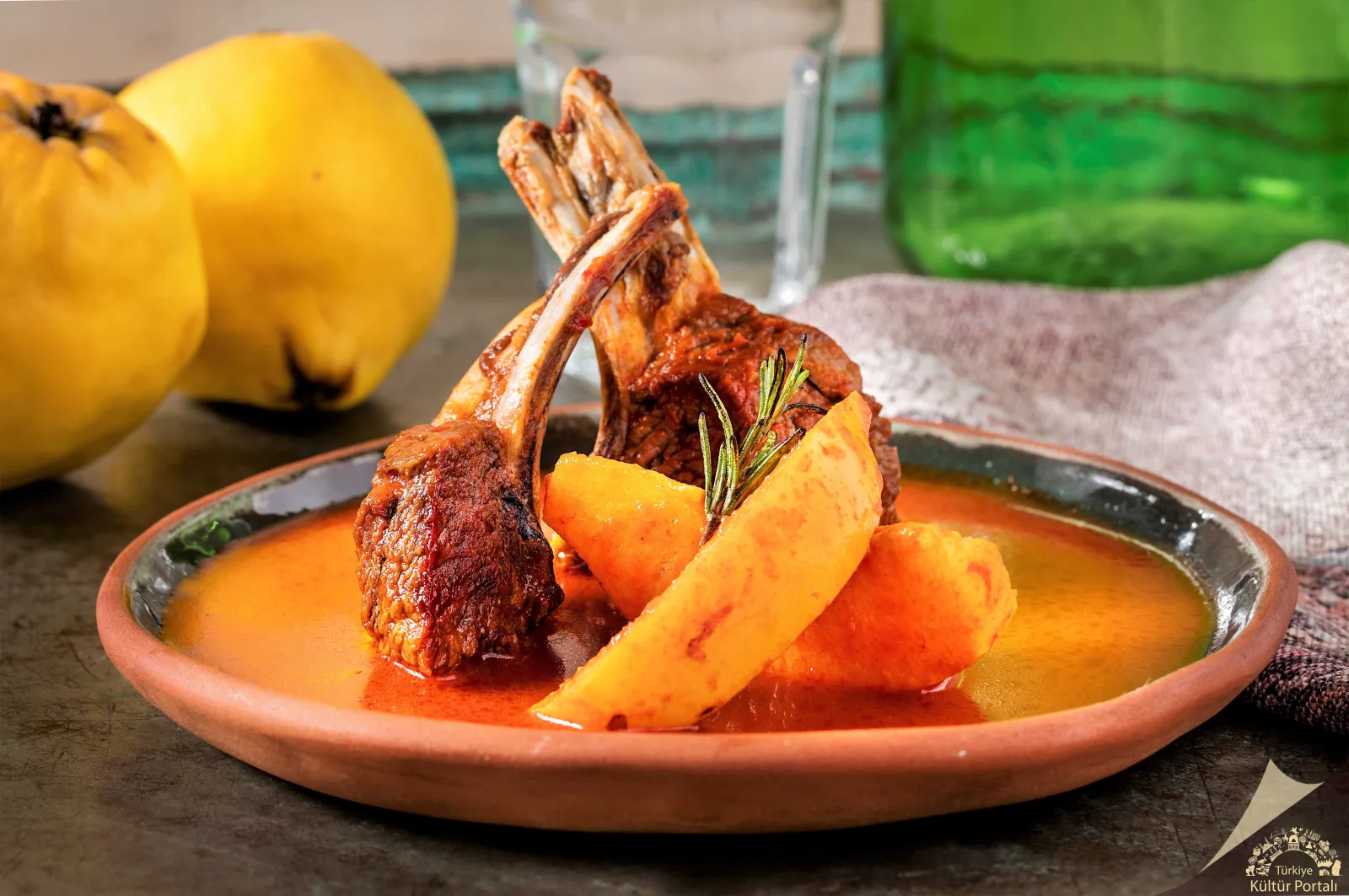
Lamb rib chops (taraklık) slow-braised with quince and pomegranate molasses, a winter dish.
Vegetable and Pan Kebabs
This final group gathers the kebabs that knead the meat with fresh greens or cook it in a copper dish rather than over embers. Though they belong to the pan rather than the skewer, the Antep table counts them as extensions of the kebab.
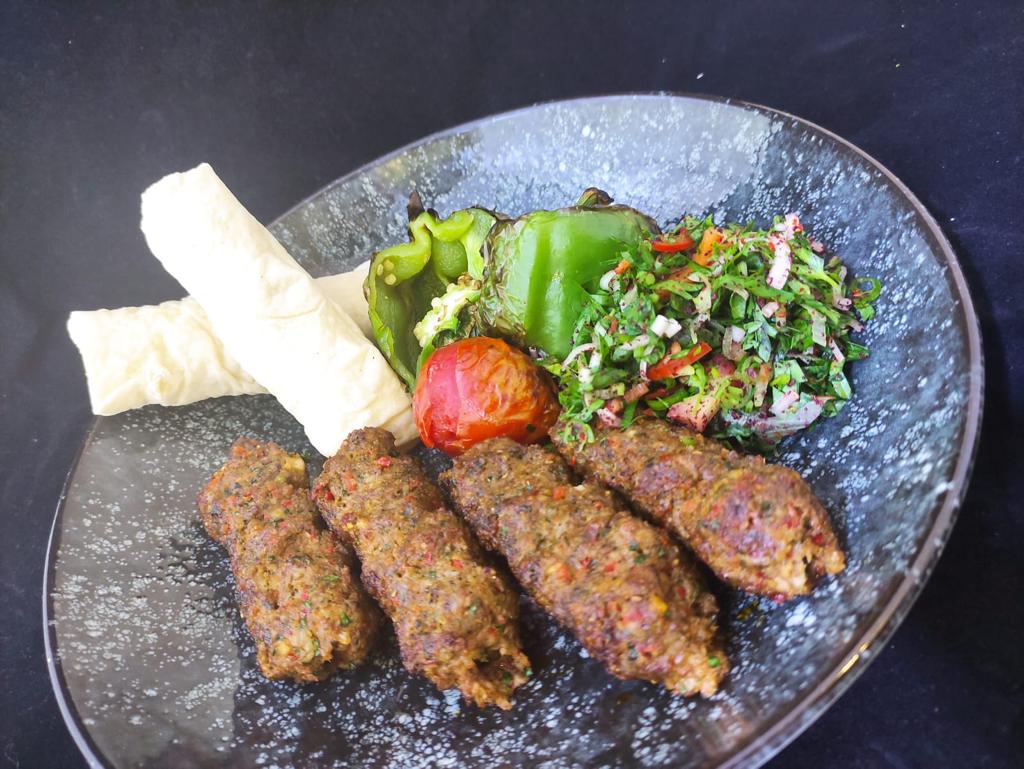
Fatty mince kneaded with fresh green garlic, parsley and red pepper, pressed onto skewers and grilled over charcoal (GI No. 1015).
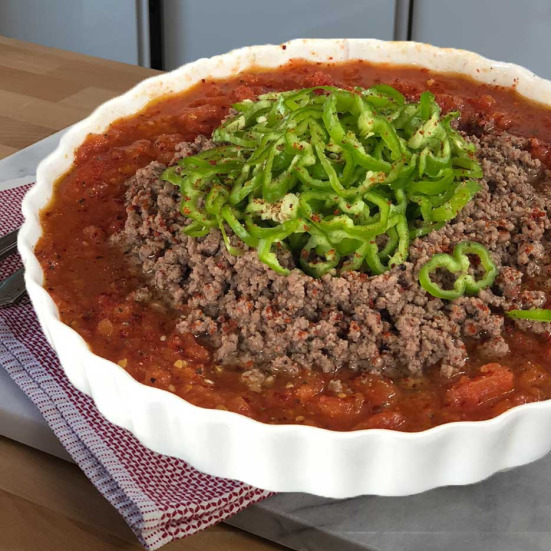
Fire-charred tomatoes crushed into a bed beneath separately pan-fried meat, a registered dish.
Three things define Gaziantep's kebabs: the texture of meat hand-chopped with a zırh, the fact that many kebabs can be made only in certain weeks, and the relationship ember heat builds with the meat. So in this city "kebab" describes not one plate but a family that changes with the season and the cut.
What Sets the Antep Kebab Apart?
The line that separates the Gaziantep kebab from other kebab traditions usually lies in how the meat is handled. The mince comes from the zırh rather than a machine; in most recipes the spice stays limited to salt and red pepper; and the fire is not a flame but a controlled bed of embers. At the same counter the plain tenderloin of küşleme can sit beside the pistachio-enriched mixture of pistachio kebab.
To see the city's wider repertoire of sweets, soups and pastries beyond the kebab, take a look at the Gastronomy page; the detailed recipe for each kebab is reachable from the links above.
Frequently Asked Questions
How many kinds of kebab does Gaziantep have?
This page brings together 17 of Gaziantep's kebab varieties and gathers them into three groups: classic meat and grilled kebabs, seasonal and fruit kebabs, and vegetable and pan kebabs. The city's repertoire is wider still; listed here are the best-known varieties with a detailed page of their own.
Why is Gaziantep a UNESCO City of Gastronomy?
Gaziantep was, in 2015, the first Turkish city admitted to the UNESCO Creative Cities Network as a City of Gastronomy. Its breadth of kebabs, its baklava tradition and the number of its registered regional products are among the main grounds for the title.
What sets the Antep kebab apart from other kebabs?
The key difference is in how the meat is handled: the mince is hand-chopped with a zırh (a wide cleaver) rather than machine-ground, the spice in most recipes stays limited to salt and red pepper, and cooking is done over controlled embers rather than open flame. As a result the meat itself, not the seasoning, comes forward.
When are the seasonal kebabs made?
Desert truffle, garlic, loquat and plum kebabs are made in spring; quince, apple, onion and quince sour ribs in autumn and winter, during the weeks their fruit or mushroom ripens. Most of these kebabs reach the table for only a short part of the year.
Which Gaziantep kebab is the leanest?
Küşleme kebab is made from the fat-free, sinew-free tenderloin cut from beside the lamb's spine; marinated only in salt and olive oil and grilled over embers, it is considered one of the plainest and leanest of the kebabs.