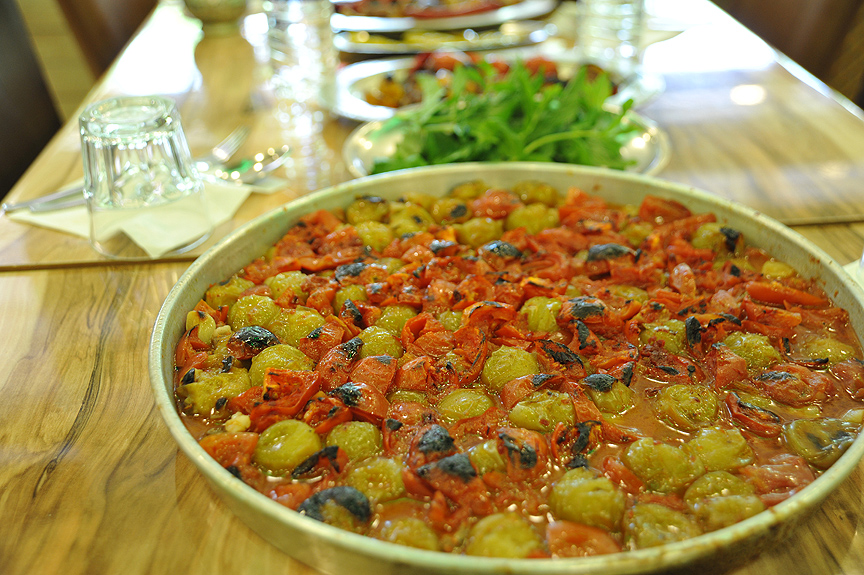
Plum Pan — known in Gaziantep as erik tavası — is a seasonal meat dish unique to Antep cuisine, in which sour green plums, picked still unripe in the first weeks of spring, are cooked together with lamb or meatballs in a single pan. In most kitchens the plum is a sweet fruit; here, in its unripe and sour state, it becomes the body of a savoury dish — a striking example of how Antep makes use of a fleeting seasonal ingredient. In 2021 the dish was granted TÜRKPATENT Geographical Indication status (No. 742), placing it under official protection.
The character of the dish is born from the contrast of two elements: the rich, fatty taste of the meat and the sharp, tart bite of the unripe plum. The two balance each other as they cook; the plum's sourness cuts the weight of the meat, while the meat's fat softens the harshness of the fruit. What results is a pan dish that is neither sweet nor merely sour, but something entirely its own.
This article explores the ingredients that define plum pan, its tight bond with the season, its place in Gaziantep cuisine, and the ritual of how it is eaten at the table.
What Is Plum Pan and What Is in It?
As its name suggests, plum pan is a "pan" dish — the ingredients are not grilled separately on skewers but cooked together in a round tray or pan. Whether finished in the oven or on the stove, the meat and the plums meet in the same vessel and work their way into each other's flavour. In that sense the dish stands apart from the classic skewer kebabs; it belongs instead to Antep's tradition of pan and casserole dishes that pair the season's vegetables and fruit with meat.
Core Components
The components of a traditional plum pan are few but decisive:
- Sour Green Plums: The signature of the dish, and the source of its name, is the sour green plum picked while still unripe in spring — most often the cherry plum (can eriği). At this stage the plum must be firm, juicy and distinctly sour; a ripened, sweetened plum will not do, because it is precisely the raw tartness of the fruit that gives the dish its character. The plum holds some of its firmness as it cooks, lending every bite a tart edge.
- Meat: The dish is traditionally made either with lean cubed lamb or with small meatballs rolled to the size of a plum from minced meat. Both forms are common in the region. The meat needs enough body to carry the plum's sourness; for this reason very lean cuts are avoided in the cubed version, and the mince mixture is kept simple in the meatball version.
- Fresh Garlic and Onion: A distinctive refinement of plum pan is the use of fresh, new-season head garlic that comes up in the same season as the plum. Harvested in spring, fresh garlic gives a softer, more nuanced aroma than dried garlic; having every component of the dish come from the same season is itself part of its logic. The onion, sautéed together with the meat, forms the base of the dish.
A few more ingredients complete the taste: tomato and pepper paste added during the searing stage (grated fresh tomato in some recipes), a pinch of sugar to balance the plum's acidity in measured fashion, butter or oil, salt and black pepper. This small balance between the sharpness of the plum and the roundness of the sugar shapes the whole character of the dish.
The Geography of the Plate
Plum pan is served hot from the pan, with a thick sauce drawn from the meat's juices, the plum's tartness and the paste. The traditional accompaniment is the geographically registered Antep tırnaklı pidesi (Antep nail-marked flatbread) or lavash bread; the bread is used to wipe up the tart sauce left on the plate. Rice pilaf may be served alongside as an option.
The History and Cultural Origins of Plum Pan
The origin of plum pan must be sought in the close relationship Gaziantep cuisine maintains with the seasons. Antep cooking is built on making use, without waste, of ingredients that are available only briefly at certain times of the year; plum pan is the springtime example of this outlook. Turning a plum that is still unripe — picked raw from the tree — into a meat dish is the product of a culinary mindset that does not see fruit merely as a sweet snack.
An Unripe Fruit Joins the Meat Table
What makes plum pan remarkable is the unusual use of the plum. In most kitchens the plum is eaten once it has ripened and sweetened; in Antep, the opposite — its raw, sour state — becomes the core ingredient of a meat dish. This approach is part of the region's tradition of using fruit as a source of acidity in meat dishes; fruit-and-meat dishes such as quince kebab are examples of the same idea falling in a different season. Plum pan is this tradition interpreted through spring and the sour plum.
A Dish Dictated by the Season
Plum pan is not a dish whose recipe can be made year-round; its very existence depends entirely on the plum's season. Since sour green plums are available only in spring, and only for a short while, the dish is naturally confined to this period. This seasonal limitation turns plum pan from an everyday meal into a flavour awaited once a year.
Gaziantep Erik Tavası / Antep Erik Tavası was registered by TÜRKPATENT as a Geographical Indication in 2021. Registration number is 742, the application date 27.06.2020 and the registration date 30.04.2021; the registrant is the Gaziantep Development Foundation (Gaziantep'i Geliştirme Vakfı), and the product group is "Meals and soups." The registry document defines the dish as a pan dish produced in spring, the season of the cherry plum, and served with Antep nail-marked flatbread or lavash.
A Home Dish on the Verge of Being Forgotten
In recent years, plum pan has been counted among the "fading" Antep home dishes. Being a traditional pan dish cooked in homes during its season, rather than a restaurant staple available on demand, it has remained one of the city's lesser-known flavours. It is precisely for this reason that the geographical indication registration serves to record the dish's recipe and name, securing its transmission to future generations.
The Tradition and Ritual of Plum Pan in Gaziantep
Plum pan belongs to the Antep home kitchen as a dish remembered with the arrival of the season and cooked within a limited window. It is not a quick meal or a year-round habit; it is a flavour that comes with spring and is left to the following year once its season passes.
A Herald of Spring
In Gaziantep, plum pan is the dish of April and May, when sour plums begin to appear in the markets. Because the plum's season is short, the dish too is cooked within this window of a few weeks. In that sense plum pan is like a signal announcing the change of season at the table; the sour plum entering the pan is the tangible springtime expression of Antep cuisine.
The Place of the Sour-Fatty Balance at the Table
The pronounced sourness of plum pan places it at the Antep table as a refreshing, appetite-opening dish. Alongside Antep's heavy, fatty meat dishes — such as the full-bodied pistachio kebab — the tart taste of plum pan freshens the palate. Balancing meat with the sourness of fruit is a common habit in the region; plum pan is the spring-specific, pan-shaped example of that balance.
The Bread-Dipping and Wiping Tradition
On an Antep table, plum pan turns into a "bread-dipping" dish toward the end. The meaty, paste-rich and tart sauce left in the pan is wiped up with pieces of warm Antep pita or lavash. This act of finishing the plate — also seen at the Ali Nazik kebab table — is an extension of the city's wider "leave nothing on the plate" culture, as in so many of its dishes.
The Dish's Place in Daily Cuisine
In the region's order of things, plum pan is not a dish cooked at every hour of the day, but a special plate brought by the season. Unlike Antep's well-known year-round flavours such as Gaziantep lahmacun, plum pan is remembered only in spring; this gives it a value of its own for those who wait for its season.
Why You Should Try It
A single bite of plum pan tells the relationship between Antep cuisine and the seasons in one plate: first the sharp sourness of the unripe plum arrives, then the full taste of the meat and the depth of the paste open up, and finally the balance rounded by a pinch of sugar appears. In this dish the plum is used not as a sweet fruit but as a source of acidity beside the meat, offering a palate experience not easily found in other cuisines. If your path takes you to Gaziantep in spring and you see a pan cooked with sour green plums at your table — know that you are facing a flavour bound tightly to its season, one that can be made for only a few weeks each year.
Frequently Asked Questions
What is plum pan?
It is a seasonal meat dish unique to Gaziantep cuisine, in which sour green plums picked still unripe in spring are cooked together with lamb or meatballs in a single pan.
What is in plum pan?
It uses sour green plums (most often the cherry plum), cubed lamb or meatballs, fresh head garlic, onion, tomato and pepper paste, a pinch of sugar and oil.
Does plum pan have a geographical indication?
Yes. It was registered by TÜRKPATENT as a Geographical Indication in 2021; the registration number is 742, the application date 27.06.2020 and the registration date 30.04.2021.
When is plum pan made?
Because sour green plums are available only briefly in spring, the dish is confined to April and May and can be made for only a few weeks each year.
How is plum pan served?
It is served hot from the pan, with Antep nail-marked flatbread or lavash. The bread is used to wipe up the tart sauce left on the plate.