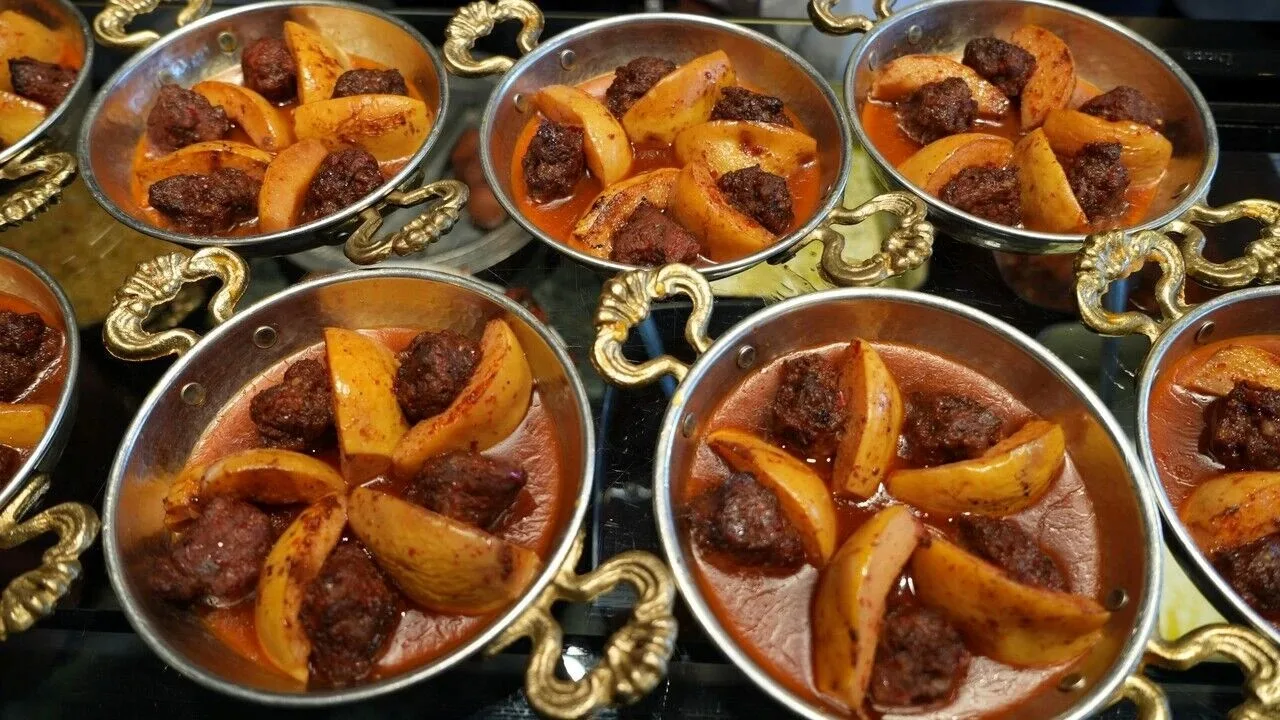
Quince kebab (Turkish: Ayva Kebabı) is one of Gaziantep cuisine's most unusual winter kebabs, placing quince beside the meat rather than in a dessert. Quince ripens in autumn and is threaded onto skewers with cubed lamb or fatty mince, grilled over charcoal or wood fire, and most often finished with a pomegranate-molasses sauce. Emerging as the weather turns cold, it counts among the seasonal specialties of the winter months when quince is abundant — a characteristic Antep idea that brings fire-warmed meat and tart fruit together on one plate.
The character of the dish springs from the harmony of two seemingly opposed components: the firm, tart quince that ripens in the cold months and the rich, fatty intensity of fire-grilled lamb. Softening as it cooks, the quince lends a gently sweet-sour note that balances the fat of the meat, while pomegranate molasses adds the plate's final edge.
This article explores the ingredients that define quince kebab, its origins in Gaziantep cuisine, and its place — along with the rituals of its consumption — at the city's winter table.
What Is Quince Kebab and What Is in It?
Quince kebab is a kebab in which sliced quince is cooked together with meat. Its most widespread form in the region is the skewer kebab: a slice of quince and a piece of meat are threaded in turn onto hand-forged square skewers and grilled over charcoal fire. In home kitchens, oven-baked tray versions also appear; in some recipes the quinces are halved and hollowed out, then filled with a browned-meat stuffing and baked. In either method, the unchanging principle is that the quince is cooked until softened and sweetened, and the meat until it releases its juices and draws them back in.
Core Components
The essential components of a traditional quince kebab are:
- Quince: The signature of the dish is the firm, tart quince that ripens in the winter months. The quinces are usually washed in vinegar water and rested briefly to keep them from browning, then sliced. As it cooks and softens, the quince gives the kebab both a faintly sweet note and a refreshing acidity that cuts the fat of the meat; in this sense the quince is not a garnish but the component that defines the kebab's character.
- Meat: The body of the kebab is lamb. On the skewer it is most often cubed lamb (kuşbaşı) or fatty mince kneaded with salt and shaped into balls. The fat ratio matters; the fat that renders during cooking both keeps the meat from drying and works into the pores of the quince, binding the two components together. As in mince-based Antep kebabs such as pistachio kebab, preparing the meat carefully by hand determines the texture of the mix.
- Fat and Spice: Both for cooking and in the stuffing, butter or clarified butter (sadeyağ) is used together with oil. Spicing is kept measured: salt and black pepper are essential, and some preparations add tomato paste, fresh peppers and the region's pepper flakes. The aim is to bring out the quince's distinctive aroma without masking it with spice.
The final touch that completes the plate is most often pomegranate molasses (nar ekşisi). The kebab, taken off the fire, is brought together with a sauce made from pomegranate molasses; this tart layer joins the quince's sweetness to give the kebab a balanced flavour profile.
The Geography of the Plate
After cooking, quince kebab is slid off the skewers and arranged on long, narrow plates. In traditional practice the kebab is rested for a while in a tinned copper vessel over a low flame; this resting lets the juices of the quince and meat and the pomegranate molasses seep into one another. Thin yufka or pita bread is served alongside, with onion, sumac and charred peppers as a refreshing accompaniment. It shares the same table logic as Gaziantep's other winter kebabs, such as onion kebab.
The History and Cultural Origins of Quince Kebab
The origins of quince kebab lie in Gaziantep cuisine's tradition of using fruit in meat dishes. Antep cuisine is known not only for its desserts but also for tart meat preparations that carry fruit into the main course; the quince entering a kebab is a winter-specific extension of this broader sensibility.
A Dessert's Fruit, Beside the Meat
In Turkish cuisine quince is most often associated with sugary preparations such as quince dessert. Quince kebab, however, reveals a wholly different role for the fruit: here the quince is not a sweetening fruit but a tart component that balances the fat of the meat. Gaziantep's masters carrying quince into a savoury kebab is a striking example of the city's skill in using an ingredient in unexpected ways.
A Kebab Defined by the Season
What makes quince kebab seasonal is the quince itself. Quince ripens in autumn and remains available through the winter; for this reason the kebab too has settled in as a winter dish that emerges as the weather cools. This is why, in Gaziantep's cold months, kebab orders shift toward quince and onion: the regional kitchen turns the season of the ingredient into the calendar of the table. In this sense quince kebab is a concrete example of the city's tradition of "eating in season."
Part of the Antep Kebab Tradition
Quince kebab shares the same tradition as the kebabs of Antep's rich repertoire that pair meat with a different component. The region holds many kebabs — such as six-paste kebab or liver kebab — each building its own base and accompaniment; what sets quince kebab apart is the placement of fruit beneath or beside the meat, and its dependence on the season. This makes it one of the kebabs specific to the city's winter kitchen.
The Tradition and Ritual of Quince Kebab in Gaziantep
Quince kebab is a seasonal delicacy awaited in Gaziantep with the arrival of winter. It has no place at the table through summer; it appears at the grill counters and kebab houses in the period when quince ripens. This seasonality makes it less an everyday kebab than a taste specific to a particular time of year.
The Seasonal Plate of Winter
In Gaziantep, quince kebab is a winter kebab whose demand rises as the weather turns cold. Among the kebabs that come to the fore in the cold months at the city's kebab houses, it is named alongside onion kebab. A widely held view in the region is that the meeting of the winter fruit quince and the fire makes for a season-appropriate, satisfying plate; for this reason quince kebab is counted among the regional kebabs that "meet the fire" in winter.
The Fire and Copper Tradition
In traditional preparation, quince kebab is cooked over charcoal or wood fire on hand-forged square skewers. The most critical moment of cooking is for the quince to cook without burning and without losing too much of its juice; the master must keep meat and quince in balance over the same fire. Resting the kebab, once off the fire, in a tinned copper vessel reflects the region's deep-rooted copperware culture; copper holds heat slowly and evenly, allowing the kebab's flavours to settle.
Its Place at the Ramadan and Winter Table
When it coincides with the winter months, quince kebab also becomes one of the prominent plates of Gaziantep's Ramadan tables. At the iftar meal, the pairing of meat and quince is favoured as a choice that is both filling and palate-refreshing. In this period the kebab turns into a seasonal signature taste that draws the interest not only of locals but also of the food enthusiasts visiting the city.
The Dish's Place in Antep Cuisine
In the regional order, quince kebab is not an everyday dish available in every season but a kebab bound to the calendar. It is sought out when its season comes and talked about when it reaches the table; it is one of the representatives, at the kebab table, of Gaziantep cuisine's approach of binding the ingredient to its season and the season to the table.
Why You Should Try It
A single bite of quince kebab carries to the palate the unexpected balance Gaziantep strikes between fruit and meat: the sweet-sour taste of fire-softened quince, the fatty intensity of the lamb, and the final edge of pomegranate molasses all arrive together. This is a season-bound kebab that can be tasted only in the winter months when quince ripens. For those curious how Gaziantep uses quince not in a dessert but at the meat table, quince kebab is a taste that tells the city's winter kitchen on a single plate.
Frequently Asked Questions
What is quince kebab?
It is a Gaziantep kebab in which sliced quince is cooked together with cubed lamb or fatty mince. Its most widespread form threads quince and meat in turn onto skewers grilled over charcoal fire.
What is in quince kebab?
The core components are the firm, tart quince that ripens in winter, lamb (cubed or fatty mince), butter or clarified butter, and measured spice. The plate is most often finished with pomegranate molasses.
Why is quince kebab considered a winter dish?
Quince ripens in autumn and stays available through winter, so the kebab emerges as the weather cools. This is why Gaziantep's cold-month kebab orders shift toward quince and onion.
How is quince kebab cooked and served?
Traditionally it is grilled over charcoal or wood fire on hand-forged square skewers, then rested in a tinned copper vessel. It is served with yufka or pita, onion, sumac and charred peppers.
What role does the quince play in quince kebab?
Here the quince is not a garnish but the component that defines the kebab's character. Softening and sweetening as it cooks, it adds a refreshing acidity that balances the fat of the meat.