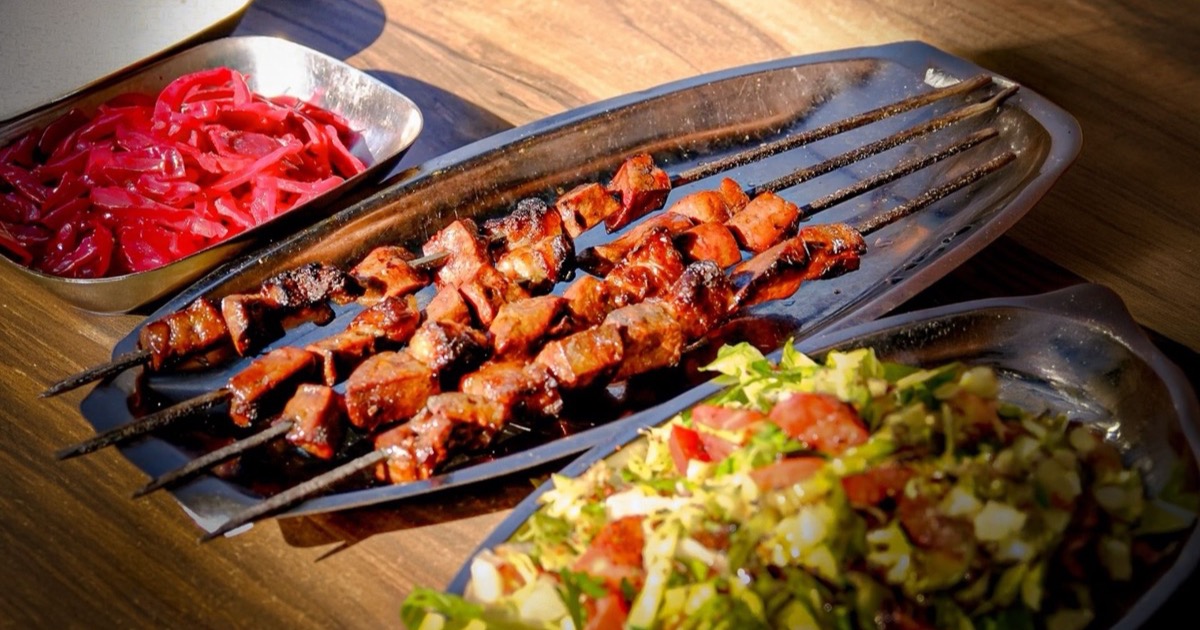
Liver Kebab — known locally as cağırtlak or cartlak — is Gaziantep's most deeply rooted morning kebab, in which lamb liver, heart, lung, kidney and tail fat are threaded onto skewers without any prior marinade and cooked over an ember fire. Contrary to common belief, it is not made of liver alone; it is a "harmony of organ meats" in which different cuts of offal meet tail fat. In 2021 it received a Geographical Indication (mahreç işareti) registration from TÜRKPATENT (No: 840), placing its regional identity under official protection.
The secret of the dish lies in craftsmanship: fresh offal, tail fat that melts and keeps everything moist, and the masterful management of embers whose flame has died down. The meat is not marinated beforehand; yet the cumin, red pepper and sumac added during cooking and at serving are indispensable elements that crown the flavour of the offal.
This article explores the ingredients that define liver kebab, the history behind the name "cağırtlak," and its unique place in Gaziantep's breakfast culture.
What Is Liver Kebab and What Is in It?
Liver Kebab, known in Antep as "cağırtlak," is in fact a far richer offal kebab than the word "liver" alone suggests. Fresh organ meats are threaded onto special thin liver skewers (tike şişi) and cooked over embers with pieces of tail fat tucked between them. Because standard thick kebab skewers would tear these delicate organs, only these thin steel skewers are used in the craft of cağırtlak. Since the offal is cut into small pieces (tike), it cooks quickly over embers whose fierce flame has subsided; the master's task is to keep these fragile textures balanced — melting the fat without drying the meat.
Core Components
- Fresh Offal: The foundation of cağırtlak is lamb liver above all, along with the heart, lung and kidney. These four organ meats are defined together in the official geographical indication registration document as well. In this respect the dish offers a more layered flavour than the word "liver" implies; the distinctive texture and taste of each organ comes together on the skewer, balanced by the tail fat.
- Tail Fat: The tail fat threaded between the pieces of offal is the lifeblood of the kebab. As it melts over the embers it continually moistens the offal, prevents it from drying out, and gives it a soft, full texture. Without tail fat, the liver hardens instantly over the embers.
- The Balance of Spices: In traditional cağırtlak the offal is not marinated beforehand and goes onto the skewer unseasoned. But once the kebab is on the fire, and at serving, cumin, red pepper, powdered sumac and salt are added over it. Salt is added not at the start of cooking — where it would draw out the offal's juices and toughen its texture — but just before the kebab comes off the fire, or as the wrap is being made. Cumin in particular is the signature element that aids the digestion of liver kebab and crowns its flavour.
On the serving plate, liver kebab is most often presented with warm flatbread, fresh greens (parsley, mint), raw onion and, if desired, hot peppers. It is a plain yet intense breakfast plate.
A common misunderstanding is to assume cağırtlak is the same as standard liver kebab. Yet cağırtlak (cartlak), as stated in the official registration document, is a whole of organ meats that brings together not only the liver but also the heart, lung and kidney, along with the tail fat. This variety gives it a far deeper and more layered taste than a plain liver kebab.
The History and Cultural Origins of Liver Kebab
The roots of cağırtlak kebab reach into Gaziantep's centuries-old culture of meat and fire. Making use of offal and cooking it over embers is part of a very old tradition in the region.
A Past Rooted in the Tradesman's Tradition
In Gaziantep, the roots of liver and cartlak kebab culture lie in the city's centuries-old life of tradesmen and craftsmen. The habit of eating liver in the early hours of the morning grew out of the need of the city's artisans, labourers and merchants to begin the day strong and energetic; over the centuries it turned into a deeply rooted tradesman's ritual. In this sense cağırtlak is not merely a dish, but a tradition in which Antep's culture of work and of the table are intertwined.
The Kebab of the Tabakhane and the Morning Ritual
Gaziantep's historic Tabakhane (tannery) district is remembered as the birthplace of this morning kebab ritual. According to local accounts, workers who began their labour in the tanneries (leather-working workshops) under harsh conditions before sunrise during the Ottoman era started eating liver with the first light of day — both to gather intense physical strength and to mask the sharp smell of the raw hides they worked. In time this tradesman's habit grew into the shared culture of the whole city, while the Tabakhane district remained the heart of the cağırtlak craft.
The Official Registration Process
Cağırtlak kebab received a Geographical Indication (mahreç işareti) registration from TÜRKPATENT in 2021 in order to protect its region-specific content and method of cooking. The registration number is 840, and the applying body is the Gaziantep Development Foundation. The dish's official registered name is "Gaziantep Cağırtlak Kebabı / Antep Cağırtlak Kebabı / Gaziantep Cartlak Kebabı / Antep Cartlak Kebabı." This registration protects not only the name of the dish, but also the types of offal used, the proportion of tail fat, and the ember-cooking method, within the framework of regional standards.
The Tradition and Ritual of Liver Kebab in Gaziantep
Liver kebab stands out through the feature that most sets it apart from other kebabs: it is not an evening meal but a morning kebab.
Antep's Morning Ritual
In Gaziantep, cağırtlak is eaten especially in the early hours of the morning, at breakfast time. In this respect it is an important part of the city's early-rising table culture; like beyran, which is also eaten in the early morning, cağırtlak too is an expression of the tradition of making a strong start to the day. To begin the day with fresh liver cooked over the embers is, for the people of Antep, more than a habit — it is a ritual.
Managing Embers Past Their Fierce Heat
There is a vital technical subtlety in cooking cağırtlak: the liver is not cooked for a long time over a slow, ash-covered fire; left over a low heat, the liver loses its juices, dries out and toughens. Instead, the kebab is cooked quickly — within six to eight minutes — over "embers past their fierce heat" (harı geçmiş köz), whose flame has died down but which still hold their warmth, with the skewers turned constantly in the same direction. This method allows the tail fat to melt and moisten the offal, while the outside is sealed and the inside stays juicy and tender.
The Richness of a Simple Table
Cağırtlak sets an unpretentious but filling table. It is served with plenty of greens, raw onion, warm bread and, most often, a glass of şalgam (fermented turnip juice) or ayran. It shares the same tradition as Antep's other tail-fat kebabs, such as onion kebab: the meeting of fat and meat in the right balance.
Why You Should Try It
A single bite of cağırtlak carries to the palate the whole spirit of sitting beside the embers in the early morning: the softness of fresh liver, the sweet texture the melting tail fat leaves on the lips, the fine smoke of the embers, and the aroma of the cumin scattered over it, all come together. This is a bare and honest flavour, unconcealed by marinades and heavy sauces — the purest expression of Antep's respect for offal and for fire. For anyone who wants to truly know Gaziantep, tasting cağırtlak beside the embers early one morning is one of the city's most authentic experiences.
Frequently Asked Questions
What is liver kebab (cağırtlak)?
It is a morning offal kebab native to Gaziantep, in which lamb liver, heart, lung, kidney and tail fat are threaded onto thin skewers without any prior marinade and cooked over an ember fire.
Is cağırtlak only liver?
No. As stated in the official registration document, cağırtlak is a whole of organ meats that brings together not only the liver but also the heart, lung and kidney, along with the tail fat.
Does liver kebab have a geographical indication?
Yes. Cağırtlak kebab received a Geographical Indication (mahreç işareti) registration from TÜRKPATENT in 2021 (No: 840); the applying body is the Gaziantep Development Foundation.
When and with what is liver kebab eaten?
It is a morning kebab eaten in the early hours, at breakfast time. It is served with warm flatbread, fresh greens, raw onion and, most often, şalgam or ayran.
Why is cağırtlak cooked over "embers past their fierce heat"?
Over a low heat the liver loses its juices and toughens; so it is cooked quickly within six to eight minutes over embers whose flame has died down but which still hold their warmth, with the skewers turned constantly.