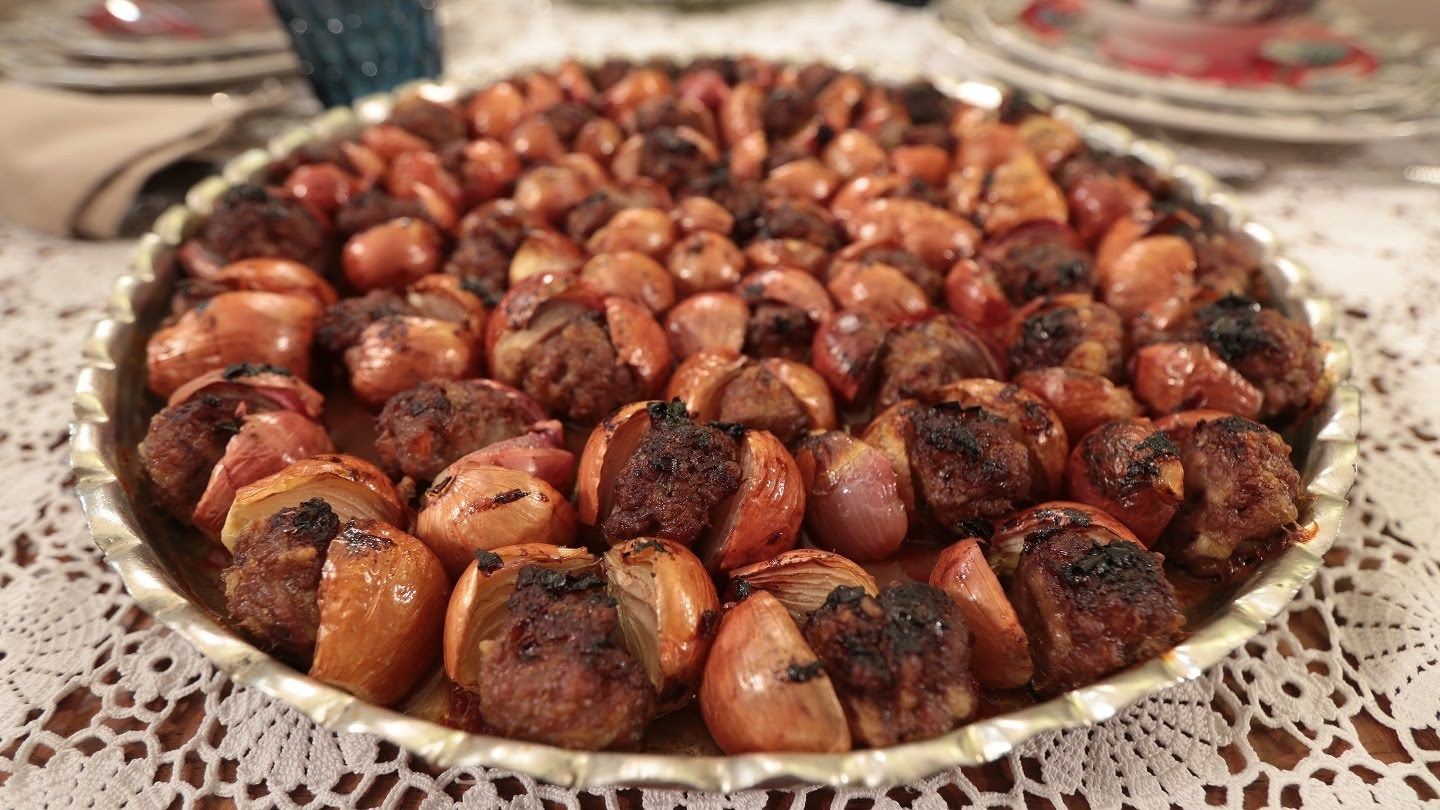
Onion Kebab (onion kebab) is a kebab unique to the winter months of Gaziantep cuisine, in which small onions are stuffed with fatty lamb mince and slowly cooked in the sweet-and-sour syrup of pomegranate molasses. The element that sets the Antep style apart from other regions is the pomegranate molasses that gives the dish its character; the sweetness of the onion, the fat of the meat and the tartness of the pomegranate are balanced on a single plate. It is a work of mastery that joins the smoke of the grill with the patience of the oven.
The soul of the dish lies in the harmony of three essentials: the small onions that turn meltingly sweet as they cook, the well-balanced fatty lamb mince, and the pomegranate molasses that ties the whole plate together. This trio is one of the most elegant examples of Antep cuisine's understanding of "bringing the sour together with the sweet."
This article explores the ingredients that define onion kebab, its origins in Gaziantep cuisine, its place at the city's winter table, and its registration status.
What Is Onion Kebab and What Is in It?
Onion Kebab, contrary to what its name might suggest, is a kebab in which the onion is not merely a garnish but forms the very body of the dish. Here the onion acts as a vessel that carries the meat, a fruit that sweetens as it cooks, and a sponge that absorbs the tartness of the sauce. Contrary to a common assumption, it is not only an oven dish; in the authentic Antep method it is first threaded onto skewers and seared over charcoal embers on the grill, then drawn onto a copper tray and rested in the oven.
Core Components
Three components form the backbone of traditional Gaziantep onion kebab:
- Small Onions: The body of the dish is made of small, sweet onions. As they cook over a gentle heat, these little onions lose their sharpness and reach an almost caramelized sweetness. The onions are opened in the middle so that mince can be placed inside; part of their outer skins is kept on so they do not fall apart while cooking.
- Fatty Lamb Mince: The mince placed between or over the onions is prepared from lamb with sufficient fat; the fat balance matters so it does not dry out and toughen while cooking. When the meat is hand-chopped with the zırh (curved rocker blade) also used in making Gaziantep lahmacun, it gains a fuller texture. In keeping with the traditional "plain mince" approach, nothing is added to the mixture beyond salt, black pepper and a little water to soften it; the purity of the meat must not overshadow the aromatic balance of the onion and pomegranate molasses.
- Pomegranate Molasses: This is the signature of the Antep style. The pomegranate molasses syrup, prepared by diluting it with water, is drizzled over the kebab before it goes into the oven; as the kebab rests in the steam of this tart liquid, the sourness works its way into the onion and the meat. This adds a tart, fruity depth that balances the sweetness of the onion and the fat of the meat. When regional products such as the geographically indicated Oğuzeli pomegranate molasses from Gaziantep's Oğuzeli district are used, the aroma and consistency of the sauce are markedly enriched.
What completes the plate is the dark sauce that gathers beneath the onions — made of pomegranate molasses, meat juices and the melted onion syrup. Wiping up this sauce with bread is an inseparable part of the dish.
A Dish of Slow Fire
Onion Kebab is not a fast-cooking skewer kebab; it draws its character from a patient relationship with fire. In the traditional Antep method, the kebab is first threaded onto skewers and seared over charcoal embers on the grill; at this stage the onions soften slightly and the meat locks in its flavour on the surface. The kebab is then drawn onto a copper tray, drizzled with water-diluted pomegranate molasses, covered, and "rested" in the oven. During this resting stage the sharpness of the onions turns to sweetness, the meat releases its fat, and the tartness of the pomegranate molasses works its way to the heart of the onion. The refinement that transforms the dish from a simple plate of meat into a balanced flavour composition lies precisely in the mastery of this grill-to-oven transition.
Onion Kebab is known in several cities of Southeastern Anatolia; but the defining element that distinguishes the Gaziantep style from the others is pomegranate molasses. While in neighbouring cuisines the dish is often made of nothing more than onion and meat, the pomegranate molasses added in Antep gives the kebab a sweet-and-sour balance and a fruity character. This is a typical example of Antep cuisine's tradition of skilfully weaving sour flavours (unripe-grape verjuice, sumac, pomegranate) into its dishes.
The History and Cultural Origins of Onion Kebab
The origins of onion kebab lie in Gaziantep's winter cuisine and in the tradition of treating the onion as a main ingredient. The onion is a long-keeping, abundant and inexpensive winter product; in this sense the dish carries the quality of a "resourceful" meal that economically flavours meat during the winter months.
A Product of Winter Cuisine
In regional accounts, onion kebab is identified with the cold months when the onion is at its sweetest and most durable. In summer the fresh vegetables give way, in winter, to storable onions, garlic and dried products; onion kebab too is a product of this seasonal transition. Turning a small amount of meat into a filling and impressive plate with plenty of onion reflects Antep cuisine's skill at creating abundance from modest ingredients.
A Regional Flavour, an Antep Interpretation
Though onion kebab is one of the shared flavours of Southeastern Anatolia, in Gaziantep cuisine it is prepared with a refinement all its own. Among its interpretations, which vary from region to region, Gaziantep's stands out with the sweet-and-sour balance brought by pomegranate molasses. In this respect, onion kebab shares the same flavour philosophy with Antep's other sour-meat dishes — for example, the char-grilled-vegetable-based altı ezmeli kebap: balancing the heaviness of meat with the freshness of a fruit or vegetable.
Registration Status
Onion Kebab is one of the regional products being evaluated within Gaziantep's geographical indication work. Under the name Antep Onion Kebab, an application for a Geographical Indication (mahreç işareti) has been filed with TÜRKPATENT by the Gaziantep Development Foundation, and the registration process is ongoing. Once this process is complete, the regional recipe and method of production of the dish will also come under official protection.
The Tradition and Ritual of Onion Kebab in Gaziantep
In Gaziantep, onion kebab is an everyday but labour-loving home dish. More than the quick fire of the grill, it requires the patient heat of the oven or stove; in this sense it is a shared plate that "cooks while you wait."
A Dish of the Winter Table
It is traditionally cooked in the cold months, especially at evening tables where the family gathers. The sweetness of the onion and the warm tartness of the pomegranate molasses offer a filling, warming taste fit for winter evenings. In Antep homes, onion kebab is seen as a "turn-of-season" dish that takes the place of summer's light vegetable meals.
The Meeting of Bread and Sauce
The most beloved aspect of onion kebab is the pomegranate-molasses sauce that gathers at the bottom of the plate. This dark, sweet-and-sour sauce is wiped up with pieces of warm flatbread or pita. The Antep table's tradition of "leaving nothing on the plate" comes to life here in its most delicious form. It is often accompanied by a bowl of ayran or a simple bean salad.
The Mastery of Few Ingredients
Onion Kebab is a dish that requires no expensive ingredient but demands the right cooking skill. It draws its strength from patiently sweetening the onion and adding the pomegranate molasses at the right moment. In this respect, the dish is a reflection of Antep cuisine's character, which prizes balance and patience over ostentation.
Why You Should Try It
A single spoonful of onion kebab leaves an unexpected harmony on the palate: the soft sugar of onion sweetened over a slow fire, the full fat of lamb, and the lively tartness of pomegranate molasses are balanced all at once. This is neither a purely meat nor a purely vegetable plate; it is a middle path between the two — one that warms in winter yet refreshes with its tartness. For anyone who wants to know Gaziantep's meat dishes not only through the kebab skewer but also through patient home cooking, onion kebab is a flavour that must be tried in its season. Just like the Ali Nazik kebab that reflects the nobility of the eggplant, onion kebab too is the most magnificent winter signature of Antep's art of elevating meat with seasonal riches.
Frequently Asked Questions
What is onion kebab and where does it belong?
It is a kebab unique to the winter months of Gaziantep cuisine, in which small onions are stuffed with fatty lamb mince and cooked with pomegranate molasses.
What is in onion kebab?
It has three core components: small onions, fatty lamb mince and pomegranate molasses. Only salt, black pepper and a little water are added to the mince.
What sets the Antep-style onion kebab apart from others?
The defining element is pomegranate molasses. It adds a tart, fruity depth that balances the sweetness of the onion and the fat of the meat, giving the kebab its Antep character.
How is onion kebab cooked?
It is first threaded onto skewers and seared over charcoal embers, then drawn onto a copper tray and rested in the oven over a slow fire with water-diluted pomegranate molasses.
Does onion kebab have a geographical indication?
Under the name "Antep Onion Kebab," a Geographical Indication (mahreç işareti) application has been filed with TÜRKPATENT by the Gaziantep Development Foundation; the registration process is ongoing.