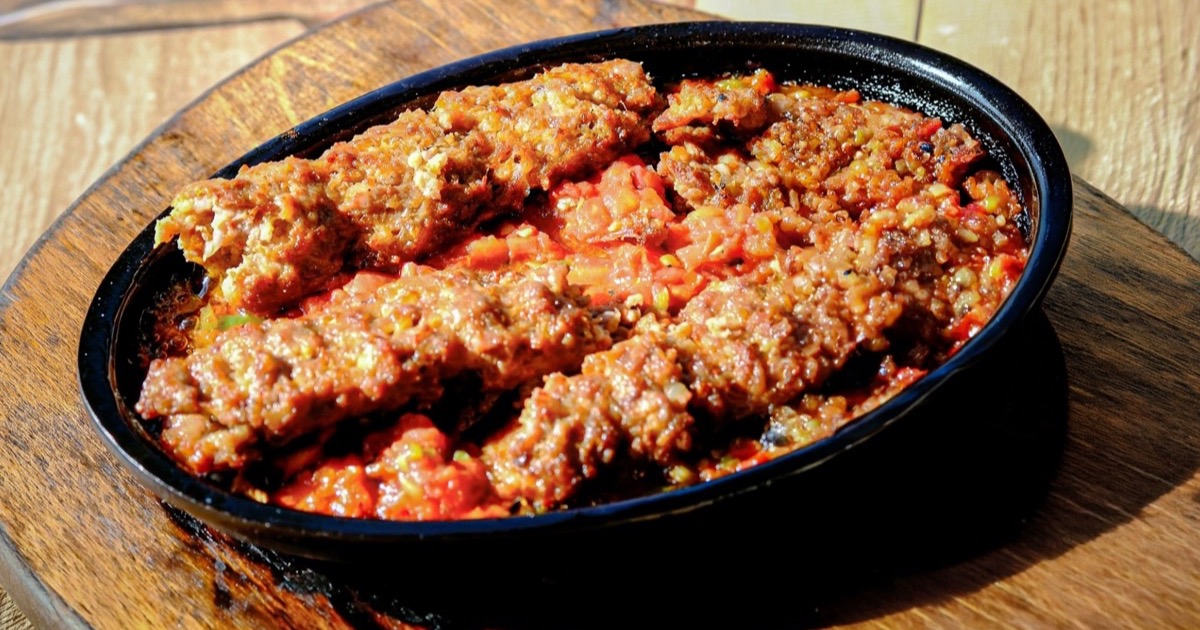
Altı ezmeli kebap is a traditional Gaziantep kebab served by laying char-grilled lamb over a smoky paste of fire-roasted tomatoes and green peppers. Its name means "the one with paste underneath": the meat rests on this char-grilled bed and is tasted, in every bite, together with the soft, sweet and smoky paste beneath it. In 2021 it was granted TÜRKPATENT Geographical Indication status (No. 873), placing its regional identity under official protection.
The character of the dish is born from the meeting of two layers: the sweet, smoky base of tomatoes and peppers softened over the coals and the direct, intense flavour of meat grilled over fire. This simple yet balanced pairing is one of the purest expressions of Antep's mangal (grill) culture.
This article explores the ingredients that define altı ezmeli kebab, the meaning of its name, its origins in Gaziantep cuisine, and its place at the city's table.
What Is Altı Ezmeli Kebab and What Is in It?
Altı ezmeli kebap is a kebab made of grilled meat laid over a bed of char-grilled vegetable paste. The dish's constant is the char-grilled vegetable paste beneath the meat; the meat on top may be prepared either cubed (in chunks) or minced.
Core Components
Two essential layers form the body of the traditional altı ezmeli kebab:
- The Char-Grilled Paste (the "underneath"): This is the signature of the dish. Ripe tomatoes and green peppers are charred directly over the coals until their skins blacken; the tomatoes are then peeled and mashed and combined with finely chopped green pepper and salt. This paste carries the smoky-sweet aroma the embers give it. When regional tomatoes such as the Sof tomato — itself a distinctive value of the Gaziantep geography — are used, the density and aroma of the paste increase noticeably.
- The Grilled Meat (the "top"): According to the official registration, the dish uses male mutton together with its inseparable flavour partner, tail fat. In the cubed version, skewers are threaded with careful alternation — one or two pieces of meat, then a piece of tail fat; in the minced version, the meat and tail fat are chopped together with the zırh (curved rocker blade) also used in making Gaziantep lahmacun. Tail fat is the most critical component, preventing the meat from drying over the coals and giving the kebab its succulent texture. The meat is threaded onto skewers and cooked over charcoal embers.
When the kebab is done, the hot pieces of meat are laid over the char-grilled paste; per the official registration, it is served with finely chopped fresh parsley and, optionally, black pepper. The base of the paste is a simple foundation of tomato, green pepper and salt; no industrial tomato paste is used. In some home and master recipes, pounded fresh garlic or red pepper flakes are also added to the char-grilled paste, lending a regional depth to the aroma — yet the essence of the registration is a plain taste in which the pure flavours of ember, meat and tomato come to the fore.
Cubed or Minced?
The two main variations offer two different textural experiences over the same paste base. In the cubed kebab, the meat — cut into small pieces — chars lightly on the outside while staying juicy within; here the meat's own texture and the pleasure of the bite come forward. In the minced kebab, the more finely worked meat blends more fully with the char-grilled paste in every mouthful, creating a softer richness on the palate. Whichever is chosen, the paste beneath stays the same; only the texture of the meat's relationship with that paste changes.
The name describes the dish's serving logic directly. "Altı" means the layer beneath the meat; "ezme" refers to the char-grilled, mashed tomato-and-pepper mixture. In other words, the meat is built upon a bed of paste and is tasted together with it in every bite. The name is as clear and local as the recipe itself — summing up the structure of the kebab in a single adjective.
The History and Cultural Origins of Altı Ezmeli Kebab
The origins of altı ezmeli kebab reach into Gaziantep's centuries-old culture of fire and the grill. In Southeastern Anatolian cuisine, cooking meat over the embers and serving it with char-grilled vegetables is a deep-rooted tradition; altı ezmeli kebab is a form of this tradition matured around the tomato.
The Arrival of the Tomato in Anatolia and the Birth of the Paste
The dish's present form is directly tied to the spread of the tomato in Anatolian cuisine. Originating in the Americas, the tomato entered Ottoman lands in the 17th–18th centuries, and its widespread culinary use took root in the 19th century. Accordingly, it can be said that altı ezmeli kebab, built on a char-grilled tomato paste, took its known shape in a relatively recent period, from the meeting of Antep's grill tradition with tomato culture. In this sense the dish is not "ancient" — but it is a distilled heritage of Antep's mastery of meat and fire.
A Regional Expression of Grill Culture
In Gaziantep cuisine, the working of meat is a craft in itself. Altı ezmeli kebap is an unostentatious but skill-demanding example of this craft: it carries neither a rich inner filling like pistachio kebab nor a complex balance of spices. Here the mastery lies in setting the heat of the embers correctly, cooking the meat without drying it, and char-grilling the paste to just the right consistency. The same logic of "meat over a bed of char-grilled vegetables" appears in another Antep signature, Ali Nazik kebab; there the eggplant takes the lead, here the tomato and pepper.
The Official Registration Story
To protect its regional method of production and service, altı ezmeli kebab was granted TÜRKPATENT Geographical Indication status on 20 August 2021. The registration number is 873, and the applicant was the Gaziantep Development Foundation (Gaziantep'i Geliştirme Vakfı). This registration protects not only the name of the dish but also the char-grilling method, the meat ratio and the manner of service, safeguarding the standard of the regional recipe.
The Tradition and Ritual of Altı Ezmeli Kebab in Gaziantep
In Gaziantep, altı ezmeli kebab is an everyday yet respected part of kebab culture. More than a grand banquet dish, it is a flavour cooked at the grill, served hot, and shared.
A Dish of the Grill and the Restaurant
This kebab appears often both at home grills and at Gaziantep's traditional kebab houses. It is essential that the meat be served the moment it comes off the embers and is laid on the paste; the paste should be hot, the meat fresh. Because it loses its flavour once cold, "eating it the instant it reaches the table" is a regional custom. At Antep tables, beside heavier plates such as eggplant kebab, the tomato tang of altı ezmeli kebab takes on a palate-balancing role.
A Dish of the Season and the Tomato
Altı ezmeli kebap traditionally comes to the fore in late summer and autumn, when the tomato is at its ripest and most aromatic. In this period the char-grilled tomato gives the paste its richest sweetness and consistency. On Antep's summer evenings, preparing this kebab around grills set up in courtyards or gardens is a typical scene of the city's warm-season table culture.
The Meaning of Simplicity at the Table
Altı ezmeli kebap is one of the representatives of the "much flavour from few ingredients" understanding in Antep cuisine. It contains no expensive or rare ingredient; it draws its strength from the freshness of its produce and the correct use of fire. In this respect, for the people of Gaziantep, the dish is an expression not of show but of mastery and refined taste.
Why You Should Try It
A single bite of altı ezmeli kebab carries the two faces of fire to the palate at once: on one side the soft, smoky and gently tart base of tomato sweetened over the embers, on the other the direct, satisfying taste of meat lightly charred on the grill. This is a bare and honest flavour, hidden behind no spice or sauce — the pure form of Antep's masterful relationship with fire. For anyone who wants to know Gaziantep's kebab culture through the elegance of simplicity, altı ezmeli kebab is an essential starting point.
Frequently Asked Questions
What is altı ezmeli kebab?
It is a traditional Gaziantep kebab served by laying char-grilled lamb over a paste of fire-roasted tomatoes and green peppers.
Where does the name "altı ezmeli" come from?
The name describes the char-grilled tomato-and-pepper paste beneath the meat: "altı" means the layer underneath, and "ezme" refers to the char-grilled, mashed mixture.
What is in altı ezmeli kebab?
It uses a char-grilled tomato and green-pepper paste with male mutton and tail fat; it is served with fresh parsley and, optionally, black pepper. No industrial tomato paste is used.
Does altı ezmeli kebab have a geographical indication?
Yes. It was granted TÜRKPATENT Geographical Indication status on 20 August 2021 (No. 873); the applicant was the Gaziantep Development Foundation.
How is altı ezmeli kebab eaten?
It is served hot the moment the meat is laid on the paste, as it loses its flavour once cold. It comes to the fore in late summer and autumn.