Gaziantep and its surroundings are among the regions of southeastern Anatolia with the highest concentration of castles. The reason lies in geography: the area sits in a transitional belt where the natural frontier traced by the Euphrates meets the ancient trade and military roads connecting Mesopotamia to Anatolia. For centuries Rome, Byzantium, various Islamic states and the Ottomans fortified the hills and rocky promontories to control these roads and river crossings; today a layered defensive heritage, stretching from the hilltop castle in the city centre to the rocky fortresses on the banks of the Euphrates, bears witness to this process.
Below we have brought the region's three castles together under a single heading, stretching from the hilltop castle in the heart of the city to the rocky fortress on the Euphrates and the frontier castle in the west of the region. By going to each castle's own page you can read in detail about its history, its changing rulers and its architecture.
Why So Many Castles?
There are three main factors behind the region being so full of castles. The first is the Euphrates frontier. Throughout antiquity and the Middle Ages, the Euphrates repeatedly became a boundary line between east and west; Byzantine studies emphasise that this empire arose from the problem of defending its eastern lands against the pressures coming from the Euphrates region. Because the river could be crossed only at certain points along hundreds of kilometres, the castles holding these crossings gained strategic value.
The second is the ancient trade and military roads. Since Gaziantep lay on the roads between Mesopotamia and Anatolia, it has been important since antiquity; in the Roman period the city and its surroundings became a strategic centre connected first to Commagene and then to the province of Syria. These routes, along which the movement of goods and armies intensified, naturally brought with them fortifications controlling the gorges and junctions.
The third is the layered heritage accumulated by changing sovereignties. The same hills and rocks were used, repaired and reshaped in turn — beginning with Rome and Byzantium, then by various Islamic dynasties, Crusader counties, the Mamluks and finally the Ottomans. The Ottoman advance in the region also fits into this framework: Bayezid I brought the borders to the Euphrates in 1399, while Ayıntab passed under Ottoman rule in 1516. The result is castles that carry traces belonging not to a single period, but to centuries layered one upon another.
The Castles of Gaziantep and Its Surroundings
From the hilltop castle in the heart of the city to the rocky fortress on the Euphrates and the frontier castle in the west of the region — three defensive structures from three different ages and geographies.
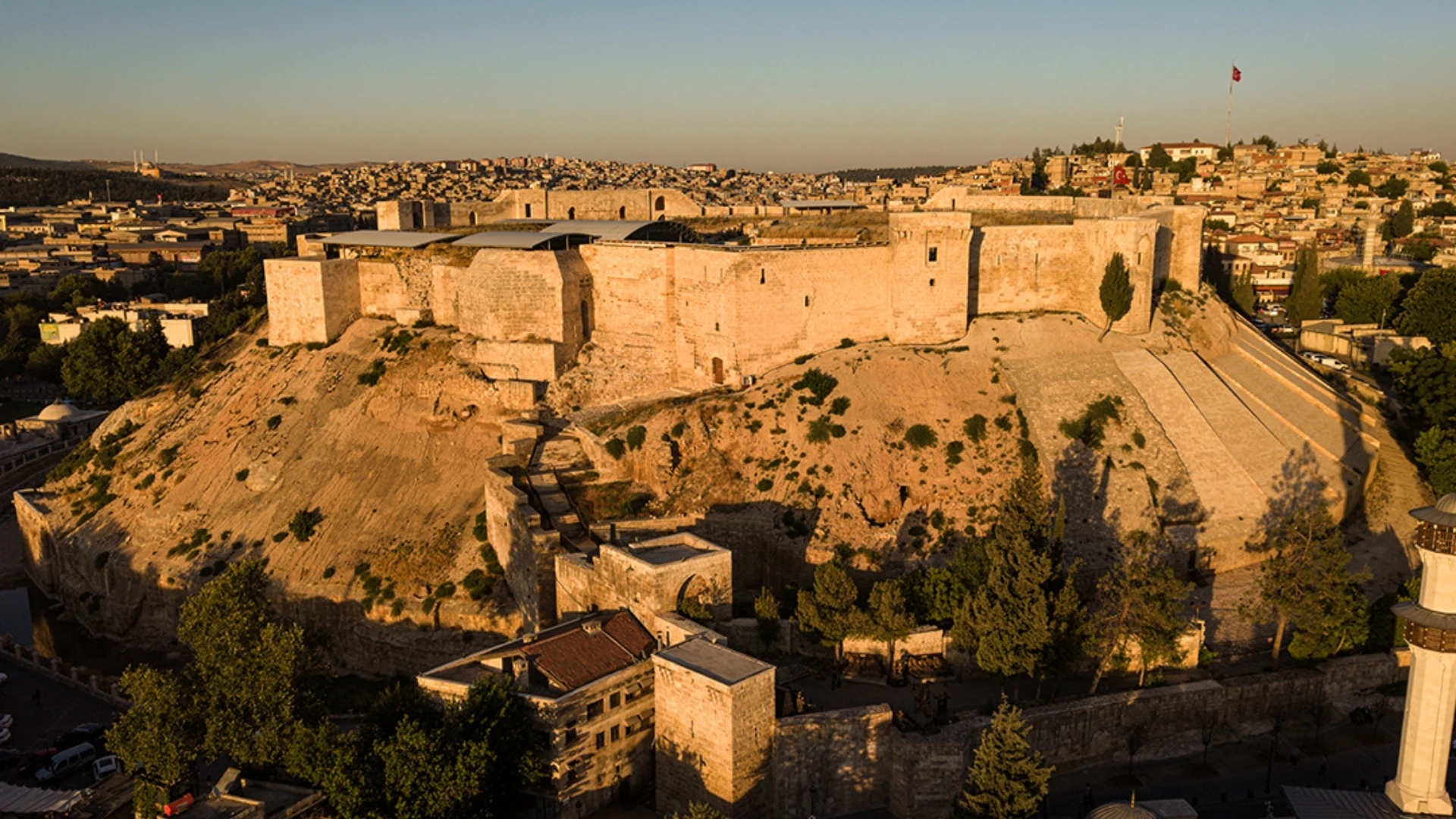
A hilltop castle in the city centre, rising on a Chalcolithic mound; it took its present outline in the 6th century under the Byzantines and now houses the Defence Museum.
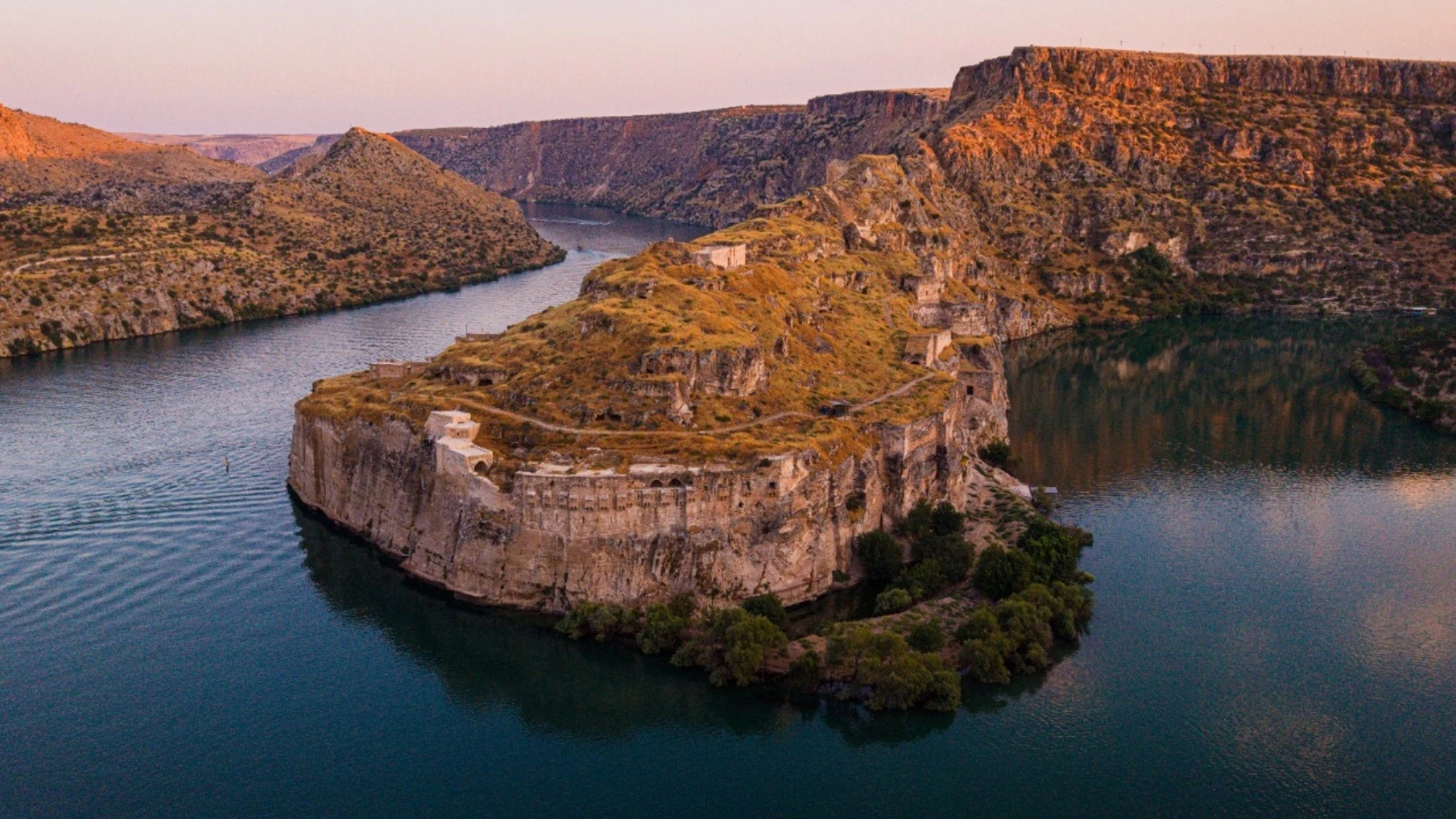
Between Yavuzeli and Nizip on a steep rock on the west bank of the Euphrates; a medieval Armenian Catholicosate seat, now surrounded on three sides by the Birecik Dam reservoir.
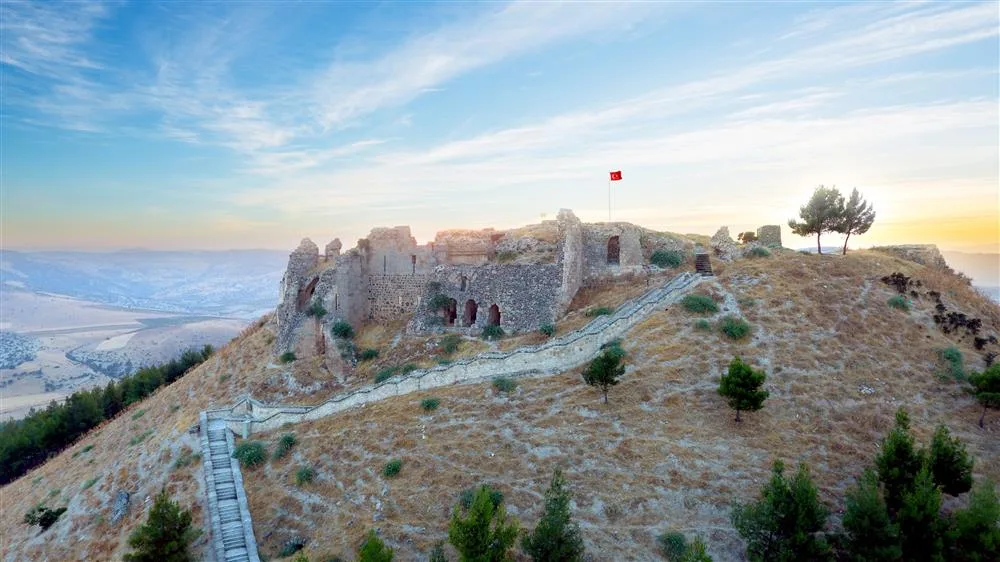
In the west of the region, administratively in the Polateli district of Kilis today; a frontier castle taken by the Crusaders in 1097 and returned to Islamic rule by Nur ad-Din Mahmud in 1151.
These three structures do not belong to a single age: Gaziantep Castle is a hilltop castle in the city centre, Rumkale a rocky fortress on the bank of the Euphrates, and Ravanda Castle a frontier castle in the west of the region. What they share is that all of them are positioned in a geography that controls the river crossings and the ancient roads.
Trip Tips
Together, these castles make it possible to read Gaziantep's defensive history, which cannot be told through a single monument. While Gaziantep Castle in the city centre is an easily accessible starting point, Rumkale lies in the Euphrates basin and Ravanda Castle in a rural setting in the west of the region; for this reason, reaching some of them requires planning. To see the place of the castles in the region's general history as a whole, the History of Gaziantep page offers complementary reading.
Frequently Asked Questions
How many important castles are there in Gaziantep, and which are they?
This page brings together the region's three castles: Gaziantep Castle in the city centre, Rumkale overlooking the Euphrates near Halfeti, and Ravanda Castle, which was the scene of Crusader–Islamic struggles. There are other fortifications and remains in the region as well; here the focus is on the three most prominent.
Why do Gaziantep and its surroundings have so many castles?
The region lies in a transitional belt where the frontier traced by the Euphrates meets the Mesopotamia–Anatolia trade and military roads. Because Rome, Byzantium, various Islamic states, Crusader counties, the Mamluks and the Ottomans, all wishing to control the river crossings and the roads, fortified these points in turn, a layered castle heritage formed in the region.
When did Gaziantep Castle take its present form?
The castle is accepted to have first appeared in the Roman period in the form of a watchtower, while it acquired its present outlines in the 6th century, during the reign of the Byzantine Emperor Justinian I (AD 527–565). In this period towers connected by arched and vaulted galleries were built and the walls were extended to the edge of the hill.
Why is Rumkale surrounded by water on three sides?
Rumkale stands on a steep rock on the western bank of the Euphrates, encircled by the river and the Merzuman Stream. After the lake formed by the Birecik Dam rose, the castle was surrounded by water on three sides and turned into a peninsula. The structure is also known for having been a centre of an Armenian Catholicosate in the Middle Ages.
What was the importance of Ravanda Castle in the Crusader period?
The castle, also known as Râvendân, was captured in 1097 by Baldwin of Boulogne and attached to the Crusader County of Edessa, becoming one of the county's far-flung western defensive points. About 54 years later, in 1151, it was brought back under Islamic administration by Nur ad-Din Mahmud, the ruler of Aleppo.