Gaziantep cuisine is best known for its kebabs and baklava — yet one of the city's most deep-rooted and most crowded families is its köftes. What sets the Antep köfte apart is often not the meat itself but the bulgur: fine köftelik bulgur — known locally as "simit" — takes the leading role in most of these köftes, while meat enters sometimes as a filling, sometimes as no more than an aroma.
For this reason Gaziantep's köftes fall into two great branches. On one side are the meat & filled köftes: içli köfte (stuffed köfte), in which a paper-thin bulgur shell is filled with roasted minced meat, walnuts and Antep pistachios; sini köfte (tray köfte), where that same filling is pressed not into individual shells but across a whole tray — the "sini" — and scored into diamond pieces; and arab köfte, which is kneaded mostly from bulgur, boiled then fried, and met with cacık. On the other side stands the city's most crowded family: the meatless, bulgur köftes. The fatty köfte (yağlı köfte) kneaded with clarified butter, the tiny fellah köfte shaped with the thumb, the lentil köfte (malhıtalı / mercimekli köfte) kneaded with red lentils, the omaç köfte made from crumbled bread and cheese, and the plain-bulgur haveydi köfte make up this group.
Most of the meatless köftes are not cooked at all; like çiğ köfte, they are kneaded at length in the palm and hand-pressed into shape. What truly defines them is this handwork and culture of sharing: gathering around a large tray or sini to knead together, everyone eating from a single platter set in the middle of the table — this turns köfte, in Gaziantep, from a dish into a gathering. Many of these köftes, with their regional identity, are also registered as geographical indications by TÜRKPATENT.
Below we have gathered Gaziantep's köfte tradition under two headings: the meat & filled köftes and the meatless bulgur köftes. You can follow through to each köfte's own page to read its history, cultural background and what it is made of in detail.
Meat & Filled Köftes
The köftes where a bulgur shell or dough meets a meat filling: some drawn out one by one like spindles, some baked across a whole tray, some boiled then fried and brought to the table with cacık — the labour-intensive köftes.
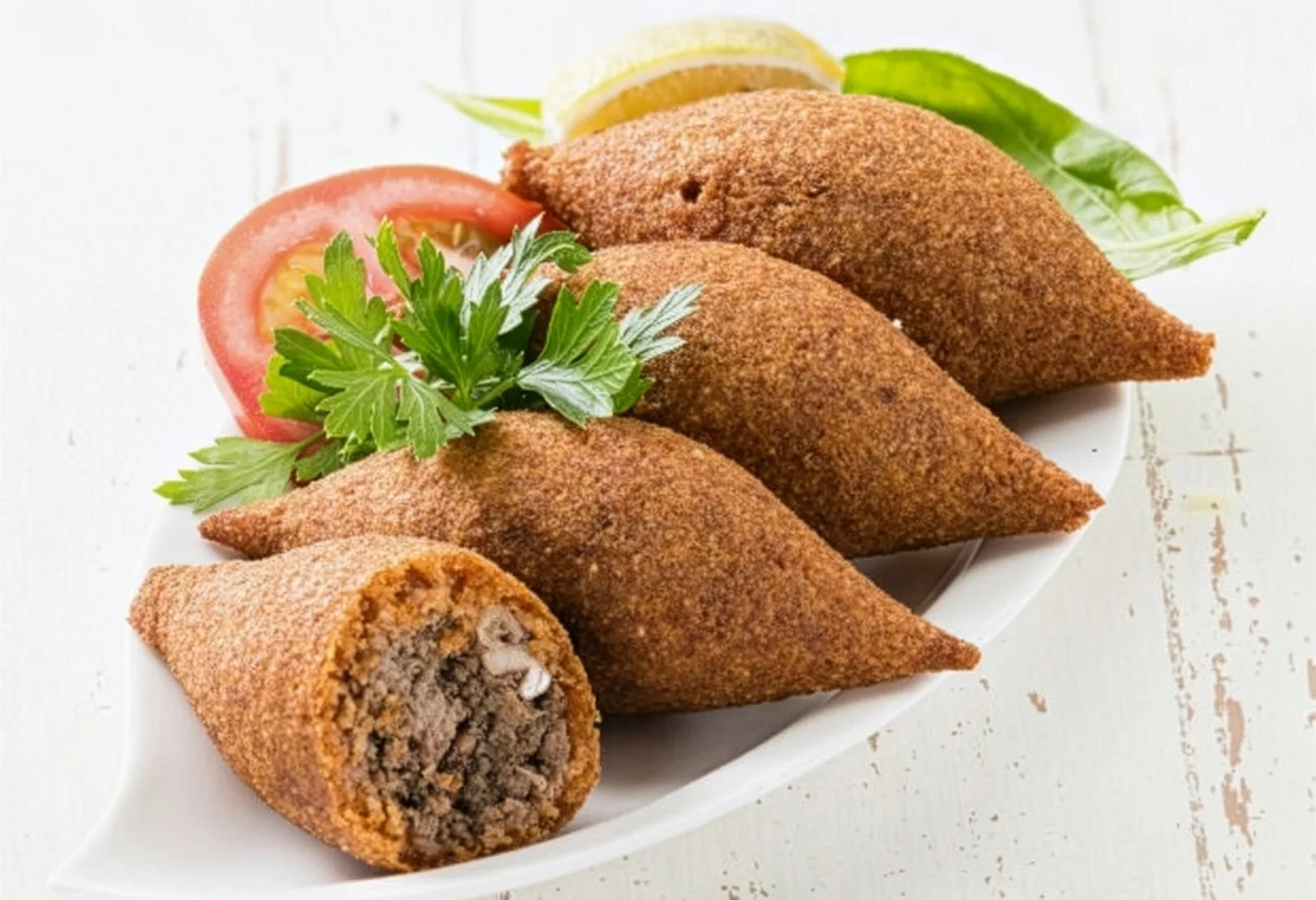
A thin bulgur shell hand-shaped into shuttles around a walnut and pistachio meat filling - Antep's labor-intensive stuffed köfte.
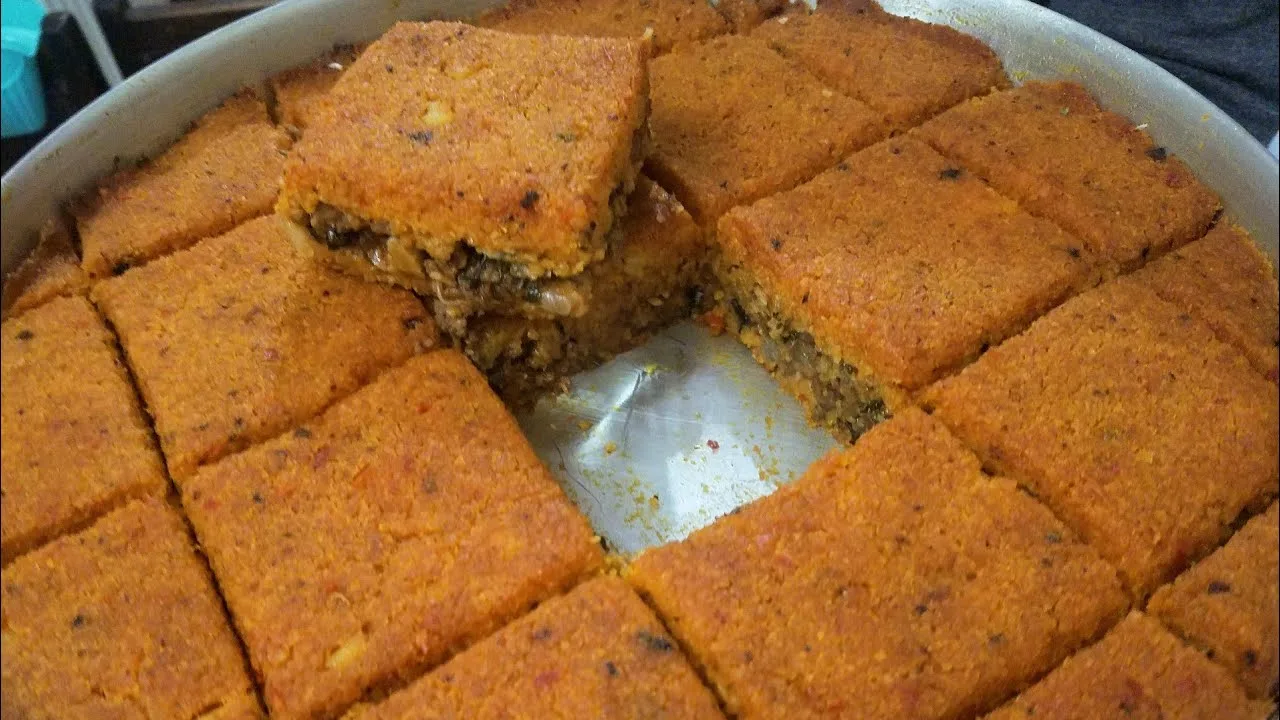
Bulgur-meat dough spread on a tray over a walnut filling, cut into diamonds and baked - Antep's tray köfte.
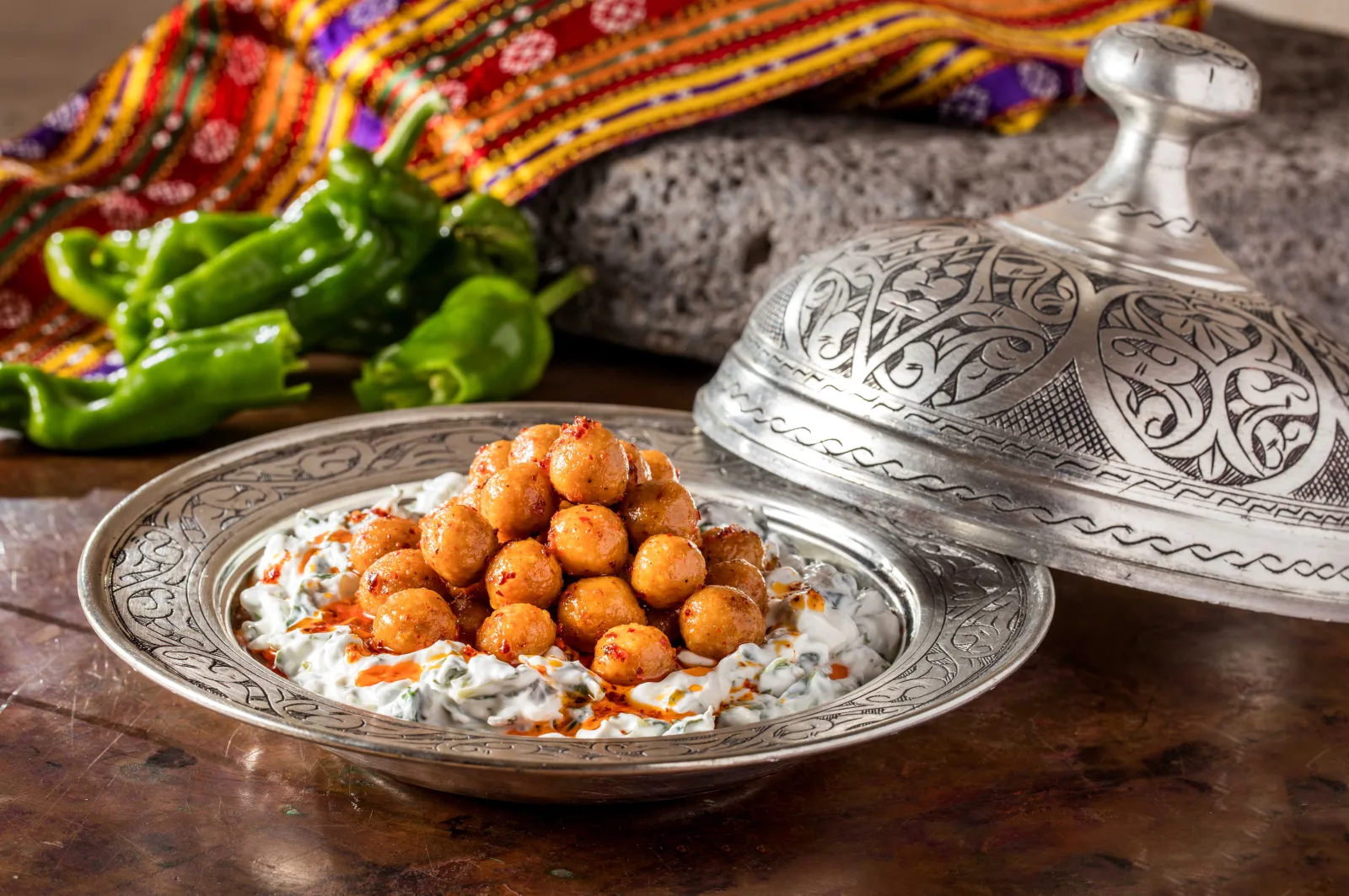
Tiny bulgur balls boiled then sauteed in ghee and served with garlic yogurt - a registered Antep köfte.
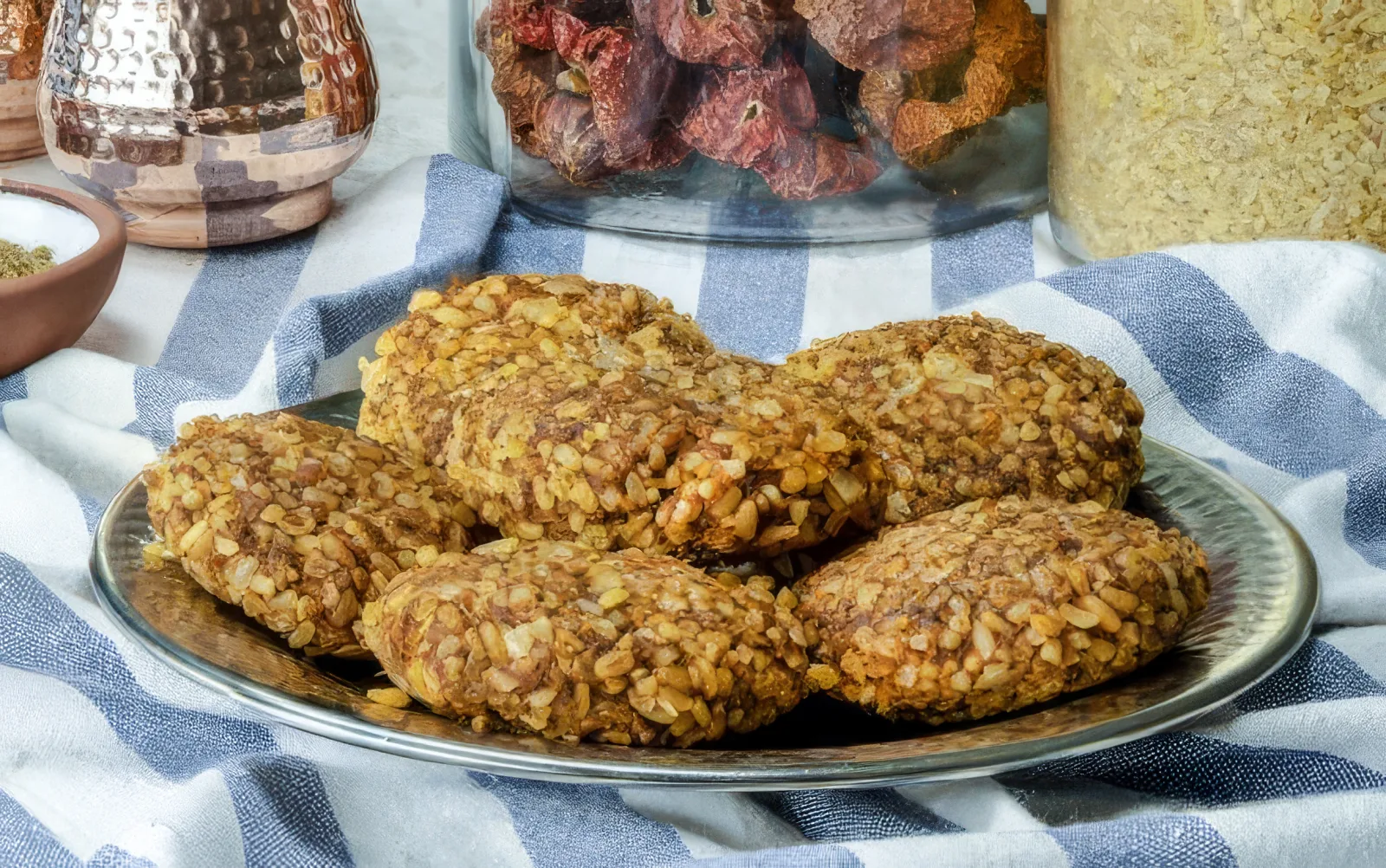
Bulgur and meat kneaded without water, shaped into small köftes and steamed on a perforated tray - a registered Antep dish.
Meatless & Bulgur Köftes
Köftes that contain no meat, drawing their heartiness from bulgur, pulses or bread: most prepared uncooked, hand-pressed in the çiğ köfte manner, and brought to the table with plenty of greens, pickles and ayran.
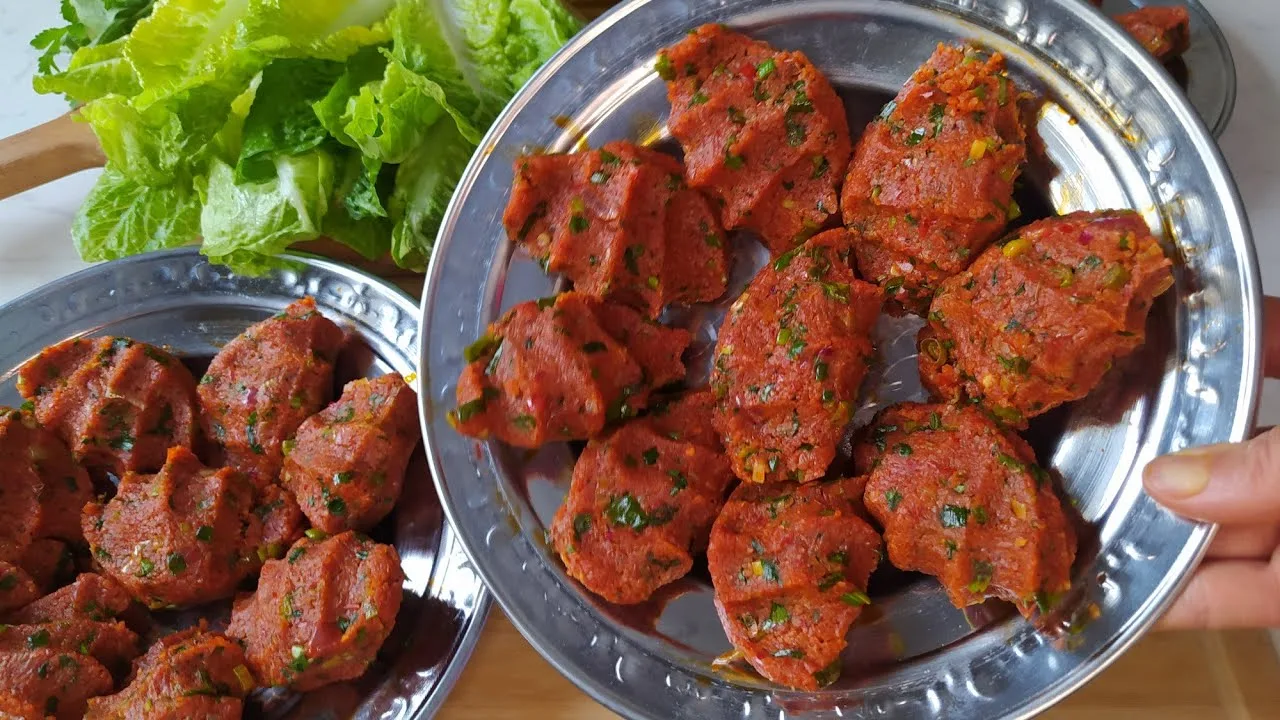
Bulgur kneaded with pepper paste, tomato, onion and chili, finished with melted ghee - Antep's uncooked meatless köfte.
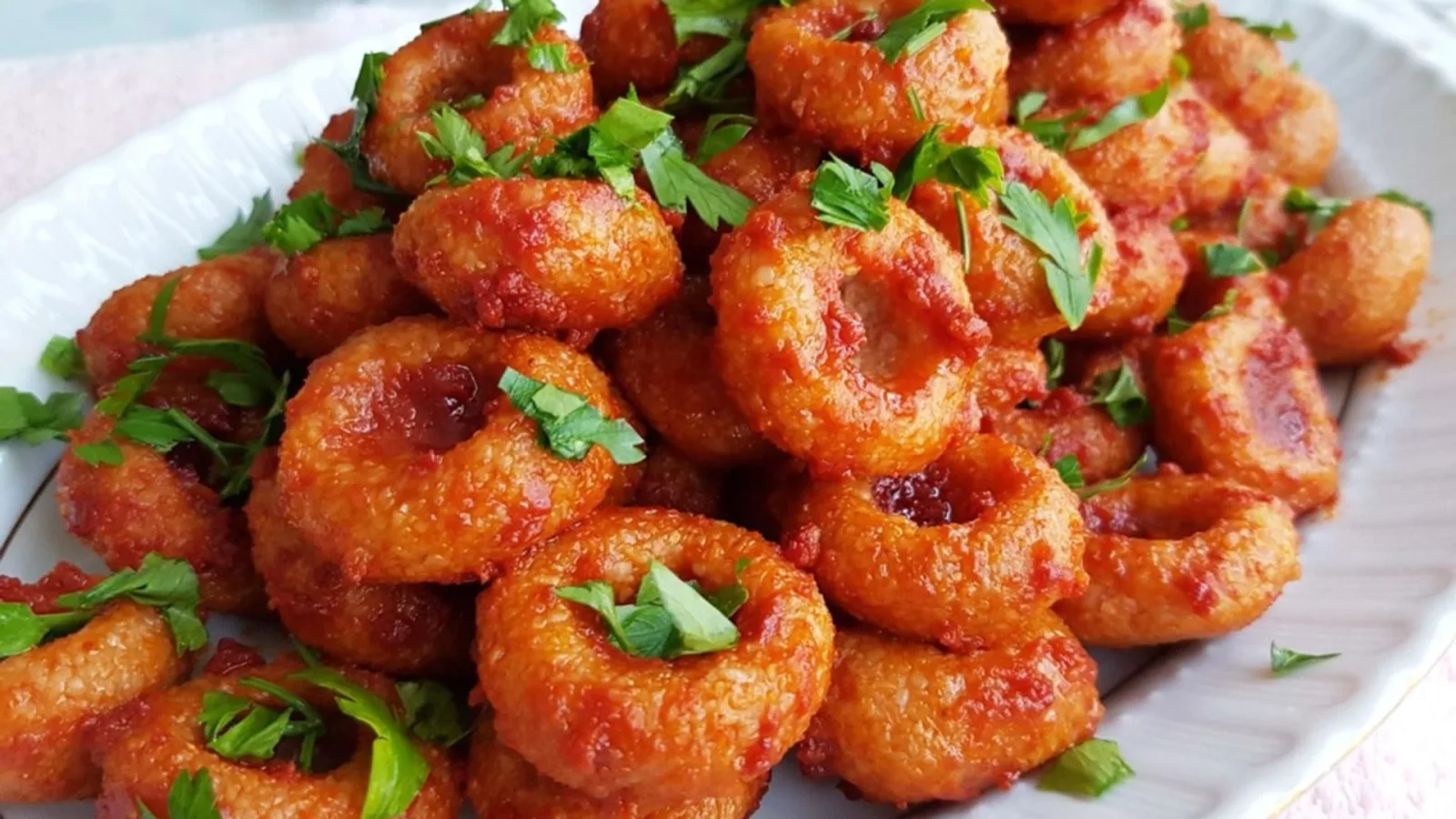
Spiced bulgur pinched into tiny grains and tossed in a hot garlic-tomato sauce - Antep's meatless fellah köfte.
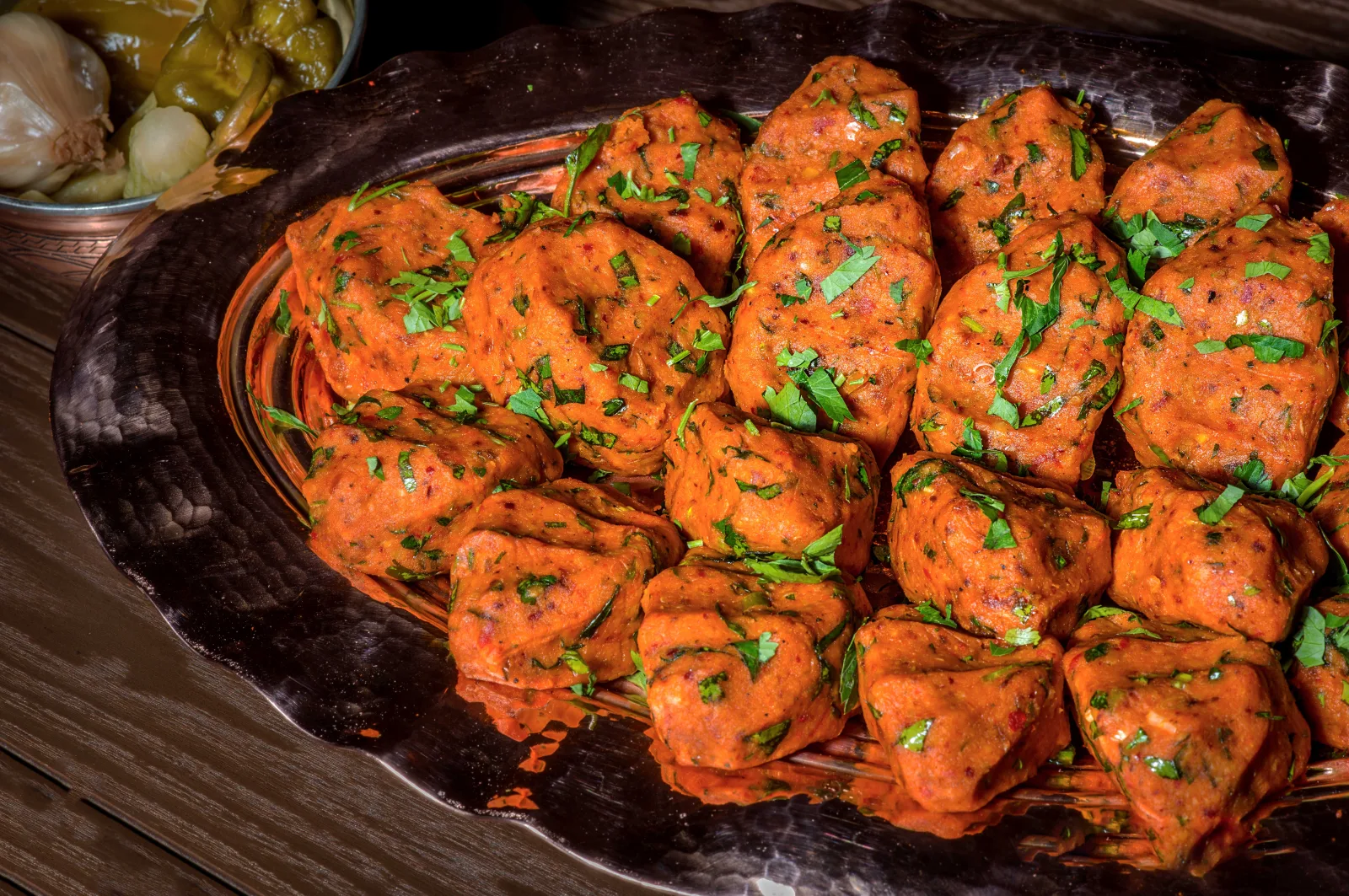
Red lentils and bulgur kneaded with onion, pepper paste, spices and tarragon and eaten cold with lemon - a meatless köfte.
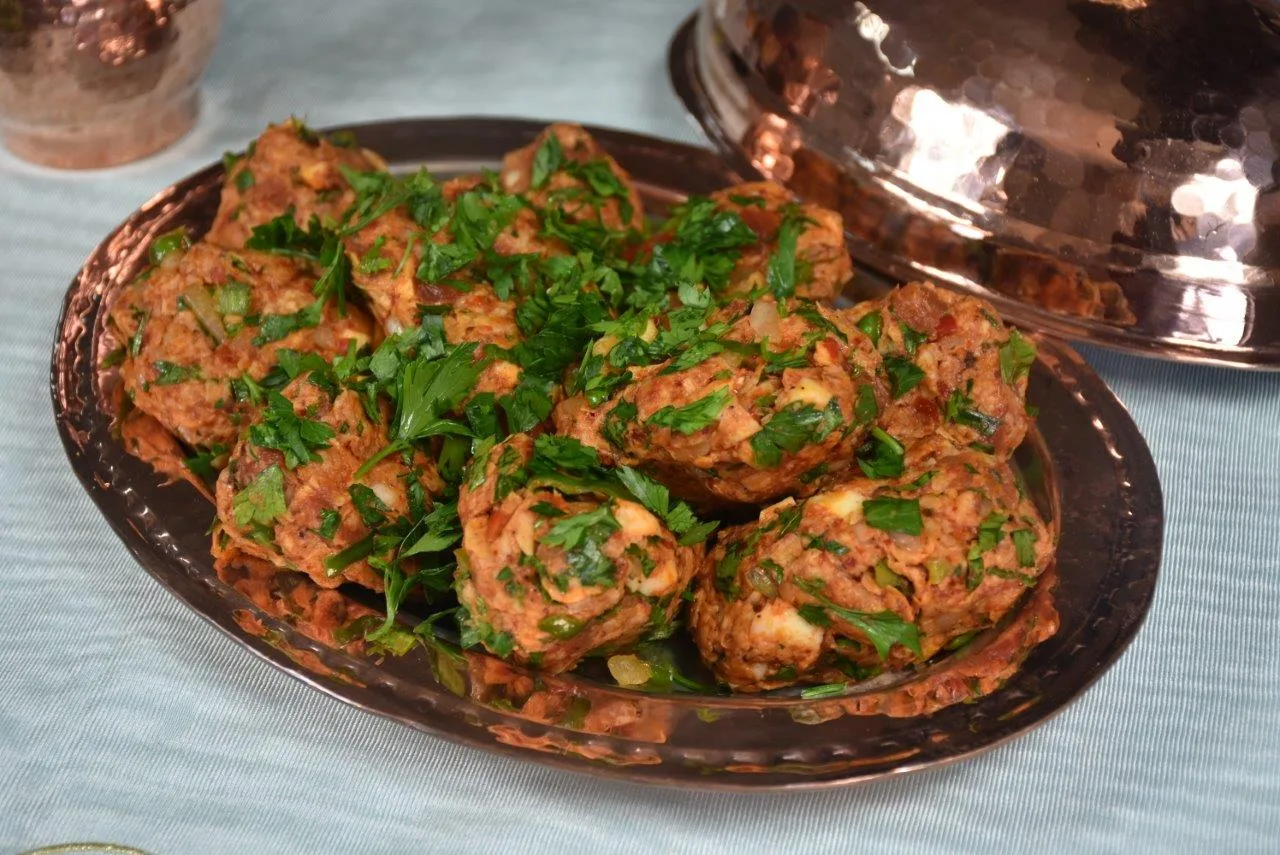
Crumbled dry flatbread kneaded with Antep cheese, tomato, onion and oil and eaten cold and uncooked - a traditional bread köfte.
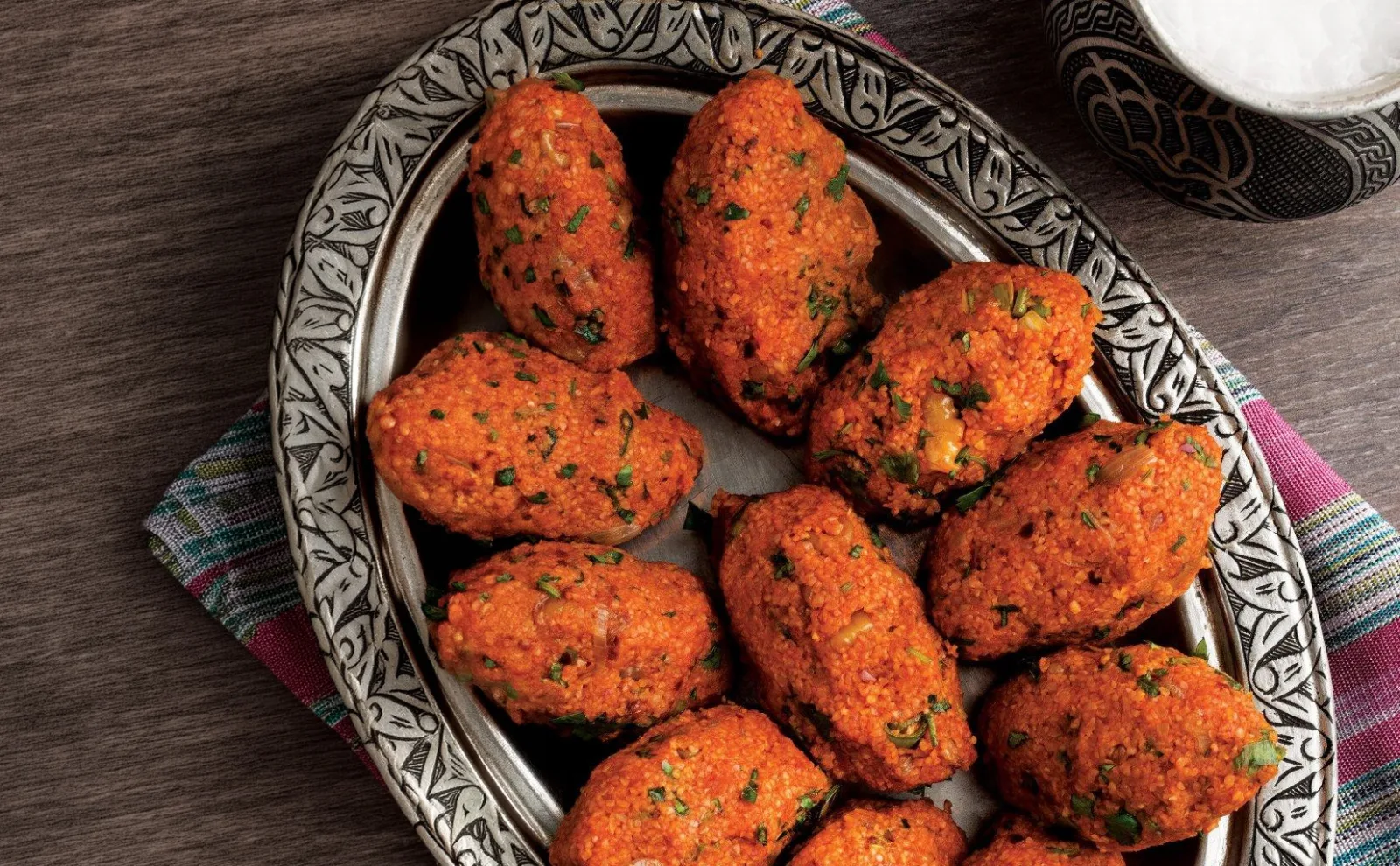
Bulgur kneaded with pepper paste, roasted onion, oil and herbs and eaten raw - Antep's meatless haveydi köfte.
Three things define Gaziantep's köftes: the fine köftelik bulgur (known locally as "simit") that forms the basis of most of them; the handwork each one demands — whether drawing out a paper-thin içli köfte shell or kneading the mixture in the palm until it reaches a dough-like consistency; and the culture of sharing that turns these köftes into a gathering — kneading together and eating together around a large sini or a single platter set in the middle of the table. So in Antep, köfte is more often a table tradition than simply a dish.
What Makes Antep Köfte Distinct?
The line that separates Gaziantep's köftes from other cuisines usually lies in the bulgur and in the handwork. Köfte here is not always a meat dish; more often fine bulgur takes the leading role, while meat enters sometimes as a filling, sometimes as no more than an aroma. Most of the meatless köftes are not cooked at all; like çiğ köfte they are kneaded at length and hand-pressed into shape. At the same table, an içli köfte with its paper-thin shell can sit beside a lentil köfte eaten in a lettuce leaf with lemon; what unites the two is bulgur and handwork.
To see the city's wider repertoire of kebabs, desserts, pastries and brothy dishes beyond its köftes, take a look at the Gastronomy page; the detailed recipe for each köfte is reachable from the links above.
Frequently Asked Questions
How many kinds of köfte does Gaziantep have?
The city's köfte repertoire is wide; this page lists 9 köftes in total under two headings — 4 meat & filled köftes and 5 meatless bulgur köftes. You can read the history, cultural background and ingredients of each on its own detailed page.
Why does bulgur stand out so much in Antep köftes?
Gaziantep cuisine is grain-centric, and the leading ingredient in most köftes is fine köftelik bulgur, known locally as "simit." The meatless köftes contain no meat at all, while in the filled köftes meat enters as a stuffing inside the bulgur shell or dough.
Are all Antep köftes made with meat?
No. The greater part of the köftes are meatless: fatty köfte, fellah köfte, lentil (malhıtalı) köfte, omaç köfte and haveydi köfte are prepared without meat and, most often, without cooking. İçli köfte and sini köfte are the ones filled with a meat mixture.
Why are the meatless Antep köftes eaten uncooked?
Köftes such as fatty köfte, haveydi and omaç are close to the çiğ köfte tradition: the mixture is kneaded at length in the palm until it reaches a dough-like consistency, hand-pressed into shape and brought to the table uncooked, most often with pickles, ayran and fresh greens.
Which Gaziantep köftes carry a geographical indication?
Most of the köftes on this page are registered as geographical indications (Mahreç İşareti) by TÜRKPATENT for their regional identity; içli köfte, sini köfte, arab köfte, fatty köfte, lentil köfte, omaç köfte and haveydi köfte are among them. The registration protects the recipe and the regional identity.