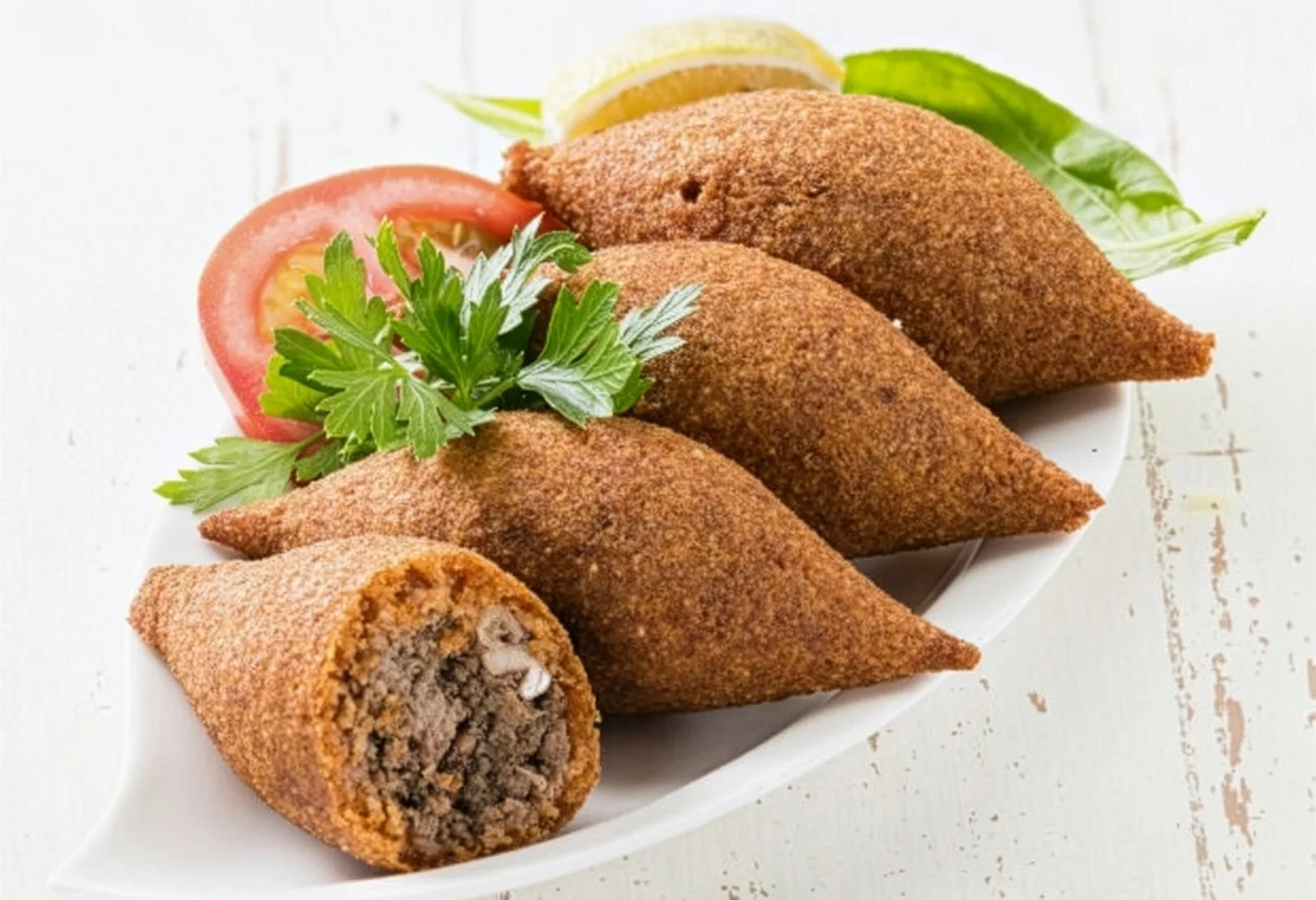
İçli köfte (stuffed köfte) is one of the most labour-intensive delicacies of Gaziantep cuisine: a köfte in which a very thin outer shell, kneaded from fine bulgur and flour, is filled with a spiced mixture of roasted minced meat, onion, walnuts and Antep pistachios, then shaped by hand into a spindle. Whether it reaches the table boiled or fried, what truly defines içli köfte is the skill of drawing out that paper-thin bulgur shell and the richness of the pistachio-and-walnut filling hidden inside.
The identity of içli köfte springs from the balance between shell and filling: on the outside, fine bulgur kneaded with lean meat and turned, fingertip by fingertip, into a membrane-thin shell; on the inside, minced meat roasted over a low flame with plenty of onion, walnuts and Antep pistachios. The most distinctive feature setting the Gaziantep style apart from içli köfte of other regions is the presence of both walnuts and Antep pistachios in its filling. This regional delicacy was registered as a geographical indication under the name "Gaziantep İçli Köftesi / Antep İçli Köftesi" by TÜRKPATENT in 2021.
What Is İçli Köfte and What Is in It?
İçli köfte is a köfte in which a shell kneaded from fine bulgur, a small amount of lean minced meat and flour is filled with a separately prepared roasted-meat filling and closed into a spindle (lemon) shape. Known locally as "oruk," this köfte is judged by how thin the outer shell can be drawn; a master's hand stretches the shell as thin as possible without tearing and packs it full of filling. The shaped köfte are then either boiled in simmering water or fried in hot oil before serving.
Core Components
- Fine Bulgur: The foundation of the shell is finely milled köfte bulgur. The bulgur is kneaded at length with lean, sinew-free minced meat and a little flour into a soft, elastic dough that takes shape easily; only well-kneaded dough yields içli köfte's thin shell.
- Roasted Minced Meat: The body of the filling is fatty minced meat roasted in clarified butter or olive oil. The meat is the main component that gives the filling depth and substance.
- Plenty of Onion: Finely chopped onion is roasted together with the meat until translucent; it lends the filling a sweetish softness and moisture.
- Walnuts: Coarsely chopped walnuts added to the filling give it both crunch and a characteristic taste; they are one of the signature components of Gaziantep içli köfte.
- Antep Pistachios: The element that truly sets the Gaziantep style apart is the Antep pistachio that goes into the filling alongside the walnuts. The peeled green pistachio gives the filling a rich, region-specific flavour and colour.
- Black Pepper and Allspice: The spiced depth of the filling is built with black pepper and allspice. These spices give the roasted meat a warm, aromatic character typical of Gaziantep cuisine.
- Red Pepper Powder and Salt: Red pepper powder worked into the bulgur dough lends the shell a faint colour and taste, while salt balances both the dough and the filling.
The Art of Thinning the Shell
The defining element of içli köfte is not so much its ingredients as the skill and patience of the hand. A small piece torn from the bulgur dough is turned in the palm and at the fingertips, hollowed out and worked into a membrane-thin shell; being able to draw this shell as thin as possible without tearing it is the hardest and most skill-demanding stage of içli köfte. Once the roasted filling is packed in, the köfte is closed into a spindle shape with two pointed ends. A thin shell, a generous filling and an even spindle form are taken as the measure of a well-made Antep içli köfte.
The History and Cultural Origins of İçli Köfte
İçli köfte belongs to a very old Mesopotamian and Eastern Mediterranean culinary tradition in which bulgur and meat are pounded together and turned into köfte. In this geography, where bulgur grows abundantly, stuffed köfte made of pounded meat and bulgur have survived for centuries under different names; Gaziantep has been one of the strong centres of this deep-rooted köfte culture in Anatolia. Antep has kneaded this shared heritage with its own palate, giving its içli köfte a regional identity by adding both walnuts and Antep pistachios to the filling.
The Origin of the Name and the Shape
The name "içli köfte" describes the structure of the köfte directly: a "stuffed" köfte with a filling inside. In Gaziantep and its surroundings the same köfte is also known locally as "oruk." The köfte's form — pointed at both ends, swollen in the middle — is called the spindle or lemon shape; this form allows both an even thinning of the shell and room for a generous filling. The thin shell and the pistachio-and-walnut filling are the clear marks that set Antep içli köfte apart from other köfte of the same family.
A Tradition Kept Alive by Hand
İçli köfte's history in Gaziantep is bound up with mastery and handwork in the kitchen. Because thinning the shell is a skill that takes years to acquire, içli köfte has become a köfte made not every day but mostly on special occasions, one for which time is set aside in its preparation. In this respect içli köfte lives on as a craft passed from mother to daughter in Gaziantep homes and as a table tradition carried from generation to generation.
Gaziantep İçli Köftesi was entered into the TÜRKPATENT geographical indications register on 12.07.2021 as a Geographical Indication (Mahreç İşareti) with No 799. The application was made by the Gaziantep Metropolitan Municipality. The registration records the presence of both walnuts and Antep pistachios in the filling as the product's distinctive feature, and guarantees that the name "Gaziantep İçli Köftesi / Antep İçli Köftesi" may be used only for a product made with the defined ingredients and method.
The İçli Köfte Tradition and Ritual in Gaziantep
In Gaziantep, içli köfte is not merely a köfte; it is the table language of labour, sharing and special days. Because drawing the thin shell by hand, one by one, takes a long time, içli köfte is often associated with a crowded preparation and working together.
Imece and Special Days
İçli köfte is traditionally made imece-style, by many hands coming together. The women of the household and neighbours gather around a table to draw, fill and shape the köfte together; this preparation becomes a moment of conversation and solidarity in its own right. On special days such as religious feasts (bayram), engagement, betrothal and henna nights, and when honoured guests are received, içli köfte takes its place of distinction at the table; the labour spent on it makes it a köfte that signals the importance of the table at which it is offered.
Boiling and Frying
The shaped içli köfte are cooked in two main ways: boiled in simmering water or fried in hot oil. Boiled içli köfte gives a softer, lighter texture, while the fried version offers a crisp outside and a piping-hot inside. In both forms the köfte are usually served hot, with lemon wedges and fresh greens.
Its Place at the Table
At the Gaziantep table, içli köfte often appears as a starter or as a carefully made köfte for hospitality, served alongside ayran and seasonal greens. Those curious about the other handmade, pistachio-rich köfte and flavours of Antep cuisine can follow the trail of the same tradition in signature tastes such as Yağlı Köfte, Fellah Köftesi and pistachio kebab.
Why You Should Try It
A single plate of içli köfte carries the value Gaziantep places on handwork and the culture of sharing to the palate in one bite: behind the paper-thin bulgur shell lie the depth of roasted minced meat, the softness of onion, the crunch of walnuts and the region-specific richness of Antep pistachios. The truest way to taste it is to eat a thin-shelled içli köfte straight from a master's hand, piping hot, with lemon squeezed over it, in the city where it was born.
Frequently Asked Questions
What is içli köfte and where is it from?
It is a handmade köfte particular to Gaziantep, in which a membrane-thin shell of fine bulgur is filled with roasted minced meat, onion, walnuts and Antep pistachios and shaped into a spindle.
What is in içli köfte?
The shell is fine bulgur with a little minced meat and flour; the filling is roasted fatty minced meat, plenty of onion, walnuts, Antep pistachios, black pepper and allspice.
What sets Gaziantep içli köfte apart from others?
The presence of both walnuts and Antep pistachios in the filling is the distinctive feature of Gaziantep içli köfte; this is also emphasised in its registration.
Does içli köfte have a geographical indication?
Yes. Gaziantep İçli Köftesi was registered as a Geographical Indication (Mahreç İşareti) with No 799 by TÜRKPATENT on 12.07.2021.
Is içli köfte boiled or fried?
Both are done; the köfte may be boiled in simmering water or fried in hot oil. In both cases they are usually served hot with lemon and greens.