 Vegetarian
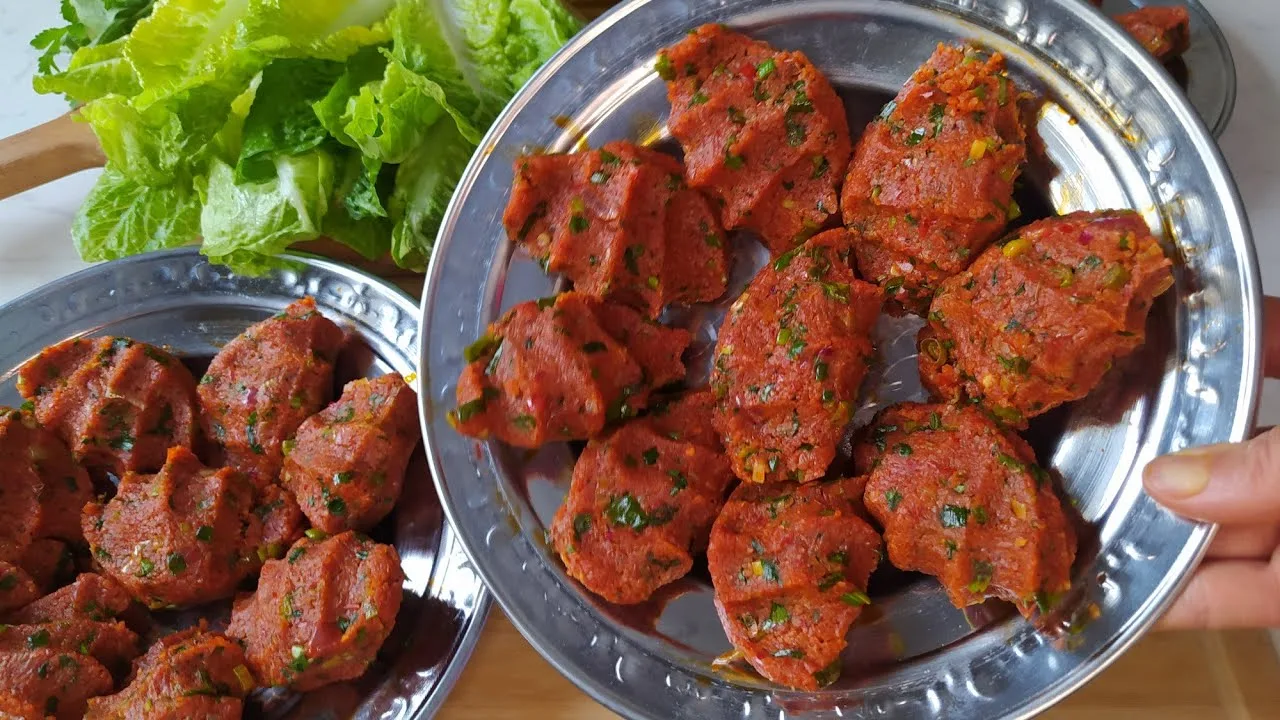
Yağlı köfte (yağlı köfte) is one of the uncooked, entirely hand-kneaded köfte of Gaziantep cuisine: a meatless köfte in which fine bulgur (known locally as "simit") is kneaded at length with pepper paste, grated tomato, onion, garlic and plenty of red chilli flakes, before melted clarified butter or butter is worked in at the very end and the mixture is kneaded once more. The "fatty" (yağlı) in its name comes from this final-stage butter, thoroughly worked into the dough; it is also what gives the köfte its softness, sheen and full mouthfeel. A close relative of çiğ köfte, yağlı köfte is a festive delicacy prepared for crowded tables on the produce-rich days of spring and summer.
The identity of yağlı köfte springs from the harmony of a few essentials: fine bulgur, red pepper paste and tomato paste, grated fresh tomato, finely chopped onion and garlic, red chilli flakes, and the melted clarified butter or butter added at the very end. Behind these lies not cooking but a long, patient kneading; the taste and texture of the köfte depend on the duration and skill of that kneading. Yağlı köfte was registered as a geographical indication under the name "Gaziantep Yağlı Köfte / Antep Yağlı Köfte" by TÜRKPATENT in 2021.
What Is Yağlı Köfte and What Is in It?
Yağlı köfte is a meatless köfte in which fine bulgur is kneaded at length in a wide bowl with pepper paste, tomato, onion, garlic and spices; once the dough comes together, melted clarified butter or butter is added and kneaded briefly once more, after which the mixture is shaped by hand and served without cooking. It contains no meat or mince; bulgur forms the body of the köfte, while the fat added at the end gives it body and richness. Because fine bulgur is called "simit" in the region, recipes usually refer to "köftelik simit."
Core Components
- Fine Bulgur (Simit): The body of yağlı köfte is built from finely milled köfte bulgur, known locally as "simit." Kneaded at length amid the paste and liquid, the bulgur softens, swells and takes on the cohesive texture that lets the köfte hold its shape.
- Pepper Paste and Tomato: Red pepper paste, tomato paste and ripe fresh tomato grated over the top give the köfte its colour and the foundation of its aroma. The pastes are worked thoroughly into the bulgur during kneading; the tomato lends both moisture and a sweetish depth.
- Onion and Garlic: Finely chopped or grated onion and pounded garlic give the köfte its sharpness and fragrance. Much of yağlı köfte's lively, spiced character comes from this pair.
- Clarified Butter or Butter: The "fatty" in the köfte's name refers directly to this component. Melted clarified butter or butter is added at the very end of kneading and worked in for a short while longer; it gives the köfte softness, sheen and a full mouthfeel. Adding the fat at this final stage is the most distinctive step that sets yağlı köfte apart from other kneaded köfte.
- Red Chilli Flakes and Spices: Plenty of red chilli flakes provide the köfte's heat and spiced depth; salt and the spices favoured in the region complete the taste. The heat is pronounced, in keeping with the Gaziantep palate.
- Parsley and Greens: Finely chopped parsley is usually added to the kneading or scattered over the köfte and beneath it at serving, lending freshness and colour.
The Art of Kneading
The defining element of yağlı köfte is not so much its ingredients as its kneading technique and the patience it demands. Bulgur, paste, tomato and spices are kneaded in a wide bowl for a long time, often until the arms tire; as this happens the bulgur swells and takes on the texture that lets the köfte hold together without any binder. The true mastery, however, lies in the moment the fat is added: when melted clarified butter is worked into the dough and kneaded a little longer, the köfte softens, gains a sheen and reaches its full flavour. Once the dough is ready, it is squeezed in the palm so that fingerprints appear, then arranged on a plate without any cooking at all. The long kneading and the fat added at the end are what set Antep yağlı köfte apart from similar köfte.
The History and Cultural Origins of Yağlı Köfte
Yağlı köfte is part of Gaziantep's deep-rooted culinary tradition built on bulgur and kneaded köfte. This way of preparing fine bulgur — kneading it with paste and spices and shaping it by hand — draws on the same root as the city's broad bulgur culture, which stretches from çiğ köfte to yuvalama. Using no meat and requiring no cooking, yağlı köfte became a köfte that can easily be prepared in season, at home and among a crowd.
The Origin of the Name
The word "yağlı" ("fatty") in the köfte's name points to the most critical step of the preparation: the melted clarified butter or butter added to the dough at the end of kneading. While many kneaded köfte use no fat or only a little, in this köfte the fat is the main element that determines the taste and texture, so the dish is called "yağlı köfte" outright. The name thus foregrounds not the köfte itself but the full, fatty flavour that defines it.
A Köfte of the Vegetable Season
That yağlı köfte is traditionally prepared in spring and summer ties it to the months when produce is plentiful and fresh. Made in the season when ripe tomatoes, fresh onions and greens are at their best, the köfte is thus interwoven with Gaziantep's seasonal table tradition. This seasonal character makes yağlı köfte a delicacy that waits for certain months of the year and is associated with its season.
Gaziantep yağlı köfte was entered into the TÜRKPATENT geographical indications register on 01.07.2021 as a Geographical Indication (Mahreç İşareti) with No 791. The application was made on 07.07.2020 (file no C2020/174) by the Gaziantep Development Foundation (Gaziantep'i Geliştirme Vakfı). The registration guarantees that the name "Gaziantep Yağlı Köfte / Antep Yağlı Köfte" may be used only for a product tied to Gaziantep and made with the defined ingredients and method.
The Yağlı Köfte Tradition and Ritual in Gaziantep
In Gaziantep, yağlı köfte is not merely a köfte; it is part of the season and of crowded tables. Country outings and picnics — known locally as "sahre" — together with special occasions and invitations are the gatherings at which yağlı köfte is most often prepared. Requiring no cooking, it becomes an offering carried to the home table and out into the countryside alike.
A Köfte for Outings and Gatherings
Yağlı köfte is traditionally a köfte prepared and eaten among a crowd, shared together. Kneading it at length in a wide bowl often turns into a communal preparation in which more than one pair of hands takes part. Arriving at the centre of the table at the country outings called sahre, at special occasions and at invitations, yağlı köfte stands out as both a filling and a festive choice.
Its Place at the Table
Yağlı köfte is shaped in the palm with fingerprints pressed into it and arranged on a plate, scattered with finely chopped parsley above and below. It is usually served with pickles, a seasonal salad and ayran on the side, and often with fresh lettuce leaves. Those curious about Gaziantep's bulgur-and-köfte culture can follow the city's other signature köfte in delicacies such as Antep içli köfte and the Arap köftesi; the full range of köfte can be reached from the gastronomy page.
Why You Should Try It
A single plate of yağlı köfte carries Gaziantep's bulgur culture and its seasonal table tradition to the palate in one bite: the softness of long-kneaded bulgur, the depth of paste and tomato, the sharpness of onion and garlic, and the richness of the clarified butter added at the end are all balanced together. And the truest way to taste it is from a shared table in the city where it was born, on a spring day when produce is at its peak.
Frequently Asked Questions
What is yağlı köfte and where is it from?
It is a meatless, uncooked köfte particular to Gaziantep, in which fine bulgur is kneaded with paste, tomato, onion, garlic and spices, with clarified butter added at the end.
Does yağlı köfte contain meat?
No. Yağlı köfte is meatless; its body is fine bulgur, while the clarified butter or butter added at the very end gives it richness.
Why is it called "yağlı" (fatty)?
Because melted clarified butter or butter is worked into the dough at the end of kneading. This fat is the main element that determines the köfte's taste and texture.
Does yağlı köfte have a geographical indication?
Yes. Gaziantep yağlı köfte was registered as a Geographical Indication (Mahreç İşareti) with No 791 by TÜRKPATENT on 01.07.2021.
When is yağlı köfte prepared?
Usually in the produce-rich spring and summer months, for crowded tables at the country outings called sahre, at special occasions and at invitations.