When Gaziantep joined the UNESCO Creative Cities Network as a City of Gastronomy in 2015, it became the first Turkish city to hold the title. This cuisine is best known for its kebabs and baklava — yet another deep-rooted strand of the city's table is its soups, eaten with a spoon from a bowl, and its dishes simmered in meat stock, that is, its "aşı" (stews).
What sets the Antep soup apart often lies in the harmony of a few core ingredients. The first is yogurt: a strained-yogurt or yogurt-and-egg liaison that gives many dishes a faintly sour character and a silky texture; binding the liaison without curdling is a craft in itself. The second is fresh garlic and, in season, fresh onion, mint and spring greens; most of these dishes are cooked according to what the month brings to the market. The third is lamb or mutton, slow-cooked overnight, together with chickpeas: these give the bowl its heartiness and depth. Most dishes are finished with hot fat infused with mint, drizzled over at the last moment.
In Gaziantep cuisine these bowls are not always called "soup." The city draws a fine distinction: what is fluid and eaten with a spoon is a soup (çorba); the denser dishes — heartier with meat, chickpeas or köftes and cooked in a sahan or pot — are often called aşı (a stew). Beyran is the best-known example: people in Gaziantep usually describe it not as a "soup" but as a meat dish brought to a boil in a copper sahan. Some of these dishes, with their regional identity, are registered as geographical indications by TÜRKPATENT.
Below we have gathered Gaziantep's soup and stew tradition under two headings: the soups, eaten with a spoon from a bowl, and the aşı (stews) simmered in meat stock. You can follow through to each dish's own page to read its history, cultural background and what it is made of in detail.
Soups
The fluid bowls eaten with a spoon: some built on a yogurt liaison, some on grains and pulses, some on lentils — the soups of the morning, of winter and of the feast.
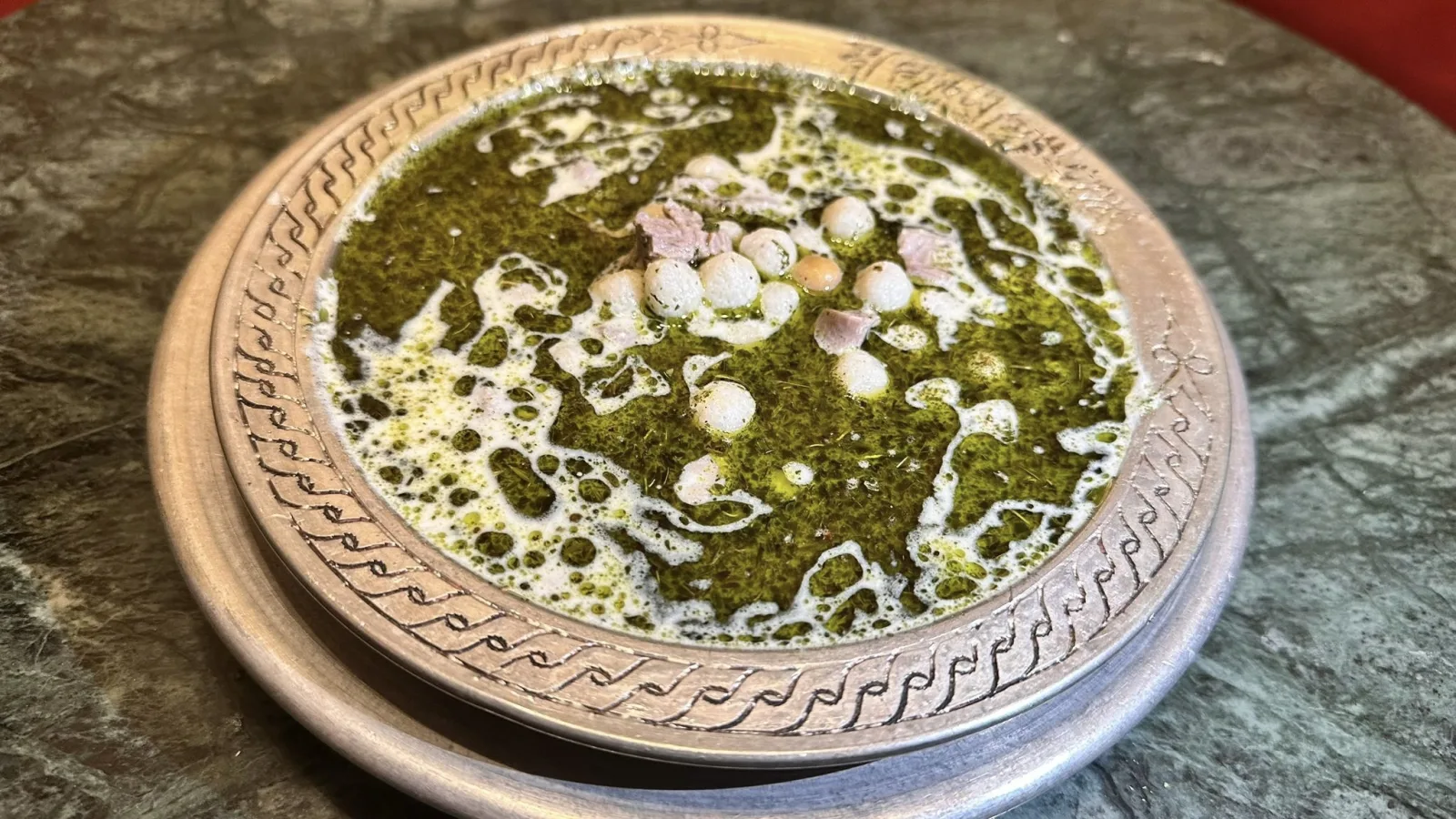
Hand-rolled tiny rice-and-meat dumplings bound in a yogurt liaison — the iconic dish of the Eid al-Fitr morning.
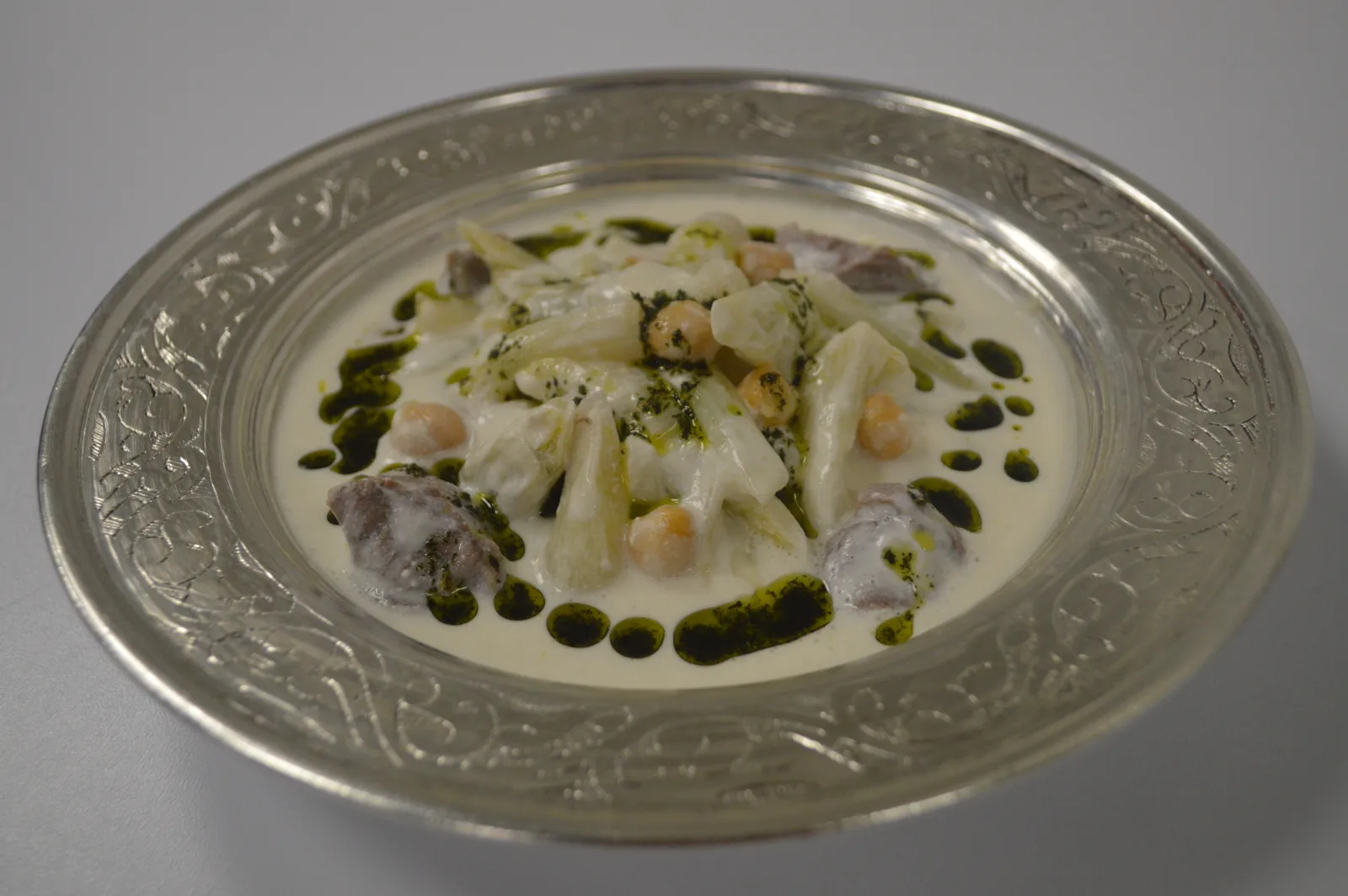
Fresh garlic and onion with lamb, chickpeas and a yogurt liaison — a faintly sour spring dish of April and May.
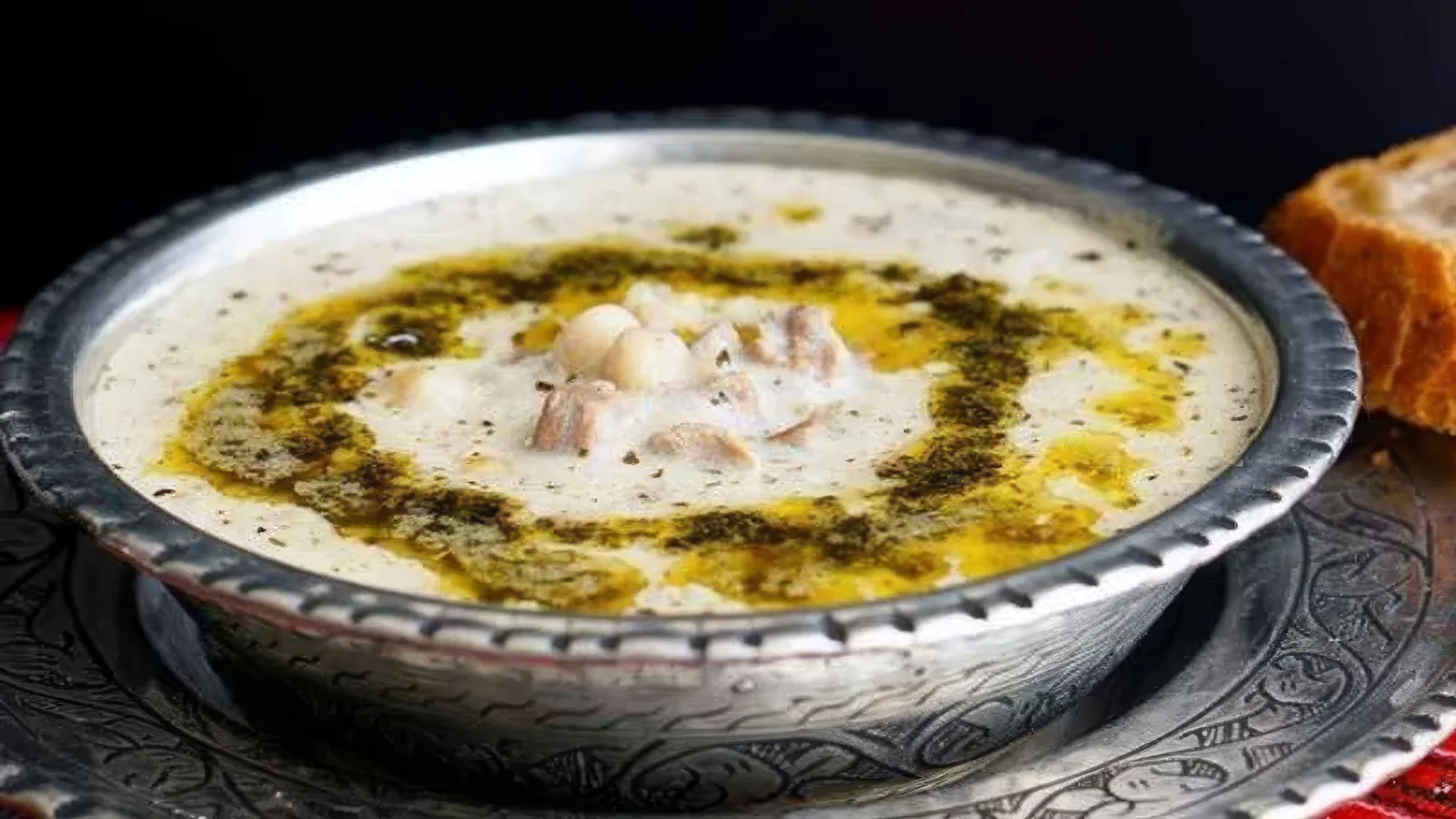
A strained-yogurt soup with chickpeas, rice and little köftes, finished with mint — registered and deep-rooted.
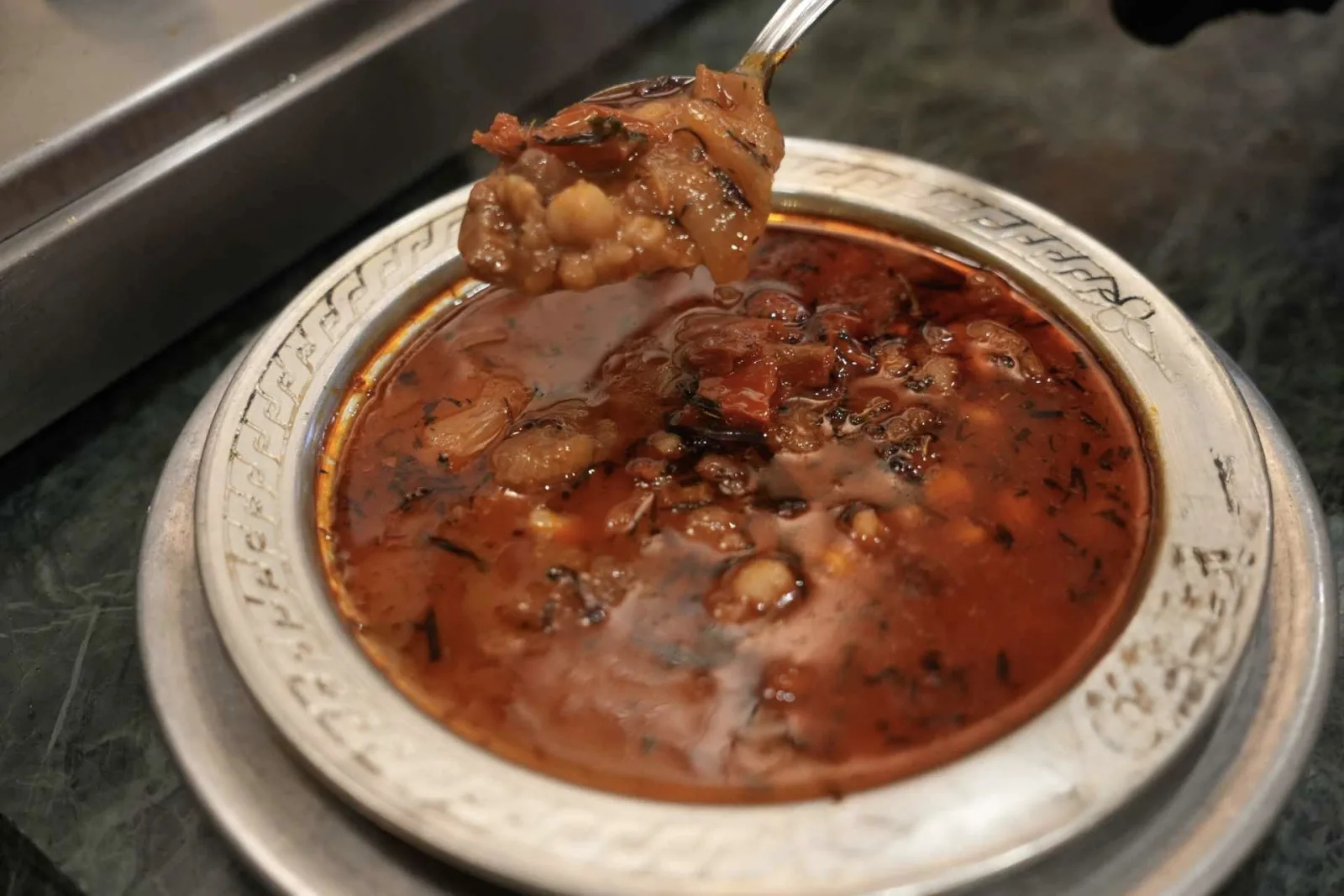
Cracked wheat, chickpeas and lentils thickened together with a red-pepper-and-tarragon finish — a hearty winter soup.
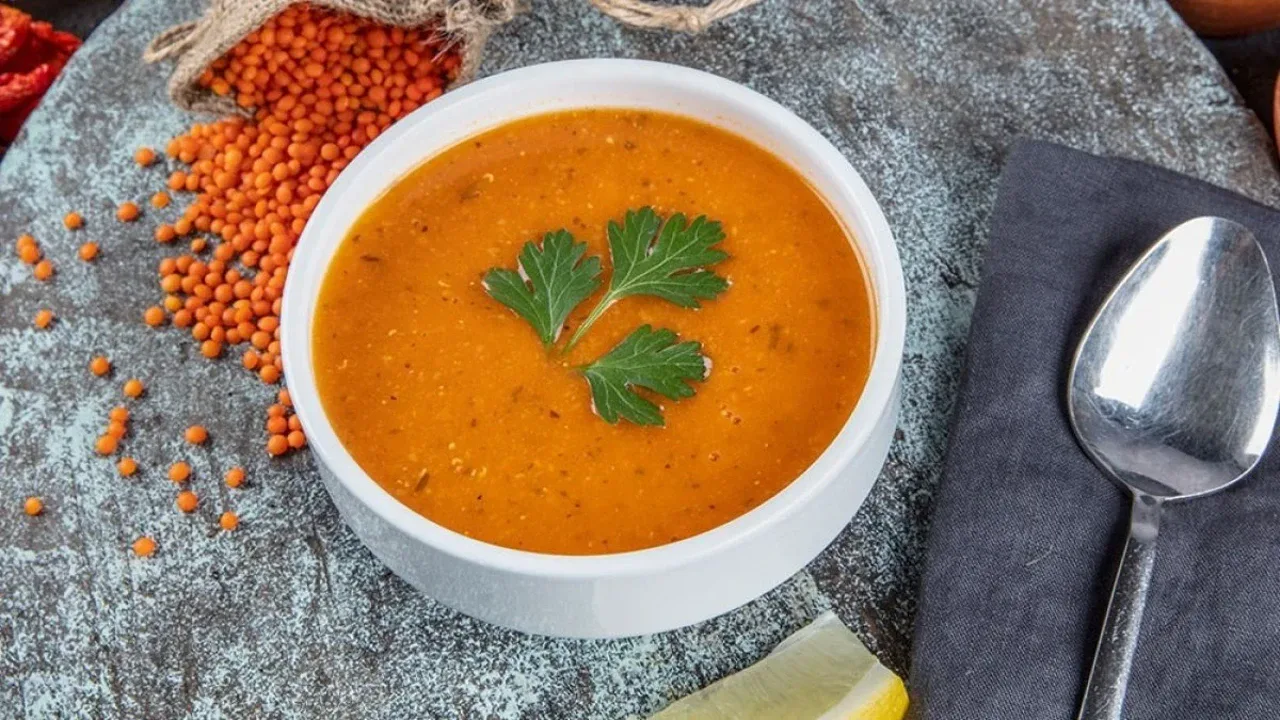
Red lentils, bulgur and rice cooked with tomato paste and served with minted oil — named after Oğuzeli's Ezo Gelin.
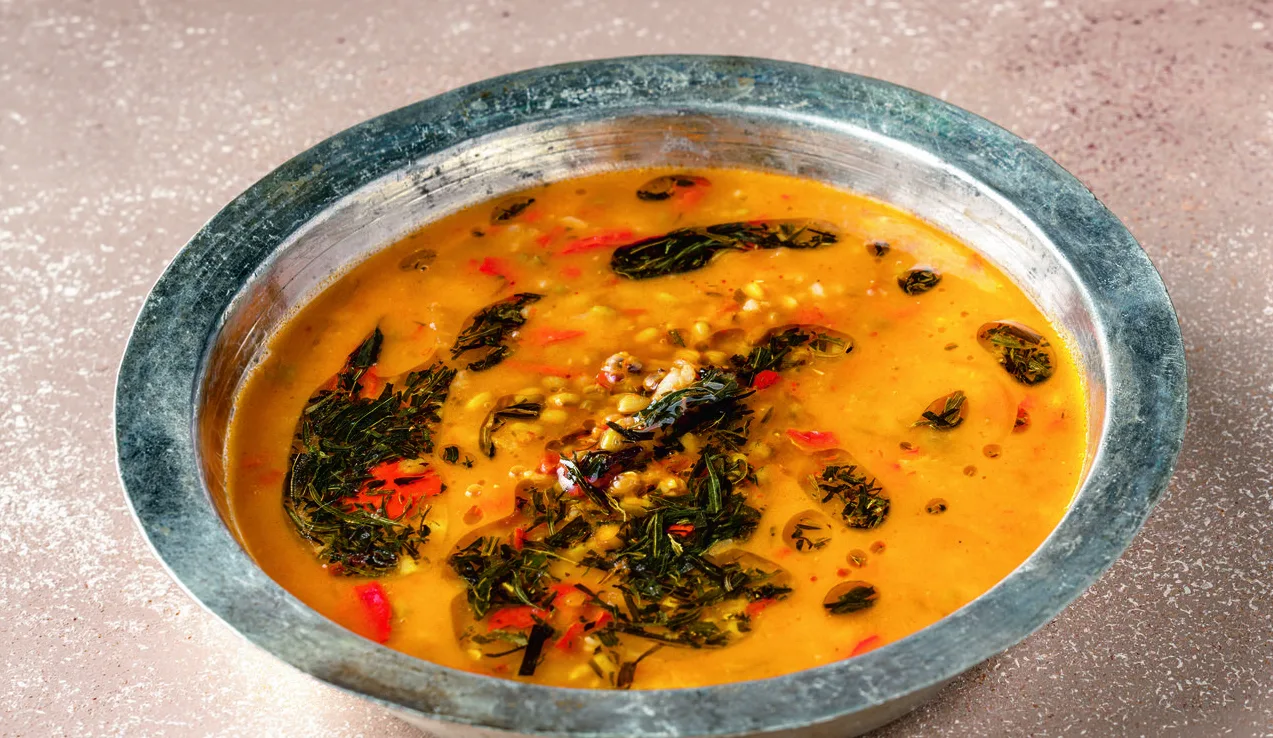
Mung beans brought together with bulgur and seasoned with onion, pepper and tarragon — a faintly sour winter soup.
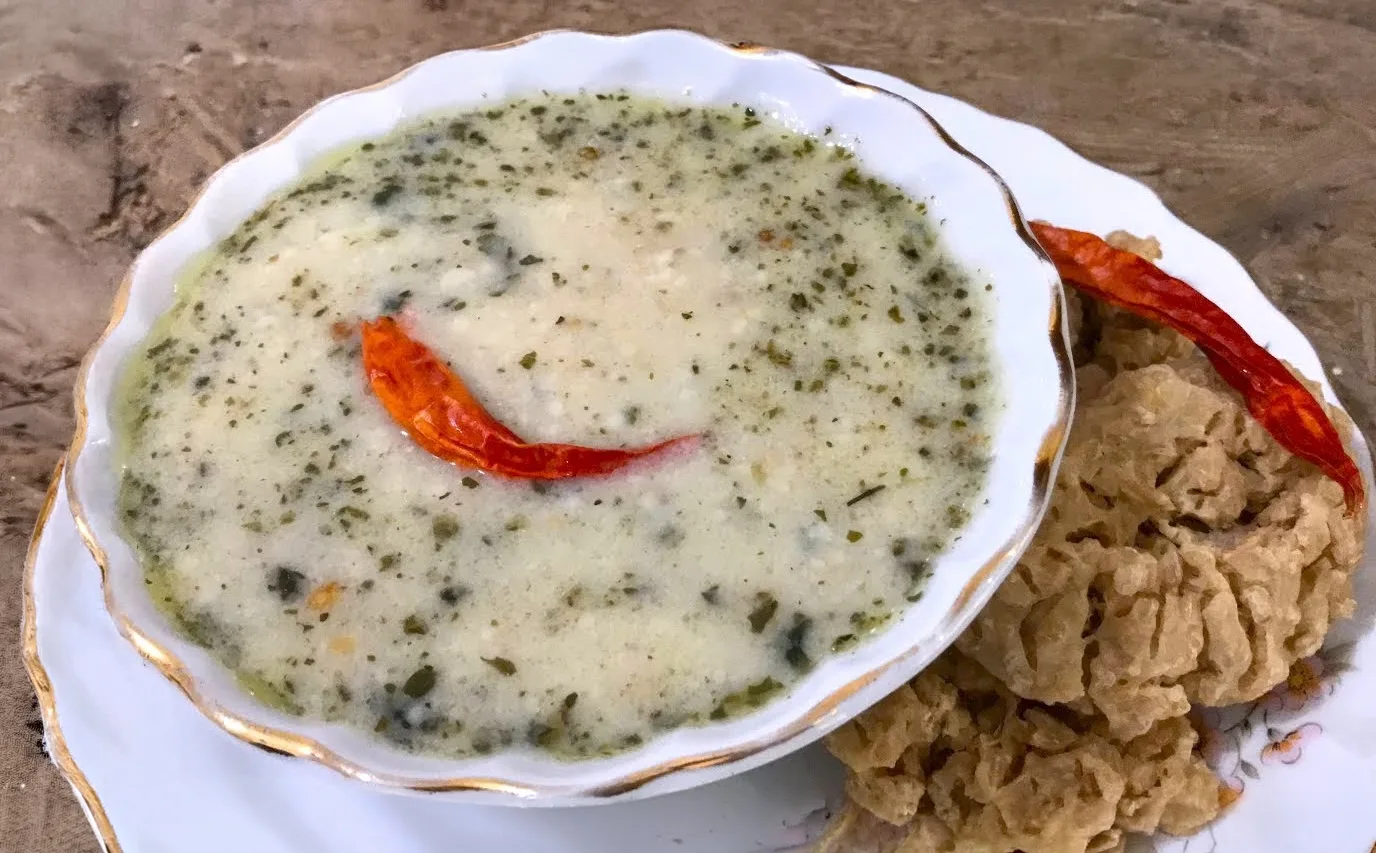
Made from tarhana fermented with village yogurt and cracked wheat, eaten in winter with minted, garlicky butter.
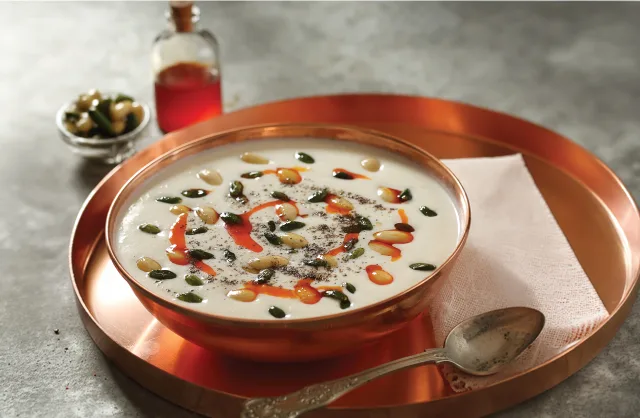
Cracked wheat, strained yogurt and bone broth topped with pistachios and almonds — a thick yogurt soup for guests.
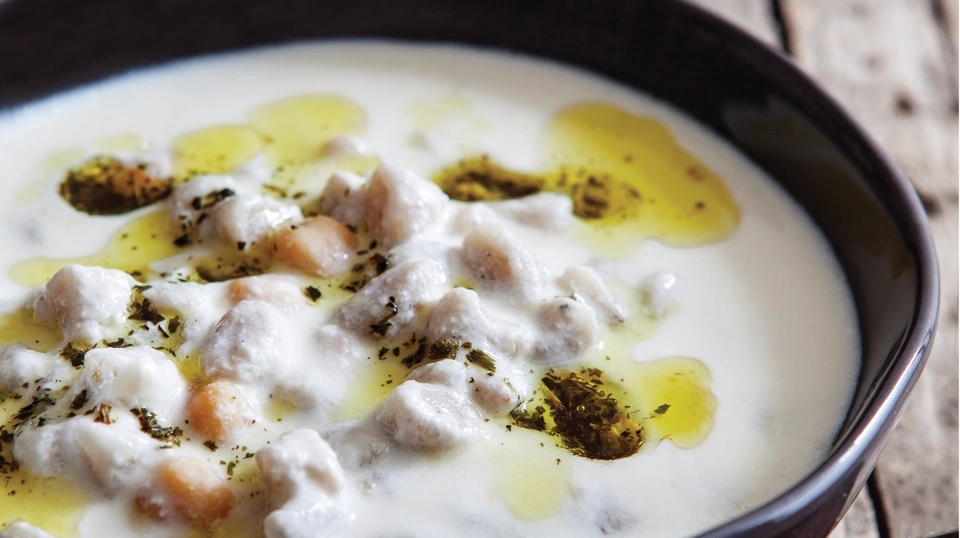
Tiny minced-filled pastry squares cooked with chickpeas and strained yogurt, finished with minted butter — a yogurt soup.
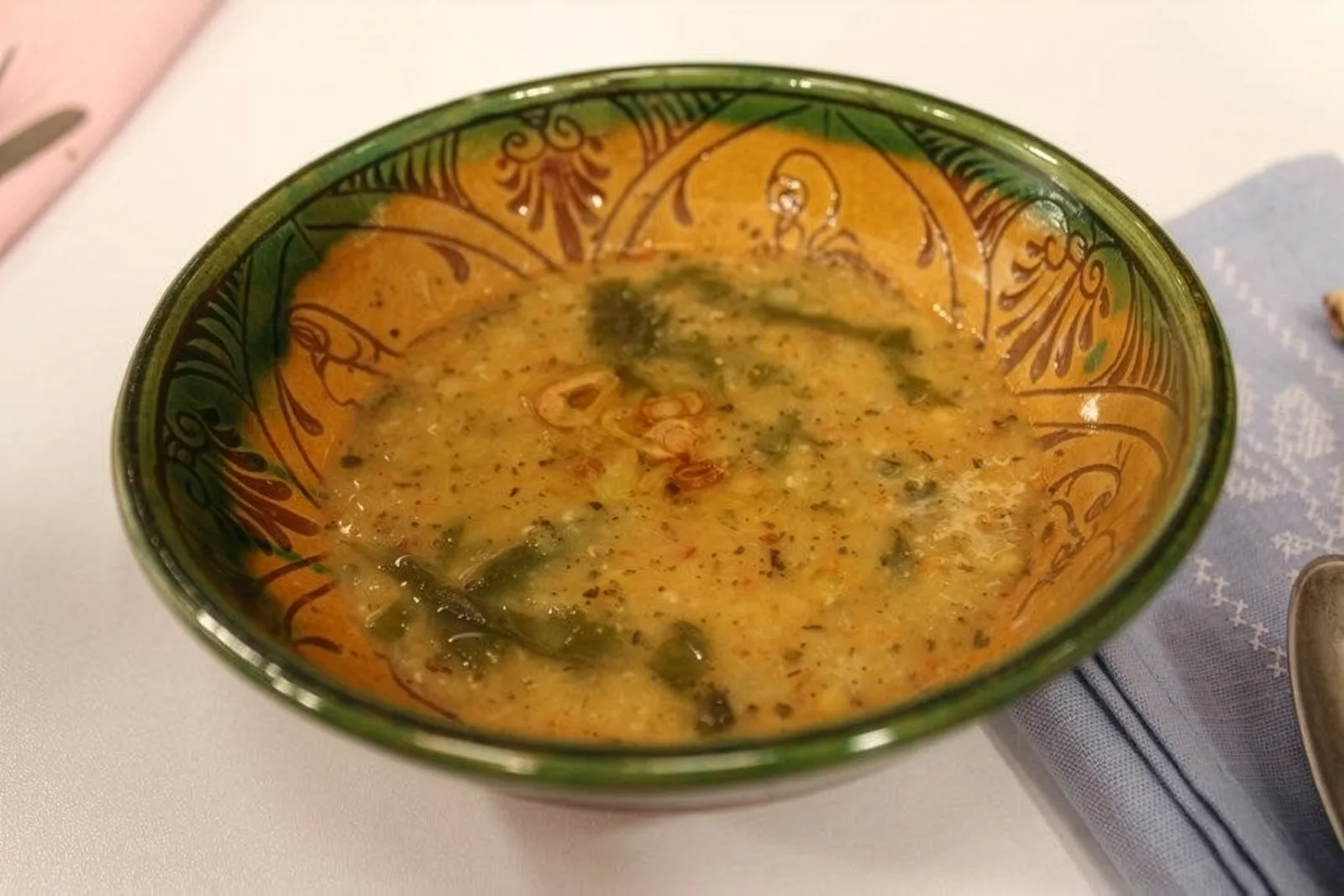
The local name for red lentils — cooked with garlic and dried mint and soured with pomegranate molasses or lemon.
Stews & Hearty Dishes
Heartier dishes built on meat, pulses, vegetables or yogurt, cooked in a pot or worked on a tray: some belong to the feast and holiday table, others to a single short season.
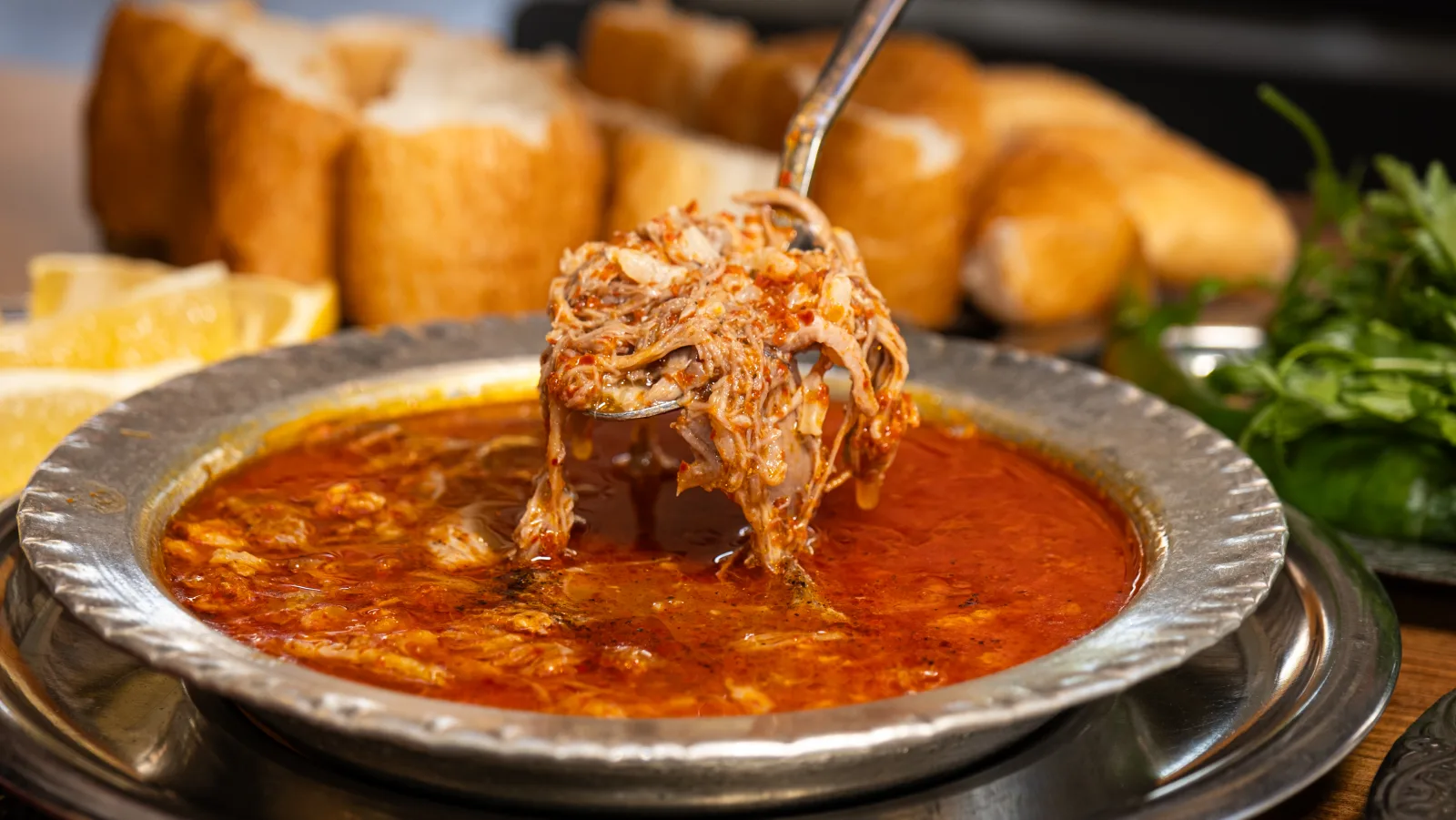
Lamb, rice and plenty of garlic simmered in a copper sahan — Antep's famous early-morning meat dish.
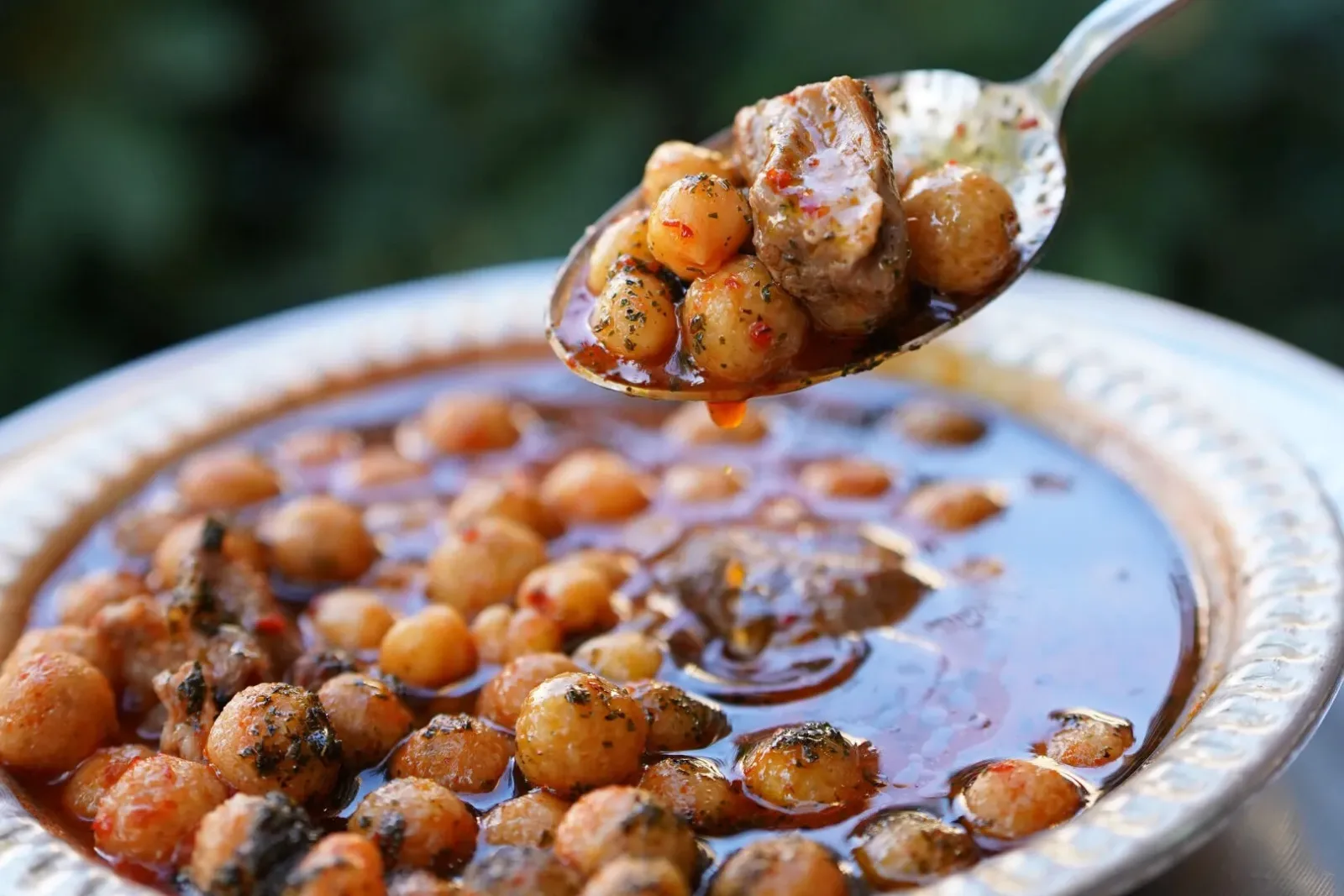
Tiny bulgur-and-meat köftes cooked with meat and chickpeas in a broth soured with sumac or lemon — a dish for gatherings.
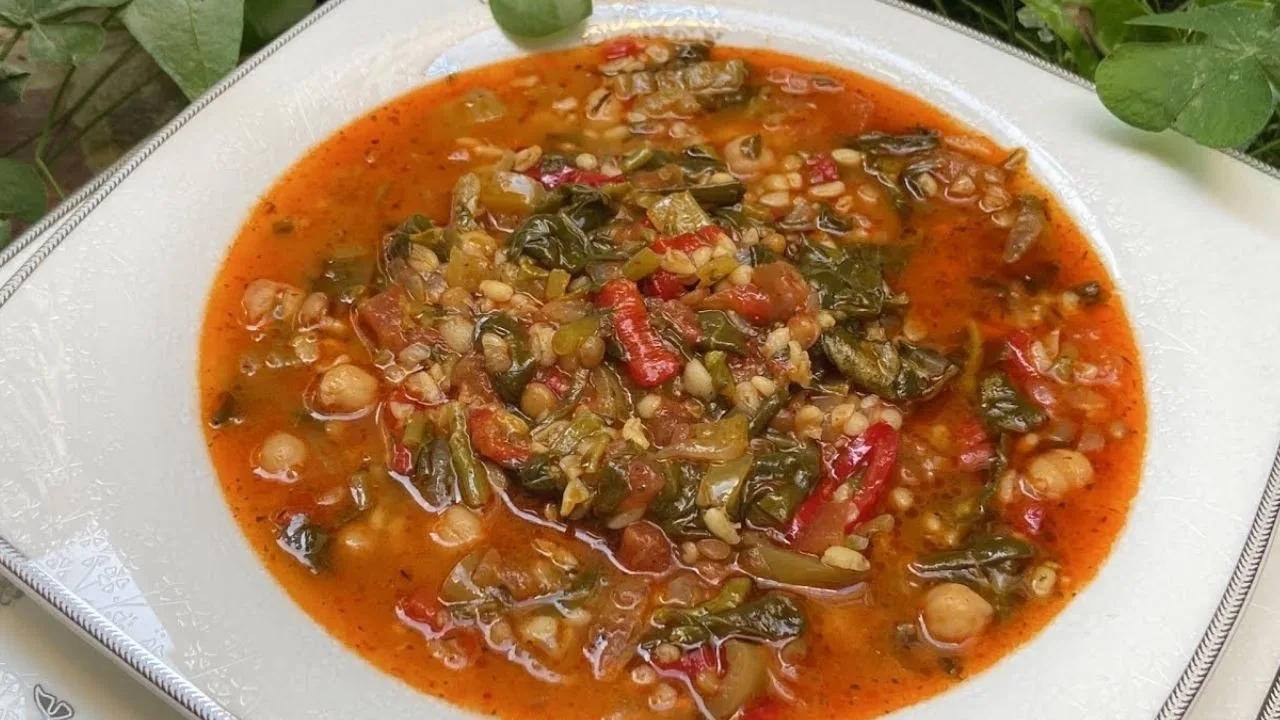
Purslane cooked with green lentils, chickpeas, black-eyed peas and bulgur and soured with sumac — refreshing and filling.
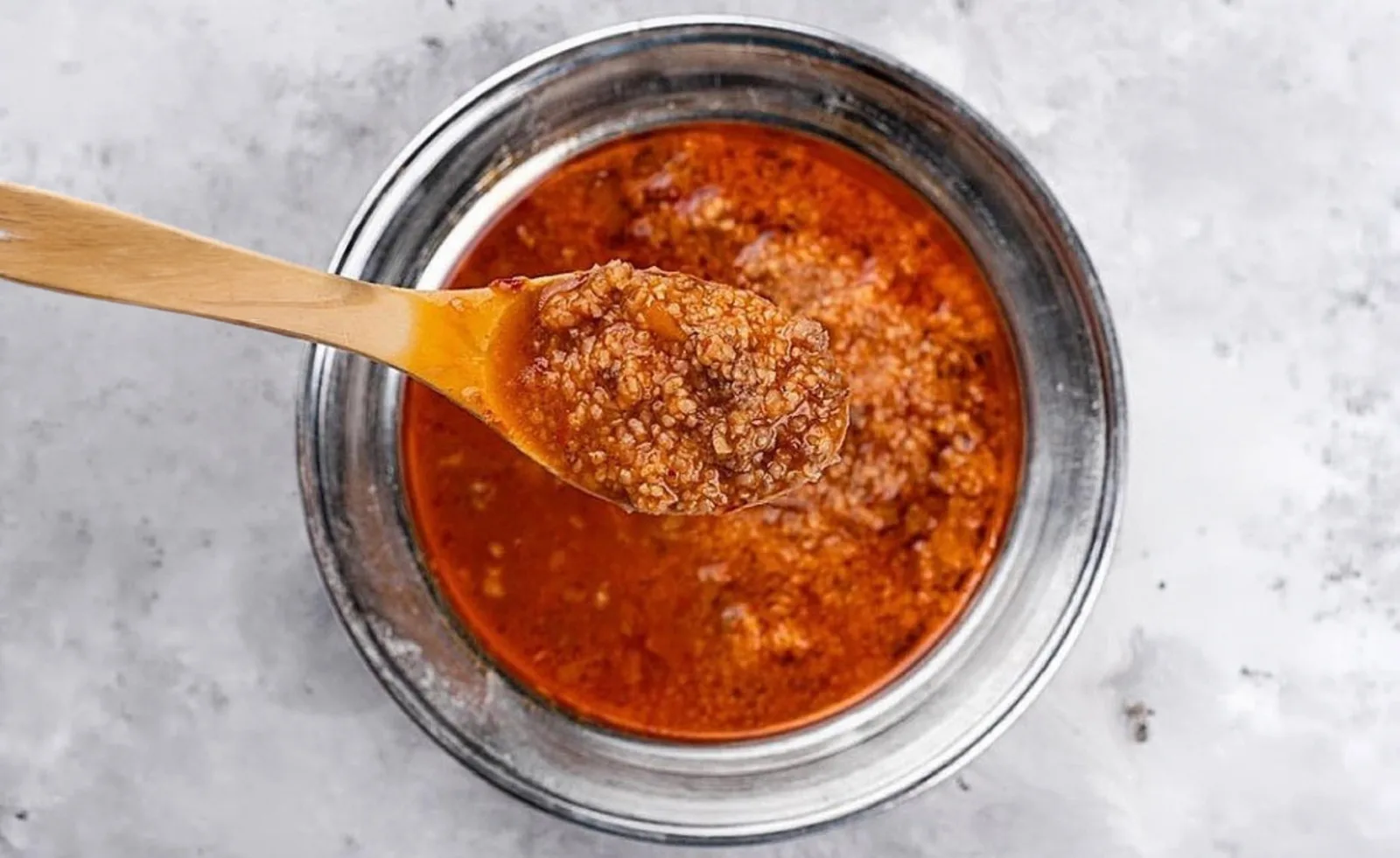
Here “simit” means coarse bulgur — cooked with tomato paste, onion and pepper, a plain, filling pre-dawn dish.
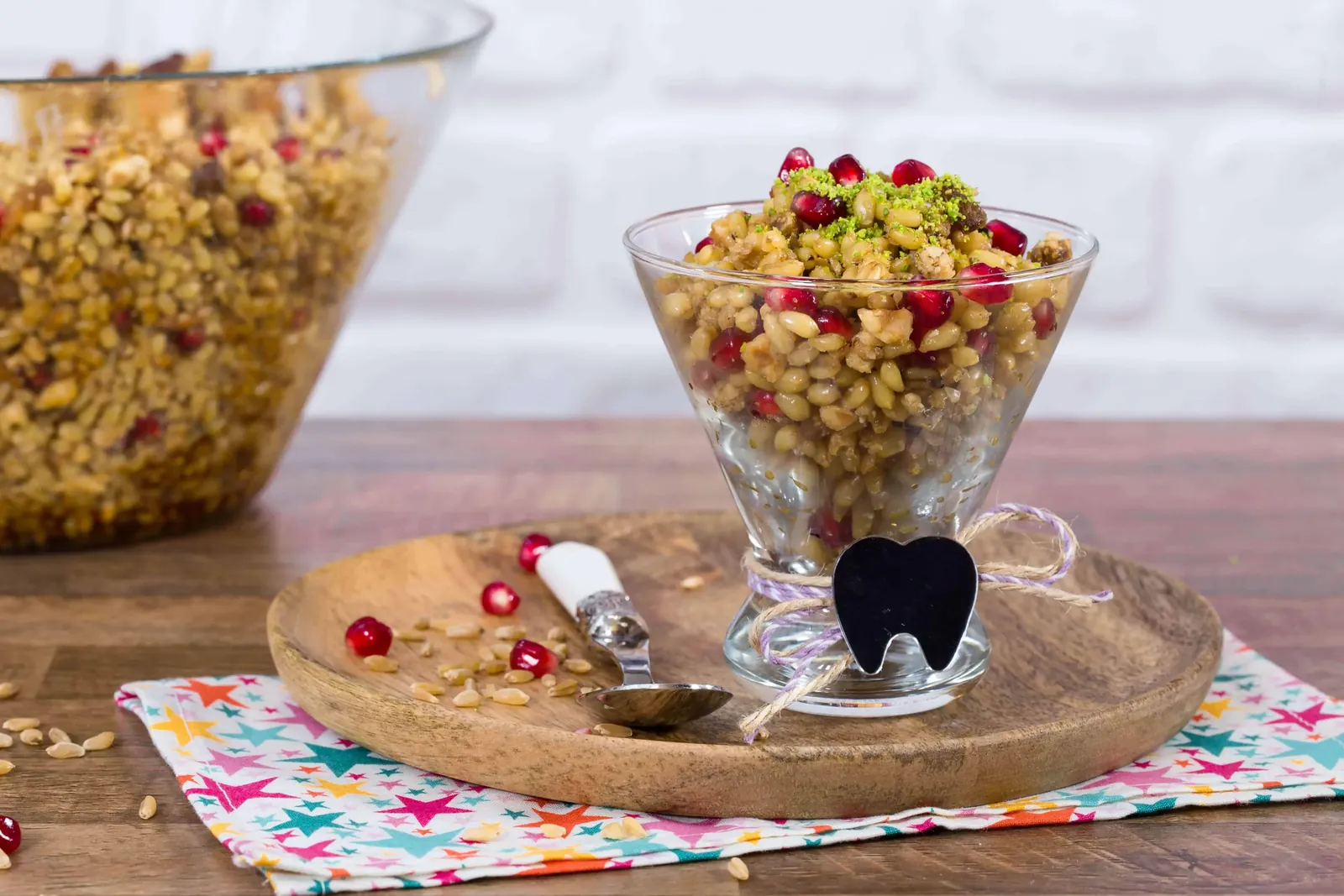
Aşure style wheat and chickpeas boiled until the grains burst open — the registered dish shared with family and relatives when a baby's first tooth appears.
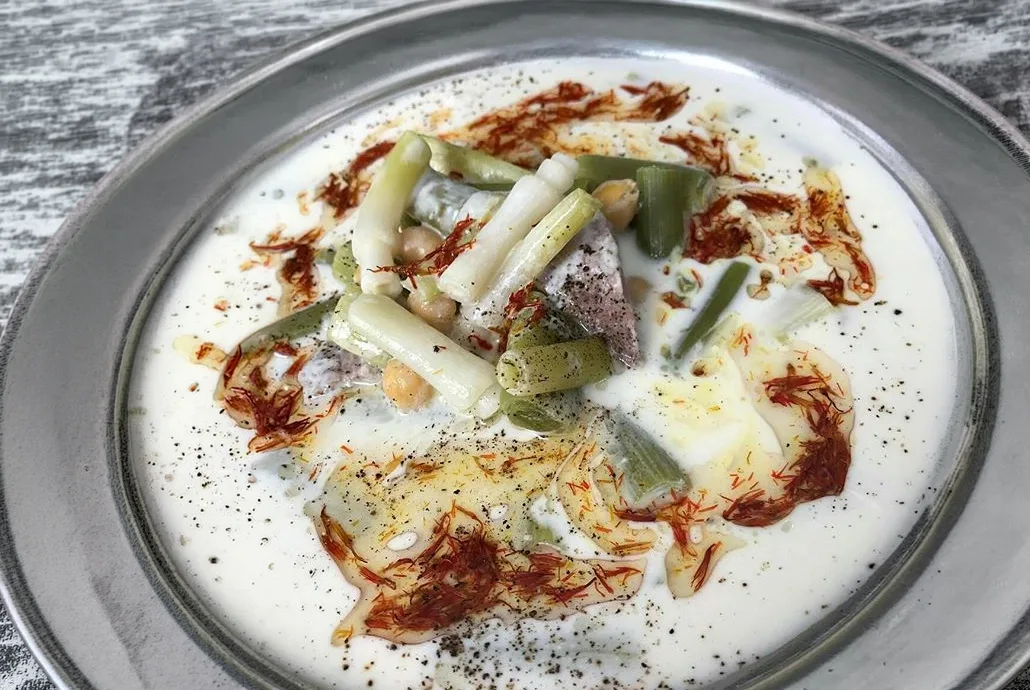
Fresh garlic in the lead, cooked with lamb, chickpeas and a yogurt liaison — made only in its short yearly season.
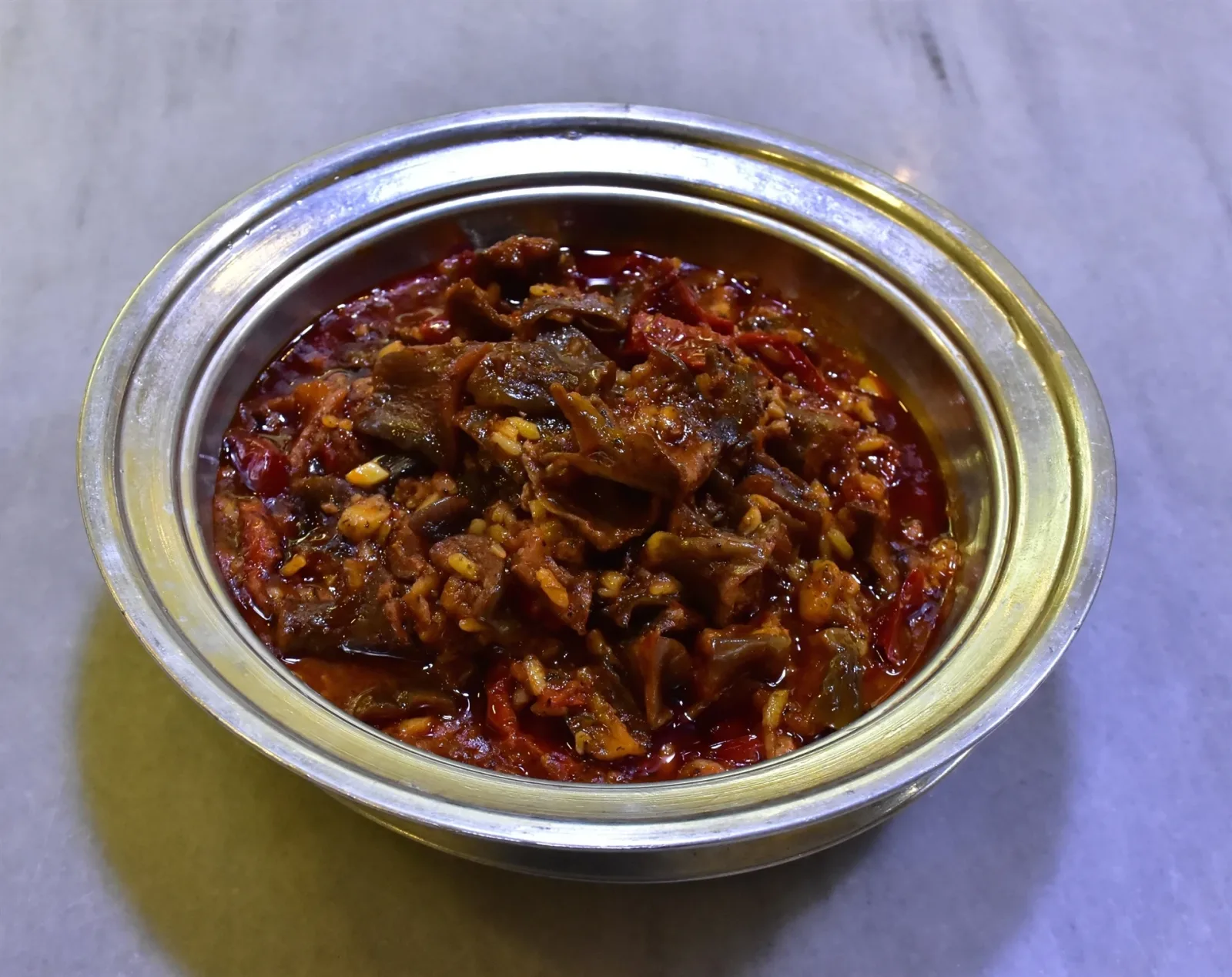
Sun-dried stuffing-eggplant (börk/mıcırık) cooked with rice, meat and tomato paste — a dried-eggplant stew eaten with yogurt.
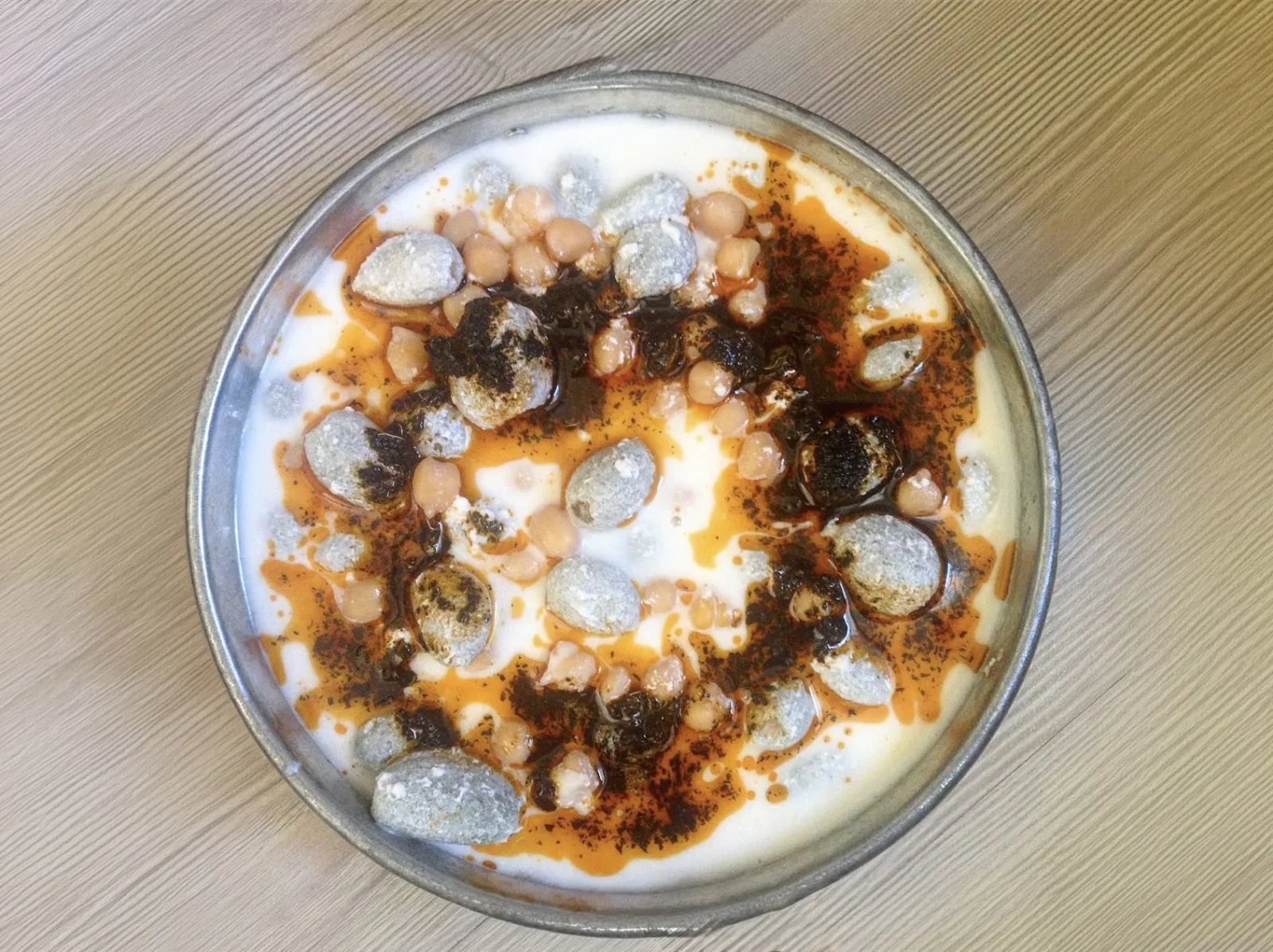
Built on fresh green almonds (çağla) with lamb and chickpeas — its sourness from the almonds, an early-spring dish.
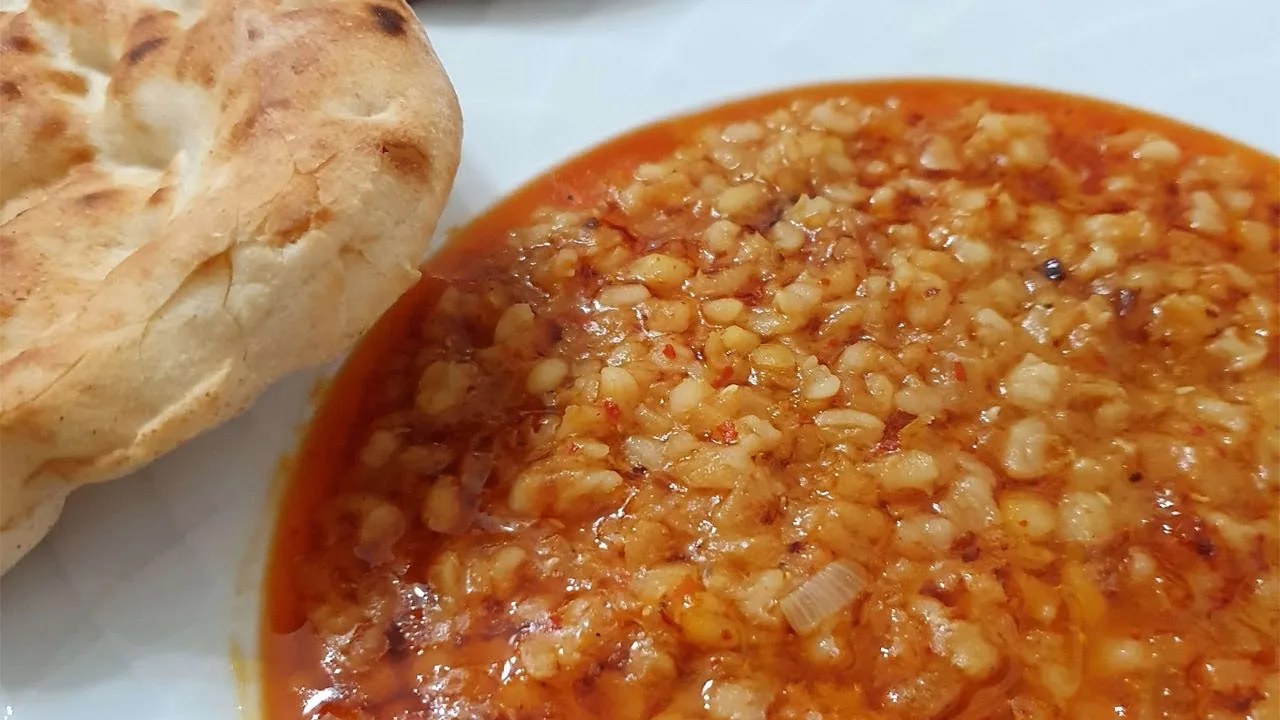
Red lentils and rice-grade bulgur cooked with tomato paste into a thick, porridge-like dish, finished with onion-and-pepper oil.
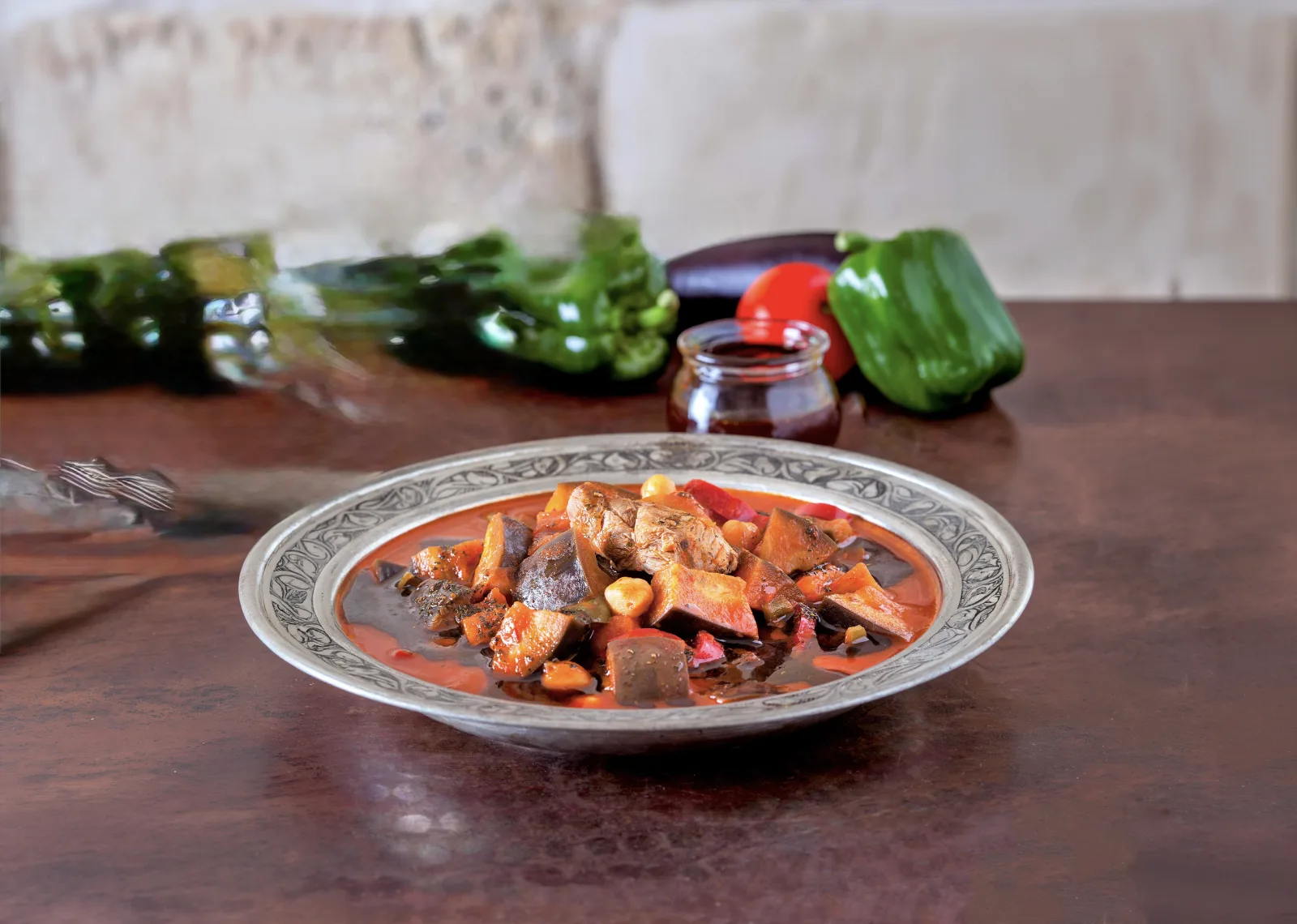
Cubed meat, eggplant and chickpeas with tomato and pepper, soured with sumac and lemon — the shared dish of holiday and wedding tables.
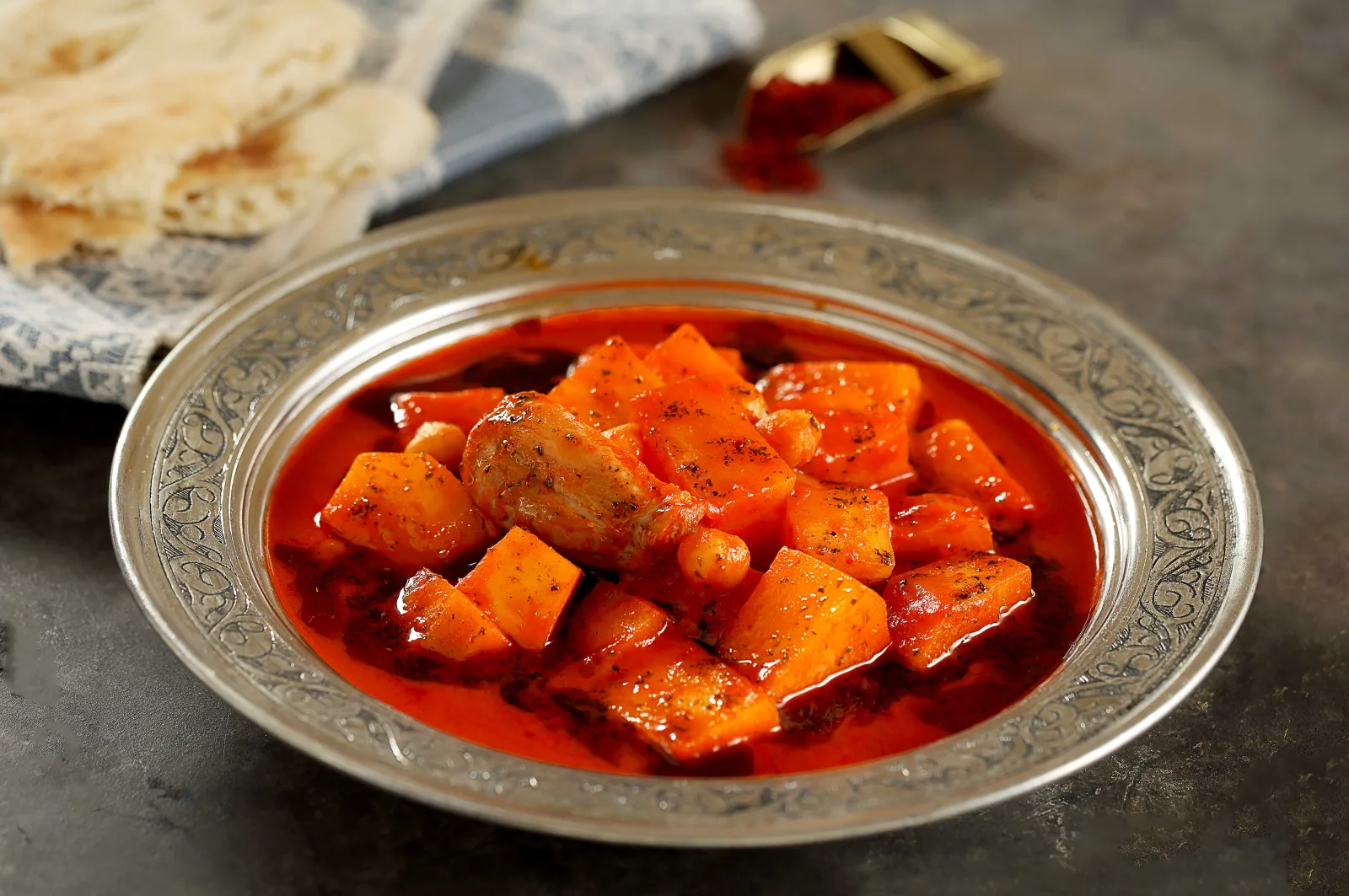
Seasonal squash cooked with meat and chickpeas, lightly soured with sumac or lemon and served with minted hot oil.
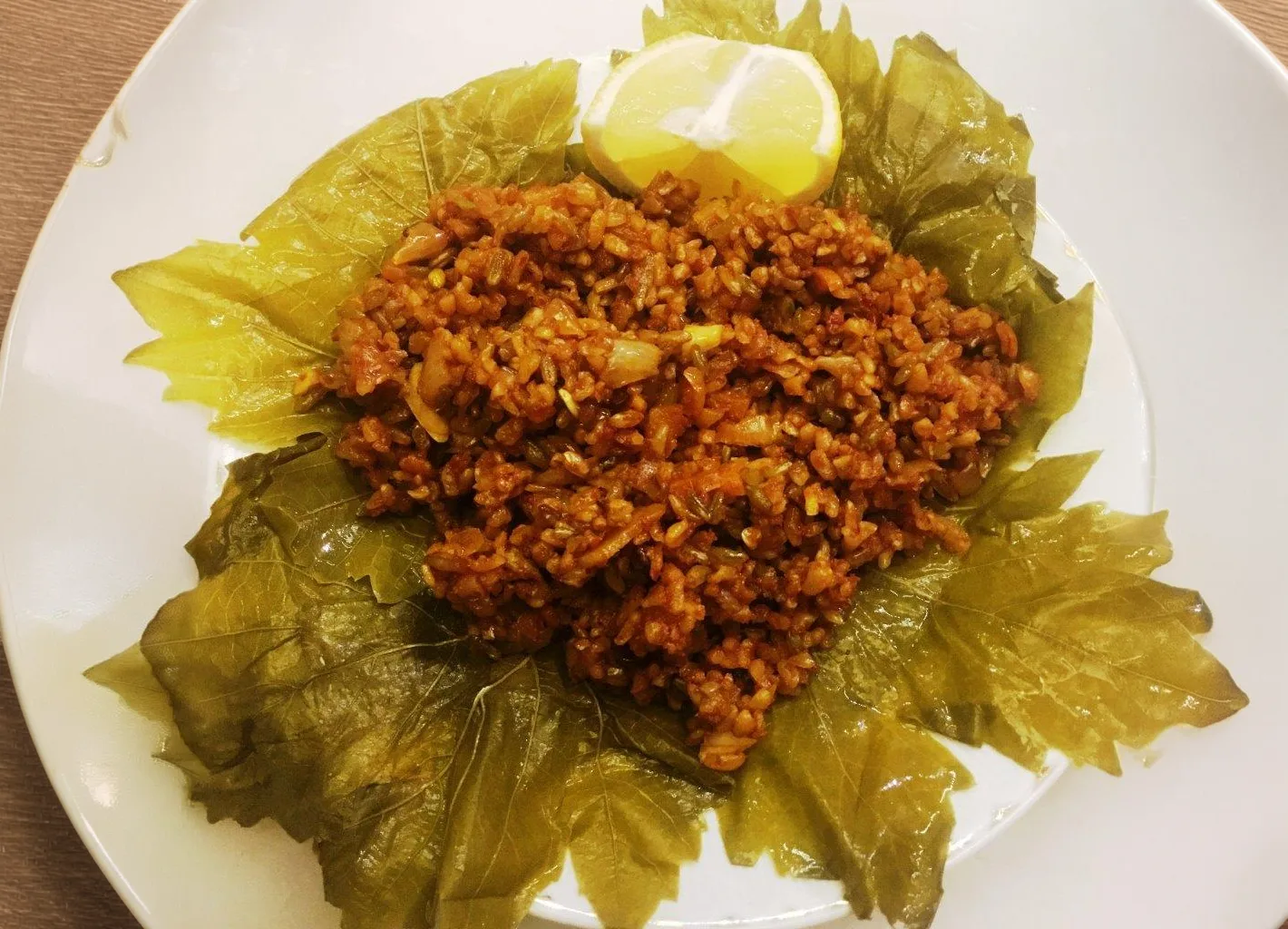
Fine bulgur kneaded on a tray with tomato paste, oil and spices and no water — a cold bulgur dish akin to çiğ köfte.
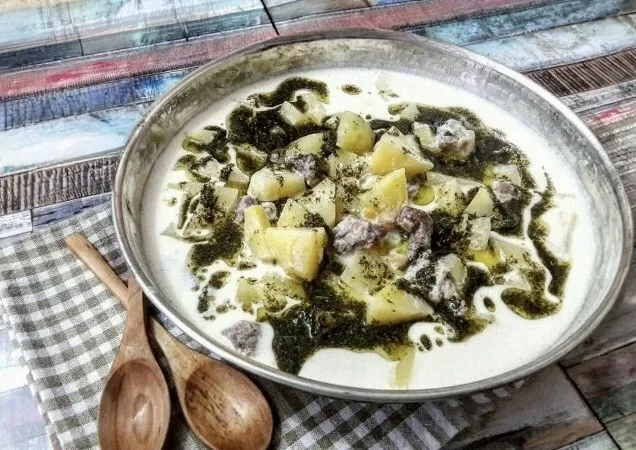
Large-cut potatoes simmered with meat and chickpeas in egg-stabilized strained yogurt, finished with safflower oil — a hot yogurt dish.
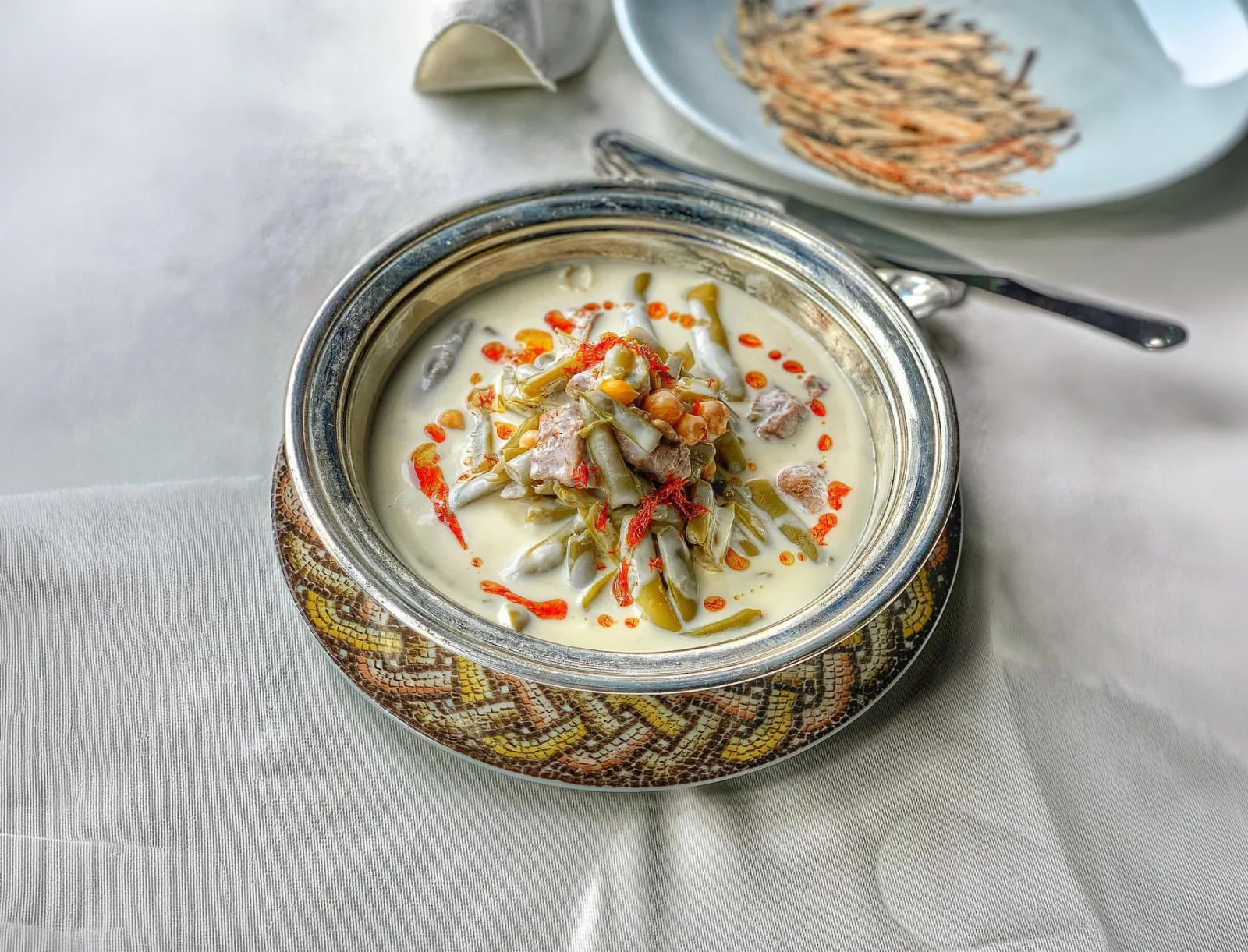
Green beans, chickpeas and pieces of meat with egg-tempered strained yogurt, finished with safflower hot oil — a warm summer dish.
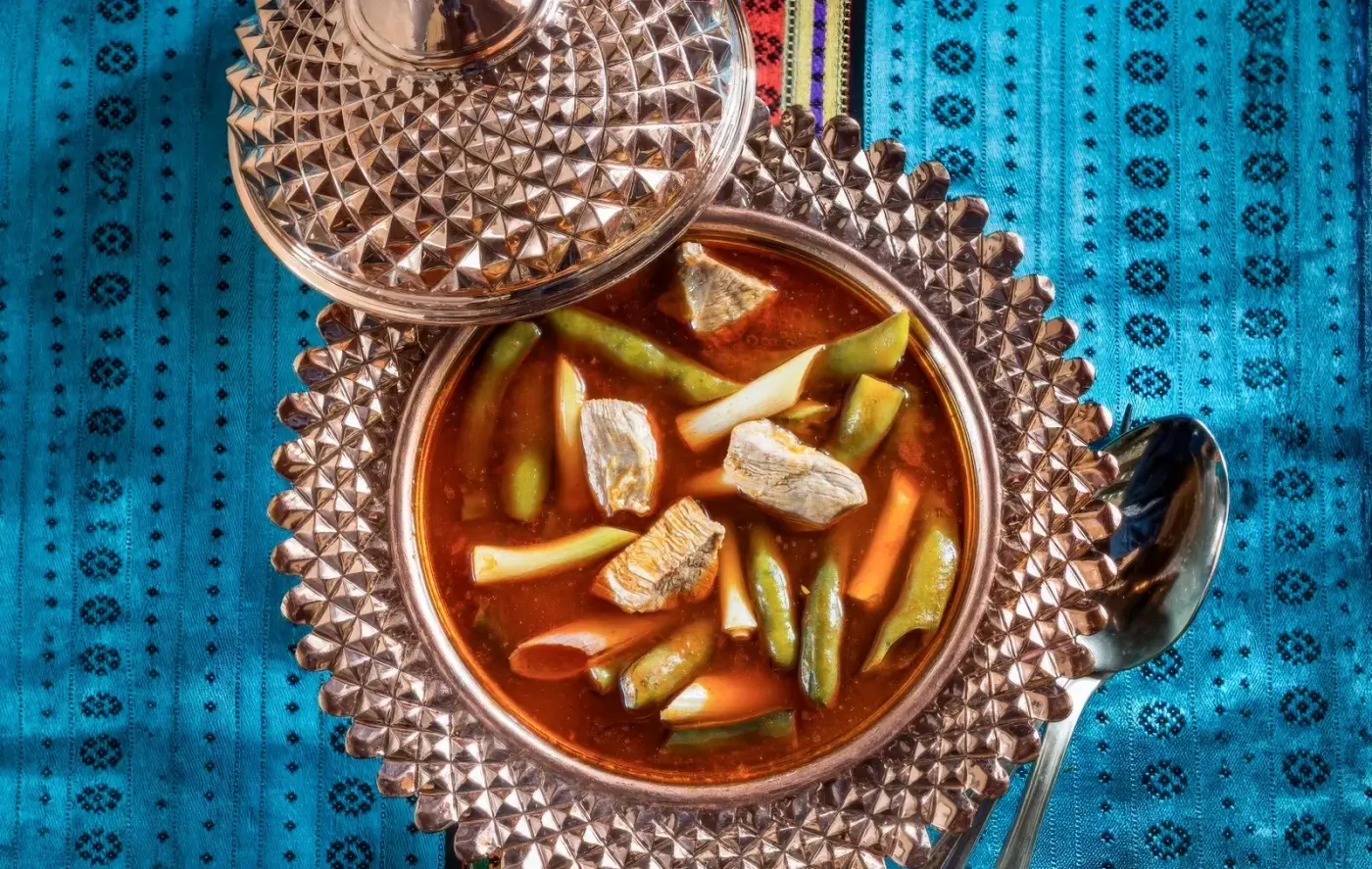
Fresh fava beans braised with diced lamb or veal; a registered hot spring dish. It is not a cold meze but a substantial hot main course, and it contains meat. (registered, No 1336)
Three things define Gaziantep's soups and stews: the yogurt that gives many dishes a faintly sour character and a silky texture (most often a yogurt-and-egg liaison); the fresh garlic that lends sharpness and aroma, alongside fresh onion, mint and spring greens in season; and the heartiness given by overnight slow-cooked lamb and chickpeas. So in this city a brothy dish is, more often than not, a seasonal tradition — cooked according to whatever the month has brought to the market.
What Makes Antep Soups Distinct?
The line that separates Gaziantep's soups and stews from other cuisines usually lies in the liaison and in a sense of season. Yogurt here is not merely a texture but a faintly sour backbone that defines a dish's character; garlic is often used not dried but fresh, as it comes to the market in spring; and the meat is never rushed, simmering slowly for hours in most dishes. At the same table, a beyran brought to a boil in a sahan in the early morning can sit beside the yogurt-based yuvalama of a holiday morning.
To see the city's wider repertoire of kebabs, desserts and pastries beyond its brothy dishes, take a look at the Gastronomy page; the detailed recipe for each dish is reachable from the links above.
Frequently Asked Questions
How many kinds of soup and stew does Gaziantep have?
The city's soup and stew repertoire is wide; this page lists 25 dishes in total under two headings — 10 soups and 15 stews. You can read the history, cultural background and ingredients of each on its own detailed page.
Why do yogurt and garlic stand out so much in Antep soups?
Yogurt is the basis of the liaison that gives many dishes a faintly sour character and a silky texture; fresh garlic lends sharpness and aroma. Dishes such as lebeniye, şiveydiz and yuvalama are built on this yogurt-and-garlic axis.
Is beyran a soup or a stew (aşı)?
People in Gaziantep usually describe beyran not as a "soup" but as a hot meat dish served in a copper sahan over a roaring flame. In the city, a fluid bowl eaten with a spoon is called a soup, while the heartier, meat-rich one is often called an aşı (a stew).
Which Gaziantep soups carry a geographical indication?
Among the dishes on this page, Lebeniye Soup is registered as a geographical indication by TÜRKPATENT under the name "Gaziantep Lebeniye Çorbası / Antep Lebeniye Çorbası." The registration protects the recipe and the regional identity.
Why is Gaziantep a UNESCO City of Gastronomy?
Gaziantep was, in 2015, the first Turkish city admitted to the UNESCO Creative Cities Network as a City of Gastronomy. The breadth of its soups and stews, its deep-rooted culinary traditions and the number of its registered regional products are among the main grounds for the title.