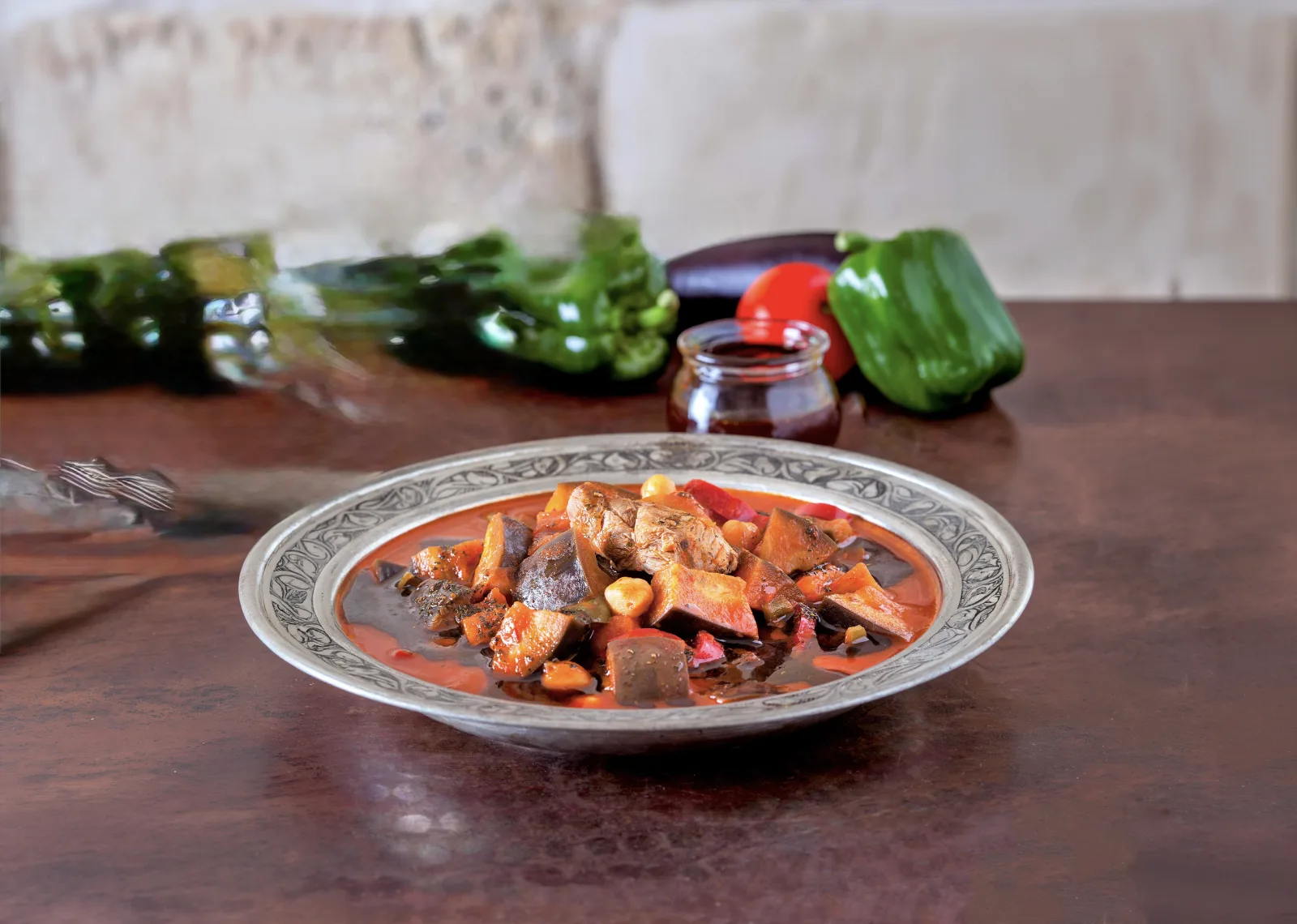
Doğrama is a hearty meat dish particular to Gaziantep, in which cubed meat, eggplant and chickpeas meet tomato and pepper, are soured with sumac and lemon, and are finished with minted butter drizzled over the top. Also called "dorgama" in the local dialect, the dish takes its name from the way its meat and vegetables are coarsely "chopped" (doğranmış). Doğrama can be an everyday evening meal, but it earns its true reputation at festival, wedding and thanksgiving tables; it is a communal feast dish cooked in large cauldrons to feed crowds and built around sharing.
The identity of doğrama springs from the harmony of a few essentials: meltingly tender cubed meat, eggplant cut into large pieces, chickpeas soaked and boiled in advance, tomato and pepper, the tang lent by sumac and lemon, and the minted butter sauce kept for the very end. The fact that the dish is also known locally as "patlıcan ekşilisi" (sour eggplant) comes from this sour-and-spiced character. Doğrama was registered as a geographical indication under the name "Gaziantep Doğrama / Antep Doğrama" by TÜRKPATENT in 2021, protecting both its name and its authentic method.
What Is Doğrama and What Is in It?
Doğrama is a meat dish in which coarsely chopped cubed meat, eggplant and chickpeas are cooked together with tomato and pepper, soured with sumac and lemon, and finished with hot minted butter drizzled over the top. The very word "doğrama" points to the fact that the ingredients are cut not finely but into bite-sized, large pieces and served together. It is also known locally as "dorgama" and "patlıcan ekşilisi" (sour eggplant).
Core Components
- Cubed Meat: The body of doğrama is built from lamb or beef cut into large cubes. The meat sets the foundation of the dish; it is sautéed with its fat and cooked until tender, giving doğrama a full, meaty aroma.
- Eggplant: Cut into large pieces, eggplant is doğrama's most defining vegetable. Cooking together with the meat, it lends the dish both its texture and its rich flavour; this is why the dish is also called "patlıcan ekşilisi" locally.
- Chickpeas: Soaked overnight and boiled, chickpeas give doğrama both texture and substance. With their plump grains they accompany the meat and eggplant, making the dish more nourishing.
- Tomato, Pepper and Paste: Doğrama's sauce arises from the meeting of chopped tomato, long green peppers and tomato/pepper paste. This base gives the dish its colour, its body and a mild spiced depth.
- Sumac and Lemon: The signature taste of doğrama is the distinct tang lent by sumac and lemon (and, at some tables, pomegranate molasses). This sour note balances the richness of the meat and eggplant, giving the dish a refreshing edge.
- Garlic and Black Pepper: Pounded garlic gives the dish sharpness, while black pepper adds a spiced depth. Together they complete doğrama's aroma.
- Minted Butter Sauce: The final touch at serving is the minted sauce made by adding dried mint to butter heated in a pan and drizzling it over the dish. This sauce gives doğrama both a bright fragrance and a complementary taste characteristic of the region.
The Geography of the Serving
Doğrama is served piping hot, with the meat, eggplant and chickpeas brought together on the plate and the minted butter drizzled over the top. In Gaziantep and its surroundings, doğrama's unfailing companion is bulgur pilaf; locally, bulgur pilaf is considered doğrama's "greatest helper." Fresh green peppers are usually present at the table beside the dish. This presentation turns doğrama into a meal in itself, its sour sauce balanced by the plain substance of the bulgur.
The History and Cultural Origins of Doğrama
Doğrama is a product of Gaziantep's feast culture built on crowded tables. Its structure, bringing meat, vegetable and legume together in a single pot, makes it both filling and a dish that can reach many people at once. In this respect doğrama belongs to the "cauldron dish" tradition of Antep cuisine — a table culture shaped around gathering, sharing and cooking in company.
The Origin of the Name
The name of the dish comes directly from the basic action in its preparation: the coarse chopping (doğrama) of the meat and vegetables. In this respect doğrama is one of those folk dishes that carry the form of their ingredient in their name. In the Gaziantep dialect the dish is often pronounced "dorgama," the local pronunciation of the word "doğrama." Because of the dominant role of eggplant and the sumac-and-lemon tang, the dish is also known popularly as "patlıcan ekşilisi" (sour eggplant).
A Dish That Brings the Table Together
The origin of doğrama is intertwined with the moments when communities gathered in Antep. At tables where relatives met for a religious holiday, where crowds of guests were fed at weddings, and where food was distributed to neighbours in thanksgiving when a wish came true, doğrama has often taken pride of place. Cooked and shared in large cauldrons, it became not just a plate of food but an occasion for coming together.
Doğrama was entered into the TÜRKPATENT geographical indications register on 15.05.2021 under the name "Gaziantep Doğrama / Antep Doğrama" as a Geographical Indication (Mahreç İşareti) with No 755. The application was made on 29.06.2020 (file no C2020/160) by the Gaziantep Metropolitan Municipality. The registration guarantees that this name may be used only for a product tied to Gaziantep and made with the defined ingredients and method.
The Doğrama Tradition and Ritual in Gaziantep
In Gaziantep, doğrama is not merely a dish; it is the table's expression of coming together and sharing. With its structure favoured at crowded gatherings, doğrama accompanies the city's moments that bring communities together — religious holidays, weddings and thanksgiving — and it also takes its place at everyday evening tables.
A Dish for Festival and Wedding Tables
Doğrama is among the dishes never missing from celebrations, weddings and religious holidays in Gaziantep. Its ability to feed many people at once makes it a practical and impressive choice for crowded tables. Cooked in large cauldrons and shared in company, doğrama stands out as an expression of hospitality and abundance.
Season and Place at the Table
Doğrama appears more often at tables in the seasons when eggplant is plentiful; yet it is a dish that can be cooked year-round with dried and prepared ingredients. At the table, rich meat spreads are laid out where doğrama sits alongside other deep-rooted Gaziantep dishes such as beyran; doğrama's chief companion, however, is always bulgur pilaf and fresh green peppers.
The Taste of a Sour and Minted Balance
Doğrama's signature on the palate is the meeting of sour and minted fat. The sharp tang of sumac and lemon cuts through the richness of the meat and eggplant, while the minted butter drizzled on at the very end gives the dish a warm, aromatic finish. This balance sets doğrama apart among the sour meat dishes of Gaziantep.
Why You Should Try It
A single plate of doğrama carries Gaziantep's sharing-based table culture to the palate in one vessel: the tenderness of meltingly cooked meat meets the rich taste of eggplant, the substance of chickpeas, the freshness of a sumac-and-lemon tang and the aroma of minted butter. Gathering all of this into one meal alongside bulgur pilaf and fresh peppers, doğrama is best tasted in its truest form in the city where it was born, at a crowded festival or wedding table.
Frequently Asked Questions
What is doğrama and where is it from?
It is a meat dish particular to Gaziantep, in which cubed meat, eggplant and chickpeas are cooked with tomato and pepper, soured with sumac and lemon, and finished with minted butter on top.
What is in doğrama?
Large cubes of meat, eggplant, chickpeas, tomato, pepper, paste, garlic, black pepper, sumac and lemon for tang, and a minted butter sauce drizzled over it at serving.
Why is doğrama also called "dorgama" and "sour eggplant"?
"Dorgama" is the Gaziantep-dialect pronunciation of doğrama; because of the dominant role of eggplant and the sumac-and-lemon tang, the dish is also known as "patlıcan ekşilisi" (sour eggplant).
Does doğrama have a geographical indication?
Yes. "Gaziantep Doğrama / Antep Doğrama" was registered as a Geographical Indication (Mahreç İşareti) with No 755 by TÜRKPATENT on 15.05.2021.
When and with what is doğrama eaten?
It is often cooked for crowded tables at festivals, weddings and thanksgivings, and is also eaten at everyday evening meals. It is unfailingly served with bulgur pilaf and fresh green peppers.