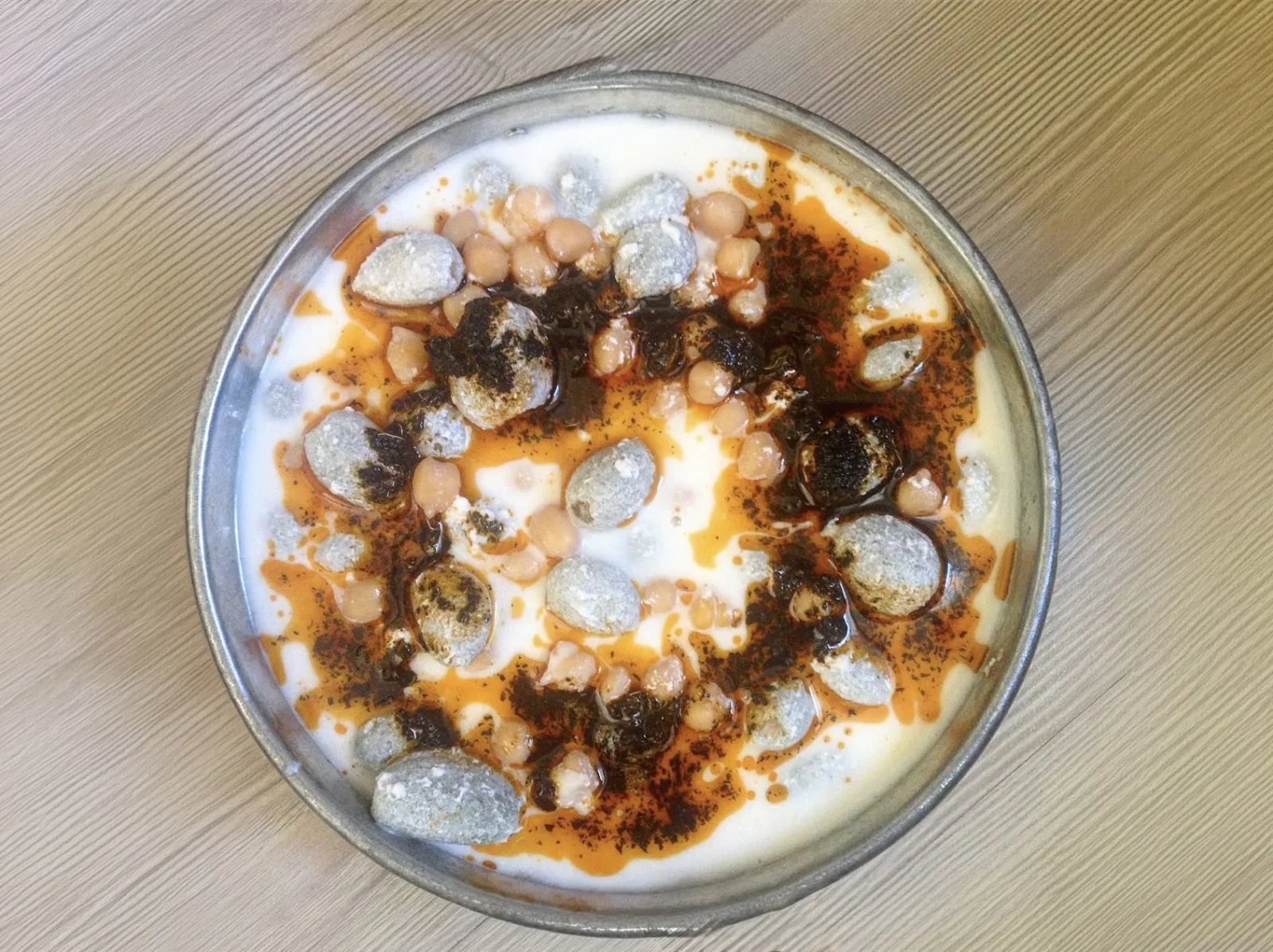
Green almond stew (Çağla Aşı) is a seasonal dish particular to Gaziantep: its main ingredient is the green almond (badem çağlası, the fresh unripe almond), cooked with lamb or mutton and chickpeas and made in either a yogurt or a tomato-paste version. Its sour character comes not from added lemon or vinegar but from the fresh tartness of the green almonds themselves; here the almond is both the dish's vegetable and its sour note. Because green almonds are available only for a short spring window, çağla aşı is cooked once a year, in the first weeks of spring, and in this way it is a flavour of the Antep table that heralds the season.
The identity of çağla aşı springs from the harmony of a few essentials: fresh green almonds halved lengthwise, their seed removed and briefly blanched; tender lamb/mutton suited to long cooking; pre-boiled chickpeas; and the sizzling fat drizzled over the dish before serving. The yogurt version is finished with black pepper and safflower (aspir) heated in fat, while the tomato-paste version is finished with black pepper and mint. Çağla aşı was registered as a geographical indication under the name "Gaziantep / Antep Çağla Aşı" by TÜRKPATENT in 2022.
What Is Green Almond Stew and What Is in It?
Green almond stew is a dish in which fresh green almonds are cooked together with lamb or mutton and chickpeas, made in two distinct versions — yogurt-based or tomato-paste-based — and drizzled with sizzling fat before serving. It is eaten piping hot, mostly with bulgur pilaf or bread, with a spoon. The defining taste of çağla aşı is the balance struck between the fresh tartness of the green almonds and the heartiness of the meat; that sourness comes directly from the almonds, without any lemon or vinegar added.
Core Components
- Green Almond (Fresh Unripe Almond): The main ingredient is the still-unripe almond, with a soft shell and a juicy interior. The green almonds are halved lengthwise, their soft seed removed, then briefly boiled and drained. The almond is both the dish's vegetable and its signature sour note; it is found fresh only in spring, and in other seasons its frozen or dried form is used.
- Lamb or Mutton: Meat gives çağla aşı its heartiness and depth; diced (kuşbaşı) lamb or mutton is preferred. The meat is cooked until tender, lending the dish a rich base of flavour.
- Chickpeas: Pre-soaked and boiled chickpeas are added along with the meat. With both their texture and their plant protein, the chickpeas make çağla aşı fuller and more nourishing.
- Yogurt or Tomato Paste: This is where the two main versions diverge. In the yogurt version, strained yogurt is whisked with flour or egg and added without curdling; in the tomato-paste version, tomato or pepper paste is used. This choice determines the colour and character of the dish.
- Sizzling Fat — Safflower or Mint: Sizzling fat prepared in butter, olive oil or clarified butter (sadeyağ) is drizzled over the dish just before serving. In yogurt çağla aşı this fat carries black pepper and safflower (aspir), while in the tomato-paste version it carries black pepper and mint.
- Fresh Garlic and Onion (Optional): At some tables the dish is given spring's fresh garlic and a little dry onion; these add a seasonal freshness and an aromatic depth to çağla aşı.
Two Versions, One Sourness
The most distinctive feature of çağla aşı is that it draws its sourness not from outside but from the green almond itself. The sour balance that yogurt soups usually build with lemon or vinegar is here achieved directly by the tartness of the fresh almond; so the dish takes both its vegetable and its acidity from the same ingredient. The two versions built on this — the soft, cool yogurt çağla aşı and the fuller, reddish tomato-paste çağla aşı — are two interpretations of the same main ingredient. Finishing the yogurt one with safflower fat and the tomato-paste one with minted fat completes each version with its own aroma.
The History and Cultural Origins of Green Almond Stew
Green almond stew is a typical example of Gaziantep's deep-rooted home-kitchen tradition of bringing the seasonal harvest to the table. In a region with a strong garden and vineyard culture, spring — when the still-unripe fresh almond becomes briefly abundant — is the time when the green almond meets meat and chickpeas and turns into a dish all its own. This structure is tightly bound to Antep cuisine's habit of making the most of nature's seasonal offerings and to its "sour stew" tradition; the history of çağla aşı, too, reaches far back and holds an important place in Gaziantep's culinary culture.
The Origin of the Name
The name "çağla aşı" comes from the combination of çağla — the dish's main ingredient — with aş, meaning a cooked dish. Çağla describes a fruit — here the almond — in its still-unripe, green, soft-seeded state; the term "badem çağlası" likewise denotes this fresh green almond. The name thus directly reflects the essence of the dish: a seasonal "aş" centred on the fresh green almond, cooked with meat and chickpeas. Under its registered name the dish is known both as "Gaziantep Çağla Aşı" and "Antep Çağla Aşı."
A Dish That Heralds Spring
Green almond stew is a dish whose origin lies not with the market tradesmen but in the home kitchen. The appearance of green almonds at the market is, in popular usage, the sign that spring has officially arrived; in this sense çağla aşı is not merely a recipe but a herald of the changing season reflected on the table. The short life of the fresh almond has turned the dish into a tradition of only a few weeks a year and carried it from generation to generation as a special spring flavour that Antep families wait for patiently.
Gaziantep / Antep Çağla Aşı was entered into the TÜRKPATENT geographical indications register on 24.01.2022 as a Geographical Indication (Mahreç İşareti) with No 1007. The application was made on 19.02.2021 (application no C2021/000073) by the Gaziantep Development Foundation (Gaziantep'i Geliştirme Vakfı). The registration guarantees that the name "Gaziantep / Antep Çağla Aşı" may be used only for a product tied to Gaziantep and made with the defined ingredients and method.
The Green Almond Stew Tradition and Ritual in Gaziantep
In Gaziantep, because green almond stew is cooked not all year round but only within a short seasonal window, it is a special dish that brings a festive air when it appears on the table. This aş, in which vegetable, meat and pulse meet in a single pot, becomes one of the most awaited recipes of Antep cuisine in the first weeks of spring, with a balance that is both filling and, thanks to the fresh tartness of the green almonds, never wearying to the palate.
Once a Year, a Short Season
The most defining aspect of çağla aşı is its seasonality: green almonds are found fresh at the market only in spring, usually within a short period lasting from a few weeks to at most a month. For this reason the dish is traditionally cooked once a year, in that short window when the almonds are fresh. Although it can also be made in other seasons with frozen or dried green almonds, the most prized is the one prepared in the spring days when fresh almonds are abundant; this short life turns çağla aşı into an awaited and treasured spring tradition.
Its Place at the Table
Green almond stew is eaten piping hot, with sizzling fat drizzled over it, with a spoon, and is traditionally served with bulgur pilaf or bread on the side. The yogurt version makes a cool, soft meal, while the tomato-paste version makes a fuller plate; both bring the freshness of spring to the table. Those curious about Gaziantep cuisine's sour-stew and seasonal-dish tradition can find a similar seasonal sourness in dishes such as kabaklama; the city's other signature flavours can be reached from the Gastronomy page.
Why You Should Try It
A single bowl of green almond stew carries Gaziantep's spring and its tradition of making the most of the seasonal harvest to the palate in one plate: the fresh tartness of green almonds, the heartiness of lamb, the fullness of chickpeas and the aroma of the safflower or minted sizzling fat are balanced together. And the truest way to taste it is in the short spring window when the almonds are fresh, in the city where it was born, with a plate of bulgur pilaf on the side.
Frequently Asked Questions
What is green almond stew and where is it from?
It is a seasonal dish particular to Gaziantep, made with green almonds (badem çağlası), lamb/mutton and chickpeas, in a yogurt or tomato-paste version.
What is in green almond stew?
Green almonds, lamb or mutton, chickpeas; a yogurt or tomato-paste base; and sizzling fat carrying black pepper with safflower (yogurt version) or black pepper with mint (tomato-paste version).
Where does the sourness of green almond stew come from?
Not from lemon or vinegar but directly from the fresh tartness of the green almonds themselves; the almond gives the dish both its vegetable and its sour note.
In which season is green almond stew eaten?
In spring. Green almonds are fresh only for a few weeks to at most a month, so çağla aşı is usually cooked once a year.
Does green almond stew have a geographical indication?
Yes. Gaziantep / Antep Çağla Aşı was registered as a Geographical Indication (Mahreç İşareti) with No 1007 by TÜRKPATENT on 24.01.2022.