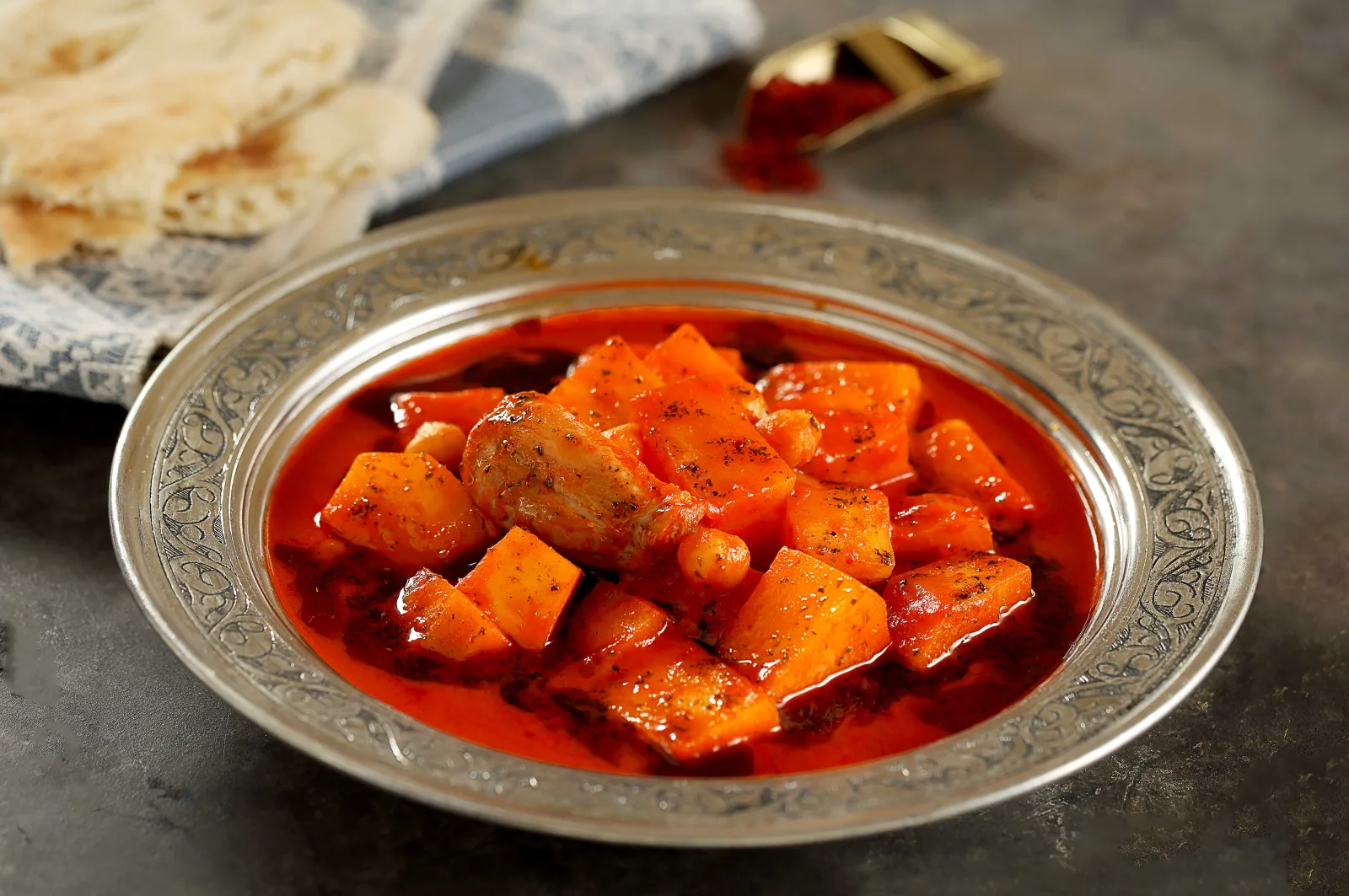
Kabaklama (Squash Stew) is a sour stew particular to Gaziantep: seasonal squash — summer or winter, depending on the time of year — cooked together with meat and chickpeas, lightly soured with sumac or lemon, and served with hot minted oil drizzled over it. Bringing the abundance of the vegetable together with the heartiness of meat and chickpeas, kabaklama is known for the balance it strikes between the sweetish softness of the squash, the depth of the meat and the fresh sourness of sumac. Served piping hot, eaten with a spoon and usually completed with a plate of bulgur pilaf, this dish is one of the deep-rooted flavours of the Antep home table.
The identity of kabaklama springs from the harmony of a few essentials: squash diced into cubes that hold their shape without falling apart, tender meat suited to long cooking, chickpeas soaked and boiled in advance, the depth lent by tomato/pepper paste and garlic, and the freshness of the sumac added at the very end. Behind these lies a kitchen skill that rests on adding the souring agent at exactly the right moment. Kabaklama was registered as a geographical indication under the name "Gaziantep Kabaklama / Antep Kabaklama" by TÜRKPATENT in 2021, protecting both its name and its authentic method.
What Is Kabaklama and What Is in It?
Kabaklama is a soupy vegetable dish in which seasonally chosen squash is cooked together with meat and chickpeas, seasoned with paste, garlic and spices, soured with sumac or lemon, and finished with hot minted oil poured over it before serving. It is eaten piping hot, with a spoon, most often alongside bulgur pilaf. The defining taste of kabaklama is the balance struck between the softness of the squash, the sourness of sumac and the aroma of mint.
Core Components
- Squash (According to Season): The body of the dish is the seasonally chosen squash: summer squash in the summer months, winter (sweet) squash in the winter months. The squash is peeled and seeded, cut into large cubes, and cooked so that it holds its shape rather than disintegrating.
- Meat: Meat gives kabaklama its heartiness and depth; cubed or bone-in pieces are preferred. The meat is cooked together with the chickpeas until tender and lends the dish a rich base of flavour.
- Chickpeas: Soaked the night before, the chickpeas are boiled together with the meat and added to the dish. With both their texture and their plant protein, the chickpeas make kabaklama fuller and more nourishing.
- Onion, Garlic and Paste: Finely chopped onion, crushed garlic and pepper-and-tomato paste build the aromatic base of the dish; it is these components that give kabaklama its reddish colour and full flavour.
- Sumac or Lemon: The signature taste of kabaklama, its sourness, comes from sumac (or pomegranate molasses or lemon). This sour note balances the sweetish softness of the squash and gives the dish a fresh character.
- Hot Minted Oil: Hot oil — clarified butter or olive oil — infused with dried mint, red chilli flakes and black pepper is drizzled over the dish just before serving. This final touch gives kabaklama both its aroma and an appetising finish.
The Art of Souring
The defining element of kabaklama is not so much its ingredients as the skill of the souring moment. The sumac or lemon is added not at random but at exactly the right moment — just before the squash has fully softened — so that the squash pieces keep their shape rather than falling apart and the dish gains a clear, balanced sourness rather than a muddy one. This skill of timing is the technical feature at the foundation of kabaklama's regional identity and of its registration as a geographical indication; it is also the detail that turns a plain home-cooked vegetable dish into an Antep plate whose balance has been carefully built.
The History and Cultural Origins of Kabaklama
Kabaklama is a typical example of Gaziantep's deep-rooted home-cooking tradition of bringing vegetable, meat and legume together in the same pot. In a region rich in garden produce, squash — in both its summer and winter varieties — took its place at the table throughout the year, and, enriched with meat and chickpeas and soured with sumac, it turned into a dish all its own. This structure is tightly bound to the "sour stew" tradition of Antep cuisine.
The Origin of the Name
The name "kabaklama" derives directly from kabak, the Turkish word for squash, the dish's principal ingredient; the "-lama" suffix is a common way of naming a dish built around a given ingredient. The name thus directly reflects the essence of the dish — a sour pot dish in which squash is central, cooked with meat and chickpeas. Under its registered name, the dish is referred to as both "Gaziantep Kabaklama" and "Antep Kabaklama."
A Dish Born at the Home Table
Kabaklama is a dish whose origins lie not with the market tradesmen but with the home kitchen. It became a way of making the most of the squash that arrived in season from the garden or the market, and of carrying meat and chickpeas to the table in balance with the vegetable; with its filling yet fresh character, it has been passed down from generation to generation as a practical family dish preferred especially in the warm months.
Gaziantep Kabaklama / Antep Kabaklama was entered into the TÜRKPATENT geographical indications register on 03.06.2021 as a Geographical Indication (Mahreç İşareti) with No 779. The application was made on 07.07.2020 by the Gaziantep Metropolitan Municipality. The registration guarantees that the name "Gaziantep Kabaklama / Antep Kabaklama" may be used only for a product tied to Gaziantep and made with the defined ingredients and method.
The Kabaklama Tradition and Ritual in Gaziantep
In Gaziantep, kabaklama is less a grand feast dish than a filling, refreshing meal of the everyday home table. Bringing vegetable, meat and legume together in a single pot, this dish — with a balance that both fills you up and, thanks to the sourness of sumac, does not tire the palate — becomes a recipe that Antep cuisine turns to often, especially in the months when squash is plentiful.
A Table That Changes with the Season
Kabaklama is a dish that changes character with the season: with summer squash in the summer months it takes on a lighter, fresher form, while in the winter months it gains a heartier consistency from the sweetish fullness of winter squash. The sour balance struck with sumac makes it especially cooling and appetising on hot days; in this respect kabaklama is a concrete example of Antep's habit of carrying seasonal produce to the table.
Its Place at the Table
Kabaklama is eaten piping hot, with minted oil drizzled over it, with a spoon, and is traditionally served alongside bulgur pilaf. To complete the table, it is accompanied by fresh Antep peppers, ayran and bread; at some tables, pickles join it as well. This pairing sets a typical Antep home table that balances the dish's fresh sourness with the fullness of the bulgur and the coolness of ayran. Those curious about the sour-stew tradition of Gaziantep cuisine can find a similar seasonal sourness in recipes such as green almond stew; the city's other signature flavours can be reached from the Gastronomy page.
Why You Should Try It
A single plate of kabaklama carries Gaziantep's home cooking — which brings garden produce together with meat and legume — to the palate in one bowl: the sweetish softness of the squash, the heartiness of meat and chickpeas, the fullness of paste and the aroma of minted oil are balanced by the fresh sourness of the sumac added at the last moment. The truest way to taste it is in season, with a plate of bulgur pilaf and a glass of ayran beside it, within the plain yet balanced setting of the Antep home table.
Frequently Asked Questions
What is kabaklama and where is it from?
It is a sour stew particular to Gaziantep, made by cooking seasonal summer or winter squash with meat and chickpeas, soured with sumac or lemon and finished with minted oil.
What is in kabaklama?
Squash, meat, chickpeas, onion, garlic, pepper and tomato paste, sumac or lemon; and, for the top, hot oil infused with dried mint, red chilli flakes and black pepper.
In which season is kabaklama eaten?
It is made all year round; with summer squash in summer and winter (sweet) squash in winter. Thanks to its fresh sourness it is preferred especially in the warm months.
Does kabaklama have a geographical indication?
Yes. Gaziantep Kabaklama / Antep Kabaklama was registered as a Geographical Indication (Mahreç İşareti) with No 779 by TÜRKPATENT on 03.06.2021.
What is kabaklama eaten with?
It is served hot and traditionally eaten with bulgur pilaf; fresh Antep peppers, ayran and bread accompany it on the side.