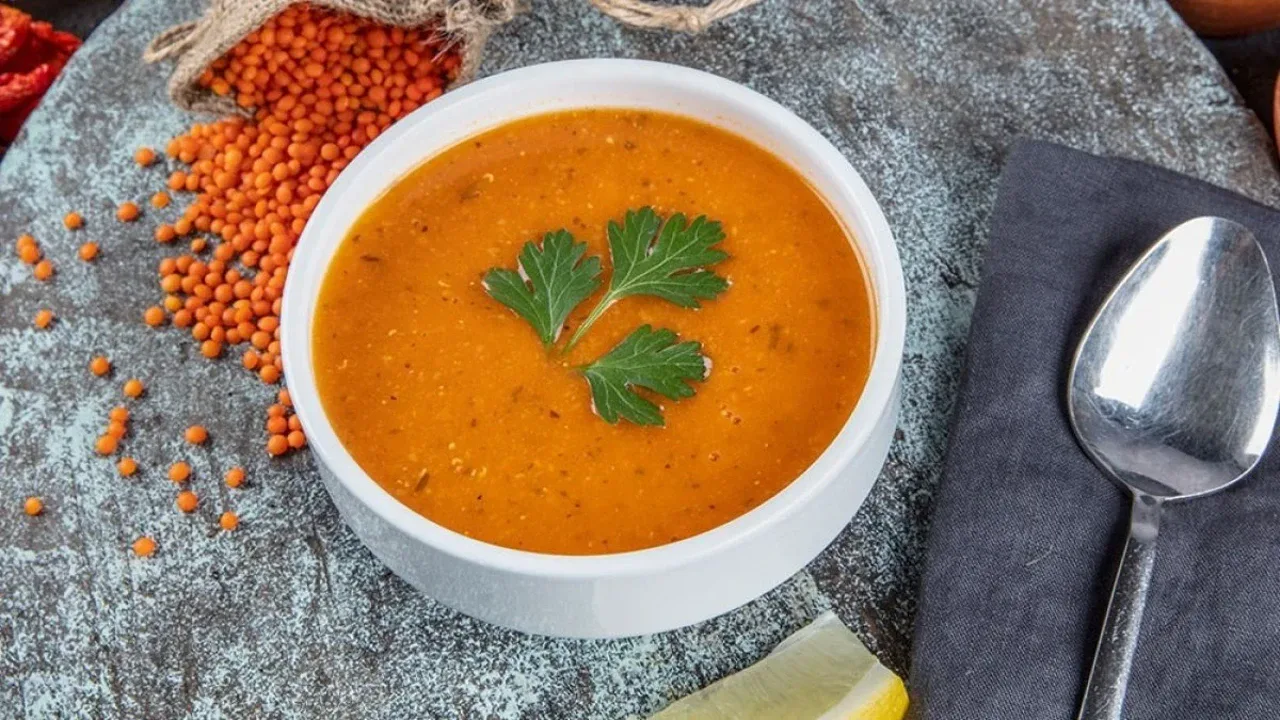
Ezogelin Soup (Ezo Gelin Çorbası) is a hearty, comforting soup in which red lentils, bulgur and rice are cooked with onion and garlic, seasoned with tomato paste and spices, and finished with a drizzle of hot oil infused with mint and red chilli flakes. It owes its name to "Ezo Gelin" (Ezo the Bride), a woman from Dokuzyol village in the Oğuzeli district of Gaziantep whose story became famous in folk memory. Although it is known across Türkiye today, both the soup's name and its registered identity are tied directly to Gaziantep and to Oğuzeli.
The identity of ezogelin springs from the harmony of a few essentials: the red lentils that give body and a velvety texture, the bulgur and rice that add a bite, the tomato and pepper paste that lend its warm colour and gentle sweet-and-sour depth, the onion and garlic that build its aroma, and the mint-and-chilli oil drizzled over it at the last moment. Ezo Gelin Çorbası was registered by TÜRKPATENT (the Turkish Patent and Trademark Office) in 2020 as a Traditional Product Name under the name of Oğuzeli.
What Is Ezogelin Soup and What Is in It?
Ezogelin is a thick soup in which red lentils, bulgur and rice are cooked together, seasoned with tomato paste and spices, and finished with a drizzle of hot mint oil; it is eaten with a spoon from a bowl. The velvety body the red lentils provide, the texture of the bulgur and rice, and the warm colour of the tomato paste make it one of Anatolia's most familiar soups. Although it is often confused with plain "red lentil soup," what sets ezogelin apart is its bulgur–rice texture together with its tomato paste and its mint-and-chilli finish.
Core Components
- Red Lentils: The body of the soup and its well-known velvety texture come from red lentils. As they cook they break down, giving the soup fullness and a faintly sweet base.
- Bulgur and Rice: What sets ezogelin apart from a plain lentil soup is the bulgur and rice cooked in it. These two grains give the soup both a bite and a filling quality.
- Tomato and Pepper Paste: The soup's warm red colour and its gentle sweet-and-sour depth come from tomato and pepper paste. The paste is sautéed in oil, releasing its colour and aroma into the soup.
- Onion and Garlic: Finely chopped and sautéed in oil, onion and garlic build the aromatic base of the soup; they are what give ezogelin its familiar, home-cooked smell.
- Mint and Chilli Flakes: The signature taste of ezogelin is dried mint and red chilli flakes that meet hot oil at the last moment. Drizzled over the top, this minty, spiced oil gives the soup both its aroma and its character.
- Oil, Water/Stock and Salt: The ingredients are cooked in plain water or stock; butter or oil is used both for the sautéing and for the seasoning drizzled on top. Balanced with salt, the soup is served piping hot, often with lemon on the side.
The Balance of Texture and Seasoning
The defining element of ezogelin is not a single ingredient but the balance of these components. The soft body the red lentils give as they break down meets the bite of the bulgur and rice; the tomato paste lends this base its warm colour and gentle sweet-and-sour depth. The hot mint-and-chilli oil drizzled over the top at the last moment is the signature touch that completes the dish in both aroma and appearance. This balance — full but not heavy, spiced but not sharp — is what makes ezogelin one of the best-loved soups on the Anatolian table.
The History and Cultural Origins of Ezogelin Soup
The origins of ezogelin soup are told together with the person whose name it bears, "Ezo Gelin." The soup is held to have emerged in the early 1900s in the Oğuzeli district of Gaziantep and to have spread from there across Türkiye over time. Resting on some of Anatolia's most common and long-keeping ingredients — red lentils, bulgur and tomato paste — it became a filling dish both of the village table and of lean times.
The Origin of the Name
The name "ezogelin" is associated in folk memory with a bride nicknamed "Ezo Gelin" who is said to have lived in Oğuzeli; the soup is described as having become identified with her and as being known by her name. Although "ezogelin" has today become, in a single word, the name of a type of soup across the country, the story behind the name is tied directly to the Oğuzeli district of Gaziantep.
A Soup That Spread Across Anatolia
Beginning in the Oğuzeli area where it was born, ezogelin gradually spread to every corner of Türkiye and became a fixture of restaurants, home tables and instant-soup shelves alike. While this ubiquity turned the soup into a "national" flavour, the source of both its name and its 2020 registration is Gaziantep; the soup's story always returns to Oğuzeli and to Dokuzyol.
Ezo Gelin Çorbası was registered by TÜRKPATENT (the Turkish Patent and Trademark Office) in 2020 as a Traditional Product Name under the name of Oğuzeli (Gaziantep). The production method on which the registration rests is the cooking of set proportions of red lentils, bulgur and rice with onion and garlic, seasoned with tomato paste and spices. This record ensures that the name "Ezo Gelin Çorbası" is used for a product made with the defined ingredients and method, and that the soup is associated with Oğuzeli.
As the legend goes, Ezo Gelin — whose given name was Zöhre — was born in the early 20th century in Dokuzyol village, in the Oğuzeli district of Gaziantep, and her beauty passed from tongue to tongue. As the folk story tells it, Ezo was married through the "berdel" exchange custom and, though she loved her husband dearly, was forced to part from him; in later years she was married to a relative and sent across the border into Syrian lands. It is said that she lived in exile longing for her homeland, and wished to be buried in a place from which she could see the soil where she was born. The name of Ezo Gelin, whose story inspired folk songs and films, became identified with this humble lentil soup said to have been made in Oğuzeli; years later, the legend tells, her remains were brought back to her native Dokuzyol village. This account is a folk story passed down through the generations rather than a documented historical record; even so, it explains why the soup carries a bride's name and why it is associated with Oğuzeli.
The Ezogelin Tradition and Ritual in Gaziantep
In Gaziantep, ezogelin soup is bound up both with the everyday table and with the identity of Oğuzeli, the district whose name it bears. Because it rests on ingredients available in every season — red lentils, bulgur and tomato paste — it is a humble yet filling soup made year-round; thanks to its warming nature, it is in greater demand in cold weather.
Its Place at the Table
Ezogelin is most often drunk at the start of a meal as a hot, appetite-opening soup; it is served with bread and slices of lemon on the side. The lemon squeezed over it is the final touch that balances the soup's tomato-paste and spiced character. Thanks to its filling body, it can also be eaten on its own as a light meal; it is a particular fixture of evening tables and winter days.
A Flavour Associated with Oğuzeli
Taking its name from Dokuzyol village in Oğuzeli, ezogelin is known across the country today yet remains a special source of pride for the region. The soup's registration under Oğuzeli's name in 2020 reinforced this bond officially as well. Those curious about the other deep-rooted soups and stews of Gaziantep cuisine — built on yogurt, garlic and the seasons — can follow the city's soup tradition in detail on the Soups & Stews page.
Why You Should Try It
A single bowl of ezogelin brings together the humble village table of Gaziantep and the name of a bride whose story inspired folk songs, in one taste: the velvety body of red lentils, the texture of bulgur and rice, the warm colour of tomato paste and the aroma of the minty, chilli oil drizzled over the top all come together. The truest way to taste it is in Gaziantep — the source of both its name and its registration — served piping hot with lemon squeezed over it. You can discover the other deep-rooted soups and stews of Gaziantep cuisine on the Gastronomy page.
Frequently Asked Questions
What is ezogelin soup and where is it from?
It is a hearty soup of red lentils, bulgur and rice with tomato paste, onion, garlic and mint. It takes its name and registered identity from the Oğuzeli district of Gaziantep.
What is in ezogelin soup?
Red lentils, bulgur, rice, onion, garlic, tomato and pepper paste, dried mint, red chilli flakes, oil and salt; lemon is often squeezed over it at serving.
Are ezogelin soup and red lentil soup the same?
Not exactly. Both are based on red lentils, but what sets ezogelin apart is the bulgur and rice cooked in it, along with its tomato paste and mint-and-chilli finish.
Does ezogelin soup have a geographical indication?
Yes. Ezo Gelin Çorbası was registered by TÜRKPATENT in 2020 as a Traditional Product Name under the name of Oğuzeli (Gaziantep).
Where does ezogelin soup get its name?
As the legend goes, the soup became identified with a bride nicknamed "Ezo Gelin" from Dokuzyol village in Oğuzeli, whose story inspired folk songs and films, and came to be known by her name.