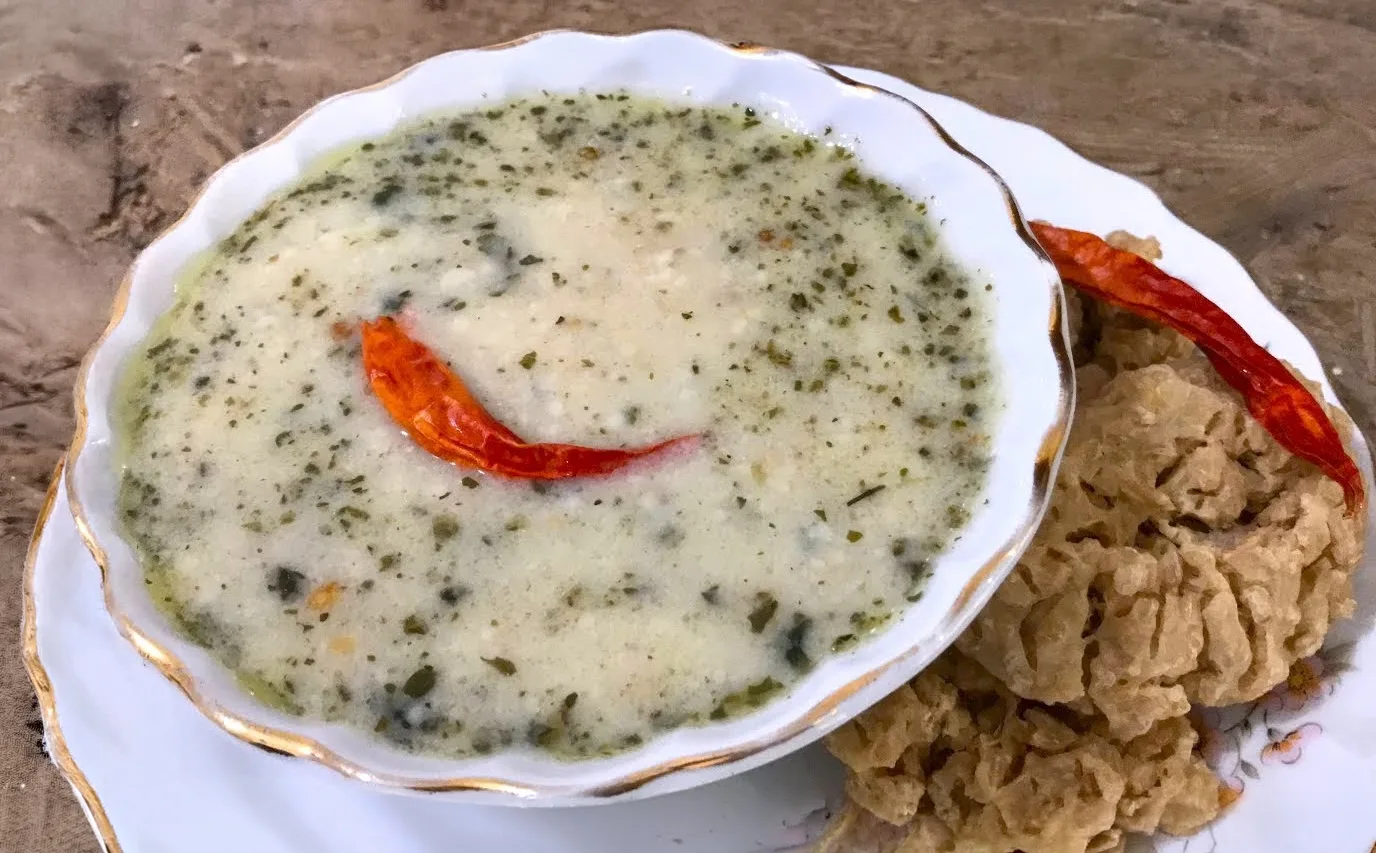
Tarhana soup is a traditional soup made from tarhana — a mixture of yogurt, flour or bulgur, pepper and spices that is fermented and sun-dried in summer — and eaten widely in winter. In Gaziantep, unlike the powdered tarhana of Central Anatolia, tarhana is prepared with village yogurt and Maraş dövme (cracked wheat) and dried in moulded pieces to keep for winter. The mild tang from fermentation, the body of the cracked wheat, and the minted, garlicky butter poured over it at serving make tarhana soup an indispensable, piping-hot opener of the Gaziantep winter table.
The identity of tarhana soup springs from a preparation that spans the seasons: tarhana fermented and dried in the abundance of summer is cooked in winter with water, meat stock or lentils into a thick, nourishing soup. In this sense tarhana is not merely a soup; it is part of the "taste kept from summer for winter" tradition, doing its work where the warm season ends. In Gaziantep, tarhana also has a sweet relative; şirin tarhana (sweet tarhana), made from grain and grape molasses and eaten as a sweet, is a separate product from the savoury soup tarhana described on this page.
What Is Tarhana Soup and What Is in It?
Tarhana soup is a thick, mildly sour soup obtained by softening and cooking, in water or meat stock, the tarhana that has been fermented and dried for storage. The base of the soup is the tarhana prepared in summer: yogurt, flour or bulgur, pepper, tomato paste and spices kneaded and fermented, then sun-dried into a tarhana that keeps for a long time without spoiling. In the Gaziantep style this tarhana is not a fine powder as in Central Anatolia; it has a coarse, grainy structure, prepared with village yogurt and Maraş dövme and dried in moulded pieces.
Core Components
- Tarhana (Fermented and Dried): The body of the soup is the tarhana prepared and dried in summer. It is obtained by kneading and fermenting yogurt, flour or bulgur, pepper and spices, then sun-drying the mixture; it gives the soup both its consistency and its distinctive sour note.
- Village Yogurt: The sour character and nutritional value of tarhana come from plenty of strained village yogurt. The live cultures in the yogurt form the foundation of the fermentation process.
- Dövme / Maraş Bulgur: Gaziantep tarhana is kneaded with coarsely milled dövme (Maraş bulgur) instead of, or together with, flour. The cracked wheat lends the soup a fullness and grainy texture not found in powdered tarhana.
- Pepper and Tomato Paste: Red pepper and tomato paste give tarhana its colour and mild, faintly hot depth. The region's pepper-forward culinary culture is reflected in the taste of tarhana too.
- Red Lentils (in Most Recipes): Antep-style tarhana soup is usually cooked together with red lentils; the lentils add consistency, body and extra nutritional value to the soup.
- Minted and Garlicky Butter: The signature touch of the soup is heated butter, dried mint and pounded garlic poured over it at serving. This hot fat balances the tang of the tarhana and brings out its aroma.
- Black Pepper, Salt and Lemon: Black pepper gives the soup a spiced depth and salt provides balance; at some tables, lemon squeezed at serving sharpens the sour, fresh taste.
The Tradition of Fermenting and Drying
The defining element of tarhana soup is not so much the soup itself as the seasonal labour behind it. Tarhana is prepared in the hot summer months: yogurt, dövme or flour, pepper and spices are kneaded and left to ferment for a few days. The fermented dough is then divided into pieces and spread on clean cloths to dry in the sun; in the Gaziantep style, drying it in small moulded pieces is common. Once thoroughly dried and kept away from moisture, tarhana lasts for months without spoiling and is used as a soup base throughout the winter. This cycle of summer preparation and winter consumption makes tarhana one of the oldest examples of Anatolia's "preservation cuisine."
The History and Cultural Origins of Tarhana Soup
The origin of tarhana is very old, and it is often remembered as one of the first ready-made soup mixes in history. Tarhana is a technology in which yogurt and grain are fermented and dried together for storage, providing a nourishing meal even in the winter months when fresh produce is unavailable. This idea of preservation is deeply embedded in the daily life of Anatolia, with its tradition of scarcity and long winters.
The Origin of the Name and the Tradition
The name and logic of tarhana rest on the idea of preserving yogurt. The word "tar," found in the 11th-century work Dîvânu Lugâti't-Türk, describes yogurt kept from summer for winter; tarhana, by its root, is understood to mean "a soup made from dried yogurt." The word appears as "tarhanah" in medieval Kipchak and Mamluk sources and in Persian spellings such as "terhuvâne" and "terhîne." This root positions tarhana, from the very beginning, as a winter food and a method of preservation.
A Taste Kept from Summer for Winter
The story told of tarhana in popular tradition turns it into a legacy that the season of abundance leaves to the season of scarcity. According to tradition, tarhana arose from the need for provisions that could be stored without spoiling in the heat; it was embraced as a way to carry the bounty of the summer months — when milk and yogurt are plentiful — into winter by drying. In Gaziantep, too, tarhana-making is a deep-rooted preparation tradition, carried out collectively as the women of a neighbourhood and family come together at the end of summer.
The plain savoury tarhana soup does not have a separate geographical indication registered under the name of Gaziantep; this page treats the dish as a verified culinary tradition of Gaziantep. By contrast, tarhana's sweet relative in Gaziantep, Gaziantep Şirin Tarhanası, was entered into the TÜRKPATENT geographical indications register on 15.04.2022 as a Geographical Indication (Mahreç İşareti) with No 1078; however, this is a separate product made from grain and grape molasses and eaten as a sweet.
Because it makes yogurt and grain storable for a long time by fermenting and drying them, tarhana is often called "the first ready-made soup in history." The way dried tarhana turns into a nourishing soup in a short time once it meets water made it invaluable in periods when fresh produce was unavailable.
The Tarhana Soup Tradition and Ritual in Gaziantep
In Gaziantep, tarhana soup is part of winter and of the home. With its body-warming, filling and economical nature in cold weather, it is a deep-rooted hot opener that accompanies both breakfast and the main meals of the day. The fact that tarhana is prepared and stored throughout the summer makes the soup the winter-table reward of a labour spread across the year.
At the Head of the Winter Table
Tarhana soup takes its place at the head of the table especially in the winter months, on cold and rainy days. Its hot, thick and mildly sour character makes it one of the first choices for those seeking a warming meal on winter evenings. Cooking, in winter, the tarhana that was dried and stored in summer sums up the cycle of the seasons in a single bowl.
Tarhana in Popular Belief
In popular belief, tarhana soup is said to strengthen the body's resistance thanks to its yogurt base, and to be good against colds and winter illnesses; it is especially favoured at the tables of the sick and on cold days. These are not a documented medical fact but a widespread folk belief and hearsay; even so, they explain why tarhana is so beloved in the winter season and its reputation as a "healing soup."
Its Place at the Table
Tarhana soup is eaten piping hot with minted, garlicky sizzling butter poured over it; it is served with bread and often pickles on the side. Those curious about the other deep-rooted soups and stews of Gaziantep cuisine can follow the city's winter and table flavours in signature dishes such as beyran and lebeniye.
Why You Should Try It
A single bowl of tarhana soup carries Gaziantep's preservation cuisine and its winter tradition to the palate in one go: the sour depth of tarhana fermented and dried in summer, the grainy fullness of the cracked wheat, and the hot aroma of the minted butter poured on at serving all come together. The truest way to taste it is to spoon it, on a cold winter day, from a bowl topped with freshly sizzled butter, in the city where it was born.
Frequently Asked Questions
What is tarhana soup and where is it from?
It is a traditional soup made from tarhana — yogurt, flour/bulgur, pepper and spices fermented and sun-dried in summer — eaten widely in winter; it is one of the deep-rooted winter flavours of Gaziantep cuisine.
What is in tarhana soup?
Fermented and dried tarhana (yogurt, dövme/flour, pepper, spices), red lentils in most recipes, tomato paste, and minted, garlicky butter poured over it at serving, with black pepper and salt.
What makes Gaziantep tarhana different?
Unlike the fine powdered tarhana of Central Anatolia, it is prepared with village yogurt and Maraş dövme; it is not a powder but a coarse, grainy product dried in moulded pieces.
Does tarhana soup have a geographical indication?
The plain savoury tarhana soup has no separate registration under the name of Gaziantep. Its sweet relative, Gaziantep Şirin Tarhanası, is registered at TÜRKPATENT as a Geographical Indication (Mahreç İşareti) with No 1078 on 15.04.2022.
Why is tarhana prepared in summer?
Yogurt and grain are fermented and sun-dried to keep for a long time without spoiling; this carries the bounty of summer into winter and provides a nourishing soup in the months when fresh produce is unavailable.