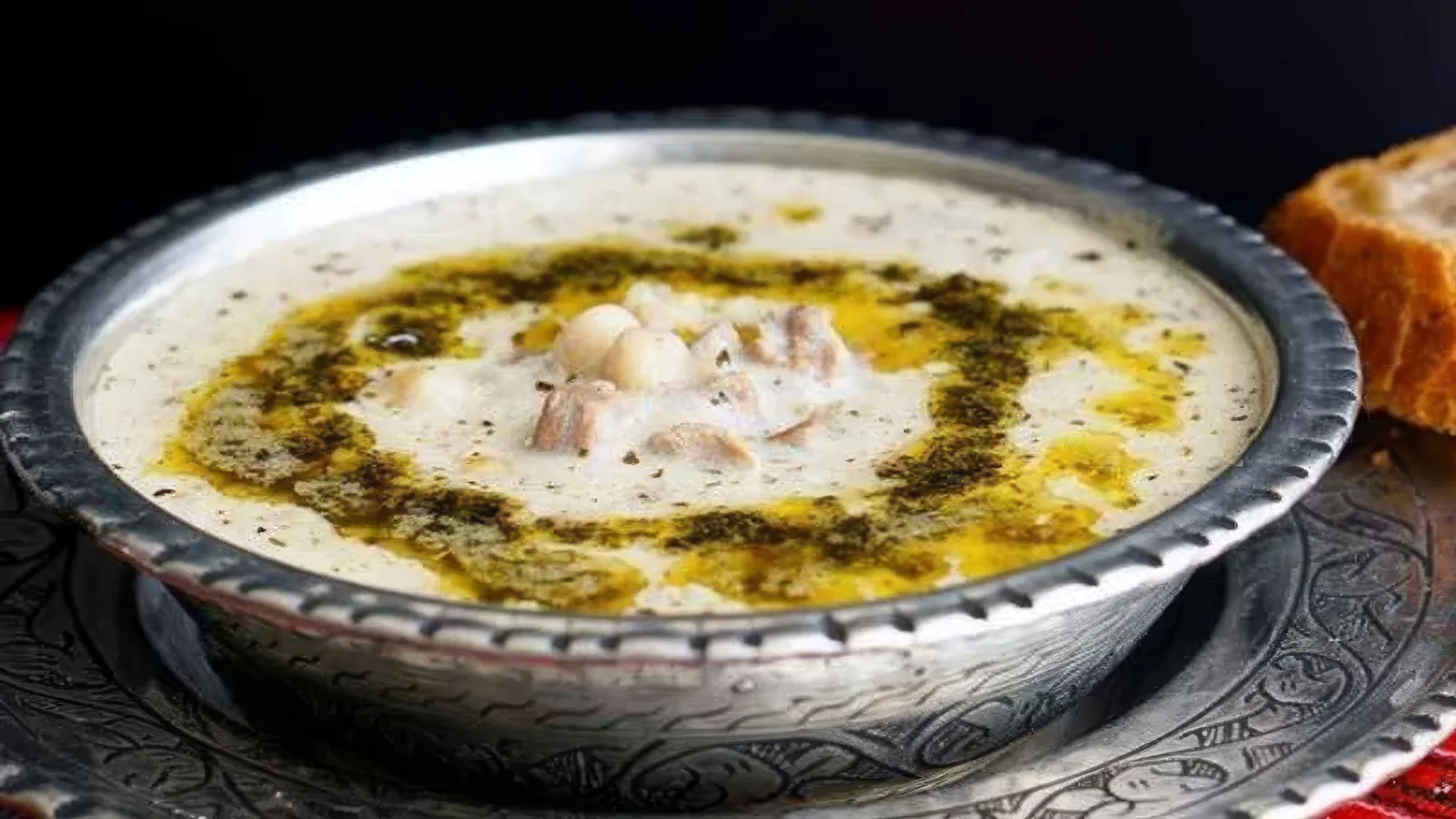
Lebeniye Soup (Lebeniye Çorbası) is one of the deep-rooted regional soups of Gaziantep cuisine: a yoghurt soup made with a strained-yoghurt tempering, with chickpeas, rice and usually small köftes the size of a chickpea (or minced meat) added, finished by drizzling minted butter on top and served hot. Its name comes from "leben," the Arabic word for "yoghurt." The faint sourness of the yoghurt, the heartiness of the meat and chickpeas, and the aroma of the minted butter meet in a single bowl. The Gaziantep version is registered as a geographical indication by TÜRKPATENT under the name "Gaziantep Lebeniye Çorbası / Antep Lebeniye Çorbası" (Geographical Indication / Mahreç İşareti, Reg. No: 756, registered on 15 May 2021).
The identity of the soup springs from the harmony of a few essentials: strained yoghurt that gives a smooth tempering, boiled chickpeas and rice that add heartiness, the minced meat or tiny köftes folded in, and the minted butter drizzled over at the moment of service. Behind these lies a tempering technique that demands patience so the yoghurt does not curdle; this tempering sets the balance of the soup.
This article is not a recipe; it is a cultural introduction to lebeniye's place in Gaziantep, the origin of its name and its meaning at the table.
What Is Lebeniye Soup and What Is in It?
Lebeniye is a yoghurt soup cooked with a tempering made by whisking strained yoghurt with egg and flour, with rice, boiled chickpeas and either minced meat or small köftes the size of a chickpea added. Dried mint heated in butter in a small pan is drizzled on top, and the soup is served hot. The name "lebeniye" derives from "leben," the Arabic word for "yoghurt," which points to the historical link between this yoghurt-based soup tradition and the Arab-Mesopotamian culinary geography. What sets it apart from many soups is that yoghurt sits at the centre of its flavour, with the meat, the spice and the mint balanced against this yoghurt base.
Core Components
- Strained Yoghurt: The soul of the soup is the strained yoghurt that makes the tempering. This yoghurt builds the soup's faintly sour, creamy character and its yoghurt base.
- Minced Meat / Small Köftes: Lamb or beef mince is added; in some areas the mince is kneaded with onion and spices and shaped into tiny köftes the size of a chickpea. This is what gives the soup its meaty heartiness.
- Rice: Rice gives the soup body and fullness; sometimes broken rice is preferred.
- Boiled Chickpeas: Pre-boiled chickpeas are a component that lends the soup both heartiness and regional character.
- Tempering Elements: Egg and flour are added to the yoghurt to keep the tempering from breaking; sometimes lemon juice is also added for a little tartness.
- Minted Butter and Spices: Before serving, dried mint (and, optionally, black pepper or red-pepper flakes) is heated in butter or clarified butter and drizzled over the soup. Salt, black pepper and, in some Antep areas, allspice complete the soup.
The Subtlety of the Tempering
The lifeline of lebeniye is folding the yoghurt into the soup without curdling it. The yoghurt is turned into a tempering with egg and flour and is added to the soup patiently, without letting it break. It is precisely this delicate balance and handwork that give the soup its smooth, creamy texture; this is the subtlety that makes lebeniye a homemade flavour.
The History and Cultural Origins of Lebeniye Soup
Lebeniye is Gaziantep's interpretation of a deep-rooted yoghurt-soup tradition that takes its name from the Arabic word "leben" (yoghurt). Yoghurt soup is a widespread tradition in southeastern Anatolia. The Gaziantep version, with its minced meat or köftes, rice and chickpeas, stands out as a hearty winter soup.
A Deep-Rooted Yoghurt-Soup Tradition
Lebeniye has a long history within the geographical boundary of Gaziantep and is a recognised part of the city's culinary culture. The yoghurt-based soup tradition extends across a wide geography in the southeast; Lebanese cuisine, too, has a yoghurt-soup (leben) tradition. This accumulation shows the soup's deep-rooted place in the region.
What Distinguishes the Gaziantep Version
The yoghurt-soup tradition extends across a wide geography in the region and appears with different recipes from place to place. What sets the Gaziantep version apart is the coherence of its recipe: a strained-yoghurt tempering combined with rice, boiled chickpeas and either minced meat or tiny köftes the size of a chickpea, with the soup served hot. This hearty, meaty character makes lebeniye a quintessential Gaziantep winter soup.
The Gaziantep version is recorded in the TÜRKPATENT geographical indications register under the name "Gaziantep Lebeniye Çorbası / Antep Lebeniye Çorbası" as a Geographical Indication (Mahreç İşareti, Reg. No: 756, registered on 15 May 2021); the registrant is the Gaziantep Metropolitan Municipality. The registration guarantees that the name "Lebeniye" may be used only for a product tied to the Gaziantep region and made with the defined ingredients and method.
The soup's name derives from "leben," the Arabic word for "yoghurt." This yoghurt-based soup lives on within the region's deep-rooted culinary tradition, with its own distinctive recipe in Gaziantep.
The Lebeniye Soup Tradition and Ritual in Gaziantep
In Gaziantep, lebeniye is not merely a soup; it is a winter classic that warms you from within and soothes the stomach in cold weather. With its minced meat or köftes, rice and chickpeas, it stands out as a hearty dish and is usually served hot.
The Soup of Winter and Iftar
Loved as a dish that soothes the stomach and warms you from within in cold weather, lebeniye is also, because it is yoghurt-based, among the yoghurt soups frequently preferred at Ramadan iftars. According to a common popular account, lebeniye is spoken of as a winter classic where the faint sourness of the yoghurt meets mint and spices — both hearty and "soothing to the stomach" (this characterisation is a popular account).
Its Place at the Table
Because of the meat, spice and chickpeas it contains, lebeniye often stands as a main dish on its own; it comes to the table with regional breads such as Antep tırnak pide. Those curious about Gaziantep's soup and stew culture can explore the city's world of flavour from the Gastronomy section, and can follow the extensions of its pistachio and yoghurt-cream culture in signature flavours such as Gaziantep baklava and Gaziantep katmer.
Why You Should Try It
A bowl of lebeniye carries Gaziantep's winter table and its bond with yoghurt to the palate in a single taste: the faint sourness of the strained yoghurt, the heartiness of the rice and chickpeas, the meaty aroma of the mince or tiny köftes, and the scent of the minted butter drizzled on top all arrive at once. Both hearty and balanced, this soup is a dish that warms you from within in cold weather. The truest way to taste it is to eat it hot, in the city where it was born, from a bowl whose tempering has been masterfully judged.
Frequently Asked Questions
What is lebeniye soup and where is it from?
It is a yoghurt soup from Gaziantep made with a strained-yoghurt tempering, with chickpeas, rice and small köftes (or minced meat), finished with minted butter and served hot.
What is in lebeniye soup?
It uses strained yoghurt, minced meat or small köftes, rice, boiled chickpeas, egg and flour (for the tempering), and minted butter. Salt and black pepper complete the soup.
Where does the name lebeniye come from?
The name derives from "leben," the Arabic word for "yoghurt," which shows the soup's link to a yoghurt-based culinary geography.
What sets Gaziantep lebeniye apart?
The Gaziantep version combines a strained-yoghurt tempering with rice and boiled chickpeas plus minced meat or tiny köftes, and is served hot; this hearty, meaty character makes it a quintessential winter soup.
Does lebeniye soup have a geographical indication?
Yes. The Gaziantep version is registered by TÜRKPATENT as a Geographical Indication under the name "Gaziantep Lebeniye Çorbası / Antep Lebeniye Çorbası" (Reg. No: 756, 15 May 2021).