 Vegetarian
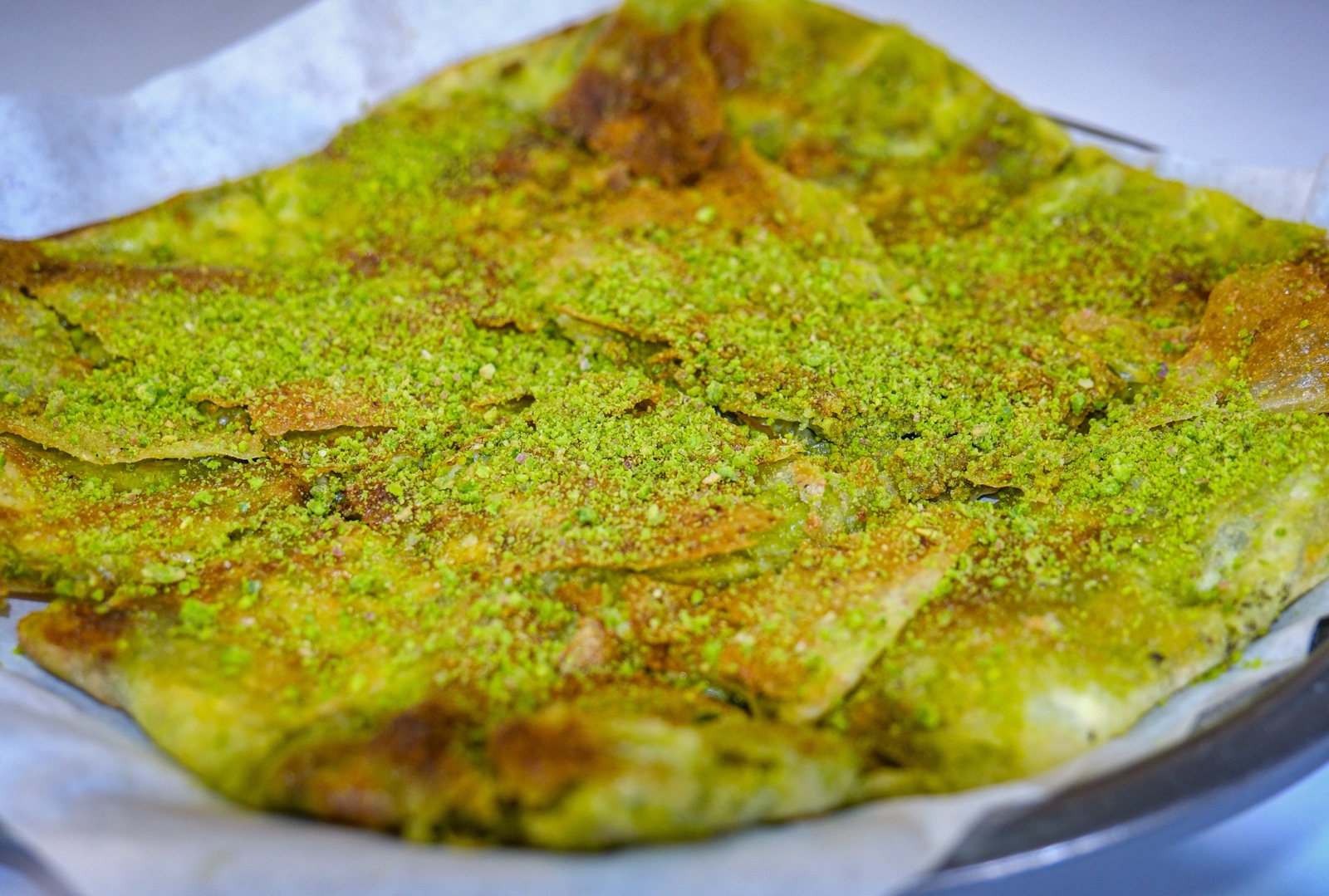
Gaziantep katmer (Antep Katmeri) is a pastry dessert regarded as the crown of Gaziantep mornings: dough opened with a rolling pin and then tossed in the air until paper-thin, filled with fresh boz-iç Antep pistachio, sahan kaymak (buffalo clotted cream) and beet sugar, folded into an envelope shape and baked in a stone oven. The crisp thin layers, the softness of the melting cream and the oily aroma of the pistachio come together in a single bite. Filed on 23 January 2015 through an application by the Gaziantep Chamber of Industry, Gaziantep katmer was registered as a geographical indication by TÜRKPATENT on 7 December 2017 (Geographical Indication / Mahreç İşareti, Reg. No: 264).
The identity of the dessert springs from the harmony of a few essentials: dough made from fine wheat flour, rested and opened until almost translucent; emerald-green boz-iç Antep pistachio; sahan kaymak (water-buffalo clotted cream); and beet sugar. Behind these lies not a process spread over days but a fast cycle — resting the dough overnight, then opening and filling it within minutes and baking it in a stone oven in a matter of minutes — that demands great skill and a master's hand.
This article explores the world of ingredients that shapes Gaziantep katmer, its traditional opening and baking technique, its origins in Gaziantep cuisine, its geographical indication protection, and its ceremonial place at the city's table.
What Is Katmer and What Is in It?
Gaziantep katmer is a pastry dessert made by opening a single ball of dough on the bench, thinning it in the air, then placing sahan kaymak, fresh boz-iç Antep pistachio and beet sugar in its centre, closing it on all four sides into a square envelope shape and baking it in a stone oven. The word "katmer" means "many-layered, in layers" in Turkish; the dessert takes its name from this many-layered structure of the folded dough. What sets it apart from syrup-soaked pastries such as baklava is that no syrup is used: its sweetness comes from the beet sugar, which melts during baking and soaks into the dough. Served hot, katmer is cut the moment it leaves the oven and finished with a scattering of crushed pistachio on top.
Core Components
- Fine-Flour Dough: The backbone of katmer is a soft dough kneaded from wheat flour, water and salt, then rested. In the geographical indication recipe the dough is prepared with one kilogram of flour, around half a litre of water and a little salt, then rested in the refrigerator overnight. This resting relaxes the gluten and lets the dough be opened to an almost translucent thinness without tearing. Unlike baklava phyllo, katmer dough is not layered with dusted wheat starch; its thinness is achieved with the help of fat and air.
- Antep Pistachio: The soul of the dessert is the bright emerald-green Antep pistachio, harvested early — usually in August, before it fully ripens — and known locally as "boz iç." Itself a geographically indicated product, it gives katmer both its colour and its signature aroma. According to the recipe, about 70-90 grams of pistachio are used for a single katmer; the pistachio is not ground to a flour but coarsely crushed so that it is felt in every bite.
- Sahan Kaymak: The soft bed of the filling is built by sahan kaymak — a water-buffalo clotted cream traditionally made from buffalo milk. According to the recipe, around 130-150 grams of cream go into one katmer. It melts slightly during baking, binding the pistachio and the dough together; this component gives katmer its characteristic creamy texture.
- Clarified Butter (Sade Yağ): The clarified butter brushed between the layers and during opening gives the layers their crispness and golden colour. The recipe specifies around 15-20 grams of pure fat for one katmer; this fat lets the thin dough bake into crisp, distinct layers in the oven.
- Beet Sugar: Katmer's sweetness comes not from syrup but from the granulated sugar scattered into the filling. The traditional recipe uses beet sugar, around 60-80 grams for a single katmer. In the heat of the oven the sugar melts and works into the dough along with the pistachio and cream; this is why katmer is a dessert that is crisp on the outside, faintly moist inside and balanced in sweetness.
The Geography of Its Service
By the nature of its preparation, Gaziantep katmer is eaten fresh and hot; because it loses its crispness as it waits, it is usually served immediately where it is baked. In Gaziantep, katmer is baked to order at the benches of katmer masters who open early in the morning, and it comes straight to the table. The classic companion at the local table is cold milk, which does not compete with strong aromas; the coolness of the milk balances the oily, sweet texture of the hot katmer. Because it is hard to transport out of the city, katmer — unlike gift sweets such as baklava or pistachio paste — has largely remained a flavour particular to Gaziantep's own breakfast tables.
The History and Cultural Origins of Katmer
The origins of Gaziantep katmer rest both on Anatolia's deep-rooted tradition of thin and layered pastry and on Gaziantep's abundance of pistachio and dairy. Although layered pastries — that is, dishes made with many-layered dough — are common in Turkish cuisine, what is today called "Antep katmer" gained its distinctive identity by meeting the city's pistachio and clotted cream.
A Deep-Rooted Thin-Pastry Tradition
The art of opening thin dough and working layered pastry is part of the centuries-old accumulation of Anatolian cuisine. Local accounts and artisan memory position katmer as one of Gaziantep's oldest desserts; in the press and in local guides katmer is often spoken of as a deep-rooted breakfast tradition particular to the city. While these accounts show the dessert's deep cultural place in the city, a precise starting date is not documented; for this reason katmer is best regarded, historically, as part of the region's deep-rooted heritage of pastry-making.
How It Became a Signature Dessert of Gaziantep
What identifies katmer with Gaziantep is the ingredients in the city's hands and its master-apprentice tradition. When the region's boz-iç pistachio, the sahan kaymak from buffalo milk, and the opening technique handed down through generations come together, katmer becomes a morning dessert that bears the city's name. Opening the dough by tossing it in the air is a skill that demands mastery and that apprentices learn over years; this handwork keeps katmer from being a dessert easily imitated at home.
Geographical Indication Registration
Gaziantep katmer went through an official registration process to protect its region-specific ingredients and method of production. The process, begun through an application by the Gaziantep Chamber of Industry, was filed on 23 January 2015 and concluded with a geographical indication registration by TÜRKPATENT on 7 December 2017 (Geographical Indication / Mahreç İşareti, Reg. No: 264). The registration guarantees that the name "Antep katmer" may be used only for a product tied to the Gaziantep region and made with the defined ingredients and method.
Gaziantep katmer was entered into the TÜRKPATENT geographical indications register as a Geographical Indication (Mahreç İşareti, Reg. No: 264) on 7 December 2017; the application was made on 23 January 2015 by the Gaziantep Chamber of Industry. The registration document defines the method of production, from resting the dough overnight, to the proportions of boz-iç Antep pistachio and sahan kaymak, to folding it into an envelope shape and baking it in the oven.
The traveller Evliya Çelebi visited Ayntab in 1671 and stayed about ten days, calling the city "Şehr-i Ayıntab-ı Cihan" (the world's pride) in Book 9 of his Seyahatname. He likened its vineyards and gardens to the paradise garden of "İrem" and recorded its fame for pomegranates, figs, apricots, white bread and dairy. The sahan kaymağı (clotted cream) that katmer cannot do without is part of this deep-rooted dairy and orchard culture. (Evliya Çelebi does not name katmer itself; his account testifies to the city's 17th-century culinary renown.)
The Katmer Tradition and Ritual in Gaziantep
In Gaziantep, katmer is not merely a dessert; it is part of the morning, of sharing and of special days. Katmer holds a place of its own in the city's social fabric, especially within the wedding tradition.
The Dessert of the Morning After the Wedding
Katmer's best-known place in Gaziantep culture concerns the morning after the wedding. By local custom, the groom's side sends katmer to the newlywed couple and to the bride's family on this morning; the gesture symbolises "a life that begins with sweetness" and the wish "may the taste in our mouths never sour." The dessert's many-layered structure is associated with wishes of abundance and continuity. Thus katmer has become a good wish conveyed within the city's wedding customs not in words but through the table.
The Craft of the Stone Oven
Katmer is defined as much by its baking technique as by the thinness of its dough. The dough, opened and filled and folded into an envelope shape, is traditionally baked quickly in the high heat of a stone oven; the geographical indication recipe specifies baking at around 200 degrees for roughly 7-8 minutes. The high heat lets the thin layers crisp rapidly and the cream and sugar inside melt and soak into the dough. This short, high-heat baking sets katmer apart from pastries that linger long in the oven; the aim is to strike a balance of crisp outside and soft inside. The handing down through generations of techniques such as opening the dough by tossing it in the air and baking it in a stone oven is also part of the diversity of crafts that was one reason for Gaziantep's admission to the UNESCO Creative Cities Network in the field of gastronomy in 2015.
Its Place at the Table
In Gaziantep, katmer is often the way to begin the day; a breakfast opened with freshly baked katmer in the early morning is one of the city's daily rituals. Katmer is eaten mostly on its own or with cold milk; like baklava, it can also appear alongside other pistachio sweets at the tables of special days. Those curious about the relationship Gaziantep cuisine builds with the pistachio can follow the nut's journey from dessert to kebab in signature dishes such as pistachio kebab and Gaziantep baklava.
Why You Should Try It
A single slice of fresh katmer carries Gaziantep's morning culture and its bond with the pistachio to the palate in one bite: the crispness of the paper-thin layers, the softness of the melting sahan kaymak and the oily aroma of the boz-iç pistachio all arrive at once. Sweetened only by the melting beet sugar rather than drenched in syrup, katmer is a balanced dessert rather than a heavy one. And because it loses its crispness as it waits, the truest way to taste katmer is to eat it in the city where it was born, fresh from the stone oven. For anyone who wishes to know Gaziantep's morning, Gaziantep katmer is a starting point that must be tried.
Frequently Asked Questions
What is Gaziantep katmer and where is it from?
It is a pastry dessert particular to Gaziantep: paper-thin dough filled with boz-iç Antep pistachio, sahan kaymak and beet sugar, then baked in a stone oven.
What is in Gaziantep katmer?
It uses fine-flour dough, boz-iç Antep pistachio, sahan kaymak, clarified butter and beet sugar. No syrup is used; its sweetness comes from the sugar that melts during baking.
Does Gaziantep katmer have a geographical indication?
Yes. Gaziantep katmer was registered as a geographical indication by TÜRKPATENT on 7 December 2017 (Mahreç İşareti, Reg. No: 264).
How and when is Gaziantep katmer eaten?
It is eaten fresh and hot, usually at breakfast with cold milk. It is also a good-wish gift sent by the groom's side on the morning after the wedding.
How can you recognise an authentic Gaziantep katmer?
It is known by its paper-thin crisp layers, melting sahan kaymak and coarsely crushed boz-iç pistachio. It is never soaked in syrup; it is crisp outside and balanced in sweetness.