 Vegetarian
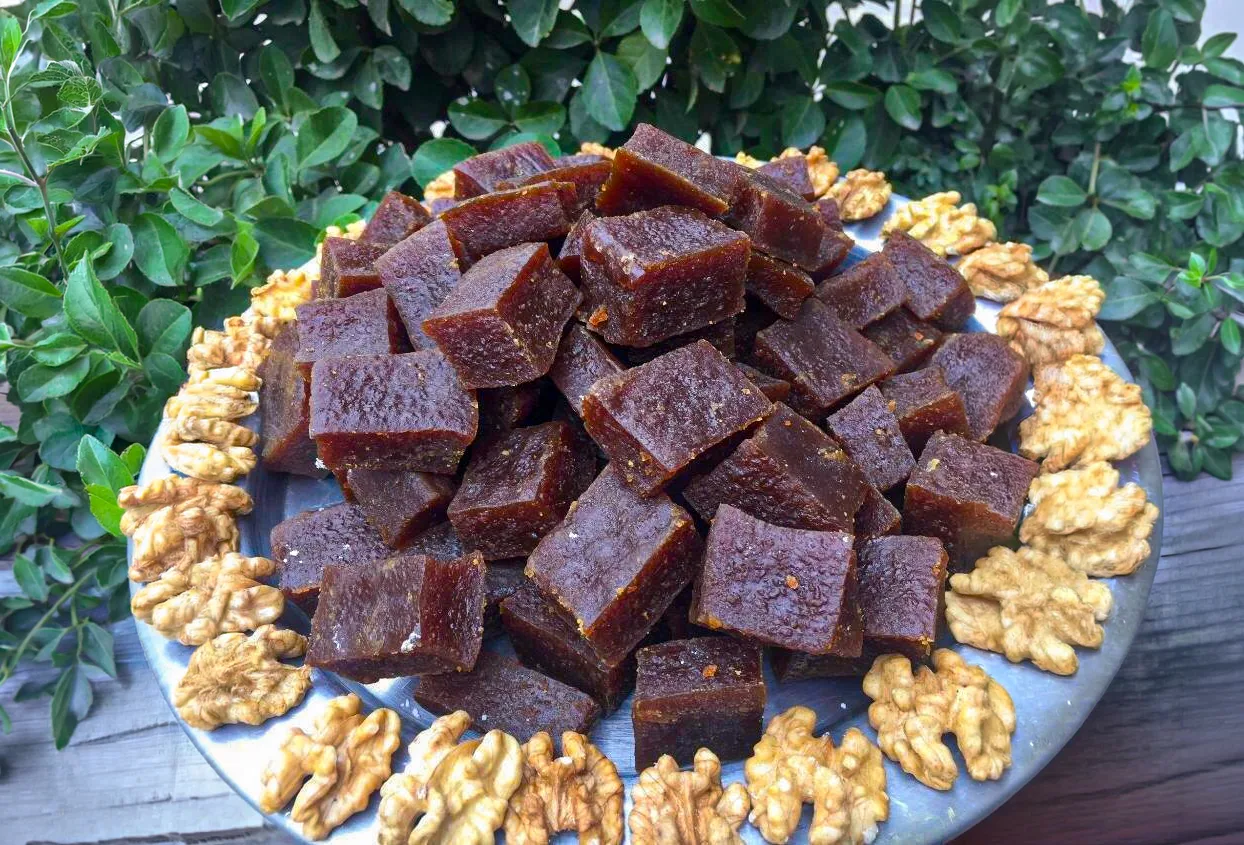
Sweet tarhana (şirin tarhanası) is, as its name says, Gaziantep's "sweet tarhana": a local confection made by boiling grape must or grape molasses with very finely ground raw wheat known as "çiğ simit" until thick, then pouring it onto trays to dry and cutting it into diamond or square pieces. Don't let the word "tarhana" mislead you: this is not the same as the fermented, sour tarhana soup. Sweet tarhana is not a soup; it is a sweet snack eaten on its own and an ingredient that goes into other desserts. The deep sweetness of grape molasses, the slight bite of the raw wheat and, if you like, the warm scent of a pinch of cinnamon and cloves all come together in these drying pieces.
The identity of sweet tarhana springs from the harmony of a few simple essentials: the must or molasses of the grape, very finely ground raw wheat (çiğ simit) and optional cinnamon and cloves. Behind these lies not a process spread over days but a preparation tied to the grape season and the skill of hitting the right consistency. Sweet tarhana is a sweet link in the "şire" tradition that carries the bounty of the vineyards into winter, and it was registered as a geographical indication under the name "Gaziantep Şirin Tarhanası" by TÜRKPATENT in 2022.
What Is Sweet Tarhana and What Is in It?
Sweet tarhana is a sweet tarhana in which grape must or molasses is boiled together with çiğ simit until it reaches a thick consistency, then poured onto trays to dry and cut into diamond or square pieces. Once the surface of the mixture on the tray has dried, the pieces are turned over so that their undersides dry too; this yields a durable confection that can be stored for the winter. In its region it is also known by names such as "dilme," and it is a relative of bastık, another product of the same şire culture. Although the word "tarhana" in its name makes it sound like the fermented, sour tarhana soup, sweet tarhana stands firmly on the sweet side and is not a soup.
Core Components
- Grape Must or Molasses: The sweetness and deep colour of sweet tarhana come entirely from the grape. The confection is made either with freshly pressed grape must or with grape molasses whose consistency has already thickened; both routes reach the same dense, caramel-like grape flavour.
- Çiğ Simit (Finely Ground Wheat): The very finely ground raw hard wheat known locally as "çiğ simit" gives the confection its body and slight bite. It is stirred bit by bit into the boiling must or molasses and is the element that binds the mixture and brings it to a sliceable consistency.
- Cinnamon and Cloves: Added optionally, cinnamon and cloves lend sweet tarhana a warm, spiced aroma. These spices are not compulsory; in some households none are added, while in others they are an inseparable part of the taste.
- Drying and Slicing: What makes sweet tarhana a sweet tarhana is its consistency and its drying. The thick mixture is spread onto a tray, left until the top sets, then cut into diamond or square pieces and turned over to dry thoroughly. This drying gives the confection both its keeping quality and its distinctive texture, somewhere between Turkish delight and pestil (fruit leather).
Not a Soup, but a Sweet Tarhana
The key to understanding sweet tarhana is to set it apart from the fermented tarhana soup. The well-known tarhana soup is a sour, salty winter soup made by fermenting and drying yoghurt and wheat; sweet tarhana, by contrast, is an unfermented confection built on the sweetness of the grape. Both are prepared and dried in the late-summer and autumn months for Gaziantep's winter pantry; but one comes to the table as a hot soup, the other as a dessert or snack. For this reason sweet tarhana is most often served on its own or used as an ingredient in the making of other desserts.
The History and Cultural Origins of Sweet Tarhana
The history of sweet tarhana reaches far back, and it holds a deep-rooted place in Gaziantep cuisine. The confection's origin is bound to the city's viticulture and to the need to preserve grapes for winter: fresh grapes are short-lived, but once turned into must and molasses and brought to consistency with çiğ simit, they become a sweet that keeps for months. In this way sweet tarhana arose as the product of a clever preservation method that carries the bounty of the grape harvest into the cold months.
A Link in the Şire Culture
Sweet tarhana takes on meaning not on its own but within Gaziantep's wider "şire" tradition. Şire is a whole culinary world in which boiled grape must is transformed into a string of sweets such as molasses (pekmez), bastık (pestil), sucuk, muska and dilme. Sweet tarhana is a part of this world; it is made from the same must boiling in the same cauldrons, in the same season. In this respect the confection is a concrete expression of the centuries-old relationship Gaziantep has built with the grape and of the principle that "nothing should go to waste."
Gaziantep Şirin Tarhanası was entered into the TÜRKPATENT geographical indications register on 15.04.2022 as a Geographical Indication (Mahreç İşareti) with No 1078. The application was made on 14.12.2020 (file no C2020/436) by the Gaziantep Metropolitan Municipality. The registration guarantees that the name "Gaziantep Şirin Tarhanası" may be used only for a product tied to Gaziantep and made with the defined ingredients and method.
The word "şirin" is of Persian origin and means "sweet, pleasant"; "şirin tarhana" therefore means directly "sweet tarhana." The name is used to set the product apart from the fermented, sour and salty tarhana, and it sums up the confection's identity in a single word.
The Sweet Tarhana Tradition and Ritual in Gaziantep
In Gaziantep, sweet tarhana is not merely a dessert; it is part of the grape season and of preparing for winter. The late summer and autumn, when the grapes ripen, are lived in the city as the "şire season"; with the grape harvest in September and October, must is boiled and molasses is made in homes and villages, and sweets such as sweet tarhana come out of these cauldrons.
A Winter Store Prepared at the End of Summer
Sweet tarhana is traditionally prepared as a family during the şire season. The grapes brought from the vineyard are boiled in large copper cauldrons; this preparation is often done in the communal "imece" manner, with the help of neighbours and relatives. Poured onto trays and dried in sunny, airy places, sweet tarhana is cut into diamond pieces and stored, becoming a sweet treasure brought down from the pantry throughout the winter. In this respect the confection is one of the sweetest examples of Gaziantep's culture of preserving the season for winter.
Şire Sweets in Popular Belief
In popular belief, sweets made from grape must — such as molasses, bastık and sweet tarhana — are said to strengthen the body in the winter months and to be good against colds and anaemia. These are not a documented medical fact but a widespread folk belief and hearsay that reflects the trust placed in the bounty of the grape and its molasses; even so, they help explain why sweet tarhana is especially in demand in the winter months and on long evenings.
Its Place at the Table
Sweet tarhana is a sweet snack served on its own at winter tea times, in front of guests or on long evenings; its pieces are held in the hand and eaten like Turkish delight. Alongside this, it is also used as an ingredient in the making of other desserts, sometimes melted and stirred into different sweets. Those curious about Gaziantep's other deep-rooted flavours of winter and the grape can explore the sweet-versus-savoury contrast between sweet tarhana and the sour, fermented tarhana soup at the other end of the very same tradition.
Why You Should Try It
A single piece of sweet tarhana carries Gaziantep's vineyards and its şire tradition to the palate in one bite: the deep sweetness of grape molasses, the slight texture of the raw wheat and, if you like, the warm scent of cinnamon and cloves turn, in a drying piece, into a simple yet unforgettable flavour. The truest way to taste it is to pick up one of the diamond pieces from a tray that has emerged from the bounty of the şire season, in the city where it was born.
Frequently Asked Questions
What is sweet tarhana and where is it from?
It is a sweet tarhana particular to Gaziantep, made by boiling grape must or molasses with finely ground raw wheat (çiğ simit), pouring it onto trays to dry and cutting it into diamond pieces.
Is sweet tarhana a soup?
No. Despite the word "tarhana" in its name, it differs from the fermented, sour tarhana soup; it is not a soup but a sweet snack and a dessert ingredient.
What is in sweet tarhana?
Grape must or molasses, very finely ground raw wheat (çiğ simit) and, optionally, cinnamon and cloves.
Does sweet tarhana have a geographical indication?
Yes. Gaziantep Şirin Tarhanası was registered as a Geographical Indication (Mahreç İşareti) with No 1078 by TÜRKPATENT on 15.04.2022.
When is sweet tarhana prepared and eaten?
It is prepared and dried during the şire season in late summer and autumn, along with the grape harvest; it is mostly eaten in the winter months, at tea times, as a sweet snack.