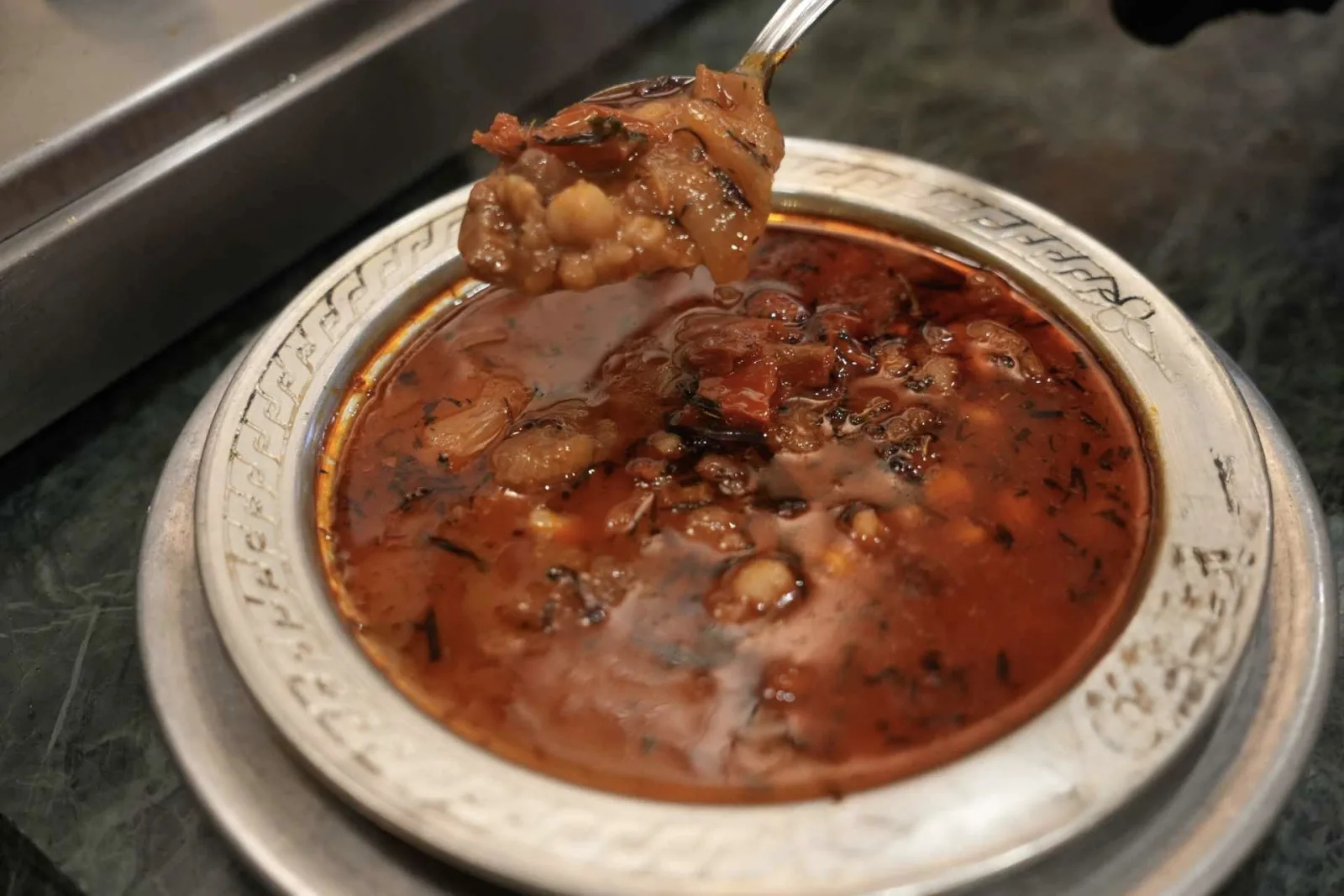
Alaca soup (Alaca Çorbası) is a traditional soup particular to Gaziantep: cracked wheat (dövme), chickpeas and lentils boiled together until they thicken, known for the deep aroma that dried pepper and tarragon give it, dense and deeply filling. Locally it is often called "dövmeli alaca çorba" (alaca soup with cracked wheat). Thanks to its abundance of grains and legumes, this soup is filling enough to stand in for a meal on its own, and it traditionally takes its place at the table in the winter months, as the weather turns cold. After it cooks and thickens, a sauce of red pepper and tarragon prepared in hot oil is drizzled over the top — the signature touch of alaca soup.
The identity of alaca soup springs from the harmony of a few essentials: the soft texture of coarsely cracked wheat, the body of chickpeas and lentils, the sweet-sharp depth of dried pepper and the distinctive, faintly anise-like fresh scent of tarragon. The word "alaca" in its name means "mixed, multicoloured, mottled" in Turkish; the soup was given this name because of the mottled appearance and variety of the grains and legumes that come together in it. Alaca soup was registered as a geographical indication under the name "Gaziantep/Antep Alaca Çorbası" by TÜRKPATENT in 2021.
What Is Alaca Soup and What Is in It?
Alaca soup is a meat-free, grain-and-legume-based Gaziantep soup in which cracked wheat (dövme), chickpeas and lentils meet long cooking and blend together into a thick consistency, seasoned with dried pepper and tarragon. The density of the mixture and its grainy texture bring it closer to a filling dish that holds the spoon upright than to a thin soup. At serving, a sauce made with hot oil, red pepper and tarragon is drizzled over it; dried mint may be added if desired.
Core Components
- Cracked Wheat (Dövme): The body of alaca soup is built from dövme, coarsely cracked wheat. Also known locally as "yarma," this grain softens with long cooking and partly breaks down, giving the soup both its consistency and its filling body.
- Chickpeas: Soaked and softened beforehand, the chickpeas add a grainy texture and a satisfying fullness to the soup. Together with the cracked wheat, they are one of the two essential grainy elements of alaca soup. Cracked wheat and chickpeas also come together in diş hediği, the dish cooked in Gaziantep for a baby's first tooth.
- Lentils: Green lentils are added alongside the chickpeas and cracked wheat; partly breaking down as they cook, they enrich both the colour and the consistency. This union of grain and legume is the essence of the "alaca" (mottled) mixture.
- Dried Pepper: Red pepper dried and stored in the summer gives alaca soup a sweet-sharp depth and its characteristic redness. It is used both during cooking and in the sauce drizzled over the top.
- Tarragon: The signature aroma of alaca soup comes from the tarragon herb. With its fresh, spiced scent reminiscent of anise, tarragon is the most defining flavour that sets the soup apart from similar grain soups.
- Onion, Oil and Tomato Paste: Dried or fresh onion lends flavour to the base of the soup; suet, butter or oil with tomato paste provides body and colour both in the cooking and in the sauce drizzled over the top.
- Dried Mint, Salt and Water: The soup is balanced with salt and cooked slowly in plenty of water so the legumes and grain soften thoroughly. Dried mint, added at serving if desired, lends a complementary scent alongside the tarragon and pepper.
The Art of the Mixture and the Consistency
The defining element of alaca soup is not so much its ingredients as their meeting in the right proportions and the consistency won through patient cooking. Soaking and softening the hard-grained cracked wheat and chickpeas beforehand, then cooking them long and slow together with the lentils in plenty of water, gives the soup its thick, blended texture. The true mastery lies in getting the consistency right and in keeping the sauce drizzled on at the last moment in balance: dried pepper and tarragon awakened in hot oil form a sharp aromatic layer over the soft grain base of the soup. The mottled union of grain and legume, together with this aromatic finish, makes alaca soup one of the distinctive winter soups of Gaziantep cuisine.
The History and Cultural Origins of Alaca Soup
Alaca soup is part of Gaziantep's deep-rooted culinary culture built on the cultivation of grains and legumes. In these lands where wheat, chickpeas and lentils grow in abundance, the tradition of putting dried, stored produce to use throughout the winter settled grain-and-legume dishes such as alaca soup onto the region's table. Its meat-free, hearty character positions the soup as both a humble and a nourishing winter dish.
The Origin of the Name
The word "alaca" means "mixed-coloured, multicoloured, mottled" in Turkish; from the same root, alaca also describes weaves and patterns in which several colours appear together. The soup was given this name because of the mottled, many-component appearance of the cracked wheat, chickpeas and lentils that come together in it, and the variety of the mixture. The name thus directly describes the soup's most striking feature: different grains and legumes meeting in a single bowl.
A Soup of Drying and Preparing for Winter
Alaca soup is intertwined with Gaziantep's culture of preparing for winter. Red pepper dried at the end of summer, stored tarragon, and grain and legumes kept in the pantry all come together in this soup during the cold months. In this respect alaca soup is not merely a dish but a winter tradition that carries the turning of the seasons and the pantry to the table.
Gaziantep/Antep Alaca Çorbası was entered into the TÜRKPATENT geographical indications register on 09.06.2021 as a Geographical Indication (Mahreç İşareti) with No 781. The application was made on 26.06.2020 (file no C2020/145) by the Gaziantep Development Foundation (Gaziantep'i Geliştirme Vakfı). The registration guarantees that the name "Gaziantep/Antep Alaca Çorbası" may be used only for a product tied to Gaziantep and made with the defined ingredients and method.
According to local lore, the roots of alaca soup reach far back — together with the region's grain-and-legume culture, as far as the Hittite period. Resting not on a documented recipe but on a narrative handed down in the region, this claim of origin points to the soup's deep rootedness in Gaziantep cuisine.
The Alaca Soup Tradition and Ritual in Gaziantep
In Gaziantep, alaca soup is a table tradition particular to the cold months. The high satiety the grain and legumes provide seats the soup at the head of winter evenings and of filling meals; often nothing more than bread is needed beside it, because the soup itself is almost a main course.
A Soup Eaten in Winter
Alaca soup is traditionally eaten in the winter months. Because the dried pepper and tarragon in it are winter stores kept from the summer, the soup has naturally come to be identified with the cold season; its thick, hot character makes it the choice of those seeking a meal that warms from within on cold days. For this reason alaca soup is sometimes called a "winter soup."
A Filling Meal
The coming together of grain and legume turns alaca soup into a filling meal on its own. Although it contains no meat, the union of cracked wheat, chickpeas and lentils gives the soup a high level of satiety; for this reason it is seen less as a light starter and more as a hearty dish at the centre of the table.
Its Place at the Table
Alaca soup is eaten piping hot, with a sauce of red pepper and tarragon prepared in hot oil drizzled over it and, if desired, a sprinkle of dried mint. It is usually served with fresh bread on the side. Those curious about Gaziantep cuisine's other deep-rooted soups with yogurt and legumes can follow the city's soupy flavours in signature dishes such as lebeniye soup. For a wider selection, see the Gaziantep gastronomy guide.
Why You Should Try It
A single bowl of alaca soup carries Gaziantep's grain-and-legume culture and its tradition of preparing for winter to the palate all at once: the softness of cracked wheat meets the body of chickpeas and lentils, the sweet-sharp depth of dried pepper and the fresh aroma of tarragon. And the truest way to taste it is to spoon it piping hot, with its sauce freshly drizzled over the top, on a cold winter day.
Frequently Asked Questions
What is alaca soup and where is it from?
It is a traditional winter soup particular to Gaziantep, in which cracked wheat (dövme), chickpeas and lentils meet dried pepper and tarragon, served with hot oil drizzled over it; thick and filling.
What is in alaca soup?
Cracked wheat (dövme), chickpeas, lentils, dried red pepper, tarragon, onion, oil and tomato paste; plus the hot-oil pepper-and-tarragon sauce drizzled over it at serving and, if desired, dried mint.
Is there meat in alaca soup?
No. Alaca soup is a meat-free, grain-and-legume-based soup; it gets its satiety from the union of cracked wheat, chickpeas and lentils.
Does alaca soup have a geographical indication?
Yes. Gaziantep/Antep Alaca Çorbası was registered as a Geographical Indication (Mahreç İşareti) with No 781 by TÜRKPATENT on 09.06.2021.
When is alaca soup eaten?
Traditionally in the winter months; because the dried pepper and tarragon in it are winter stores kept from the summer, the soup is identified with the cold season.