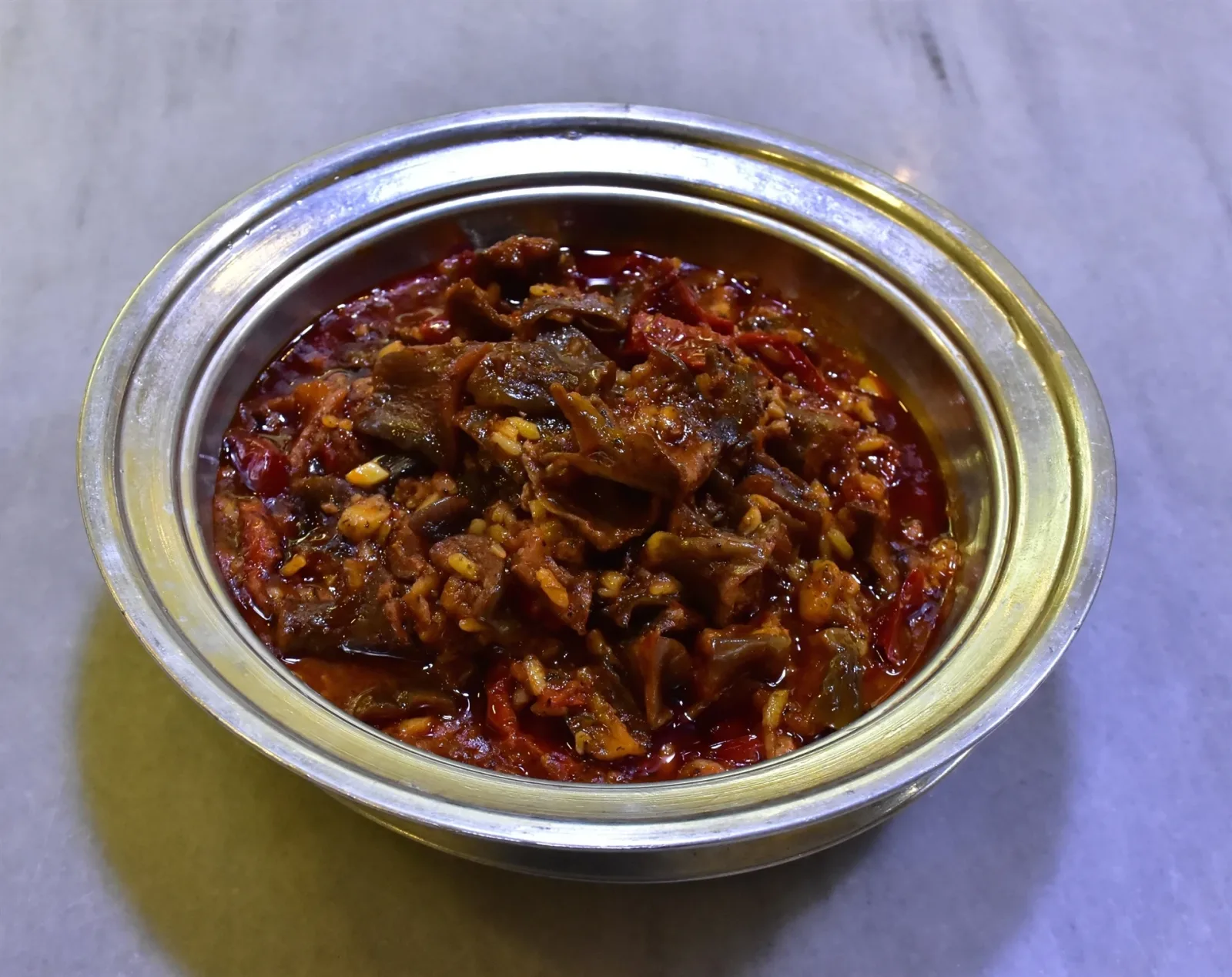
Bork aşı (widely known locally as mıcırık aşı) is a traditional dish particular to Gaziantep, in which sun-dried eggplant pieces called "börk" and "mıcırık" come together with rice, meat and tomato/pepper paste in a plain, filling stew. The "börk" and "mıcırık" in its name are not a grain or a pastry as many assume, but the local names for the dried pieces left over from making dried (stuffed) eggplant. Wasting nothing, this humble dish is cooked above all in the winter months and usually comes to the table piping hot, with yogurt alongside.
The identity of bork aşı springs from the harmony of a few essentials: sun-dried eggplant pieces (börk and mıcırık), rice, minced or diced meat, onion and garlic, tomato and pepper paste, and a few dried spices. Behind these lies not an expensive shopping list but a culture that makes use of everything on hand and turns scraps into a meal. Bork aşı was registered as a geographical indication under the name "Gaziantep Bork Aşı / Gaziantep Mıcırık Aşı" by TÜRKPATENT in 2021.
What Is Bork Aşı and What Is in It?
Bork aşı is a stew in which sun-dried eggplant pieces (börk and mıcırık) are cooked in water alongside browned onion and meat, with paste, garlic and spices, and brought to consistency with rice. Its texture wanders between a thick stew and a moist pilaf; for this reason it is called a soup at some tables and a dish (aş) at others. Its most important point is to clear up the misunderstanding in its name: here "börk" and "mıcırık" are the names of two different parts of the dried eggplant.
What Do "Börk" and "Mıcırık" Mean Here?
In Gaziantep, eggplant is preserved by drying for the winter larder; its best-known form is the hollowed-out dried eggplant strung on a thread for stuffed dolma. Both main ingredients of bork aşı come from the pieces left over from this very process. Börk is obtained by cutting the head (crown) of the eggplant together with its green stem into small pieces and sun-drying them; mıcırık is obtained by sun-drying the inner flesh removed when the eggplants are hollowed out for dolma. In other words, the pieces that would normally be thrown away are dried, stored, and turned into a stew in winter. In this respect bork aşı belongs to the same tradition as plain dishes such as simit aşı (bulgur stew), which use the produce of Gaziantep from root to tip.
Core Components
- Börk and Mıcırık (Dried Eggplant): The body and identity of bork aşı are built from börk and mıcırık, the sun-dried pieces of eggplant. Soaked in hot water and rinsed several times with cold water before cooking, these dried pieces soften as they draw in the liquid and give the dish its distinctive dried-eggplant aroma.
- Rice: Rice gives the stew its body and consistency. Pre-soaked, it cooks together with the börk and mıcırık, drawing in the liquid and giving the dish its "aş" character.
- Meat (Minced or Diced): The traditional version adds minced or small diced meat; browned with the onion, it lays the base of the dish. The meat gives bork aşı depth and a filling quality.
- Onion and Garlic: Finely chopped onion browned in fat, together with pounded garlic, forms the fragrant base of the dish and balances the taste of the dried eggplant.
- Tomato and Pepper Paste: The colour and depth of the stew come from the paste. Tomato paste gives a sweetish body, while pepper paste adds a mildly spicy, spiced depth.
- Dried Red Pepper and Mint: Dried red pepper lends the dish a spiced warmth and dried mint a typical herbal aroma; both are indispensable spices of Gaziantep stews.
- Sumac (or Lemon) Juice, Water and Salt: Sumac juice or lemon is used to add a tangy, fresh balance; the paste base, opened up with water, is balanced with salt. The amount of water determines whether the result is a soup or a thicker stew.
The Flavour of Plainness and Thrift
The defining element of bork aşı is not an expensive ingredient but a culinary wisdom that skilfully makes use of everything at hand. Eggplant pieces dried and stored through the summer are soaked when winter comes, added to the paste base browned with onion and meat, and cooked slowly together with rice. The transformation of a piece that would normally be discarded into a filling stew sets bork aşı in a special place among the unshowy yet deep-rooted, "waste-nothing" flavours of Gaziantep cuisine.
The History and Cultural Origins of Bork Aşı
Bork aşı's history in Gaziantep cuisine is intertwined with the city's tradition of preparing for winter by drying eggplant. Drying rather than discarding the pieces left over from the eggplants hollowed out for dried dolma is a natural outcome of a culture of making much from little. In this respect bork aşı is the product not of abundance but of a folk-kitchen tradition that turns scarcity and thrift into a meal.
The Origin of the Name
The "börk" and "mıcırık" in the dish's name are the local names given in and around Gaziantep to two different parts of dried eggplant, while "aş" means a cooked dish, especially a soupy or porridge-like one. Thus "bork aşı" and "mıcırık aşı" are in fact two names for the same dish, varying according to which dried eggplant piece is used; the two are often used together and describe the same stew. Mistaking the name for a pastry or a "börek" is a common error; the true meaning is dried eggplant.
A Dish Left from Days of Scarcity
In popular belief, bork aşı is cited as a typical example of the "born of scarcity" flavours of Gaziantep cuisine; according to hearsay, in days of famine and hardship it was a way to set a filling table with the dry provisions on hand. Some accounts say this dish has been cooked in homes since the difficult years of the War of Independence. These accounts are not documented history but an origin story living among the people; even so, they explain why bork aşı is associated with thrift and wasting nothing.
Gaziantep Bork Aşı / Gaziantep Mıcırık Aşı was entered into the TÜRKPATENT geographical indications register on 04.10.2021 as a Geographical Indication (Mahreç İşareti) with No 911. The application was made on 10.07.2020 (file no C2020/190) by the Gaziantep Development Foundation (Gaziantep'i Geliştirme Vakfı). The registration guarantees that the name "Bork Aşı / Mıcırık Aşı" may be used only for a product tied to Gaziantep and made with the defined ingredients and method.
Bork aşı arises from drying and making use of the crown and inner pieces left over from the eggplants when dried dolma is made; in this respect it is regarded as a beloved example of the "waste-nothing," zero-waste outlook of Gaziantep cuisine.
The Bork Aşı Tradition and Ritual in Gaziantep
In Gaziantep, bork aşı is not the dish of showy feasts but of the winter table and the everyday folk kitchen. The eggplant pieces dried through the summer come to the table in the cold months; its hot, filling nature makes it a meal preferred above all in winter.
A Dish Eaten in Winter
Bork aşı is traditionally cooked most of all in the autumn and winter months. The börk and mıcırık dried and stored in summer, when eggplant is plentiful, are soaked once the weather turns cold and made into a stew; in this way it has been carried from generation to generation as a filling, economical dish that keeps the winter table warm. Keeping a little dried eggplant among the winter provisions in almost every Antep home makes bork aşı a seasonal home dish.
Its Place at the Table
Bork aşı is eaten piping hot from a bowl with a spoon; it is usually served with yogurt and pickles on the side. The coolness of the yogurt balances the dense taste of the dried eggplant and the spices, while the pickle adds a tangy accompaniment. Those curious about the other deep-rooted flavours of Gaziantep cuisine built on plain dishes and dried ingredients can follow the same thrifty tradition in dishes such as simit aşı (bulgur stew).
Why You Should Try It
A single bowl of bork aşı carries Gaziantep's culture of making much from little and its winter-table tradition to the palate in one taste: the dense aroma of sun-dried eggplant, the red depth of the paste, the filling quality of the meat and the warmth of the spices are balanced by the coolness of the yogurt set beside it. And the truest way to taste it is to spoon it from a warm bowl on a cold Antep day, in the city where it was born.
Frequently Asked Questions
What is bork aşı (mıcırık aşı) and where is it from?
It is a traditional dish particular to Gaziantep in which sun-dried eggplant pieces (börk and mıcırık) are cooked with rice, meat and paste; loved in the winter months.
What are börk and mıcırık?
Börk is the crown of the eggplant cut with its green stem and dried; mıcırık is the dried inner flesh removed when eggplant is hollowed out for dolma. Both are sun-dried pieces of dried eggplant.
What is in bork aşı?
Dried eggplant (börk/mıcırık), rice, minced or diced meat, onion, garlic, tomato and pepper paste, dried red pepper, dried mint, sumac or lemon juice, water and salt.
Does bork aşı have a geographical indication?
Yes. Gaziantep Bork Aşı / Gaziantep Mıcırık Aşı was registered as a Geographical Indication (Mahreç İşareti) with No 911 by TÜRKPATENT on 04.10.2021.
When is bork aşı eaten?
Most of all in the autumn and winter months; the eggplant pieces dried in summer are turned into a stew in the cold months. It usually comes to the table piping hot, with yogurt and pickles.