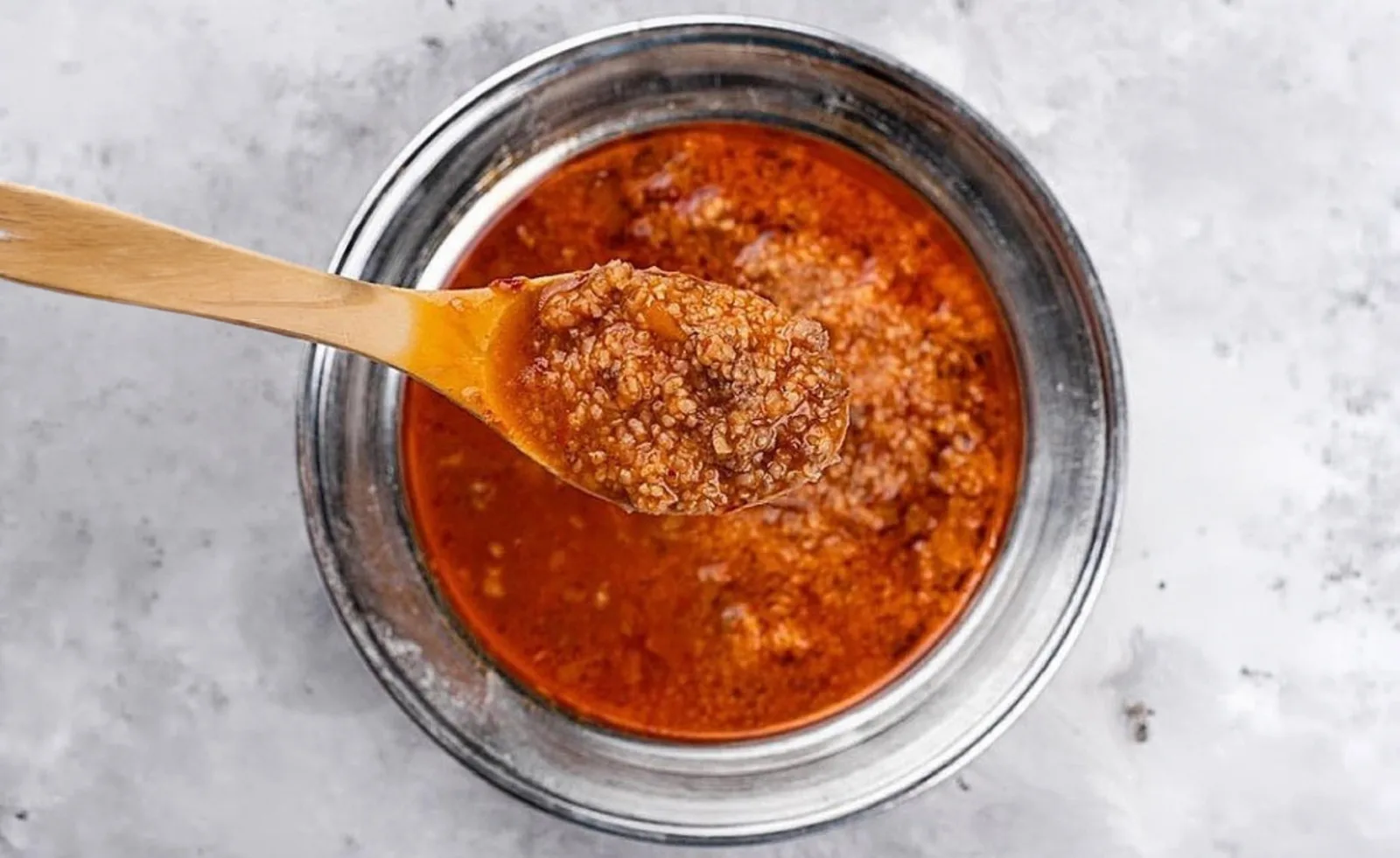
Simit aşı (Simit Stew) is a traditional dish particular to Gaziantep: coarse bulgur — called "simit" in the region — cooked with tomato and pepper paste, onion and red pepper into a thick, soup-like dish that is plain yet deeply filling. Despite its name, the "simit" here is not the sesame bread ring most people picture, but the local name given to coarse bulgur for köfte in Gaziantep and its surroundings. This humble dish, which feeds many from little, is especially enjoyed at breakfast and at sahur during Ramadan; it comes to the table piping hot, with red-pepper-infused oil drizzled over it.
The identity of simit aşı springs from the harmony of a few essentials: the coarse bulgur known locally as "simit," tomato and pepper paste, browned onion, ground red pepper, and olive oil or clarified butter. Behind these lies not an expensive ingredient list but a culture of making much from little, carried from lean times to the present day. Simit aşı was registered as a geographical indication under the name "Gaziantep Simit Aşı / Antep Simit Aşı" by TÜRKPATENT in 2023.
What Is Simit Stew and What Is in It?
Simit aşı is a dish in which the coarse bulgur known locally as "simit" is cooked in water with browned onion, tomato and pepper paste, ground red pepper and fat, brought to consistency and then served with sizzling red-pepper oil drizzled over it. Its consistency sits somewhere between a thick soup and a moist pilaf; for this reason it is called a soup at one table and a bulgur dish at another. The most important point is to clear up the confusion in its name: the "simit" here is not the sesame bread ring.
What Does "Simit" Mean Here?
In the Gaziantep dialect, and across much of southeastern and eastern Anatolia, "simit" is the name given to the coarse bulgur ground for köfte. So simit aşı means, quite literally, "bulgur stew," and it is this coarse bulgur that forms the body of the dish. It has nothing to do with the sesame ring bread; the two are simply namesakes that arise from one word carrying two separate meanings. Knowing this distinction is the key to correctly understanding simit aşı and other local dishes named from the same root, such as simit kebab.
Core Components
- Coarse Bulgur (Simit): The body of the dish is the coarse bulgur known locally as "simit." Swelling as it draws in the liquid, this bulgur gives the dish both its body and its characteristic consistency.
- Tomato and Pepper Paste: The colour and depth of simit aşı come from paste. Tomato paste lends a sweetish body, while pepper paste adds a mildly hot, spiced depth.
- Onion: Finely chopped and well browned in fat, the onion lays the base of the dish and gives it a sweet aroma and body.
- Ground Red Pepper: Ground red pepper provides the dish's heat and its reddish colour; it is used both during cooking and in the oil heated just before serving.
- Olive Oil or Clarified Butter: The traditional version adds olive oil or clarified butter. Drizzling sizzling red-pepper oil over it at serving is the signature touch of simit aşı.
- Ground Meat (Optional): At more abundant tables simit aşı may also be cooked with a little ground meat; the essence of the dish, however, is its plain form, where the bulgur rather than the meat takes the lead.
- Water and Salt: The liquid of the dish is obtained by loosening the paste base with water and is balanced with salt. The proportion of water decides whether it becomes a soup or a moist stew.
The Flavour of Simplicity
The defining element of simit aşı is not an expensive ingredient but the skill of setting a filling, flavourful table from very little. The patient browning of the onion in fat, the loosening of the paste with water and the slow drawing of that reddish liquid into the bulgur, and finally the hot pepper oil drizzled over it, turn humble ingredients into a warm dish that keeps you full. This simplicity gives simit aşı a special place among the unassuming yet deep-rooted flavours of Gaziantep cuisine.
The History and Cultural Origins of Simit Stew
Simit aşı's history in Gaziantep cuisine reaches far back and is intertwined with the city's everyday home table. In Antep, where coarse bulgur, paste and onion were found in almost every household, this dish was passed from generation to generation as a cheap, easy and filling meal. Its identity is built not on abundance but on the tradition of making skilful use of the little one has.
The Origin of the Name
The "simit" in the dish's name is the local word for coarse bulgur in Gaziantep and its surroundings, while "aş" means a cooked dish, especially a soupy or porridge-like one. So "simit aşı" means, directly, "coarse-bulgur stew." The simit kebab, in which the word simit also appears in the same region, comes from this root too and again points to bulgur. Confusing the name with the sesame ring bread is a common misconception; the true meaning is bulgur.
A Dish Left from Days of Hunger
Simit aşı is remembered in popular memory as a dish identified with the days of hunger and scarcity during the Defence of Antep. It is told that in the besieged city, in those hard days when provisions ran out, this humble dish — one that could be prepared from a handful of ingredients such as the bulgur and paste at hand — became a table that kept people on their feet and came to symbolise solidarity. In this respect simit aşı is not merely a dish but also part of Gaziantep's cultural memory from a hard chapter of its history.
Gaziantep Simit Aşı / Antep Simit Aşı was entered into the TÜRKPATENT geographical indications register on 21.07.2023 as a Geographical Indication (Mahreç İşareti) with No 1417. The application was made on 29.11.2021 (file no C2021/000497) by the Gaziantep Metropolitan Municipality. In the register the product falls under the "meals and soups" group. The registration guarantees that the name "Simit Aşı" may be used only for a product tied to Gaziantep and made with the defined ingredients and method.
The Simit Stew Tradition and Ritual in Gaziantep
In Gaziantep, simit aşı is the dish not of lavish feasts but of mornings and the everyday home table. Its light, filling nature has made it a meal favoured especially at the start of the day, while its humble ingredients have ensured it a place at the table in every season.
A Dish of Breakfast and Sahur
Simit aşı is traditionally eaten most of all at breakfast. As it is not a heavy dish, it is also enjoyed at sahur during the month of Ramadan; keeping you full through the day without burdening the stomach, it makes a practical and filling choice for the pre-dawn table. Able to be prepared in all four seasons, the dish is thus firmly bound to Gaziantep's morning culture.
Its Place at the Table
Simit aşı is eaten piping hot from a bowl with a spoon, with sizzling red-pepper oil drizzled over it. It is usually served with bread and pickles on the side; with its plain, warm character it is considered a warming meal on cold mornings. Those curious about the other deep-rooted flavours of Gaziantep cuisine built on bulgur and plain stews can follow the same tradition in dishes such as purslane stew and simit kebab.
Why You Should Try It
A single bowl of simit aşı carries Gaziantep's culture of making much from little, and its morning-table tradition, to the palate in one taste: the body of the coarse bulgur, the reddish depth of the paste, the sweet aroma of the browned onion and the warmth of the pepper oil drizzled on at the last moment all come together. And the truest way to taste it is to spoon it hot from a bowl in the city where it was born, on an Antep morning.
Frequently Asked Questions
What is simit aşı and where is it from?
It is a traditional dish particular to Gaziantep, made by cooking the coarse bulgur known locally as "simit" with paste, onion and red pepper into a thick, soup-like dish.
Is the "simit" in simit aşı the sesame bread ring?
No. In Gaziantep and its surroundings, "simit" is the local name for coarse bulgur for köfte; it has nothing to do with the sesame bread ring.
What is in simit aşı?
Coarse bulgur (simit), tomato and pepper paste, browned onion, ground red pepper, olive oil or clarified butter, water and salt; and, optionally, a little ground meat.
Does simit aşı have a geographical indication?
Yes. Gaziantep Simit Aşı / Antep Simit Aşı was registered as a Geographical Indication (Mahreç İşareti) with No 1417 by TÜRKPATENT on 21.07.2023.
When is simit aşı eaten?
Most of all at breakfast; as it is light, it is also enjoyed at sahur during Ramadan. It is a dish that can be prepared in all four seasons.