 Vegetarian
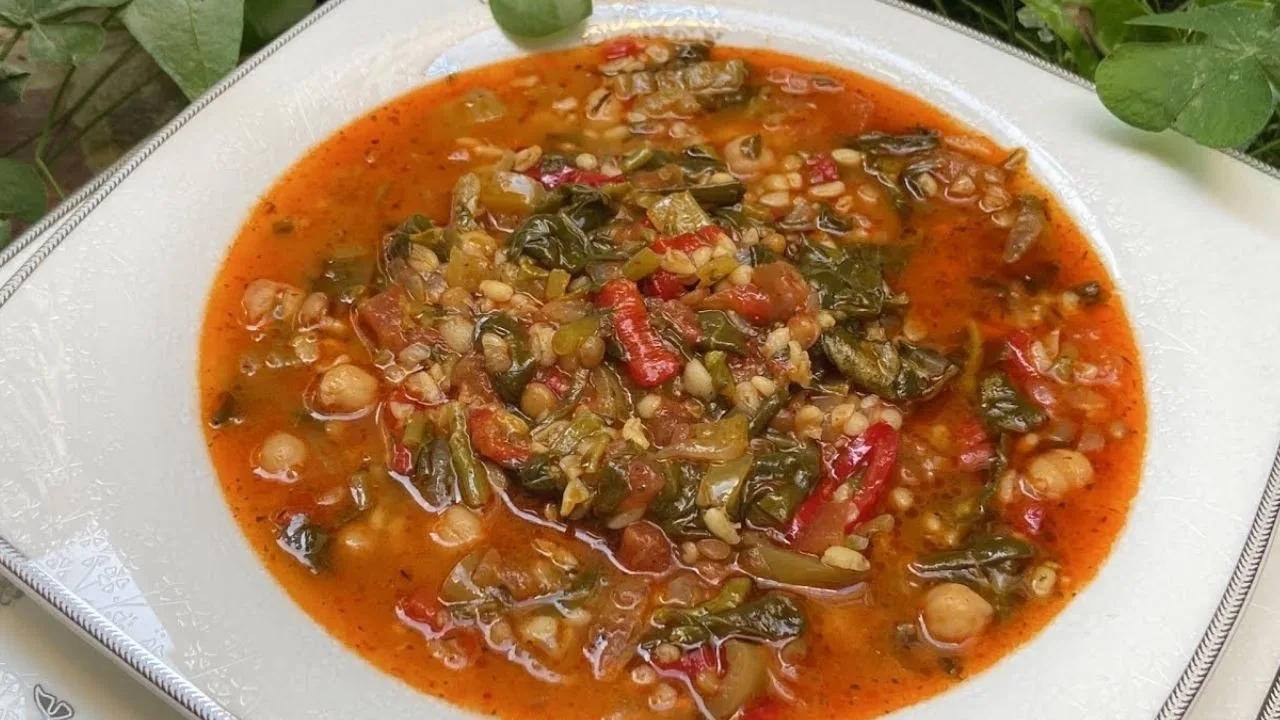
Purslane stew (Pirpirim Aşı) is a traditional dish particular to Gaziantep: purslane — known locally as "pirpirim" — brought together with legumes and bulgur and soured with sumac. Alongside green lentils, chickpeas and black-eyed peas, plenty of purslane is cooked until tender, giving a dish known for being both filling and refreshing. People in Gaziantep often see pirpirim aşı as both a soup and a stew that can stand on its own; it is served hot and leaves a light, cooling, gently tart trace on the palate.
The identity of purslane stew springs from the harmony of a few essentials: purslane (pirpirim) that softens into tender strands, green lentils and chickpeas that keep their shape, black-eyed peas, bulgur, and the sweet-and-sour balance of the sumac that holds it all together. Behind these lies a deep-rooted preserving tradition in which purslane is used fresh in summer and dried for use through the winter, keeping the dish on the table all year. Purslane stew was registered as a geographical indication under the name "Gaziantep Pirpirim Aşı / Antep Pirpirim Aşı" by TÜRKPATENT in 2021.
What Is Purslane Stew and What Is in It?
Purslane stew is a dish in which purslane (pirpirim), green lentils, chickpeas, black-eyed peas and bulgur are cooked together, soured with sumac and flavoured with onion and paste. In Gaziantep cuisine the word "aş" covers both a soup and a stew; with this dual identity, pirpirim aşı can be a starter at the beginning of a meal or the main course of the day. Although its consistency and sourness may vary from place to place, what defines it in Gaziantep is the way the body of legumes and bulgur is balanced by the tartness of sumac.
Core Components
- Purslane (Pirpirim): The main ingredient that gives the dish its name and character. "Pirpirim" is the local Gaziantep name for purslane; its fleshy, succulent leaves soften when cooked and lend the dish a distinctive, gently tart, fresh texture. It is used fresh in summer and dried in winter.
- Green Lentils: Green lentils largely build the body and the filling nature of the dish. They are cooked so that they keep their shape rather than break apart, giving an earthy depth.
- Chickpeas and Black-Eyed Peas (Loğlaz): Pre-soaked and cooked chickpeas, along with black-eyed peas — known locally as "loğlaz" — add both body and varied textures. This trio of legumes makes purslane stew a nourishing, satisfying dish.
- Bulgur: Coarsely ground bulgur thickens the stew and, together with the legumes, gives it a light grain flavour and a fuller body.
- Sumac Sourness: The signature taste of purslane stew comes from sumac sourness drawn from sumac. It gives a balanced, refreshing tartness that is never overpowering; this is what sets the dish apart from other legume-based stews.
- Onion, Paste and Fat: Sautéed onion with tomato and pepper paste forms the base of the dish, while olive oil or clarified butter (sadeyağ) adds roundness and body.
- Dried Garlic, Dried Mint and Spices: Pounded dried garlic, dried mint and red pepper complete the aromatic balance of purslane stew; some versions also add dried tomato and pepper.
Fresh and Dried: A Dish of Two Seasons
One of the defining features of purslane stew is that it is not tied to a single season. Purslane is fresh and abundant in summer; in this period the dish is made with fresh pirpirim as a light, refreshing summer meal. Part of the purslane gathered through the summer is dried and stored; in winter the stew made with this dried pirpirim turns into a denser, more filling winter dish. In this way a single dish changes form according to what the garden gives and stays on the table through all four seasons. This fresh-and-dried duality makes purslane stew a fine example of the practical, season-following, waste-nothing wisdom of Gaziantep cuisine.
The History and Cultural Origins of Purslane Stew
Purslane stew is part of Gaziantep's deep-rooted culinary tradition of herb and legume dishes. Combining purslane — which grows easily, springing up almost in every garden and at the edge of every field — with cheap, abundant legumes turned the dish into an everyday home-cooked staple prepared in households for many years. The way it makes a nourishing meal from simple ingredients has bound it tightly to Gaziantep's home kitchen.
The Origin of the Name
The name of the dish is made up of two local words. "Pirpirim" is the folk name given to purslane in Gaziantep and the surrounding region; known for its fleshy, succulent leaves, this herb is called by the same name in other areas too. "Aş" is an old word in Anatolian cuisine for a soup or a stew cooked with broth. Brought together, "pirpirim aşı" literally means "purslane dish/soup"; it has become the most natural name in the region, describing at once both the main ingredient and the consistency of the dish.
A Dish from Garden to Table
Purslane stew's place in folk cuisine binds it to Gaziantep's daily life. Because purslane grows on its own and in abundance, the dish became an easily reached, economical and healthy meal; among the people it has long been said that purslane cools and lightens the body in the summer heat. These are not a documented medical fact but a widespread folk belief and hearsay; even so, they help explain why the stew is enjoyed especially in the hot months.
Purslane stew was entered into the TÜRKPATENT geographical indications register on 06.12.2021 under the name "Gaziantep Pirpirim Aşı / Antep Pirpirim Aşı" as a Geographical Indication (Mahreç İşareti) with No 964. The application was made on 09.06.2020 (file no C2020/120) by the Gaziantep Metropolitan Municipality. The product is registered in the "dishes and soups" group, and the registration guarantees that the name may be used only for a product tied to Gaziantep and made with the defined ingredients and method.
The Purslane Stew Tradition and Ritual in Gaziantep
In Gaziantep, purslane stew lives on as a home dish that follows the season. It is cooked often with fresh pirpirim when purslane is abundant in summer; in winter it comes to the table made with purslane dried through the summer. In this respect the dish is a part — spread across all four seasons — of the city's rich culture of legume and herb stews.
A Table That Changes with the Season
Purslane stew is eaten light and refreshing with fresh purslane in the summer months, and denser and more filling with dried pirpirim in winter. On hot days the tartness of sumac gives the dish a cooling lightness, while in cold months the body of legumes and bulgur comes to the fore. The way the same dish changes consistency and character with the season makes it a classic cooked again and again in Gaziantep homes all year round.
Purslane in Popular Belief
Among the people it is said that purslane (semizotu) is a light and healthy herb, that it cools the body in the summer heat and eases digestion. The tartness given by sumac is also held to be appetising and refreshing. These beliefs are not documented medical claims but pieces of hearsay carried from generation to generation; they do, however, explain why purslane stew is seen as a light and "good-for-you" dish.
Its Place at the Table
Balanced with sumac sourness, purslane stew is served piping hot; if desired, garlic or mint butter is drizzled over it. It is usually served with bread and a seasonal salad on the side and can take its place as both a starter and a main course. Those curious about Gaziantep's legume-based and sour stew culture can follow this tradition in related dishes such as malhita (lentil aş) and simit aşı (simit stew).
Why You Should Try It
A single bowl of purslane stew carries Gaziantep's herb-and-legume cuisine to the palate in one go: the freshness of softened purslane, the satisfying body of green lentils, chickpeas and black-eyed peas, the fullness of bulgur and the refreshing tartness of sumac are all balanced in the same bowl. The truest way to taste this dish — at once light and filling, both a summer and a winter meal — is to spoon a bowl of it in the city where it was born, cooked with fresh or dried purslane according to the season.
Frequently Asked Questions
What is purslane stew and where is it from?
It is a traditional dish particular to Gaziantep, cooked with purslane (pirpirim), green lentils, chickpeas, black-eyed peas and bulgur, and soured with sumac.
What does "pirpirim" mean?
Pirpirim is the local name for purslane in Gaziantep and the surrounding region; "aş" means a soup or a broth-based stew.
What is in purslane stew?
Purslane, green lentils, chickpeas, black-eyed peas, bulgur, onion, paste, dried garlic, dried mint, and the sumac sourness that gives it its tartness.
Does purslane stew have a geographical indication?
Yes. Purslane stew was registered as a Geographical Indication (Mahreç İşareti) with No 964 by TÜRKPATENT on 06.12.2021.
When is purslane stew made?
With fresh purslane in summer and with purslane dried through the summer in winter, so it is a dish that stays on the table all year round.