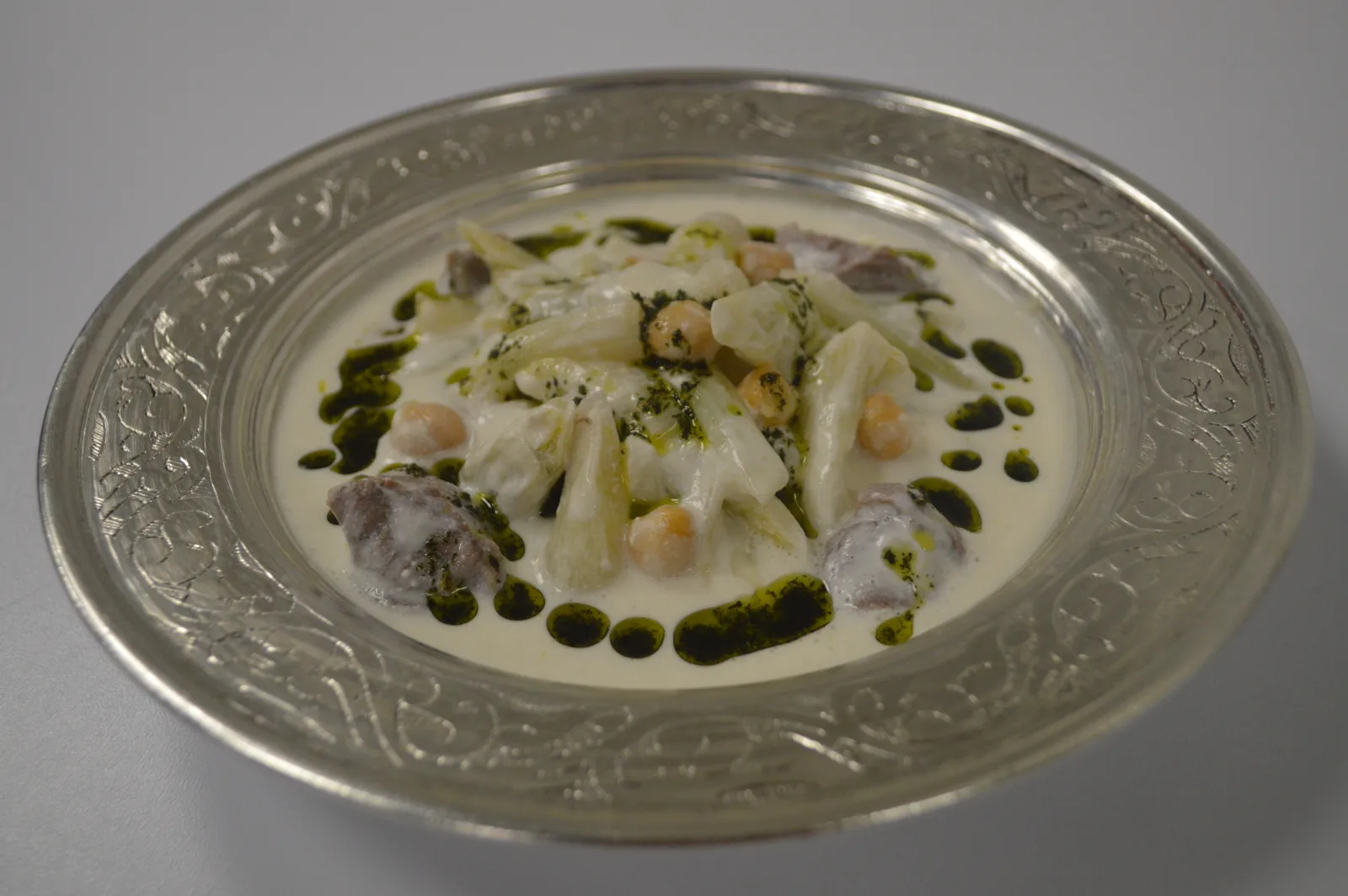
Şiveydiz is a spring stew particular to Gaziantep cuisine, in which only the white, fleshy parts of fresh garlic and fresh onion are cooked together with lamb, chickpeas and a yogurt-egg liaison, producing a faintly sour, tempered dish of stew-like consistency. It is served hot, finished with hot fat infused with dried mint — and, in some recipes, black pepper — drizzled over the top. Identified with April and May, when fresh garlic and onion appear, şiveydiz is regarded as one of the oldest dishes of the city's traditional cuisine.
The dish's identity springs from the harmony of a few essentials: the soft, spring-tempered pungency of fresh garlic, the weight of the lamb, the fullness of the chickpeas, and the velvety, faintly sour liaison that strained yogurt and egg provide. This liaison gives the dish both its colour and the gentle sourness characteristic of şiveydiz; done correctly, the yogurt turns into a smooth stew without curdling.
Antep Şiveydizi went through an official registration process to protect its region-specific ingredients and method; the application, made on 29 September 2015, concluded with registration as a geographical indication at TÜRKPATENT under the name "Antep Şiveydizi" on 15 March 2018.
What Is Şiveydiz and What Is in It?
Şiveydiz is a brothy spring dish in which lamb is boiled and joined with chickpeas, the white parts of fresh garlic and fresh onion are softened in the pot, and finally a liaison of strained yogurt, egg and flour is added to give the dish a velvety, faintly sour consistency. What sets it apart from many meat dishes is that fresh garlic plays the leading role and that a yogurt-egg liaison binds the stew. It is usually served hot as a main course, accompanied by bulgur pilaf and bread.
Core Components
- Fresh Garlic: The soul and main ingredient of the dish is the white, fleshy part of fresh garlic alone, chopped into rings or pieces and added to the pot. This spring garlic gives şiveydiz both its signature sharp-yet-soft aroma and its seasonal identity.
- Fresh Onion: Again only its white parts are used; the fresh onion goes into the dish alongside the fresh garlic, adding a sweetish depth that balances the garlic's sharpness.
- Lamb: Cubed or bone-in lamb builds the filling base of the dish and is the essential component that gives the stew its meaty flavour.
- Chickpeas: Chickpeas lend the dish fullness and texture and, together with the lamb, add to its filling character.
- Yogurt-Egg Liaison: Fresh, unsoured strained yogurt, egg (mostly the yolk) and, in some recipes, flour form the liaison that binds the dish. This mixture gives the dish its colour, its creamy texture and the gentle sourness characteristic of şiveydiz.
- Dried Mint and Fat: Dried mint — and in some recipes black pepper — added to heated butter or olive oil and drizzled over the dish is the final touch that completes şiveydiz's signature aroma.
The Liaison's Signature Touch
What gives şiveydiz its distinctive identity is the velvety texture and gentle sourness that the yogurt-egg liaison lends the dish. This liaison provides both the dish's colour and that soft, sour taste characteristic of şiveydiz, while the dried-mint hot fat drizzled over the top completes its signature aroma. It usually comes to the table hot, with bulgur pilaf and bread.
The History and Cultural Origins of Şiveydiz
Şiveydiz is regarded as one of the oldest dishes of Gaziantep's (Antep's) traditional city cuisine, and it is a seasonal spring dish tied to the months of April and May, when fresh garlic and fresh onion ripen. As much as its deep-rooted identity, the origin of its name draws interest; two distinct main views have been put forward on this point.
Two Views on the Origin of the Name
Where the name comes from is not known with certainty; two separate views stand out. One account holds that the name "Şiveydiz" is linked to the village of "Şiveydin" in Gaziantep's Oğuzeli district or to the "şivey" tribe mentioned in the Oğuz Epic. Another explanation traces the name to the Arabic phrase "şâvi bil dist," shifting first to "şaveydist" and then to "şiveydiz," where "şâvi" means meat exposed directly to fire and "tist" means a large hemispherical cauldron or a deep-rimmed tray. Both are popular accounts and are not settled.
A Dish Bound to Spring
What binds şiveydiz to the calendar is its main ingredient, fresh garlic. Because fresh garlic and fresh onion are available only in spring, especially in April and May while they are fresh, the dish too is prepared and eaten not year-round but in this short season. This seasonality makes şiveydiz one of the dishes that herald the arrival of spring at the Gaziantep table.
Antep Şiveydizi was entered into the TÜRKPATENT geographical indications register as a Geographical Indication (Mahreç İşareti, Reg. No: 331) on 15 March 2018; the application was made on 29 September 2015 by the Gaziantep Metropolitan Municipality. The registration guarantees that the name "Antep Şiveydizi" may be used only for a product tied to the Gaziantep region and made with the defined ingredients and method.
There are two distinct views on the origin of the name şiveydiz. One account holds the name may be linked to the village of "Şiveydin" in Oğuzeli or to the "şivey" tribe in the Oğuz Epic. Another explanation holds that the name shifted from the Arabic phrase "şâvi bil dist" (meat held to fire + large cauldron / deep tray) through "şaveydist" to "şiveydiz." Both explanations remain popular accounts.
The Şiveydiz Tradition and Ritual in Gaziantep
In Gaziantep, şiveydiz is not merely a spring dish; it is a table tradition associated with the season, with health and with certain festivities. It holds a place of its own in the city's everyday and special days.
The Natural-Antibiotic Belief
Among the people, şiveydiz is regarded as a "natural antibiotic" because of the fresh garlic and onion it contains; it is believed to be eaten in spring to guard against colds and flu. Because şiveydiz is held to be both delicious and good for one's health during seasonal changes, the dish is sought out at the table especially in these periods.
Spring Festivities and Table Tradition
In local culture, because its fresh garlic is plentiful, şiveydiz is also remembered as a dish identified with spring weddings and festivities, associated with the bride-and-groom season and served together with bulgur pilaf. In this respect the dish is one of the symbols of the abundance spring brings and of sitting down at the table together.
Not to Be Confused with Sarımsak Aşı
Şiveydiz is often confused with Sarımsak Aşı (garlic stew); yet the two are different dishes. Sarımsak Aşı is made with fresh garlic alone and usually with safflower (haspir) oil, towards the end of winter; şiveydiz, by contrast, is prepared with both fresh garlic and fresh onion, is finished with dried-mint fat on top, and is eaten in April and May. This distinction is important for understanding şiveydiz's distinctive identity.
Why You Should Try It
A single bowl of fresh şiveydiz carries Gaziantep's spring to the table in one go: the softened pungency of fresh garlic, the fullness of the lamb and chickpeas, the velvety sourness of the yogurt-egg liaison and the aroma of the dried-mint hot fat drizzled over the top all meet on the same plate. Because it is prepared only in the short season when fresh garlic and onion appear, şiveydiz is a spring dish best tasted in the city where it was born, in April and May, freshly cooked with bulgur pilaf and bread. For anyone curious about Gaziantep cuisine, it is one of the doors that opens onto the city's gastronomy heritage.
Frequently Asked Questions
What is şiveydiz and where is it from?
It is a spring dish particular to Gaziantep: fresh garlic and fresh onion cooked with lamb, chickpeas and a yogurt-egg liaison, finished with dried-mint hot fat on top.
What is in şiveydiz?
It uses fresh garlic, fresh onion, lamb, chickpeas and a strained-yogurt and egg liaison. Heated fat infused with dried mint is drizzled over the top.
Does şiveydiz have a geographical indication?
Yes. Antep Şiveydizi was registered as a geographical indication by TÜRKPATENT on 15 March 2018 (Mahreç İşareti, Reg. No: 331).
When is şiveydiz eaten?
It is a seasonal dish, eaten hot in spring — especially in April and May, when fresh garlic and onion appear — with bulgur pilaf and bread.
Are şiveydiz and Sarımsak Aşı the same thing?
No. Sarımsak Aşı is made with fresh garlic alone; şiveydiz is prepared with both fresh garlic and fresh onion and finished with dried-mint fat on top.