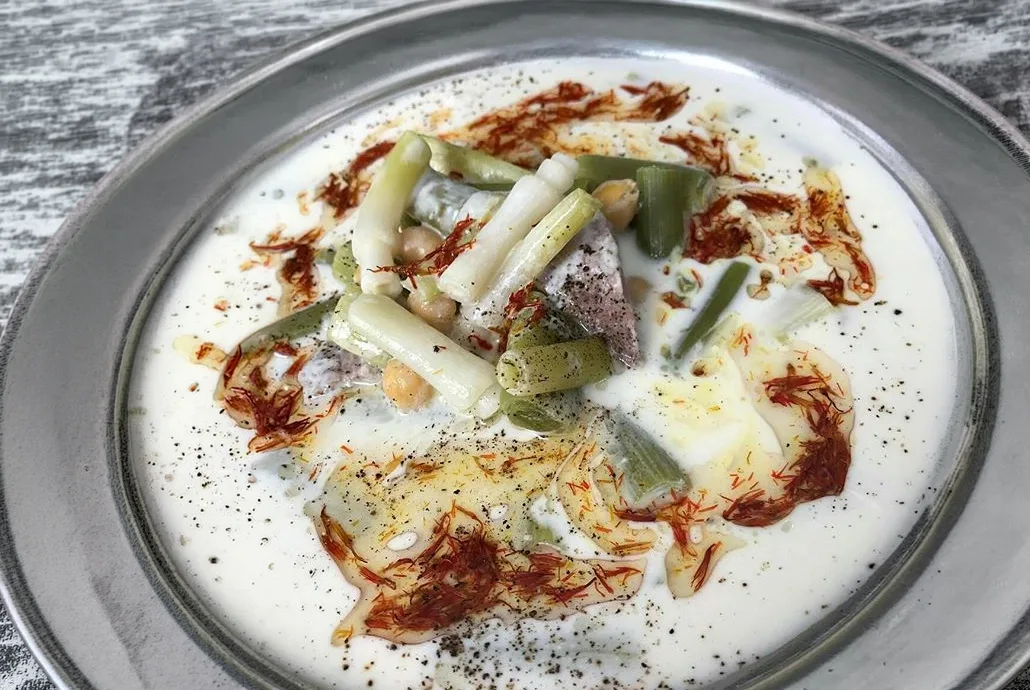
Garlic stew (Sarımsak Aşı) is a dish particular to Gaziantep: built around fresh green garlic, cooked with lamb, chickpeas and a yogurt-egg liaison, and finished with hot fat infused with safflower (haspir). Although it is often confused with şiveydiz, it is a different dish: the identity of garlic stew is set not by onion but by fresh garlic alone. Because the garlic must be used while its cloves are still juicy, its aroma not yet sharp and its woody centre not yet hardened, the dish can be made only during a very short window of three to five weeks a year — which makes it one of the rare, seasonal flavours of the Gaziantep table.
The identity of garlic stew springs from the harmony of a few essentials: spring's fresh garlic, bone-in lamb, small local chickpeas, and a yogurt-egg liaison that gives the dish a velvety, gently sour body. The hot clarified butter drizzled over it at serving — coloured and scented with safflower (haspir) — lends the stew both a golden hue and a distinctive aroma. Gaziantep Sarımsak Aşı was registered as a geographical indication by TÜRKPATENT in 2020.
What Is Garlic Stew and What Is in It?
Garlic stew is a dish in which bone-in lamb and chickpeas are boiled until tender, fresh garlic is added, and finally a liaison of strained yogurt, egg and flour is stirred in to give the dish a velvety, gently sour body; it is served hot with safflower-infused hot fat drizzled over it. As the name suggests, fresh garlic plays the lead role; in the region it is also called "samsak aşı" or "samırsak aşı." Being made with fresh garlic alone is what sets it apart both from onion-bearing şiveydiz and from other yogurt-based meat dishes.
Core Components
- Fresh Garlic: The soul and main ingredient of the dish is fresh garlic. Traditionally, fresh garlic grown in central Gaziantep or Nizip is preferred, with heads four to five centimetres across; the cloves should be juicy, the aroma mild and the centre not yet woody. Garlic of this quality is chopped into pieces and added to the pot.
- Bone-in Lamb: Bone-in lamb gives the dish its body and stock; the meat of the local hallik or karaman breed of lamb is preferred. The meat is boiled together with the chickpeas until tender and lends the stew a filling depth.
- Chickpeas: Garlic stew uses the small, locally grown chickpeas of the region. Cooked together with the meat, they give the dish both texture and substance.
- Strained Yogurt, Egg and Flour (Liaison): The element that binds the stew and gives it its character is the liaison made from strained yogurt, egg and flour. This liaison lends a velvety body and a gentle sourness; it is added slowly and with constant stirring so that it does not split in the pot.
- Safflower (Haspir) and Clarified Butter: The signature touch at serving is the fat prepared by heating clarified butter and adding safflower and black pepper to it. Known as the safflower flower, haspir gives the dish a warm, saffron-like yellow hue and a distinctive scent; this fat is drizzled over the stew.
- Black Pepper and Salt: Black pepper provides the dish's spiced balance and salt its seasoning. The pepper works into the stew both through the liaison and through the hot fat on top.
A Dish That Fits into a Season
The defining element of garlic stew is not so much its ingredients as the narrowness of its season. For the dish to be made, the garlic's cloves must be juicy, its aroma mild and its woody centre not yet hardened; the garlic reaches this stage only towards the end of winter, for a short time. For this reason garlic stew can be cooked within a very narrow window of about three to five weeks a year. The skilful addition of the liaison and the correct searing of the safflower fat on top are also the fine touches that complete the dish's character; but what truly makes it rare is this very brief season.
The History and Cultural Origins of Garlic Stew
The history of garlic stew in Gaziantep rests on the city's deep-rooted urban culinary tradition. The dish is known to have been widely made in Gaziantep since the early 20th century; bringing together regional products such as fresh garlic, chickpeas and yogurt places it in a special spot among Antep's seasonal home dishes. Being cooked with the small local chickpeas and the meat of the hallik or karaman breed of lamb reinforces the dish's bond with Gaziantep.
A Late-Winter Tradition
Garlic stew is a seasonal dish cooked towards the end of winter, on the threshold of spring, when fresh garlic comes into season. Since fresh garlic is found in the sought-after condition only in this short period, the dish too is prepared and eaten in season rather than all year round. This seasonality makes garlic stew one of the dishes that see winter out and welcome spring at the Gaziantep table.
Gaziantep Sarımsak Aşı was entered into the TÜRKPATENT geographical indications register on 15.11.2020 as a Geographical Indication (Mahreç İşareti) with No 591. The application was made on 15.05.2017 (file no C2017/042). The registration guarantees that the name "Gaziantep Sarımsak Aşı" may be used only for a product tied to the Gaziantep region and made with the defined ingredients and method.
In the dish's registration, the fresh garlic used is required to have been grown in central Gaziantep or Nizip; with its juicy cloves and mild aroma, this garlic is the stew's essential distinguishing feature. Besides Gaziantep, garlic stew is also a flavour known in the neighbouring Kilis region.
The Garlic Stew Tradition and Ritual in Gaziantep
In Gaziantep, garlic stew is not merely a dish; it is a seasonal, awaited flavour. Because it can be made only during a short period of the year, cooking it and bringing it to the table is like a small celebration of the end of winter and the coming of spring.
A Dish Eaten in Its Season
Garlic stew is eaten hot as a main course in late winter and early spring, when fresh garlic appears. Also called "samsak aşı" in places, the dish is seen more often on home tables during this short window when the garlic is in the right condition; once its season passes, it gives way to other dishes.
Garlic Stew in Popular Belief
In popular belief, garlic stew is considered a "natural antibiotic" because of the plentiful fresh garlic it contains; it is said to be eaten to ward off colds and flu during the change of seasons. These are not a documented medical fact but a widespread folk belief and hearsay; even so, they help explain why the dish is in demand precisely in this passage from winter to spring.
Its Place at the Table
Garlic stew, with hot safflower-infused fat drizzled over it, is served piping hot as a main dish, usually with bread. It is a relative of the same season as Şiveydiz, another Gaziantep spring dish that revolves around fresh garlic; tasting the two together is a way to see Antep's fresh-garlic culture in two distinct interpretations. Those curious about the seasonal flavours of Gaziantep cuisine can set out from this gateway into the city's gastronomy heritage.
Why You Should Try It
A single bowl of garlic stew carries one of Gaziantep's brief, winter-ending seasons to the table all at once: the softened sharpness of fresh garlic, the substance of lamb and chickpeas, the velvety sourness of the yogurt-egg liaison and the warm scent of the safflower-infused hot fat drizzled on top all meet in the same dish. Since it can be made only in a three-to-five-week window when fresh garlic appears, the truest way to taste it is to spoon it freshly cooked, in season, in the city where it was born.
Frequently Asked Questions
What is garlic stew and where is it from?
It is a seasonal dish particular to Gaziantep, cooked with fresh garlic, lamb, chickpeas and a yogurt-egg liaison, and finished with safflower-infused fat.
What is in garlic stew?
Fresh garlic, bone-in lamb, chickpeas, a strained-yogurt-egg-flour liaison, black pepper and salt; hot clarified butter infused with safflower (haspir) is drizzled over it.
Are garlic stew and Şiveydiz the same thing?
No. Garlic stew is made with fresh garlic alone and finished with safflower-infused fat; Şiveydiz is prepared with both fresh garlic and fresh onion and finished with dried-mint fat on top.
Does garlic stew have a geographical indication?
Yes. Gaziantep Sarımsak Aşı was registered as a Geographical Indication (Mahreç İşareti) with No 591 by TÜRKPATENT on 15.11.2020.
When is garlic stew made?
In late winter, when fresh garlic is juicy and mild in aroma, it can be made only during a very short window of three to five weeks a year.