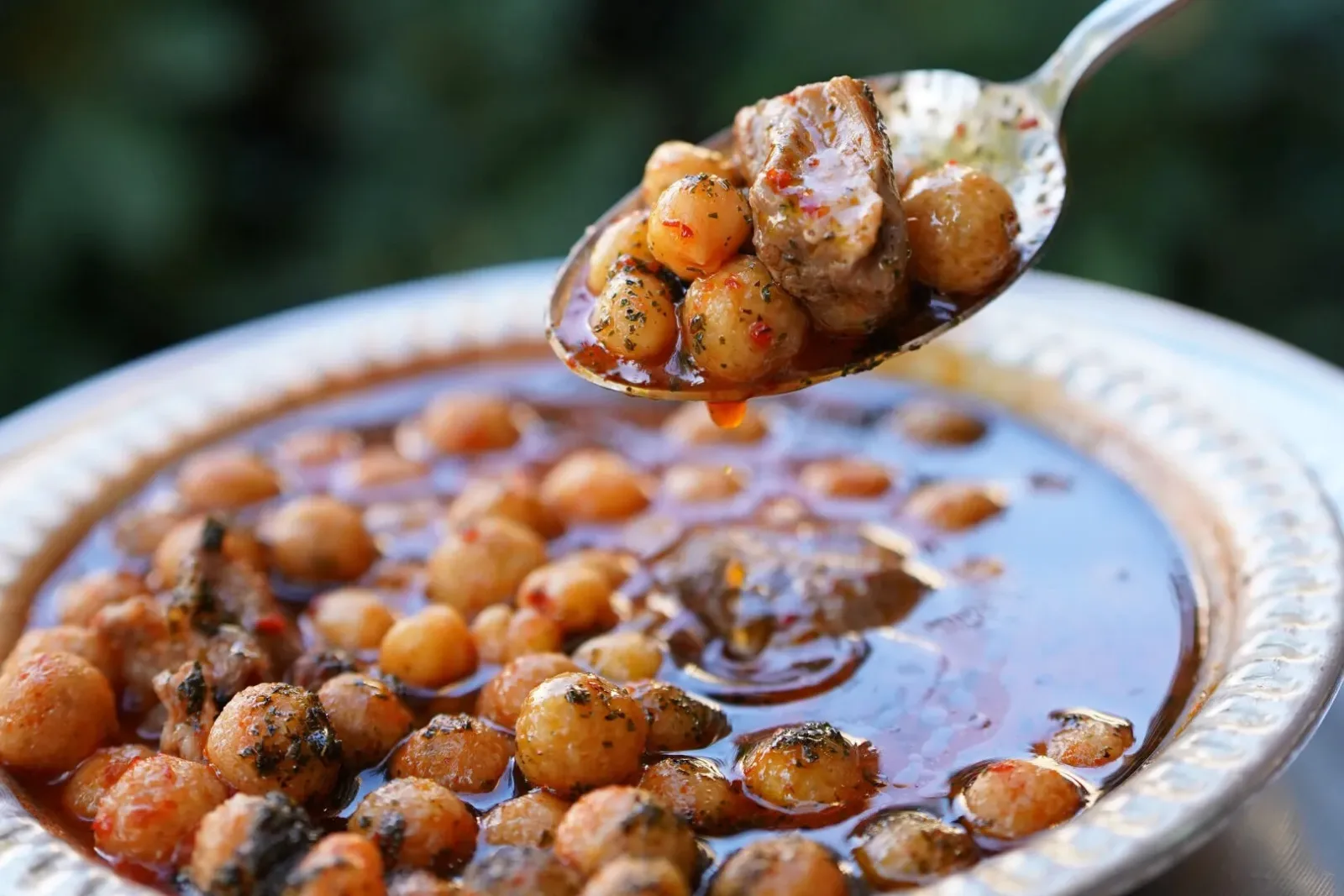
Ekşili ufak köfte (sour small köfte soup) is a traditional feast dish particular to Gaziantep: tiny köftes of fine bulgur and meat, rolled one by one in the palm to the size of a chickpea, cooked together with meat and chickpeas in a gently soured broth. The dish's signature taste comes from the distinct sourness given by the sumac or lemon added to the broth; because the tiny köftes demand patience and, often, several pairs of hands, ekşili ufak köfte is regarded in Antep less as an ordinary evening meal than as a dish for special days and gatherings.
The identity of ekşili ufak köfte springs from the harmony of a few essentials: minuscule bulgur-and-meat köftes rolled one by one, chickpeas soaked overnight and cooked, tender shredded meat, and the sour stock that wraps them all. This dish is only one face of a broader registration: in Gaziantep the same tiny köfte is made "ekşili" (sour) with a soured broth and "akıtmalı" (flowing) with a fatty filling placed inside it. Both together were registered as a geographical indication by TÜRKPATENT in 2022, under the name "Gaziantep/Antep Ekşili/Akıtmalı Ufak Köfte."
What Is Sour Small Köfte Soup and What Is in It?
Ekşili ufak köfte is a dish in which tiny köftes — pinched from a dough kneaded of fine bulgur and meat and rolled in the palm to the size of a chickpea — meet separately cooked meat and chickpeas in a broth soured with sumac or lemon, boil together, and are served hot with dried mint sizzled in hot oil drizzled over the top. The word "ufak" ("small") in its name points to the minuscule köftes; "ekşili" ("sour") points to the distinct sour taste that defines the character of the broth.
Core Components
- Fine Bulgur (Simit): The body of the köftes is made from fine köfte-grade bulgur. Locally this fine bulgur is called "simit"; Gaziantep is a city regarded as the ancestral home of bulgur, where bulgur itself carries a geographical indication (Antep bulguru). Kneaded with meat, the fine bulgur gives the tiny köfte its smooth texture.
- Lean Meat for the Köftes: The köfte dough is made from lean minced meat kneaded with the fine bulgur, with finely chopped onion and spices worked in. Pieces pinched from this dough are rolled one by one in the palm into tiny chickpea-sized köftes.
- Pieces of Meat: Alongside the köftes, the dish also contains pieces of meat that give body and depth to the broth. Cooked slowly with the chickpeas, the meat both softens and enriches the stock.
- Chickpeas: Soaked overnight, the chickpeas cook with the meat and lend the dish both texture and substance. Chickpeas are an indispensable component of ekşili ufak köfte.
- The Souring Element: The sourness that gives the dish its signature comes from sumac extract or lemon added to the broth; in the local kitchen pomegranate molasses or koruk (unripe-grape) juice is also sometimes used. This sourness is the appetising main character that balances the dish's rich, meaty body.
- Paste and Spice: Tomato and pepper paste give the broth its colour and depth, while red chilli flakes and black pepper give its warmth. These are worked into the stock in which the meat and chickpeas cook, laying the dish's foundation.
- Hot Oil and Dried Mint: Drizzled over at serving, hot oil with dried mint is the final touch of ekşili ufak köfte; spreading over the sour broth, this aromatic oil gives the dish its distinctive scent.
The Art of Rolling the Köftes
The defining element of ekşili ufak köfte is not so much its ingredients as the labour and skill it demands. The "ufak" ("small") in its name comes from rolling the dough one by one, patiently, into chickpea-sized pieces in the palm; shaping all of these tiny köftes by hand is long and tiring work. To cook without falling apart or swelling, the köftes are boiled separately in salted water, then added to the meat-and-chickpea stock; the souring is usually added towards the end of cooking. The hand-rolling of the tiny köftes and the balance of the sour broth are what set ekşili ufak köfte apart from similar dishes. That same painstaking handwork makes it a close relative of yuvalama, the symbolic dish of festival mornings; both are labour-intensive Antep dishes built from tiny köftes rolled one by one.
The History and Cultural Origins of Sour Small Köfte Soup
The history of ekşili ufak köfte in Gaziantep cuisine reaches far back. The dish is part of the ancient cooking tradition of Antep — a city regarded as the ancestral home of bulgur, where countless kinds of bulgur köfte were developed. Kneading fine bulgur with meat into minuscule köftes and cooking them in a sour broth lies at the heart of the city's labour-intensive "ufak köfte" (small köfte) culture.
A Dish with Two Faces: Ekşili and Akıtmalı
In Gaziantep the same tiny köfte comes to the table in two distinct forms, and takes its name from that form. Ekşili ufak köfte is made by cooking solid tiny köftes in a broth soured with sumac or lemon; it takes its name from the sourness of the broth. Akıtmalı ufak köfte is made with slightly larger köftes filled with a fatty mixture that, when bitten, dissolves and "flows" in the mouth; it takes its name from that flowing. Although the two are protected together under a single registration, the defining character of the ekşili version is that clear sourness in the broth.
Gaziantep/Antep Ekşili/Akıtmalı Ufak Köfte was entered into the TÜRKPATENT geographical indications register on 17.01.2022 as a Geographical Indication (Mahreç İşareti) with No 994. The application was made on 18.06.2020 (file no C2020/134) by the Gaziantep Development Foundation (Gaziantep'i Geliştirme Vakfı). The registration guarantees that the name may be used only for sour and flowing-filled small köftes tied to Gaziantep and made with the defined ingredients and method.
Because of the effort its preparation demands, ekşili ufak köfte has long been known in Gaziantep as a dish not of ordinary days but of special occasions and gatherings; the tiny köftes are often rolled together by several pairs of hands working side by side.
The Sour Small Köfte Tradition and Ritual in Gaziantep
In Gaziantep, ekşili ufak köfte is not merely a dish; it is a symbol of labour, of sharing and of the culture of hospitality. Because rolling the tiny köftes one by one demands great patience, the dish lives on as one whose preparation — like its table — gathers a crowd, often made by the women of a household coming together to prepare it side by side.
A Dish for Special Days and Gatherings
Because of its labour-intensive nature, ekşili ufak köfte is a prized dish served on special days and at gatherings. It is chosen for tables where guests are welcomed, for crowded family reunions and for important days; the effort of the tiny köftes turns it into an expression of the value placed on a guest. With its sour and filling character, the dish is also a favourite in cold seasons and often takes its place on Antep tables in winter.
Its Place at the Table
Ekşili ufak köfte is eaten piping hot from the bowl with a spoon, with dried mint sizzled in hot oil drizzled over the top. With its sour broth, chickpeas and tiny köftes it is a filling meal on its own; it is served with bread and pickles on the side. Those curious about Gaziantep's labour-intensive tradition of soups and stews can follow the same tiny-köfte mastery in other deep-rooted flavours such as yuvalama, the symbolic dish of festival mornings, and beyran, the morning dish of the market.
Why You Should Try It
A single bowl of ekşili ufak köfte carries Gaziantep's culture of labour and hospitality to the palate on one plate: the patience of tiny köftes rolled one by one in the palm, the substance of meat and chickpeas, the lively sourness given by sumac or lemon, and the aroma of minted hot oil drizzled on at the last moment all come together. The truest way to taste it is to spoon it piping hot at an Antep table that knows the real meaning of this dish, in the city where it was born.
Frequently Asked Questions
What is sour small köfte soup and where is it from?
It is a traditional feast dish particular to Gaziantep, in which tiny chickpea-sized köftes of fine bulgur and meat are cooked with meat and chickpeas in a sour broth.
What makes ekşili ufak köfte sour?
The sumac extract or lemon added to the broth; in the local kitchen pomegranate molasses or koruk (unripe-grape) juice is also sometimes used.
What is the difference between ekşili and akıtmalı ufak köfte?
They are two forms of the same tiny köfte: the ekşili version cooks in a soured broth, while the akıtmalı version is named for the fatty filling that dissolves in the mouth. Both fall under one registration.
Does sour small köfte soup have a geographical indication?
Yes. Gaziantep/Antep Ekşili/Akıtmalı Ufak Köfte was registered as a Geographical Indication (Mahreç İşareti) with No 994 by TÜRKPATENT on 17.01.2022.
When is ekşili ufak köfte eaten?
Because it is laborious to prepare it is mostly served on special days and at gatherings; with its sour, filling character it also appears often on tables in the cold winter months.