 Vegetarian
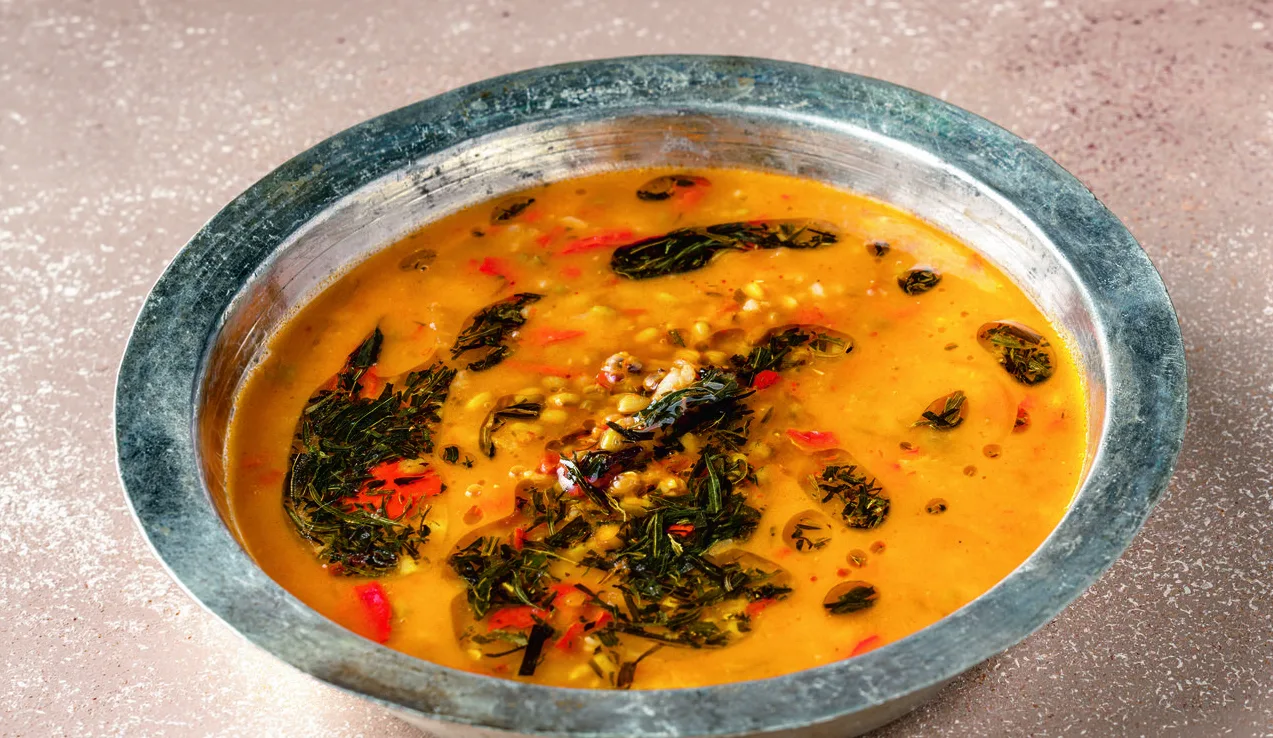
Mung bean soup (maş çorbası) is a traditional winter soup particular to Gaziantep, in which mung beans come together with bulgur or cracked wheat, seasoned with onion, red pepper and tarragon: gently tangy and deeply nourishing. It takes its name from its main ingredient, the mung bean — a small green-seeded legume known locally as "maş." Hearty, filling and unfussy, mung bean soup lives on in Antep cuisine as a warming meal of the cold months, eaten as much for its sustenance as for its taste.
The identity of mung bean soup springs from the harmony of a few essentials: mung beans cooked until soft, the bulgur or cracked wheat that gives the soup body and consistency, the flavour base built from onion and red pepper, and the tarragon that lends its characteristic aroma. Plain yet nourishing, this combination is a fixture of Antep's winter tables. Mung bean soup was registered as a geographical indication under the name "Gaziantep Maş Çorbası / Antep Maş Çorbası" by TÜRKPATENT in 2022, protecting both its name and its authentic method.
What Is Mung Bean Soup and What Is in It?
Mung bean soup is a hearty Gaziantep soup in which mung beans cooked until soft come together with bulgur or cracked wheat, onion, red pepper, tarragon, oil, red chilli flakes, water and salt. Beneath its plain appearance lies a layered flavour, where the mung bean's distinctive gentle taste is balanced by the body of the wheat and the fresh aroma of tarragon. Both light and filling, mung bean soup is often eaten in Antep as a meal in its own right.
Core Components
- Mung Beans: The body of the soup, and the source of its name, is the mung bean — a small, green-seeded legume. Well suited to long cooking, the bean softens to give the soup its own gently sweetish taste and a nourishing texture. Mung is a crop grown in and around Gaziantep and the foothills of the Taurus.
- Bulgur or Cracked Wheat: Body and fullness come from the bulgur or cracked wheat that accompanies the mung beans; at some tables rice is used as well. This grain carries the softness of the mung into a substantial soup consistency.
- Onion and Red Pepper: The flavour base is built from chopped onion and red pepper. Sweated in oil, this pairing adds depth and a gentle sweetness to the plain taste of mung and wheat.
- Tarragon: The characteristic aroma of mung bean soup comes from tarragon, an herb with its own distinctive fragrance. Added to the soup, the tarragon completes the soft taste of the mung with a fresh, lightly herbal note; it is the signature aroma that sets this soup apart from its relatives.
- Oil and Red Chilli Flakes: Fullness comes from oil, while a warm, lightly spicy tone comes from red chilli flakes. Some recipes also use butter or clarified butter and pepper paste.
- Water and Salt: The soup's own consistency forms from the long cooking of mung and wheat, balanced with water and salt. Because it is a plain combination, the taste of each ingredient can be told apart within the soup.
A Plain Yet Nourishing Soup
The defining element of mung bean soup is not showy ingredients but the way plain components turn into a substantial whole through long, patient cooking. The softening and breaking down of the mung, the thickening lent by the wheat and the working of the tarragon's aroma into the soup all take time; this slow cooking is the foundation of both the soup's texture and its taste. Meatless and legume-based, mung bean soup may look like a light meal, yet thanks to the sustenance of the mung and the wheat it is a full soup that keeps you satisfied for a long time. This balance is what makes it special in Antep's winter cooking.
The History and Cultural Origins of Mung Bean Soup
The roots of mung bean soup reach back to the long history of the mung bean in Anatolian cooking. Thanks to its keeping qualities as a dry pulse and its nourishing nature, this small green-seeded legume became one of the durable provisions of the winter months, finding a firm place in the Antep winter kitchen built on flour, bulgur and pulses. The mung's storable, filling character made the soup made from it a dependable meal of the cold seasons.
The Origin of the Name
The soup takes its name directly from its main ingredient, maş (mung). "Maş" is the short name of the mung bean (botanically Vigna radiata), a small, green-seeded legume. Sometimes known by other local names across Anatolia, this bean is recognised in many regions; in Gaziantep, the soup made from it has been embraced under the name "maş çorbası" as one of the area's deep-rooted flavours.
A Soup Born in the Winter Kitchen
The history of mung bean soup is intertwined with Antep's culture of preparing for winter. In the cold months, when fresh vegetables are scarce, dry pulses and grains form the foundation of the table; mung bean soup, too, was born as part of this seasonal order. Built on nourishing and durable ingredients, the soup has thus been passed down from generation to generation as a tradition carried from one winter to the next.
Mung bean soup was entered into the TÜRKPATENT geographical indications register on 07.03.2022 as a Geographical Indication (Mahreç İşareti) with No 1041, under the name "Gaziantep Maş Çorbası / Antep Maş Çorbası." The application was made on 21.10.2021 (file no C2021/000435). The registration guarantees that this name may be used only for a product tied to Gaziantep and made with the defined ingredients and method.
Mung bean soup appears in old medical texts under the name "maş müzevveresi"; "müzevvere" was the term for meatless, light and strengthening dishes prepared for the sick. This record shows that mung bean soup has long been regarded not merely as a meal, but as a nourishing and restorative dish.
The Mung Bean Soup Tradition and Ritual in Gaziantep
In Gaziantep, mung bean soup is not merely a soup; it is part of the winter table and of the home kitchen. Cooked often in the cold months, mung bean soup is tightly bound to the city's seasonal order of eating; it is sought more in winter than in summer, as a meal that warms and fills.
Its Place at the Winter Table
Mung bean soup is traditionally eaten in the cold months, as a warming meal of winter evenings. Thanks to its light yet filling nature it is often counted as a meal in its own right; with its pulse- and grain-based content it is spoken of as a soup that "warms a person from the inside in winter." Cooked in a pot in the home kitchen and eaten the same day, mung bean soup thus lives on as a winter warmth belonging to the home.
Mung Bean Soup in Popular Belief
In popular belief, mung bean soup is held to be nourishing and "strengthening," to warm the body on cold winter days and to be good for someone recovering from illness; with its light, easily digestible nature it is said to be recommended to those who wish to regain their strength. These are not a documented medical fact but a widespread folk belief and hearsay; even so, they help explain why mung bean soup is more in demand in the winter months and after illness.
Its Place at the Table
Mung bean soup is eaten piping hot, with heated oil and red chilli flakes drizzled over the top; at some tables lemon or vinegar is served alongside. It is usually served with bread, as a substantial main meal. Those curious about the other deep-rooted winter soups of Gaziantep cuisine can follow the city's cold-month flavours in dishes such as alaca soup; all the soups and stews, meanwhile, are gathered together on the Gastronomy page.
Why You Should Try It
A single bowl of mung bean soup carries Gaziantep's winter cooking and its plain, nourishing table tradition to the palate in one bowl: the softness of long-cooked mung, the body of the wheat, the sweetish base of onion and pepper, and the fresh aroma of tarragon are all balanced together. Made fuller still by the hot oil and chilli flakes drizzled over the top, the soup is both light and filling. And the truest way to taste it is to spoon it from a warm bowl in the city where it was born, on a cold winter's day.
Frequently Asked Questions
What is mung bean soup and where is it from?
It is a traditional winter soup particular to Gaziantep, of mung beans cooked with bulgur or cracked wheat, onion, red pepper and tarragon, nourishing and filling.
What is in mung bean soup?
Mung beans, bulgur or cracked wheat, onion, red pepper, tarragon, oil, red chilli flakes, water and salt; some recipes add butter/clarified butter and pepper paste.
What gives mung bean soup its character?
The soft taste of the mung with the body of the wheat and, above all, the fresh aroma of tarragon; balancing plain ingredients through long cooking gives the soup its signature taste.
Does mung bean soup have a geographical indication?
Yes. "Gaziantep Maş Çorbası / Antep Maş Çorbası" was registered as a Geographical Indication (Mahreç İşareti) with No 1041 by TÜRKPATENT on 07.03.2022.
When is mung bean soup eaten?
Mostly in the cold months, as a warming and filling meal of winter; with its light, easily digestible nature it is counted as a meal on its own.