 Vegetarian
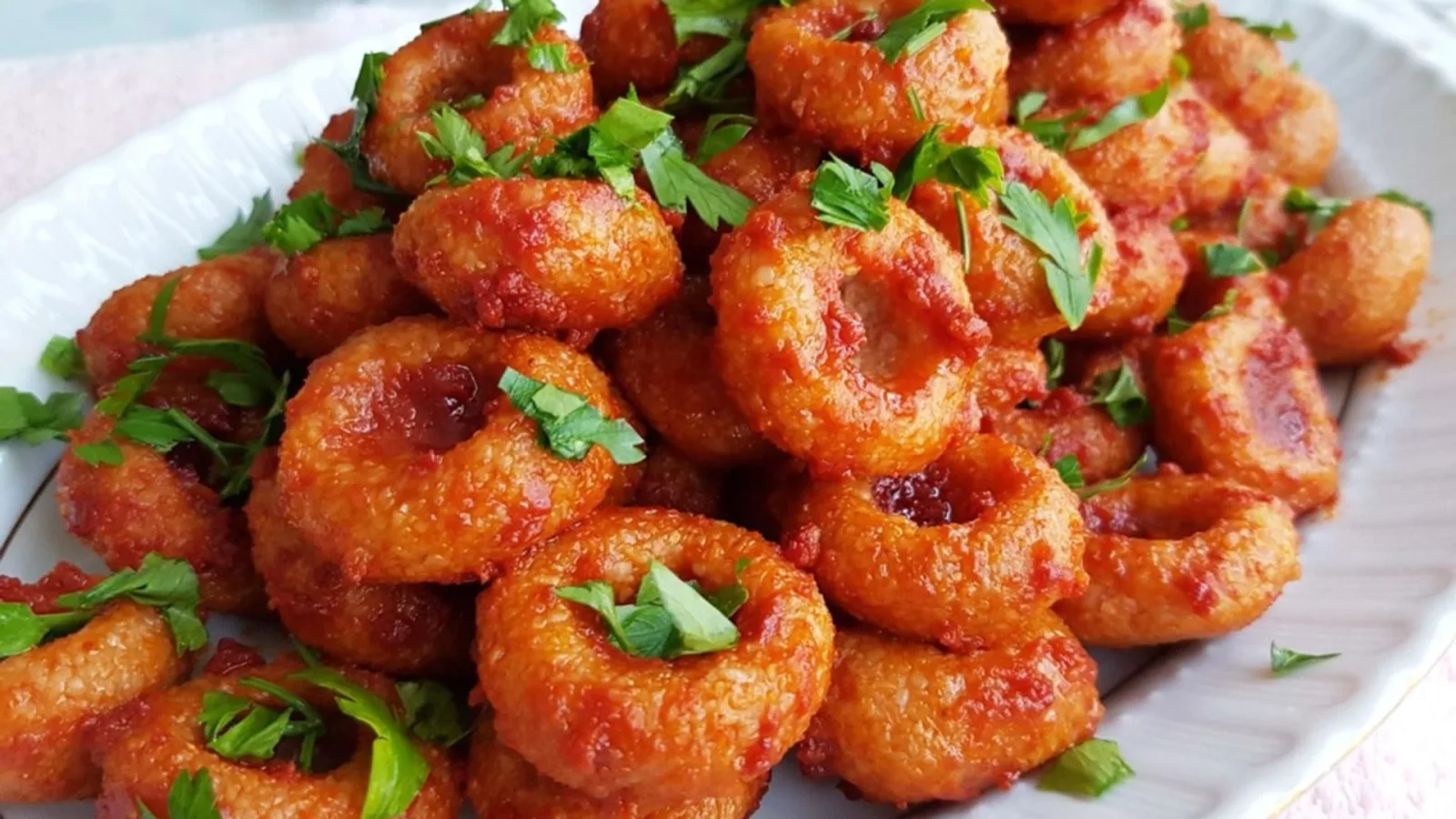
Fellah köftesi (fellah's bulgur köfte) is one of the meatless, plain yet deeply filling köftes of Gaziantep cuisine. Fine bulgur is kneaded with pepper paste and spices, shaped by hand into tiny pieces pressed with the thumb, boiled in salted water and then brought together with a garlicky tomato-and-pepper-paste sauce, often finished with pomegranate molasses and fresh greens. Even on days when meat rarely reached the table, this köfte filled the stomach and lifted the spirit. Its very name gives away its origin: in Arabic, "fellah" means a farmer, a peasant, a tiller of the soil.
The identity of fellah köftesi springs from a few simple things meeting with skill: fine bulgur kneaded to the right consistency, the pepper paste that gives it colour and depth, spices such as red chilli flakes and cumin, and finally the hot, garlicky, pepper-paste sauce that coats the köftes. There is no meat; its heartiness comes from bulgur, its flavour from the sauce and the spices. In Gaziantep this meatless köfte, economical and light, is a much-loved dish especially of the hot summer months and of crowded tables.
What Is Fellah Köftesi and What Is in It?
Fellah köftesi is a meatless köfte in which fine bulgur is rested in warm water and kneaded thoroughly with pepper paste, salt and spices, then divided into small chickpea-sized pieces, each shaped by pressing lightly with the thumb, boiled in salted boiling water and finally tossed with an olive-oil, garlic and pepper-paste tomato sauce. What turns plain bulgur into a satisfying meal is this köfte's sauce, its spices and the fresh touches added over the top.
Core Components
- Fine Bulgur (Köftelik Bulgur): The body of fellah köftesi is built from fine köfte-grade bulgur. Softened in warm water and kneaded with pepper paste and spices, the bulgur gives the köfte both its texture and its heartiness; in this way fellah köftesi is an entirely meatless köfte.
- Pepper Paste: Worked into the dough, the pepper paste gives fellah köftesi both its reddish colour and that familiar depth of taste. The paste is one of the essentials that turn plain, meatless bulgur into a köfte worthy of the table.
- Spices (Red Chilli Flakes, Black Pepper, Cumin): Red chilli flakes, black pepper and cumin enliven the plain taste of the bulgur; kneaded into the dough, they give the köfte a bold and appetising character.
- Garlicky Tomato-Pepper-Paste Sauce: The signature of fellah köftesi is the sauce poured over it. Plenty of garlic is sautéed in olive oil and meets pepper paste and tomato; the boiled köftes are dressed in this hot sauce for serving.
- Pomegranate Molasses: At many Gaziantep tables, pomegranate molasses (nar ekşisi) is added to the sauce or over the köfte. This tart touch cuts the richness of the garlicky, pepper-paste base and lends the köfte freshness and balance.
- Fresh Greens: At serving, plenty of parsley and sometimes fresh mint is scattered over the köfte. The greens complete the plate with both their colour and their freshness.
- Lemon: Like pomegranate molasses, fresh lemon squeezed over the top is a final touch that balances the spicy, rich character of fellah köftesi.
The Geography of the Service
The defining element of fellah köftesi is not a costly ingredient but the care given to plain bulgur and the balance struck with the sauce. Kneading the bulgur to the right consistency and shaping each köfte by hand takes patience; the true character emerges at the moment the boiled köftes meet the hot sauce. On the plate the köftes are usually served generously sauced, topped with greens and pomegranate molasses; they are eaten hot or warm, with a spoon or fork. In Gaziantep, fellah köftesi often appears as a main dish in its own right, and sometimes as a colourful part of a table laden with meze.
The History and Cultural Origins of Fellah Köftesi
Fellah köftesi comes out of Gaziantep's tradition of meatless bulgur köftes. In a culinary culture where bulgur was plentiful and meat was precious, turning fine bulgur into a filling köfte with pepper paste and spices was both a clever and a deep-rooted habit. For this reason fellah köftesi, though meatless, never let the table feel that something was missing, and it has been carried from generation to generation as a flavour woven into everyday life.
The Origin of the Name
The word "fellah," which gives the köfte its name, comes from Arabic; it means "a farmer, a peasant, a tiller of the soil." The word is borrowed from the Arabic fallāḥ (farmer), which in turn rests on the root falḥ, "to cleave or plough the soil." It passed into Turkish in the Ottoman period. The name reflects the köfte's plain, modest and filling nature: a folk-table köfte that needs no costly ingredient and rests on bulgur, the product of soil and labour. That the same köfte is also known by other popular names — such as bulgur köfte and garlic köfte — reinforces this plain and widespread identity.
A Köfte of the Folk Table
The meatless, economical nature of fellah köftesi binds it to Gaziantep's daily life. Even in times when buying meat was not always possible, this köfte built from bulgur, pepper paste and spices was a filling option that brightened the table. It is said that fellah köftesi was kneaded and shaped together at crowded family tables, so that the dish became not merely a meal but also an occasion to gather.
"Fellah" comes from the Arabic fallāḥ, "farmer, peasant," and speaks to the köfte's plain, labour-rooted folk identity. The same bulgur köfte is also known in different regions by names such as bulgur köfte and garlic köfte; in Gaziantep it is a beloved member of the meatless bulgur köfte tradition.
Fellah köftesi is a köfte that contains no meat; its heartiness comes from bulgur and its flavour from pepper paste, spices and the garlicky sauce. Although egg is sometimes used to bind the dough, when it is prepared without egg it becomes an entirely plant-based, vegan plate.
The Fellah Köftesi Tradition and Ritual in Gaziantep
In Gaziantep, fellah köftesi is not merely a köfte; it is also a sign of how rich a meatless kitchen can be. At the Antep table, where bulgur is plentiful and spices are used with mastery, fellah köftesi makes a place for itself according to the season and the occasion, light and filling at once.
A Dish of Summer and the Crowded Table
Being meatless and economical, fellah köftesi is chosen more often especially in the hot summer months; with its lightness and fresh sauce it suits summer tables. Shaping the köftes one by one by hand turns it into a dish prepared together at crowded family tables, where everyone takes a part. In this way fellah köftesi brings together both the labour in the kitchen and the sharing at the table.
Its Place at the Table
Fellah köftesi is served hot or warm, drizzled with pomegranate molasses and adorned with plenty of greens; it can be a main dish on its own or a colourful part of a table full of meze. Those curious about the other deep-rooted, bulgur- and köfte-based flavours of Antep can follow the city's köfte culture in signature köftes such as içli köfte and lentil (malhıtalı) köfte.
Why You Should Try It
A single plate of fellah köftesi tells, in one mouthful, of the mastery of Gaziantep's meatless cuisine: the heartiness of plain bulgur, the depth of pepper paste, the sharpness of garlic and the warmth of spice, balanced by the freshness of the pomegranate molasses and greens added on top. The truest way to taste it is to try it at a Gaziantep table where bulgur and köfte meet with skill, generously sauced and topped with fresh greens.
Frequently Asked Questions
What is fellah köftesi?
It is a meatless köfte particular to Gaziantep cuisine, in which fine bulgur is kneaded with pepper paste and spices, shaped with the thumb, boiled and then dressed in a garlicky tomato-pepper-paste sauce.
Is there meat in fellah köftesi?
No. Fellah köftesi is meatless; its heartiness comes from bulgur and its flavour from pepper paste, spices and the garlicky sauce. Prepared without egg, it is a vegan plate.
What does "fellah" mean?
In Arabic it means "a farmer, a peasant, a tiller of the soil." The name reflects the köfte's plain, modest and filling folk-table identity.
How is fellah köftesi served?
With a garlicky tomato-pepper-paste sauce, often with pomegranate molasses, fresh greens and lemon; hot or warm, as a main dish or as a meze plate.
When is fellah köftesi preferred?
Because it is meatless and economical, it is a köfte made often especially in the hot summer months and at crowded family tables.