 Vegetarian
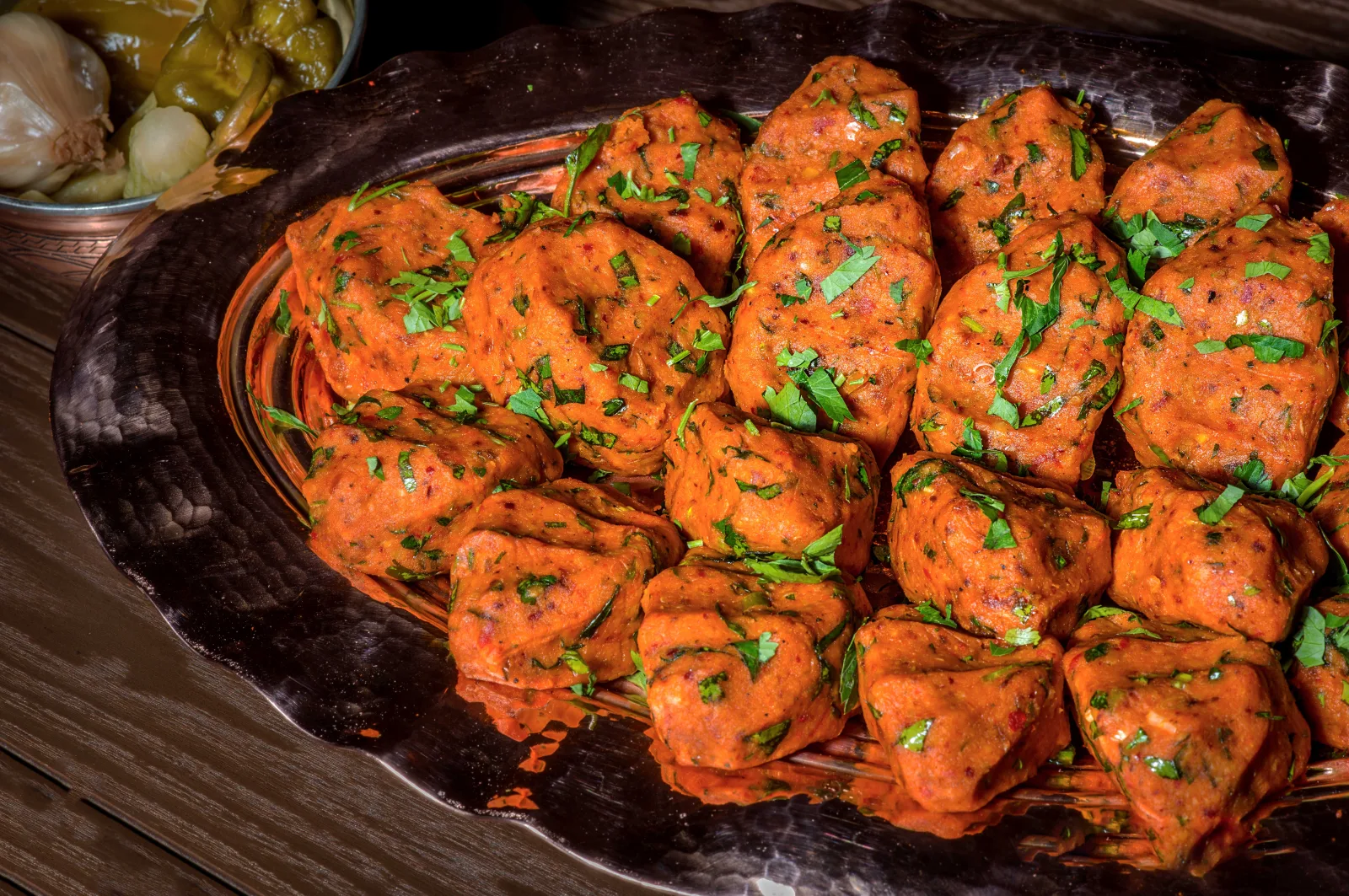
The lentil köfte (malhıtalı / mercimekli köfte) is one of the meatless masterpieces of Gaziantep cuisine: a cold köfte in which softly cooked red lentil and fine köftelik bulgur are kneaded with onion, pepper paste, spices and the region's signature tarragon, then hand-pressed into shape. People in Gaziantep usually eat it from a large platter set in the middle of the table, cradled in lettuce or fresh leaves, with lemon squeezed over it. It contains no meat; it draws its body and its filling character from lentils, bulgur and plenty of greens. It belongs to both everyday winter tables and the special tables where guests are welcomed.
The identity of the lentil köfte springs from the harmony of a few essentials: red lentil cooked down to the consistency of a thick soup, fine köftelik bulgur (known locally as "simit") that swells in its warmth, both sautéed and raw onion, pepper and tomato paste, plenty of parsley, and the tarragon that sets it apart from other lentil köftes. Its name points straight to its ingredient: "malhıta" is the local word for red lentil in Gaziantep folk usage. The köfte was registered by TÜRKPATENT in 2021 under the name "Gaziantep Malhıtalı Köftesi / Gaziantep Mercimekli Köftesi" as a geographical indication.
What Is the Lentil Köfte and What Is in It?
The lentil köfte is a meatless köfte in which red lentil cooked until soft and fine köftelik bulgur are kneaded with onion, garlic, paste, spices and tarragon, then pressed into shape in the palm of the hand and served cold. In Turkish it is known both as "malhıtalı köfte" and "mercimekli köfte"; both names describe the same dish. Unlike meat köftes, its body is built entirely from plant ingredients, which makes it one of the best-loved examples of Gaziantep's meatless table tradition.
Core Components
- Malhıta (Red Lentil): The body of the köfte is built from red lentil, softened by cooking until it reaches the consistency of a thick soup. "Malhıta" is the Gaziantep dialect word for red lentil, and it gives the köfte both its name and its soft, filling texture.
- Fine Köftelik Bulgur (Simit): The fine köftelik bulgur called "simit" locally is added into the hot lentil and swells in its heat, giving the köfte its cohesive consistency. The balance between lentil and bulgur determines the kneadable structure of the mixture.
- Onion and Garlic: Part of the dry onion is sautéed until golden and part is added raw; this is joined by spring onion, garlic and optional fresh garlic. This layered use of onion lends the köfte depth and aroma.
- Tarragon: The signature herb that distinguishes the lentil köfte from other lentil köftes is tarragon (tarhun), used fresh or dried according to the season. Its cool, faintly anise-like fragrance gives the köfte its distinctly Gaziantep character.
- Paste and Red Pepper Flakes: Pepper paste and tomato paste give the köfte its colour and full flavour, while red pepper provides a heat fitting to the region. These elements set the dish's dominant red tone and spiced character.
- Parsley and Olive Oil: Plenty of finely chopped parsley adds freshness and greenery, while olive oil is used both in sautéing the onion and in binding the mixture, lending the köfte its softness.
The Geography of the Serving
After the mixture is kneaded, the lentil köfte is shaped in the local manner by pressing it in the hand: both palms work together, the lower hand is cupped and filled with a walnut-sized piece of the mixture, and the upper hand presses down to give the köfte its elongated, finger-marked form. The shaped köftes are arranged on a platter; they are usually served with radish, cress, pickles and ayran on the side. Lettuce leaves most often accompany them at the table, and the köfte is taken into a leaf, wrapped, and eaten with lemon squeezed over it.
The History and Cultural Origins of the Lentil Köfte
The lentil köfte grows out of Gaziantep's deep-rooted meatless cooking tradition, in which lentil and bulgur have been cornerstones of the kitchen for centuries. In periods when meat was expensive or scarce, nourishing, storable ingredients available in every season — such as lentil and bulgur — formed the backbone of filling tables in Antep homes. The lentil köfte took its place within this tradition as the skilfully shaped way to set an abundant, flavourful table from modest ingredients.
The Origin of the Name
The köfte's name comes straight from its main ingredient. "Malhıta" is the local word given to red lentil in Gaziantep folk usage; so "malhıtalı köfte" and "mercimekli köfte" are two names for the same dish. This local naming also shows that the köfte comes from the same culinary family as Gaziantep's other lentil-based dishes, such as malhıta (sour lentil dish) and lentil aş porridge; in all of them malhıta is the nourishing element at the centre of the table.
Relatives Among the Meatless Köftes
The lentil köfte is part of Gaziantep's family of meatless köftes that are kneaded and shaped by hand. With bulgur and pulses to the fore, these köftes resemble one another in being eaten cold and shared from a common platter in the middle of the table. Another beloved example of the same tradition, fellah köftesi, is a close cousin of the lentil köfte, with its small bulgur köftes simmered in a paste-laced broth and served cold.
Gaziantep Malhıtalı Köftesi / Gaziantep Mercimekli Köftesi was entered into the TÜRKPATENT geographical indications register on 09.02.2021 as a Geographical Indication (Mahreç İşareti) with No 665. The application was made on 09.06.2020 (file no C2020/121) by the Gaziantep Metropolitan Municipality. The registration guarantees that the name may be used only for a product tied to Gaziantep and made with the defined ingredients and method (fine bulgur, red lentil and seasonal tarragon).
The Lentil Köfte Tradition and Ritual in Gaziantep
In Gaziantep, the lentil köfte is not merely a dish; it is a table ritual built on sharing and togetherness. It is generally regarded as a winter dish, prepared on a large platter and set in the middle of the table; everyone takes a lettuce leaf of their own, places some köfte inside, squeezes lemon over it, wraps it and eats. In this form the lentil köfte is a natural part of both everyday evening tables and the special tables where guests are welcomed and conversation runs long.
A Köfte Eaten Cold
The lentil köfte is eaten not hot but warm or cold; this makes it a dish that can be prepared and kept, well suited to crowded tables and long conversations. Its cold serving brings out the freshness of the tarragon and parsley and the spiced taste of the paste and pepper. It is most often set as the main dish of a meal, but it can also come to the table as an offering plate or a meze.
Its Place at the Table
The köfte is eaten wrapped in lettuce leaves and with plenty of lemon squeezed over it; at some tables it is accompanied by pomegranate molasses, at others by radish, cress and pickles. This presentation, balancing spicy and sour tastes, is particular to Gaziantep's cold, green-laced köftes. Those curious about the same shared-table logic and meatless flavour understanding can follow it in the city's other lentil-based dishes, such as malhıta and lentil aş porridge.
Why You Should Try It
A plate of lentil köftes carries Gaziantep's meatless table wisdom and its culture of sharing to the palate in a single bite: the softness of the lentil, the texture of the bulgur, the sweetness of sautéed onion, the spice of the paste and the cool fragrance of tarragon are balanced when wrapped in lettuce and met with lemon. The truest way to taste it is to take a leaf of köfte from the common platter in the middle of the table, in the city where it was born, and squeeze lemon over it.
Frequently Asked Questions
What is the lentil köfte and where is it from?
It is a meatless Gaziantep köfte made of red lentil (malhıta) and fine bulgur, kneaded with onion, paste, tarragon and spices, hand-shaped and eaten cold.
Does the lentil köfte contain meat?
No. The lentil köfte is entirely meatless; it draws its body and filling character from red lentil, fine bulgur and plenty of greens.
What does "malhıta" mean?
Malhıta is the local word for red lentil in Gaziantep folk usage; that is why malhıtalı köfte and mercimekli köfte are the same dish.
Does the lentil köfte have a geographical indication?
Yes. Gaziantep Malhıtalı Köftesi / Gaziantep Mercimekli Köftesi was registered as a Geographical Indication (Mahreç İşareti) with No 665 by TÜRKPATENT on 09.02.2021.
How is the lentil köfte eaten?
Cold, most often wrapped in lettuce or fresh leaves with lemon squeezed over it; it is shared from the platter in the middle of the table, with radish, cress, pickles and ayran on the side.