 Vegetarian
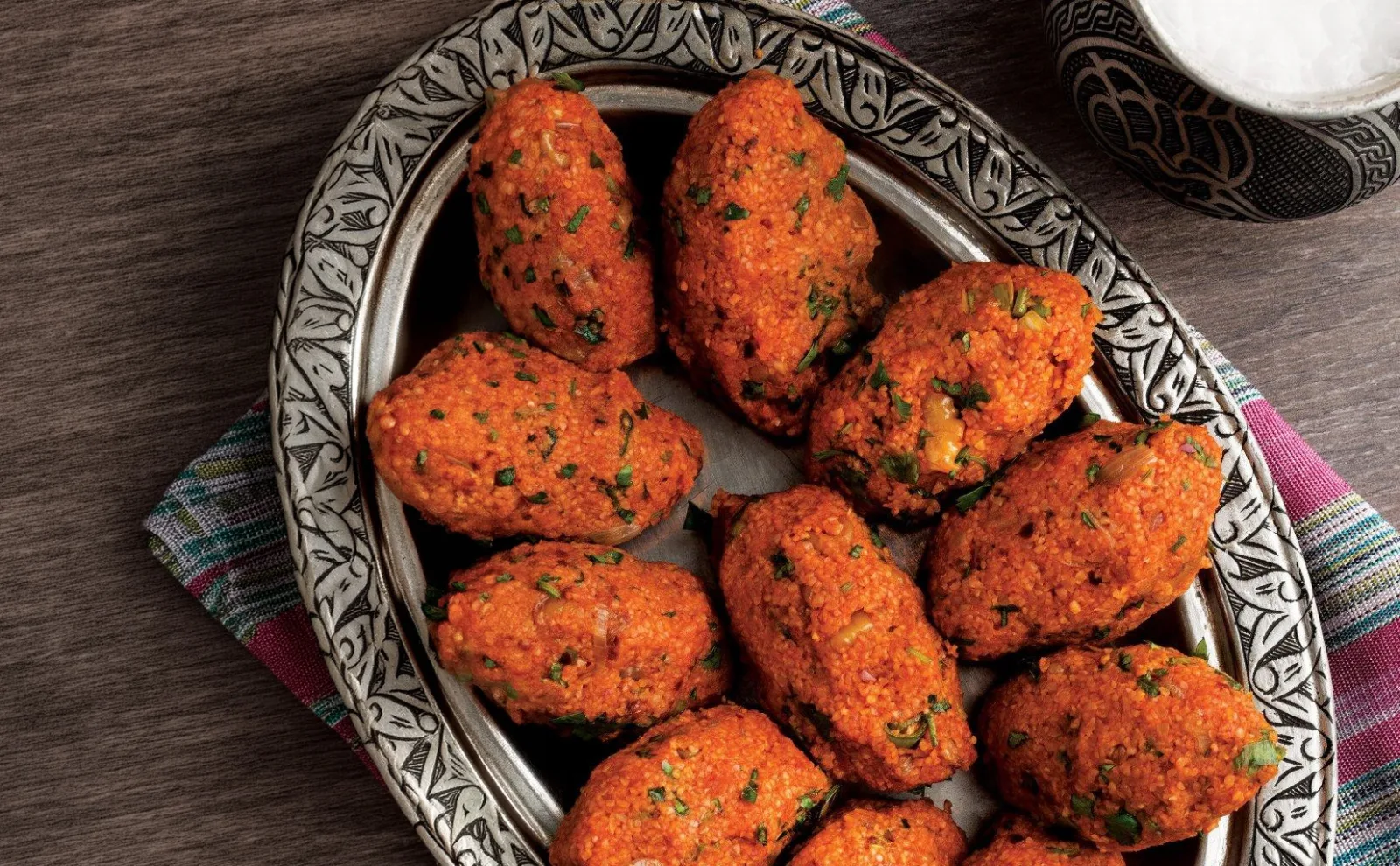
Haveydi köfte is a traditional bulgur köfte particular to Gaziantep: meatless, made by kneading fine bulgur (known locally as "simit") with pepper paste, sautéed onion, fat and plenty of fresh herbs, and eaten uncooked. Kneaded at length until it reaches a dough-like consistency, the mixture is hand-shaped like çiğ köfte and comes to the table plainly, served neither hot nor specially chilled. Especially popular in the winter months, haveydi köfte is eaten with pickles, ayran (a yogurt drink) and fresh greens alongside.
The identity of haveydi köfte springs from the harmony of a few essentials: fine bulgur that softens as it absorbs water, onion sweetened by sautéing, the red of tomato and pepper paste, the body that fat lends, and the freshness of parsley and spring onion. Behind these lies the patient labour of kneading, which turns the mixture into a smooth, "gum-like" whole. Haveydi köfte was registered as a geographical indication under the name "Gaziantep Haveydi Köfte" by TÜRKPATENT in 2021.
What Is Haveydi Köfte and What Is in It?
Haveydi köfte is a meatless köfte in which fine bulgur, soaked and swollen, is kneaded at length together with onion sautéed in fat, tomato and pepper paste, plenty of parsley and spices, then shaped by hand. Although the word "köfte" appears in its name, there is no meat in it; its body is made up entirely of bulgur and the paste-rich mixture. In this respect haveydi köfte belongs to the same "kneaded bulgur" family as çiğ köfte and kısır; it stands apart from köfte such as içli köfte, which is stuffed and then boiled or fried.
Core Components
- Fine Bulgur (Simit): The body of haveydi köfte is built from fine köfte bulgur; this fine bulgur is known locally as "simit." Soaked and swollen in hot water, it is the principal ingredient of the mixture and gains a binding consistency as it is kneaded.
- Tomato and Pepper Paste: Tomato and pepper paste give the mixture its colour, its savoury-sweet depth and its characteristic taste. Kneaded into the soaked bulgur, the paste lends the köfte a reddish appearance and a full flavour.
- Sautéed Onion: Finely chopped onion is sautéed in fat until it turns pink, so that its sharpness fades and it sweetens. This sautéed onion is worked into the mixture and gives haveydi köfte depth.
- Fat: The fat in which the onion is sautéed, and which gives the mixture body, is one of the binding elements of the recipe; butter or clarified butter is traditionally preferred.
- Parsley and Spring Onion: Plenty of finely chopped parsley and spring onion add freshness and a green lift to the mixture, balancing the köfte's spiced character.
- Spices: Salt, black pepper and red chilli flakes give the mixture flavour and a mild heat. The spices are worked into the bulgur together with the paste.
- Optional Additions: Regional recipes may add walnuts, Antep pistachios, tarragon or pounded garlic to the mixture; these bring different tastes to haveydi köfte according to local palate.
The Art of Kneading and Shaping
The defining element of haveydi köfte is not so much its ingredients as the kneading technique and the skill of shaping by hand. The meeting of the soaked bulgur with paste, sautéed onion and spices is only the beginning; the mixture is kneaded at length until it becomes a smooth, cohesive whole — that is, until it reaches what is described locally as a "gum-like consistency." This patient kneading determines both the texture and the flavour of the köfte. The mixture is then pressed in the palm, like çiğ köfte, into small köfte bearing finger marks. Because there is no cooking stage, the whole character rests on soaking the bulgur correctly and kneading the mixture well.
The History and Cultural Origins of Haveydi Köfte
The history of haveydi köfte rests on Gaziantep's deep-rooted cuisine, which places bulgur at its centre. In a region where wheat is processed into bulgur and meat was not always plentiful, enriching bulgur with paste and fat to turn it into a filling dish is a widespread practice. As part of this tradition, haveydi köfte too has been carried from generation to generation as a labour-intensive home and table köfte made from plain, accessible ingredients.
The Logic of a Meatless Köfte
Haveydi köfte is a typical example of the meatless bulgur köfte of Gaziantep cuisine. In these köfte, the lengthy hand-kneading of bulgur, paste and spices yields a dish that is filling, flavourful and satisfying even without meat. Eating the köfte uncooked, raw, is also part of this tradition; the flavour comes not from heat but from the correct consistency of the mixture and the balance of the ingredients.
Gaziantep Haveydi Köfte was entered into the TÜRKPATENT geographical indications register on 21.04.2021 as a Geographical Indication (Mahreç İşareti) with No 733. The application was made on 10.07.2020 (file no C2020/186) by the Gaziantep Development Foundation (Gaziantep'i Geliştirme Vakfı). The registration guarantees that the name "Gaziantep Haveydi Köfte" may be used only for a product tied to Gaziantep and made with the defined ingredients and method.
The Haveydi Köfte Tradition and Ritual in Gaziantep
In Gaziantep, haveydi köfte is an unshowy but deep-rooted table tradition. Usually prepared in the winter months, the köfte is a natural part of the gatherings full of conversation, the culture of hospitality and the bulgur-based cuisine. The lengthy kneading its preparation requires often makes it a dish prepared together and shared, rather than eaten alone.
A Köfte of the Winter Table
Haveydi köfte is especially in demand in the cold months. Its filling nature, where bulgur, paste and fat come together, makes it an ideal köfte for the winter table. That it requires no cooking also makes it practical; once the mixture is kneaded and shaped, the köfte can go straight to the table.
Its Place at the Table
Haveydi köfte comes to the table plainly, with fresh greens. Traditionally it is served with pickles, ayran and greens such as parsley, spring onion and lettuce on the side; these accompaniments balance the köfte's spiced and full character. Those curious about Gaziantep's culture of kneaded bulgur and köfte can follow this rich table in signature köfte such as içli köfte and Arab köfte (Arap köftesi).
Why You Should Try It
A plate of haveydi köfte carries Gaziantep's bulgur-based cuisine, and its tradition of turning plain ingredients into flavour through labour, to the palate in a single bite: the texture of softened bulgur, the depth of the paste, the sweetness of sautéed onion and the freshness of greens become one through lengthy hand-kneading. And the truest way to taste it is in the city where it was born, with pickles and ayran, alongside fresh greens.
Frequently Asked Questions
What is haveydi köfte and where is it from?
It is a meatless bulgur köfte particular to Gaziantep, made by kneading fine bulgur with pepper paste, sautéed onion, fat and herbs, then shaping it by hand and eating it uncooked.
Does haveydi köfte contain meat?
No. Although the word "köfte" appears in its name, haveydi köfte is meatless; its body is made up of fine bulgur and a paste-rich mixture.
What is in haveydi köfte?
Fine bulgur (simit), tomato and pepper paste, sautéed onion, fat, plenty of parsley and spring onion, plus salt, black pepper and chilli flakes; optionally walnuts, pistachios or tarragon.
Is haveydi köfte cooked?
No. The bulgur is soaked in hot water and the mixture is kneaded, then shaped by hand like çiğ köfte and eaten uncooked, plainly.
Does haveydi köfte have a geographical indication?
Yes. Gaziantep Haveydi Köfte was registered as a Geographical Indication (Mahreç İşareti) with No 733 by TÜRKPATENT on 21.04.2021.