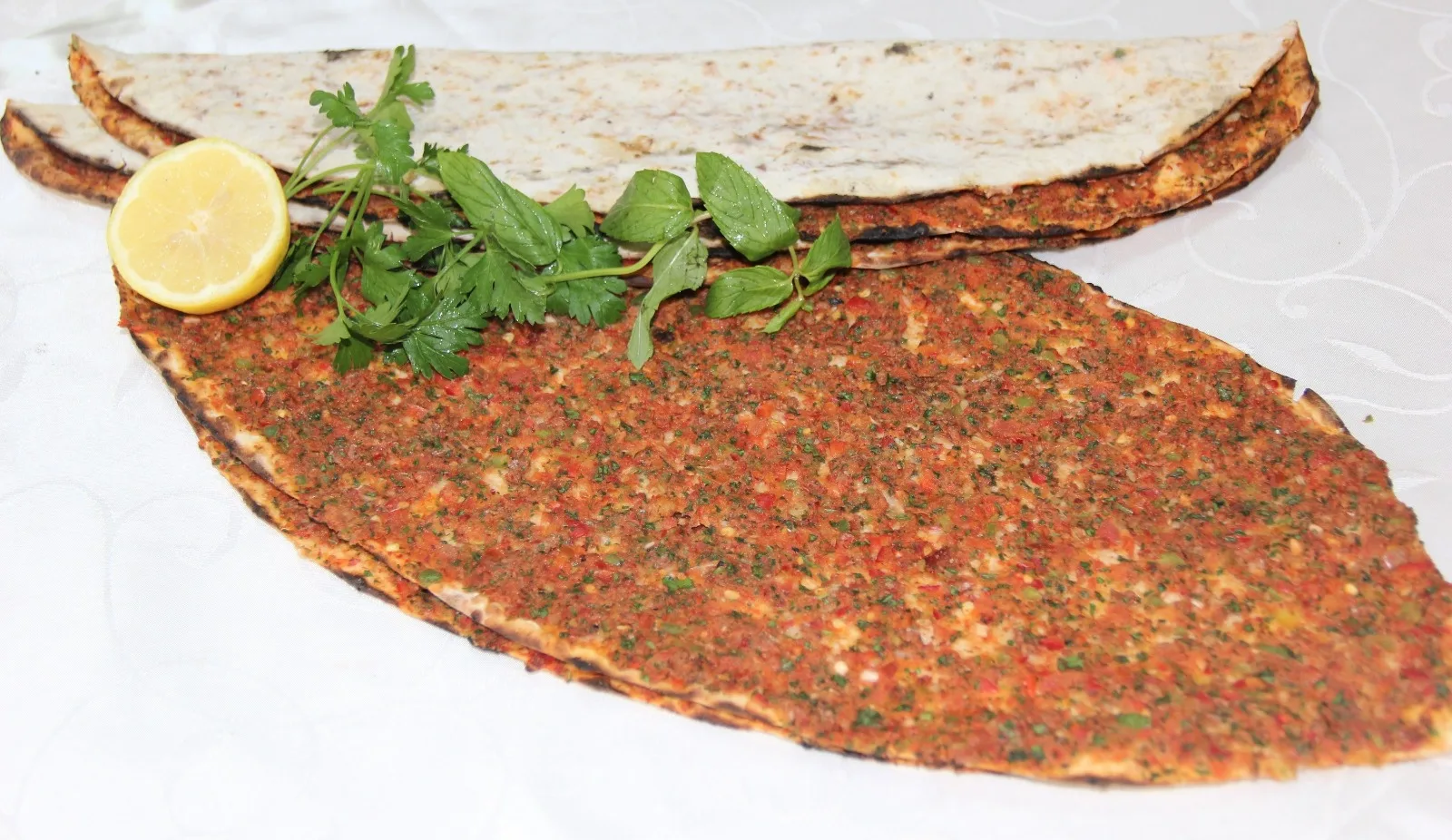
Gaziantep lahmacun is a signature Antep street and market flavour, made by spreading a filling of hand-chopped lamb (cut with a wide blade called a "zırh"), garlic, parsley and pepper over thinly rolled dough and baking it in a stone oven. Two features set it apart from the lahmacun of other cities: no onion in the filling and garlic as the main source of aroma. With its high meat ratio and hand-chopping tradition, lahmacun has a full texture, and it is an Antep heritage protected internationally — registered both in TÜRKPATENT's geographical indications register and in the European Union's register.
The identity of lahmacun springs from the harmony of a few essentials: thin dough rolled from pide flour, lamb hand-chopped with a zırh, plenty of garlic in place of onion, a parsley-pepper-tomato mixture, and the roaring heat of the stone oven. Behind these lies a master-apprentice tradition resting on zırh chopping and the stone oven. Gaziantep Lahmacun was registered by TÜRKPATENT as a Geographical Indication in 2017, and by the European Union as a geographical indication (PGI) in 2025.
What Is Lahmacun and What Is in It?
Lahmacun is a traditional dough dish in which a meat-and-vegetable filling is spread over thinly rolled dough and baked briefly in a stone oven, then served hot. What makes Gaziantep's lahmacun special is the composition of its filling and the way the meat is prepared: an onion-free, garlic-rich and notably meaty filling bakes over thin, crisp dough in a stone oven.
Core Components
- Thin Dough: The base of lahmacun is dough kneaded from pide flour and rolled very thin. Baked in a stone oven, its underside turns slightly crisp; this thinness is the foundation of Gaziantep lahmacun's light, foldable texture.
- Lamb Hand-Chopped with a Zırh: The body of the filling is lamb, and this meat is chopped not by a mincing machine but by hand with a wide-bladed cleaver called a "zırh." Hand-chopping keeps the meat from being crushed and gives the filling its distinctive texture; it is one of the core skills of the master-apprentice tradition in Gaziantep.
- Garlic (No Onion): The clearest hallmark of Gaziantep lahmacun is that its filling contains no onion, with plenty of garlic used instead. Garlic gives lahmacun its signature aroma.
- Parsley, Pepper and Tomato: Fresh parsley, local Gaziantep pepper and tomato complete the filling. Fresh pepper or pepper paste is used depending on the season.
- Stone Oven: The dough, spread with filling, bakes briefly over a roaring flame in a traditional stone-floored oven. The even heat of the stone oven crisps the underside of the dough while cooking the filling on top evenly.
What Sets Gaziantep Lahmacun Apart
The line that sets Gaziantep lahmacun apart from the lahmacun of other regions lies in a few details also protected by the geographical indication registration. The use of garlic instead of onion, the meat being chopped by hand with a zırh rather than by machine, and the filling carrying a notably high meat ratio — these three features give lahmacun both a full texture and a dominant meat-and-garlic aroma. So in a real Gaziantep lahmacun no onion is visible, garlic is felt at the first bite, and the filling covers the dough in a rich layer.
The History and Cultural Origins of Lahmacun
Lahmacun is a very old flavour reaching back to the cuisines of Mesopotamia and Anatolia, where the tradition of spreading minced meat over thin dough and baking it is deep-rooted. Gaziantep turned this ancient flavour into an identity of its own with its onion-free, garlic-rich and high-meat form, and made lahmacun an essential of the everyday table, of market life and of communal gatherings.
The Origin of the Name
The name "lahmacun" is of Arabic origin: it comes from the combination of lahm (meat) and acin (kneaded dough), meaning "meat spread over / kneaded with dough." This name also appears in the form "lahm-ı acin" in the 17th-century Seyahatnâme of Evliya Çelebi; this record points to the deep-rooted past of both the word and the dish. In everyday speech the pronunciation turned over time into "lahmacun."
Market and Oven Culture
In Gaziantep, lahmacun is part of a tradesman-and-market culture tied to stone and wood-fired ovens. In the past, neighbourhood ovens baked the dough and filling brought from homes; as the city grew and market life intensified, lahmacun gained the identity of a street food prepared and sold in independent oven shops. From everyday meals to ceremonies, from picnics to funeral tables, it appears in every corner of Gaziantep's daily life.
Gaziantep Lahmacun (Antep Lahmacunu) was entered into the TÜRKPATENT geographical indications register on 20.11.2017 as a Geographical Indication (Mahreç İşareti) with No 236. The application was made by the Gaziantep Commodity Exchange (Gaziantep Ticaret Borsası). The registration guarantees that the name "Gaziantep Lahmacun" may be used only for a product tied to Gaziantep and made with the defined ingredients and method.
Gaziantep Lahmacun was entered into the European Union's geographical indications register on 29 October 2025 as a Protected Geographical Indication (PGI), securing protection of the name across the EU. Lahmacun is the 40th product from Türkiye and the 5th from Gaziantep to obtain an EU geographical indication — a milestone that crowns the dish's international recognition.
The Lahmacun Tradition and Ritual in Gaziantep
In Gaziantep, lahmacun is served piping hot straight from the oven; the crispness of the dough and the aroma of the filling are fully experienced only when fresh. For this reason, established ovens bake lahmacun to order and bring it straight to the table.
The Local Roasted-Eggplant Serving
As a serving style particular to Gaziantep, hot lahmacun may be served on or beside a roasted and peeled eggplant. The smoky aroma of the roasted eggplant combines with the lamb and garlic flavour of the lahmacun to create a taste particular to the region; this presentation shows the ritual dimension of lahmacun at the Gaziantep table.
Its Place at the Table
Lahmacun is traditionally eaten with ayran, with lemon squeezed over it and rolled up with fresh greens such as parsley and mint. Quick, filling and made for sharing, it is both an on-the-go street food and the communal platter of crowded tables. Those curious about Gaziantep's street and market culture can follow the other flavours of the same tradition in tastes such as liver stir-fry and chickpea wrap.
Why You Should Try It
A Gaziantep lahmacun carries the city's market-and-oven culture and its registration-protected authentic identity to the palate in a single bite: an onion-free yet garlic-rich filling, full with lamb hand-chopped by a zırh, bakes over thin, crisp dough in the smoky heat of a stone oven. With lemon squeezed over it and a roasted eggplant alongside, it offers a texture and aroma not easily found in other cities. And the truest way to taste it is in the city where it was born, eaten hot, straight from the stone oven.
Frequently Asked Questions
What is Gaziantep lahmacun and where is it from?
It is a registered street food particular to Gaziantep: thin dough spread with hand-chopped (zırh) lamb, garlic, parsley and pepper and baked in a stone oven.
What sets Gaziantep lahmacun apart from others?
No onion in the filling, garlic as the main aroma, meat hand-chopped with a zırh, and a high meat ratio; these features set it apart from the lahmacun of other regions.
Does Gaziantep lahmacun have a geographical indication?
Yes. It was registered by TÜRKPATENT with No 236 on 20.11.2017 (Mahreç İşareti), and by the European Union as a geographical indication (PGI) on 29.10.2025.
How is lahmacun served in Gaziantep?
It is eaten hot straight from the oven; in the local style it is served with a roasted eggplant, and rolled up with ayran, a squeeze of lemon and fresh greens.
When was lahmacun registered in the European Union?
On 29 October 2025 it was entered into the EU geographical indications register as a PGI. Lahmacun is the 40th product from Türkiye and the 5th from Gaziantep to be registered in the EU.