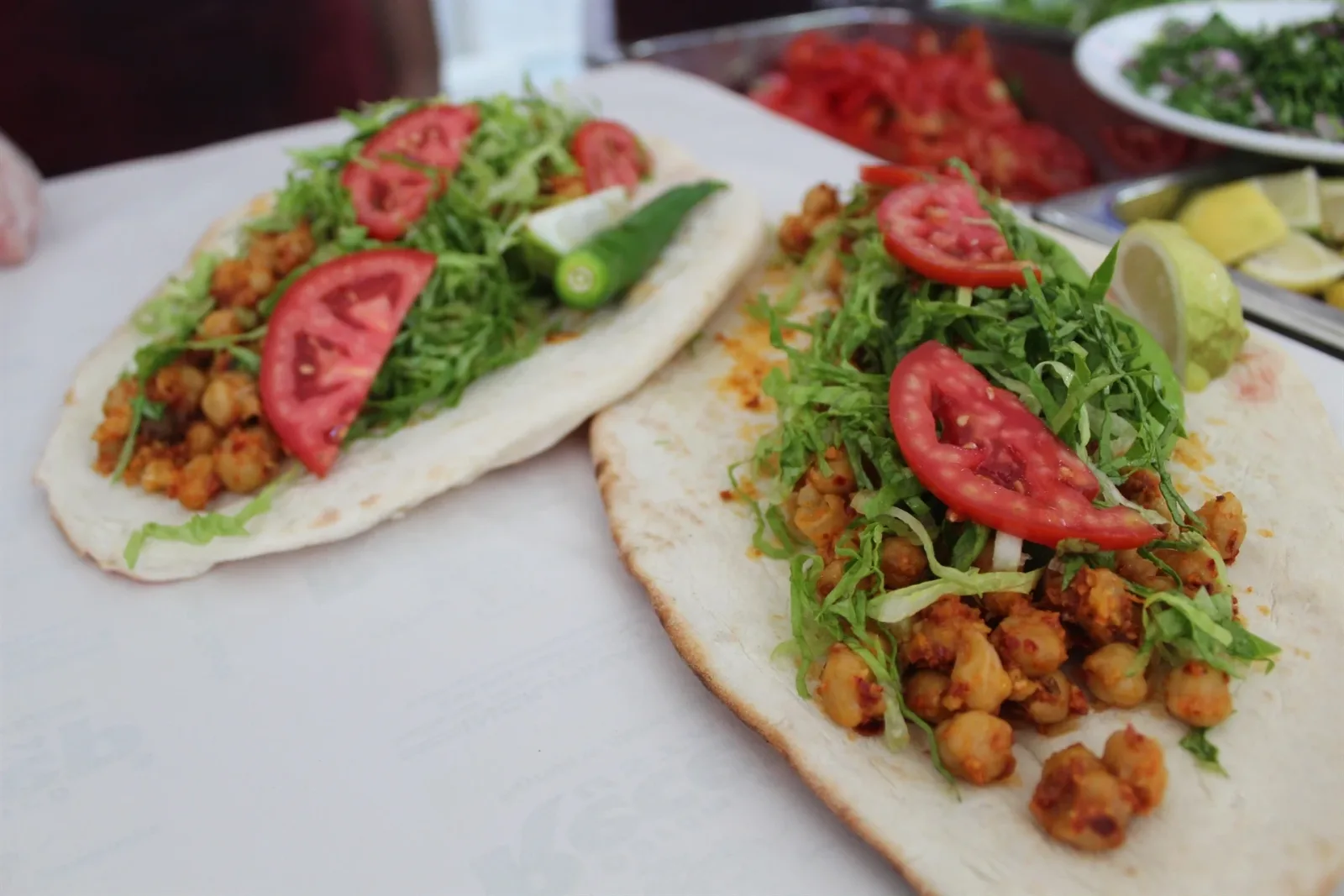
The chickpea wrap (nohut dürüm) is a practical, filling Gaziantep street food made by folding boiled, spiced large-grain chickpeas into a hot, registered Antep tırnaklı pide (nail-pattern flatbread). It contains no meat pieces; the chickpeas are traditionally simmered in meat broth. The chickpeas are placed inside the warm pide, lightly mashed with a spoon, and topped to taste with onion, parsley and spices; the wrap is then folded and eaten by hand, hot or spicy.
The identity of the chickpea wrap springs from a simple but balanced harmony: large, pale-yellow "koçbaşı" chickpeas, the registered tırnaklı pide they are wrapped in, spices, and optional chilli flakes. Cheap, filling and quick, this street food has over time become one of the symbols of Gaziantep's everyday street culture. The Gaziantep chickpea wrap was registered as a geographical indication by TÜRKPATENT in 2020.
What Is the Chickpea Wrap and What Is in It?
The chickpea wrap is a street food made by placing chickpeas — boiled until soft and seasoned — inside a hot tırnaklı pide, mashing them lightly with a spoon and folding the bread. Behind its plain appearance lies a balanced taste: starchy, full-bodied chickpeas; thin, light tırnaklı pide; and the warmth of spice. Onion, parsley and chilli added to taste shape each wrap to the eater's preference.
Core Components
- Koçbaşı Chickpeas: The body of the wrap is built from the large, pale-yellow "koçbaşı" variety of chickpea. This big grain gives the wrap a full texture and filling quality; it is boiled until soft.
- Tırnaklı Pide: The chickpeas are folded into the thin, flat Antep tırnaklı pide. This registered flatbread is not only the wrap's carrier but an inseparable part of its taste; the hot pide softens the chickpeas within and defines the wrap's texture.
- Spice and Heat: Salt, spices and optional red chilli flakes enliven the mild taste of the chickpeas. It can be ordered hot or mild; heat is part of the wrap's street identity.
- Garnish (Optional): Onion, parsley and tomato may be added at serving; some stalls also offer fried potato or aubergine on the side. These additions enrich the wrap but never overshadow the core chickpea flavour.
The History and Cultural Origins of the Chickpea Wrap
The chickpea wrap's history in Gaziantep dates to the 19th century. Cheap, filling and practical, it began as a folk food that helped lower-income people get through the day on a full stomach. As its taste and convenience spread, it turned into a street food embraced across class lines, by young and old alike. Today it is counted among Gaziantep's best-known street foods.
A Food of the Street
What binds the chickpea wrap to Gaziantep's daily life is that it has belonged to the street from the start. Filling yet light on the budget, it became the practical meal of tradesmen, workers and students during the day, and has been carried from generation to generation as a flavour eaten standing, quick and hot.
The Gaziantep Chickpea Wrap (Antep Nohut Dürümü) was entered into the TÜRKPATENT geographical indications register on 17.12.2020 as a Geographical Indication (Mahreç İşareti) with No 631. The application was made by the Gaziantep Development Foundation (Gaziantep'i Geliştirme Vakfı). The registration guarantees the use of large "koçbaşı" chickpeas and the registered Antep tırnaklı pide, and that production remains tied to Gaziantep.
Besides shops, the chickpea wrap is sold from mobile stalls on the streets of Gaziantep. The vendor loads the chickpeas prepared early in the morning onto the stall and moves through the neighbourhoods; these stalls, decorated with flowers and ornaments, are a colourful part of the city's street-food culture.
The Chickpea Wrap Tradition and Ritual in Gaziantep
In Gaziantep the chickpea wrap is a practical flavour spread across the whole day but belonging especially to breakfast and lunch hours. The chickpeas placed inside a hot tırnaklı pide are prepared quickly at the stall and handed over folded; it keeps its identity as a street food eaten standing, without sitting down to wait.
How It Is Served
The chickpeas are placed inside the hot tırnaklı pide and spread by lightly mashing them over the bread with a spoon; onion, parsley and spices are added to taste, and it is folded hot or mild. This plain preparation brings the flavour of the chickpeas and the pide to the fore. Like Gaziantep lahmacun, another symbol of the same street culture, the chickpea wrap is eaten fresh and piping hot.
Who Eats It
The chickpea wrap is a flavour that draws no line between incomes; from child to elder, from tradesman to student, it has been a stop everyone makes during the day. Its filling, economical nature makes it a familiar, beloved taste especially for university students and newcomers to the city.
Why You Should Try It
The chickpea wrap is a plain yet filling option in Gaziantep's meat-heavy street scene. The fullness of the large koçbaşı chickpeas, the lightness of the thin tırnaklı pide and the warmth of spice come together to offer an economical, quick and authentic taste. The truest way to taste it is at a stall in the city where it was born, folded straight from a hot pide.
Frequently Asked Questions
What is the chickpea wrap and where is it from?
It is a filling Gaziantep street food made by folding boiled, spiced large koçbaşı chickpeas into a registered Antep tırnaklı pide.
What is in the chickpea wrap?
Large koçbaşı chickpeas, the registered Antep tırnaklı pide, salt and spices; optionally red chilli flakes, onion, parsley and tomato.
Does the chickpea wrap have a geographical indication?
Yes. The Gaziantep Chickpea Wrap was registered as a Geographical Indication (Mahreç İşareti) with No 631 by TÜRKPATENT on 17.12.2020.
When is the chickpea wrap eaten?
It can be eaten at any time of day; it is a practical street food enjoyed especially at breakfast and lunch, standing and hot.