 Vegetarian
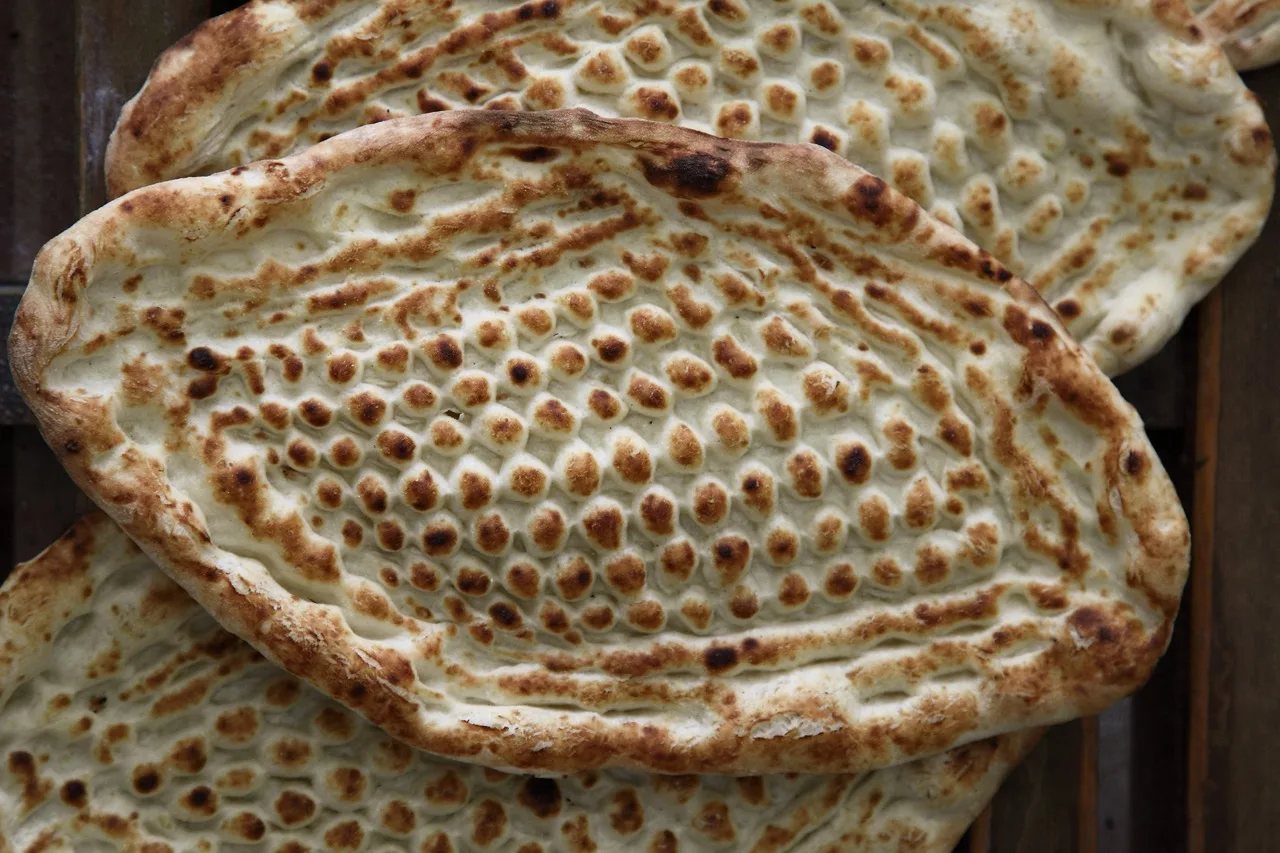
Antep tırnaklı pidesi is a thin, flat stone-oven bread patterned with "nail" marks pressed into its surface with the fingertips while the dough is still moist. Made from only flour, water, yeast and salt, it is a plain bread. Traditionally baked in ovens lined with hot stone — most often over a wood fire — it is the best-known bread of Gaziantep's neighbourhood-bakery culture and the carrier of street foods such as the chickpea wrap (nohut dürüm).
The bread's identity comes from that familiar woven pattern on its surface: rows of nail marks pressed into the oval, flattened dough with the tips of eight fingers (the thumbs excepted). These marks give the bread its character and also help heat spread evenly, so that the top and bottom of the pide bake together in balance. The Gaziantep tırnaklı pide was registered as a geographical indication by TÜRKPATENT in 2017, and holds the distinction of being the first product ever registered under the bread category at TÜRKPATENT.
What Is Antep Tırnaklı Pidesi and What Is in It?
Antep tırnaklı pidesi is a flat bread baked in a stone oven after nail marks are pressed by hand into the surface of dough rolled out in an oval, thin and flat shape. Its contents are extremely simple, and no animal ingredient goes into the bread. What sets it apart from an ordinary bread is that characteristic nail pattern on top and the distinctive, lightly crisp texture the stone oven gives it.
Core Components
- Flour: The body of the tırnaklı pide is made from bread wheat flour and/or whole wheat flour. This flour determines the texture of the dough and the plain, wheaty flavour of the bread.
- Water and Yeast: The flour is kneaded with water and yeast and left to rise; this simple combination is the basis of the pide's thin yet soft body.
- Salt: The salt added to the dough balances the taste of the bread. The tırnaklı pide's contents are limited to these four components; it contains no oil, egg, milk or any animal product.
- Nail Pattern: Though not an ingredient, it is an inseparable part of the bread: the marks pressed in with the fingertips while the dough is moist shape the surface and determine how the bread bakes.
Where Does the Name "Tırnaklı" Come From?
The bread's name comes from that pronounced pattern on its surface. After the dough is rolled out flat on the bench, the maker presses rows into it with the tips of eight fingers, the thumbs excepted; this process is called "tırnaklama" (nailing). The woven-like hollows left behind give the bread both its visual identity and its name. As the next section shows, nailing is not merely decorative — its real function is balanced baking.
The History and Cultural Origins of Antep Tırnaklı Pidesi
The history of Antep tırnaklı pidesi reaches far back; the craft of nailing has been carried on for centuries, handed from generation to generation in the neighbourhood bakeries of Gaziantep. From the start, the pide has been a bread made not at home but at the neighbourhood bakery: baked fresh and hot on demand, eaten in time for a meal. In this respect the tırnaklı pide is not only a bread but a part of Gaziantep's culture of neighbourliness and the bakery.
The Neighbourhood Bakery and the Chain of Masters
The making of the tırnaklı pide rests on a defined division of labour in the traditional neighbourhood bakery. The dough-maker who kneads and proofs the dough, the portioner who weighs and divides it into pieces and rolls it flat, the nailer who presses the nail marks into the surface, and the baker who bakes the bread in the stone oven all work like links in a chain. The names of these roles may vary from bakery to bakery; what does not vary is that each is a hand-skill mastered through practice. The nailer in particular is the one who keeps this centuries-old hand-skill alive with the tips of the fingers.
Antep Tırnaklı Pidesi was entered into the TÜRKPATENT geographical indications register in 2017 as a Geographical Indication (Mahreç İşareti) with No 223. The registration guarantees that the pide is made by the traditional method tied to Gaziantep — with bread and/or whole wheat flour, water, yeast and salt — that nail marks are pressed into its surface by hand, and that it is baked in a stone oven.
Antep tırnaklı pidesi is the first product registered under the bread category in the TÜRKPATENT geographical indications register; the second registration in the same category belongs to Kübban bread. This precedence reflects both the deep-rooted place of the tırnaklı pide in Gaziantep cuisine and the national recognition of the city's bread tradition.
The Tırnaklı Pide Tradition and Ritual in Gaziantep
In Gaziantep the tırnaklı pide is a bread that comes to the table hot and meal-fresh. It is baked on demand at the neighbourhood bakery and eaten while still fresh from the oven, while it keeps its warmth. This habit of hot, fresh consumption brings out the pide's soft body and stone-oven aroma at their best; it is never left to wait and go hard.
What It Is Eaten With and How
The tırnaklı pide is a versatile bread at the Gaziantep table. It is folded around kebab or grilled aubergine to make a wrap; it comes to the table as the main bread alongside beyran and pan dishes. Gaziantep's registered street food, the chickpea wrap (nohut dürüm), is officially wrapped in this very pide; boiled, spiced chickpeas are placed inside the hot tırnaklı pide and folded. In the same way, the tırnaklı pide is a natural companion to dishes such as liver stir-fry (ciğer kavurma), eaten at the stall in the early hours of the morning.
The Function of the Stone Oven and the Nailing
The tırnaklı pide is traditionally baked in ovens lined with hot stone, most often over a wood fire; the type of fuel is not the main factor that defines the bread's flavour. The pide never touches the fire directly: the heat of the hot stone from below and of the hearth from above bakes it. This is where the true function of the nailing appears; the marks on the surface increase the bread's surface area and let the heat spread evenly. So the top of the pide browns while the bottom also bakes, the aroma within the dough is preserved, and the bread matures in balance.
Its Kinship with Lahmacun
Coming from the same stone-oven tradition, the tırnaklı pide shares a culinary world with Gaziantep lahmacun. Even so, the two are different things: the tırnaklı pide is a plain bread with no topping on it, while lahmacun is a dish made by spreading a minced-meat topping over thin dough and baking it. Though they are products of the same oven, one is the bread of the table and the other a flavour in its own right.
Why You Should Try It
Antep tırnaklı pidesi is one of the plainest yet most fundamental cornerstones of Gaziantep cuisine: a plain bread born of only flour, water, yeast and salt, matured by the heat of the stone oven. The nail pattern on its surface is both its visual identity and the secret of its balanced baking. Whether you taste it alongside kebab, folded as a chickpea wrap, or in the company of beyran, the truest way to enjoy the tırnaklı pide is to break it while still hot at a neighbourhood bakery in the city where it was born.
Frequently Asked Questions
What is Antep tırnaklı pidesi?
It is a thin, flat stone-oven bread with nail marks pressed into its surface by fingertip; it is specific to Gaziantep and registered with a geographical indication.
Where does the name "tırnaklı" come from?
It comes from the woven pattern, called "tırnaklama" (nailing), pressed into the surface with the tips of eight fingers (thumbs excepted) while the dough is moist.
What is the purpose of the nailing?
It increases the surface area so heat spreads evenly; this lets the top and bottom of the pide bake in balance and preserves its aroma.
Does Antep tırnaklı pidesi have a geographical indication?
Yes. It was registered by TÜRKPATENT in 2017 with No 223 as a Geographical Indication, and is the first product registered under the bread category.