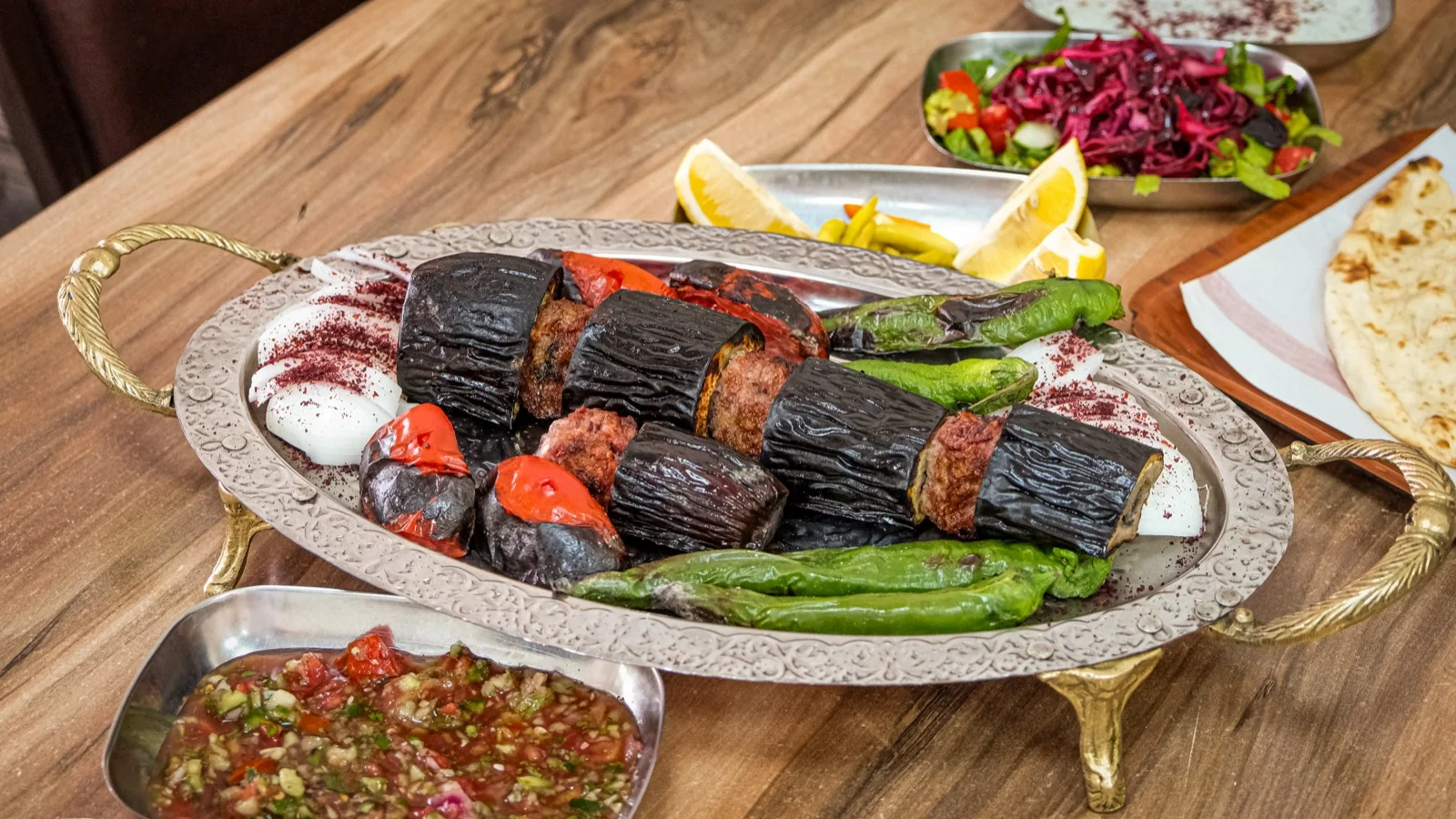
Eggplant Kebab is a traditional Gaziantep kebab in which eggplant slices that soften as they char and seasoned mince are threaded alternately, side by side, onto a skewer and cooked over charcoal embers on the grill. The fat of the meat seeps into the eggplant over the embers, and the smoky taste of the eggplant passes into the meat; the two components cook one another on the same skewer. It is one of the most deeply rooted grilled kebabs of Antep's summer table.
The character of the dish springs from the interplay of two elements: the eggplant that sweetens over the embers and softens with the fat of the meat, and the zırh-chopped mince seasoned with nothing more than salt and spice. This plain pair is a typical example of Antep cuisine's tradition of balancing meat with vegetables.
This article explores the world of ingredients that shapes the identity of eggplant kebab, its origins in Gaziantep cuisine, and its place at the city's summer table.
What Is Eggplant Kebab and What Is in It?
Eggplant Kebab is a grilled kebab in which the meat is threaded onto the skewer not on its own, but alternating with eggplant. A wide, flat skewer is loaded with a slice of eggplant and a piece of mince side by side, in sequence; this arrangement allows both the meat and the eggplant to cook at the same time, in each other's juices. Because eggplant is called "balcan" in the local dialect, this kebab is also often known in Gaziantep as balcan kebab. In regional cuisine it is prepared both on skewers over the grill and baked in a tray.
Core Components
- Eggplant: Half of the dish is eggplant. Medium-sized, firm-fleshed eggplants are often peeled in stripes and cut into thick slices; lightly salting them and letting them rest a while to sweat out their bitter water is a regional preparation step. As they cook, they soften with the heat of the embers and gain a full, smoky flavour by absorbing the dripping fat of the meat. Regional varieties such as the geographically indicated Nizip eggplant, grown in Gaziantep's Nizip district, are ideal for this kebab with their firm flesh.
- Mince (Kebap Harcı): The well-balanced fatty lamb is hand-chopped with the zırh (curved rocker blade) technique also used in Gaziantep lahmacun. The mixture is kept plain: it is seasoned only with salt and black pepper. No onion or garlic is used in this kebab; the aim is to bring out the smoky sweetness of the eggplant with the natural taste of the meat itself. The chopped mince is shaped into small pieces and placed between the eggplant slices.
The fat balance of the dish is critical: the mince must be fatty enough, because the fat it releases as it cooks softens the eggplant and prevents the kebab from drying out. For this reason there is usually no need to add extra fat to the meat in the traditional recipe.
The Geography of Serving
The cooked skewer is most often laid over a bed of lavash or yufka flatbread; alongside it come char-grilled tomatoes and peppers. The bread soaking up the meat juices and the smoky fat of the eggplant gathered beneath is a complementary part of the dish.
The History and Cultural Origins of Eggplant Kebab
The origins of eggplant kebab reach into Gaziantep's deep culinary relationship with the eggplant and into a grill culture stretching back centuries. In Antep cuisine the eggplant is the chief vegetable of the summer months; it forms the foundation of dozens of dishes, from kebabs to stuffed vegetables, from char-grilling to drying.
The Place of the Eggplant at the Antep Table
Bringing meat and vegetable together on the same plate is a deeply rooted tradition in Southeastern Anatolian cuisine. Eggplant kebab is the most direct expression of this understanding over the grill fire: it is not an expensive feast of meat, but a clever solution at the table that shares the meat in balance with a seasonal vegetable. The same harmony of "meat and eggplant" appears with a different technique in the Ali Nazik kebab, built upon a bed of char-grilled eggplant.
A Product of Grill Culture
Eggplant kebab is a typical part of Antep's summer grill tradition. It is prepared during the period when eggplant is at its most abundant and aromatic, over grills set up in the courtyards or gardens of homes. Cooking the meat over embers and serving it together with char-grilled vegetables is a shared flavour philosophy it holds in common with the city's other grilled kebabs, such as altı ezmeli kebap.
Eggplant kebab is prepared in two ways. In the skewer version, the eggplant slices and mince cook directly over the embers of the grill; the embers lend the eggplant a smoky depth. In the tray version, the same arrangement is laid in a tray and baked; in Gaziantep this method was traditionally done in the stone ovens of neighbourhood bakeries, with the slow heat of the embers. The tray version is more often preferred in home cooking, when setting up a grill is difficult. Both methods share the same basic logic: the meat and the eggplant cooking one another.
The Tradition and Ritual of Eggplant Kebab in Gaziantep
Eggplant kebab is a shared, filling home and restaurant dish of the summer months in Gaziantep. Being prepared beside the grill turns it into a gathering dish that takes its place at the centre of the table.
A Dish of Summer and Season
It is traditionally cooked in July and August, when the eggplant is at its ripest and most abundant. In this period the sweetness and flesh of the eggplant give the kebab its most balanced flavour. In Antep homes, around the grills set up on summer evenings, eggplant kebab is one of the leading plates of the table.
Its Place at the Table
Eggplant kebab is one of the filling main dishes of Antep kebab culture. It is served with ayran, char-grilled vegetables and plenty of yufka flatbread. It appears often at guest tables and at summer gatherings where the family comes together; it carries a feeling of abundance and sharing rather than show.
Its Meeting with Bread
The bread laid beneath the kebab turns into one of its most delicious parts, soaking up both the juices of the meat and the fat of the eggplant. Gathering this bread-meat-eggplant trio into a single bite is a natural part of Antep table etiquette.
Why You Should Try It
A single bite of eggplant kebab carries two faces of the embers to the palate at once: on one side the smoky, full eggplant softened by the fat of the meat, on the other the seasoned mince with its surface lightly charred over the coals. This is a plain yet balanced grill flavour, in which vegetable and meat complete one another. For anyone who wishes to know Gaziantep's summer cuisine in the warmth of a table-side grill, eggplant kebab is a starting point that must be tried in its season.
Frequently Asked Questions
What is eggplant kebab?
It is a traditional Gaziantep kebab in which char-softened eggplant slices and seasoned mince are threaded alternately onto a skewer and grilled over charcoal embers.
Why is eggplant kebab also called balcan kebab?
Because eggplant is called "balcan" in the local dialect, this kebab is also often known in Gaziantep as balcan kebab.
What is in eggplant kebab?
Eggplant slices and zırh-chopped lamb mince seasoned only with salt and black pepper. No onion or garlic is used in this kebab.
Is eggplant kebab made on a skewer or in a tray?
It is made both ways: on skewers over the grill embers, or baked in a tray. Both methods share the same logic of the meat and eggplant cooking one another.
When and with what is eggplant kebab eaten?
It is cooked in July and August when eggplant is abundant, and served over lavash or yufka flatbread with ayran and char-grilled vegetables.