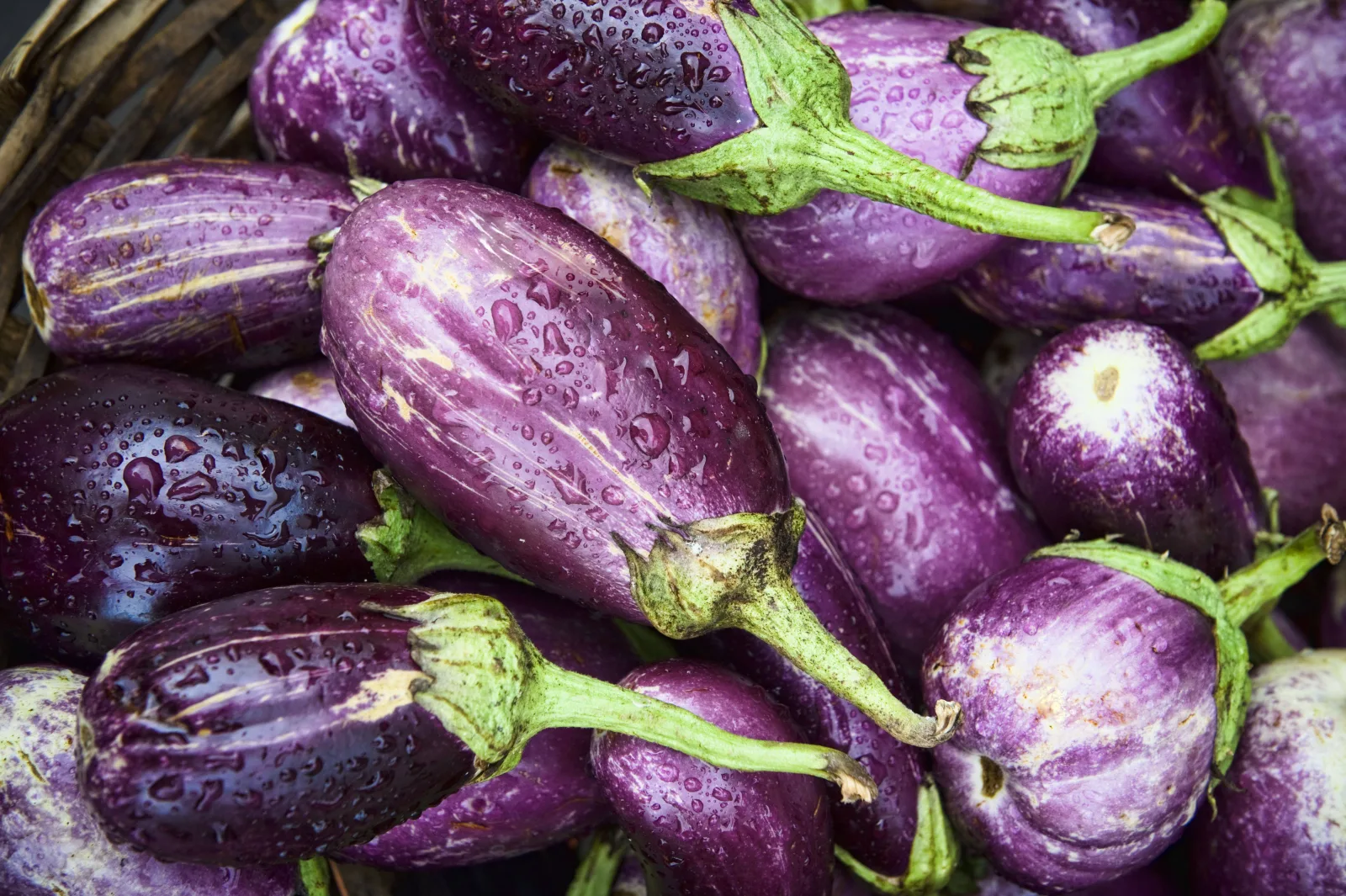
Nizip Eggplant (Nizip Patlıcanı) is a registered eggplant variety grown in the Nizip district of Gaziantep. Adapted to its locale, the variety stands out for its even shape and its soft, low-seed flesh, and is traditionally regarded as well suited both to stuffing (dolma) and to drying. Nizip Eggplant is a regional ingredient of Antep cuisine, protected by TÜRKPATENT Designation of Origin No 595.
What makes an eggplant a "Nizip eggplant" is not only where it grows but the locally adapted seed it grows from. Sustained through seed that growers save each year from their most productive fruit, the variety forms a local eggplant identity bound up with the soil and climate of Nizip. On this page, Nizip Eggplant is treated as one of Gaziantep's registered ingredients — through its characteristics, its origin, and its place in the kitchen.
What Is Nizip Eggplant?
Nizip Eggplant is an officially registered eggplant variety grown in the Nizip district of Gaziantep. What sets it apart is the even shape that comes from its locally adapted seed, together with its soft, low-seed and sweet flesh. As a fresh vegetable it has a wide place in Antep cuisine: it is used directly in dishes and is also traditionally regarded as an ingredient for stuffing and for drying.
Defining Characteristics
- Size and Shape: The fruits are long and full; the registration description gives a length of roughly 15–20 cm and a diameter of 8–10 cm. The fruit stalk is thorny.
- Skin Colour: The skin shows purple, white and greenish tones together, in the form of longitudinal parallel lines; this striped appearance is the variety's typical mark.
- Flesh: The flesh is white, soft and low in seeds, with a sweet taste. This structure is the main quality that makes the eggplant well suited to cooking and to stuffing.
- Local Variety: Its seed is sustained by saving it each year from the most productive fruit; in this way it is preserved as a locally adapted, internally homogeneous local eggplant variety.
Its Tie to Nizip: Suitability for Stuffing and Drying
What binds Nizip Eggplant to its locale is both the geography in its name and its use in the kitchen. Thanks to its soft, low-seed and sweet flesh, the eggplant is traditionally regarded as well suited to being hollowed and stuffed (dolma) and to being dried in the sun. In and around Nizip, storing eggplant by drying it — alongside fresh use — is a deep-rooted culinary habit, and these uses reinforce the variety's tie to its region. (Use for stuffing and drying is a general culinary assessment rather than part of the registration text.)
The History and Geographic Origins of Nizip Eggplant
The geographic origin of Nizip Eggplant is the Nizip district of Gaziantep, from which it takes its name. Through the district's soil, climate and growers' knowledge, the variety has acquired a locally specific identity over time. Sustaining the eggplant as a local variety is made possible by growers saving seed from the best fruit each year and resowing it the next; in this way a homogeneous eggplant type adapted to Nizip is carried from one generation to the next.
A Locally Adapted Variety
What distinguishes Nizip Eggplant is that it is a locally adapted variety belonging to a particular place. Its even shape, its low-seed soft flesh and its sweet taste are the result both of the local ecology and of the seed selection sustained over the years. This local identity also forms the basis for the eggplant being registered under the Nizip name; the variety is regarded not merely as an eggplant but as a product tied to a specific geography.
Nizip Eggplant is registered with TÜRKPATENT as a Designation of Origin (No 595); this indicates that the product is a locally specific variety tied to a particular geography — the Nizip district of Gaziantep. The product described on this page is the fresh Nizip Eggplant. The sun-dried dried eggplant (kuruluk) is a separate product, protected under its own registration record (No 376). Although the two products are related, they are distinct registrations.
Nizip Eggplant in Gaziantep Cuisine
Eggplant is one of the most frequently used vegetables in Gaziantep cuisine, appearing in many places from kebabs to stuffed dishes, from stews to preparations for drying. Nizip Eggplant takes its place within this wide use as a locally specific, registered variety. Its even shape and its low-seed soft flesh make it especially apt for preparations in which it is hollowed and stuffed, and in which it is dried to be kept for a long time.
Which Dishes Use It?
Nizip Eggplant can be cooked fresh, but it is most associated with preparations in which it is stuffed. Its soft, low-seed flesh makes it well suited to Stuffed Eggplant, hollowed and filled. The sun-dried form of the same eggplant is kept as dried eggplant and used for stuffing out of season. Eggplant dishes are often prepared together with other regional ingredients of the area, such as Nizip olive oil.
Why It Matters
The importance of Nizip Eggplant comes from its being not merely a vegetable but a variety tied to a particular geography and protected by registration. Its locally adapted seed, its even shape and its kitchen-friendly flesh make this eggplant part of the wealth of Gaziantep's regional ingredients. The registration records both the variety's identity and its tie to Nizip, helping to make this local heritage visible.
Frequently Asked Questions
What is Nizip Eggplant?
It is a registered, locally adapted eggplant variety grown in the Nizip district of Gaziantep; it stands out for its even shape and its soft, low-seed and sweet flesh.
Is Nizip Eggplant registered?
Yes. It is registered with TÜRKPATENT as a Designation of Origin (No 595), which indicates that the product is a locally specific variety tied to the Nizip area.
Are Nizip Eggplant and dried eggplant the same product?
No. This page is about the fresh Nizip Eggplant; the sun-dried eggplant (kuruluk) is a separate product protected under its own registration record (No 376).
Which dishes use Nizip Eggplant?
It is most used hollowed and filled in stuffed eggplant; it is also sun-dried and kept as dried eggplant, then used for stuffing out of season.