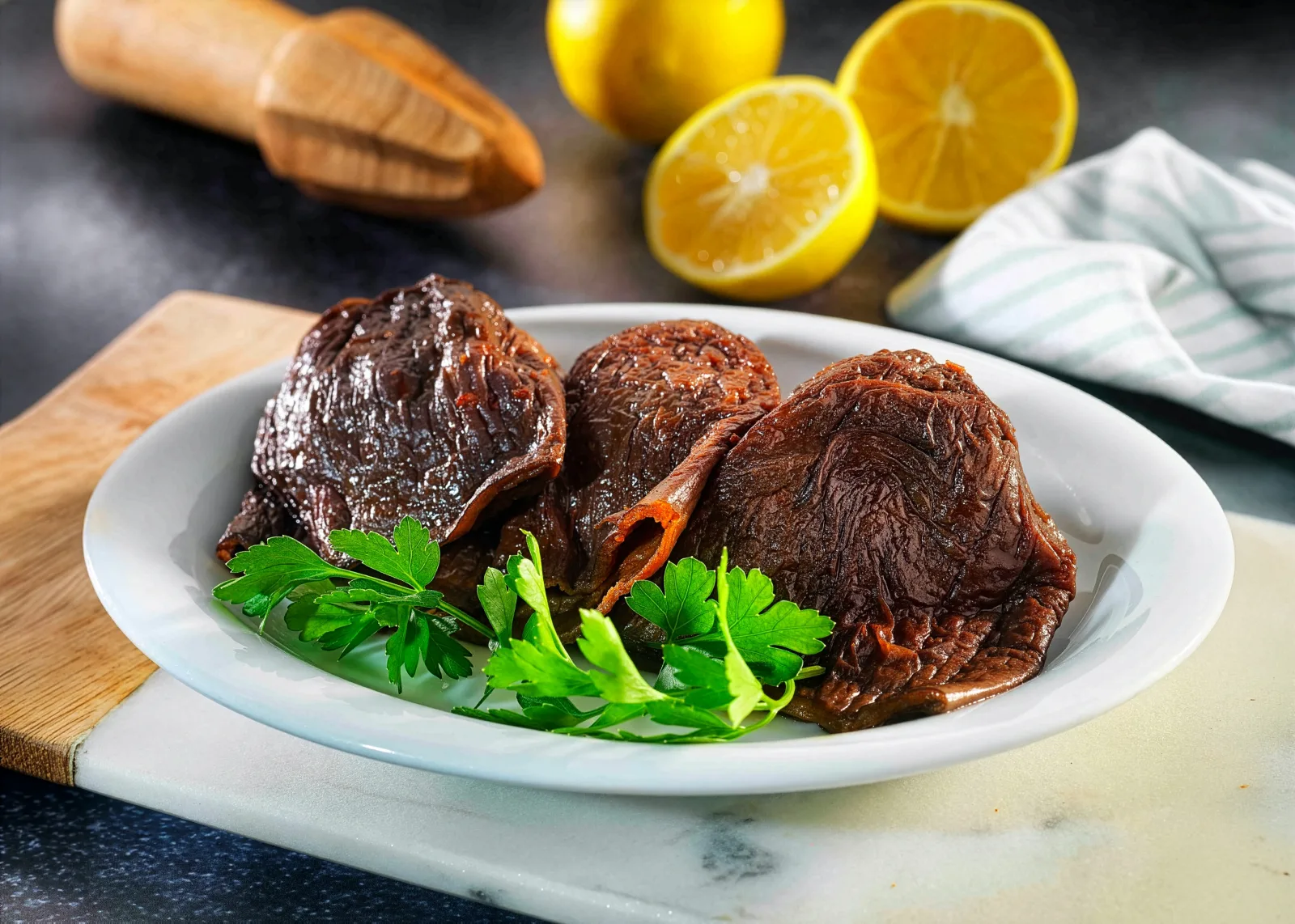
Stuffed eggplant (patlıcan dolması) is a classic Anatolian dish in which eggplant is filled with a spiced rice mixture and cooked in a pot; but in Gaziantep it appears above all as kuru dolma — Antep's dried-eggplant dolma. In Antep the eggplant is traditionally sun- or air-dried (kuru patlıcan), reconstituted in hot water in winter, and cooked in one pot together with dried pepper dolma (kuru biber dolması). The sour-and-spicy note that comes from pomegranate molasses and sumac makes this dolma a deep-rooted flavour of the city's winter table.
Stuffed eggplant's identity in Antep springs less from the summer form made with fresh eggplant than from the winter kitchen built on dried vegetables. The eggplants hollowed, strung on rope and dried in late summer return to the table in the cold months, reconstituted; the rice filling, the paste-forward spicing and the pomegranate molasses drizzled at the end come together. On this page stuffed eggplant is treated as a living culinary heritage, intertwined with Antep's kuruluk (winter-provisioning) tradition, even though it carries no registration of its own.
What Is Patlıcan Dolması (Stuffed Eggplant) and What Is in It?
Stuffed eggplant is a dolma made by hollowing out eggplant, filling it with a spiced rice mixture, and cooking it in a pot. In Gaziantep the character of this dish comes mostly from the use of dried eggplant and from the paste-forward, sour-and-spicy filling. Antep-style stuffed eggplant usually reaches the table not on its own but cooked in the same pot as dried pepper dolma (kuru biber dolması); in this way the shared flavour of the city's dried vegetables meets on a single plate.
Core Components
- Eggplant (Mostly Dried): In Antep the essence of the dolma is the dried eggplant that is traditionally sun- or air-dried and reconstituted in hot water in winter. A summer form made with fresh eggplant also exists, but the city's reputation rests on the dolma made with dried eggplant.
- Rice Filling: The base of the filling is rice. It is seasoned with pepper and tomato paste, onion, generous garlic, red pepper flakes, black pepper, dried mint and sumac, and sometimes cumin. This paste-forward seasoning gives the Antep dolma its deep colour and full taste.
- Pomegranate Molasses and Sumac: The signature of the dolma is the sour note from pomegranate molasses (nar ekşisi) and/or sumac added toward the end. This sour-and-spicy balance is the most distinctive feature that sets Antep stuffed eggplant apart from sweeter dolmas.
- Two Forms (Meaty / Olive-Oil): Traditionally there are two forms: a meaty (kıymalı) version often enriched with sheep tail fat or meat broth, and a meatless olive-oil (zeytinyağlı) version made only with rice, spices and pomegranate molasses.
Antep's Dried-Eggplant "Kuru Dolma"
In Gaziantep stuffed eggplant is best known by the name "kuru dolma" (dried dolma). The reason is that the dolma is made mostly not from fresh but from dried eggplant. Eggplants hollowed and strung on rope to dry in summer are soaked in hot water and reconstituted in winter; their interiors are then filled with the rice mixture and cooked in one pot together with dried pepper dolma (kuru biber dolması). This method brings out both the concentrated flavour of the eggplant and the city's dried-vegetable culture; it is largely this dried form that sets Antep-style stuffed eggplant apart from the standard fresh dolma.
The History and Cultural Origins of Patlıcan Dolması
Stuffed eggplant itself has no documented inventor or precise starting date; the dolma is a shared, very old tradition of Anatolian cuisine. What is genuinely documentable in Gaziantep is the kuruluk tradition on which the dolma rests — the practice of preparing winter provisions. In Antep, in late summer, roughly August–September, vegetables such as eggplant, pepper, zucchini and okra are hollowed, strung on rope and dried for winter; this drying is a seasonal task of communal women's labour (imece).
The Kuruluk Tradition and Imece
Preparing the kuruluk is a deep-rooted part of getting ready for winter in Antep. The vegetables are harvested in late summer, when they are fresh and plentiful; eggplants and peppers are carefully hollowed, strung on rope and dried in an airy place. Because the drying time varies with the method and the weather, it would be wrong to give a single fixed number of days; what matters is that the vegetables are dried enough to keep through the winter. This preparation is mostly a communal task carried out by women together, in conversation and solidarity; the dried eggplants and peppers become the main ingredients of stuffed eggplant and dried pepper dolma in the winter months.
Stuffed eggplant carries no geographical indication under its own name; it is an unregistered but deep-rooted culinary heritage of Antep. No invented registration is claimed for the dolma on this page. The registrations here belong not to the dolma but to the raw ingredient: the dried eggplant itself is registered as Antep Kuruluk Patlıcanı / Gaziantep Kuru Patlıcanı (Designation of Origin, No 376), while a fresh eggplant variety, Nizip Patlıcanı, is a separate registration (Designation of Origin, No 595). These are registrations of the raw ingredients used (or usable) in the dolma, not of the dolma itself.
The Patlıcan Dolması Tradition and Ritual in Gaziantep
In Gaziantep stuffed eggplant, in its dried form, is above all a winter dish. The eggplants dried and stored from summer return to the table in the cold months, reconstituted; in this respect the dolma is a direct product of the city's dried-vegetable larder culture. Cooking the dried eggplant and dried pepper together in one pot brings Antep's winter provisions onto a single plate and carries the flavour of out-of-season vegetables into cold days. This makes stuffed eggplant a deep-rooted dish that is awaited in winter in Antep cuisine and whose preparation begins back in summer.
How It Is Served
The way stuffed eggplant is served changes with its form. The meaty (kıymalı) version, served hot, mostly comes to the table with garlic yogurt; the coolness of the yogurt balances the spiced, full taste of the dolma. The olive-oil (zeytinyağlı) version, served cooled, is usually presented with extra pomegranate molasses drizzled over it, which brings the dish's sour character to the fore. In both forms the dolma is mostly plated together with dried pepper dolma.
Why You Should Try It
A plate of Antep-style stuffed eggplant carries the city's dried-vegetable culture and winter-provisioning tradition straight to the palate: the intense taste of the reconstituted dried eggplant, the paste-forward spiced rice filling and the sour-and-spicy balance of the pomegranate molasses at the end come together. Coming out of the same pot as dried pepper dolma gives it an identity all its own, particular to an Antep winter. The truest way to taste it is at a winter table in Gaziantep — the meaty form with garlic yogurt, the olive-oil form with pomegranate molasses drizzled over the top. For those who love a sour-and-spicy balance, or who are curious about a character set apart from other dolmas, it is a fine place to start.
If you would like to explore the other Antep dolmas that share the same larder and stuffing culture, the onion-, garlic- and spice-laced Nakışlı Dolma, the Cabbage Roll wrapped in cabbage leaves rather than vine leaves, and the Haylan Squash Dolma made with a regional squash are other faces of this same tradition.
Frequently Asked Questions
Is stuffed eggplant made with fresh or dried eggplant?
Both are possible; in Gaziantep the dolma is made mostly with dried eggplant that is sun- or air-dried and then reconstituted in water in winter. A summer form made with fresh eggplant also exists, but the city's reputation rests on the dried dolma.
What makes the Antep dried-eggplant kuru dolma distinctive?
It is the cooking of the dried eggplant in the same pot as dried pepper dolma, and the sour-and-spicy taste from pomegranate molasses and sumac added to a paste-forward filling. This dried form and sour character set it apart from the standard fresh dolma.
Does stuffed eggplant have a geographical indication?
The dolma has no geographical indication under its own name; it is an unregistered culinary heritage. What is registered is the raw ingredient: the dried eggplant as "Antep Kuruluk Patlıcanı" (No 376) and the fresh variety as "Nizip Patlıcanı" (No 595), as separate registrations.
When and how is stuffed eggplant eaten?
In its dried form it is a dish eaten especially in the winter months. The meaty version, served hot, mostly comes with garlic yogurt; the olive-oil version, served cool, is presented with pomegranate molasses drizzled over the top.