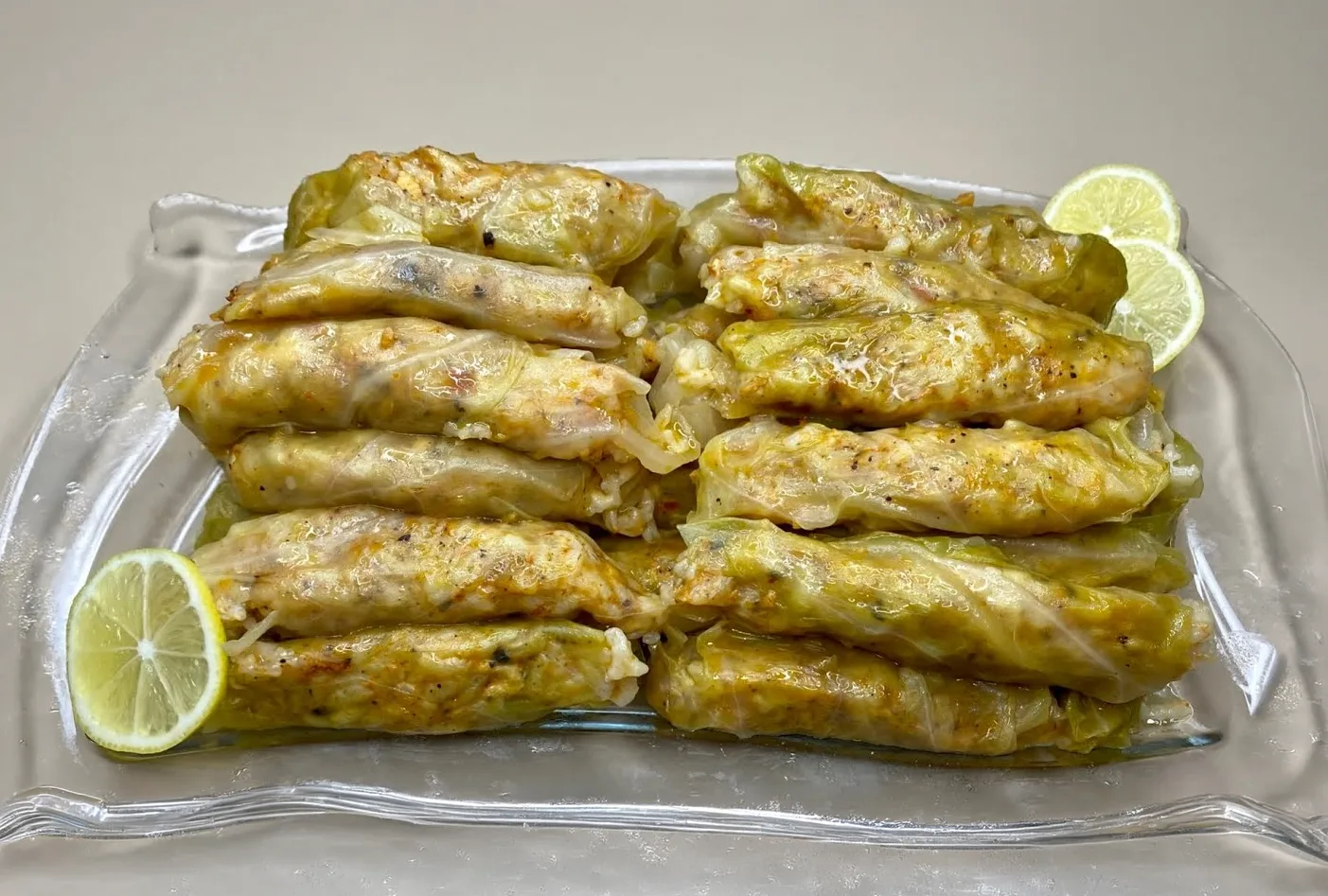
Cabbage roll (Lahana Sarması) is a deep-rooted Gaziantep winter dish in which softened white-cabbage leaves are filled with a rice- or bulgur-based filling and rolled thin and snug. What sets the Antep style apart is its salça-rich base (both tomato and red-pepper paste), a markedly spicy profile, and the sour note given by pomegranate molasses (nar ekşisi) drizzled near the end of cooking. Enriched with onion, plenty of garlic and mint–parsley, the rolls are made in both meat and meatless (olive-oil) versions, and most often come to the table with garlic yogurt.
Cabbage roll is the warm pot dish of Antep homes through the winter months, when cabbage is at its best. The city's sarma and dolma culture is remarkably rich, and the cabbage roll is an everyday, home-table form of that tradition. Although many of the city's stuffed dishes carry geographical indications, the cabbage roll itself is not registered; it stands out as a beloved part of Gaziantep's living winter cuisine.
What Is Lahana Sarması (Cabbage Roll) and What Is in It?
Cabbage roll is a dish made by lightly blanching and softening white-cabbage leaves, filling them with a spiced filling, rolling them into thin rolls and cooking them in a salça-rich liquid. The filling is traditionally built on rice or bulgur; the meat version adds ground meat, while the meatless (olive-oil) version keeps the filling to grain, onion and spices. What gives the dish its true identity is the depth of the salça, the warmth of the spices and the sour balance of the pomegranate molasses added near the end.
Core Components
- Cabbage Leaves: The body of the dish is the softened white-cabbage leaves. Skilled cooks roll the leaves thin and snug; neat, tidy rolling keeps them from coming apart as they cook and shows the cook's skill.
- Rice or Bulgur Filling: The filling is built on rice or bulgur (both are traditional; bulgur is especially prominent in the meatless version). Worked together with onion, spices and herbs, it gives the roll its full interior. In the meat version, ground meat (kıyma) is added to the filling.
- Salça (Tomato and Red-Pepper Paste): The backbone of the Antep style is salça; both tomato and red-pepper paste are used together. The salça gives the dish its deep colour, its depth and its satisfying flavour.
- Garlic and Spices: Plenty of garlic, along with black pepper, pul biber (red-pepper flakes), mint and parsley, give the roll its markedly spicy and aromatic character.
- Pomegranate Molasses (the Sour Note): Diluted pomegranate molasses (nar ekşisi), drizzled near the end of cooking, is the signature touch of the Antep style, lending the dish a distinctly regional sour balance. On some tables lemon or sumac may also be used for tartness.
What Sets the Antep Style Apart?
Cabbage rolls are made in many regions; what sets the Antep style apart is the coming-together of four elements: a salça-rich base (tomato and red-pepper paste), a markedly spicy profile, the sour note added near the end with pomegranate molasses, and plenty of garlic. The leaves are rolled thin and snug by skilled cooks; this neat, tidy rolling is prized both in appearance and in the cooking. This salça-rich, spicy, sour and garlicky balance distinguishes the dish from the sweeter or plainer cabbage rolls of other regions, giving it a flavour all its own that carries the stamp of Antep cuisine.
The History and Cultural Origins of Lahana Sarması
The cabbage roll has no fixed starting date or single "inventor"; it is a long-standing regional winter dish that comes from within Gaziantep's deep-rooted dolma and sarma tradition. The cold months, when cabbage is freshest and most flavourful, are the dish's natural season; this is why the cabbage roll has been one of the warm pot dishes most often brought to the table in Antep homes in winter. The dish has been passed down from generation to generation as an everyday, home-bound form of the city's sarma–dolma culture.
As a Winter Home Dish
The cabbage roll is a dish tied to the home and the season rather than to show. When winter comes, in the period when cabbage is plentiful and well-suited, the pots are set up; cooked in a large pot and shared so it stretches across crowded tables, it becomes the dish of family and guest gatherings. Rolling the leaves thin and snug is seen as a skill that shows the deftness of home cooks and skilled hands, carried from generation to generation. In this respect the cabbage roll is a living home dish that leans not on a particular date but on Antep's winter-cuisine tradition.
The cabbage roll does not carry a geographical indication under its own name; although Gaziantep has many registered dolmas and sarmas, the cabbage roll itself is not registered. No invented registration is claimed for the cabbage roll on this page; the dish is treated as an unregistered but deep-rooted part of Gaziantep's winter-cuisine heritage. (It should not be confused with the different "sour cabbage" products of other provinces.)
The Lahana Sarması Tradition and Ritual in Gaziantep
In Gaziantep, the cabbage roll is a winter-table dish. On cold days, the diluted pomegranate molasses drizzled near the end of cooking over the rolls lifted from the hot pot is the regional signature touch; this sour note balances the salça-rich, spicy base. The dish is most often served with garlic yogurt (sarımsaklı yoğurt); the coolness of the yogurt completes the hot, spicy taste of the rolls.
How It Is Served
The cabbage roll is served by arranging the thin rolls neatly on a plate, spooned over with some of the cooking liquid and the drizzled pomegranate molasses. Its most frequent companion is garlic yogurt; on some tables the yogurt is placed over the rolls, on others beside them. The meat version can be eaten as a more filling main dish, the meatless (olive-oil) version as a lighter plate served warm or at room temperature. In the Antep style it shares the same table culture as its sarma–dolma relatives such as Nakışlı Dolma, stuffed eggplant and mumbar.
The cabbage roll is part of the same tradition as the city's other sarmas and dolmas; together with Nakışlı Dolma, Stuffed Eggplant and Mumbar it makes up Gaziantep's rich sarma–dolma table.
Why You Should Try It
A plate of Antep-style cabbage roll carries the city's winter table straight to the palate: the depth of the salça, the warmth of the spices, the scent of garlic and the sour balance of the pomegranate molasses added at the end all come together. Rolled thin and snug, with pomegranate molasses drizzled over and garlic yogurt alongside, the rolls tell the sour-and-spicy winter flavour of Gaziantep cuisine in the truest way. Being made in both meat and meatless (olive-oil) versions makes it a warm, satisfying regional dish that adapts to different tables.
Frequently Asked Questions
What is cabbage roll and what sets the Antep style apart?
It is a winter dish of cabbage leaves rolled thin around a rice- or bulgur-based filling; what sets the Antep style apart is a salça-rich, spicy base, plenty of garlic and the sour note from pomegranate molasses drizzled near the end.
Is it made with rice or bulgur?
Both are traditional; the filling can be made with rice or bulgur. Bulgur is especially prominent in the meatless (olive-oil) version, while the meat version also adds ground meat to the filling.
Does the cabbage roll have a geographical indication?
It has no geographical indication under its own name. Although Gaziantep has many registered dolmas and sarmas, the cabbage roll itself is unregistered; it is treated as a deep-rooted part of the city's winter-cuisine heritage.
When and how is the cabbage roll eaten?
It is a pot dish made in the winter months, when cabbage is at its best; it is finished with a drizzle of pomegranate molasses and most often served with garlic yogurt.