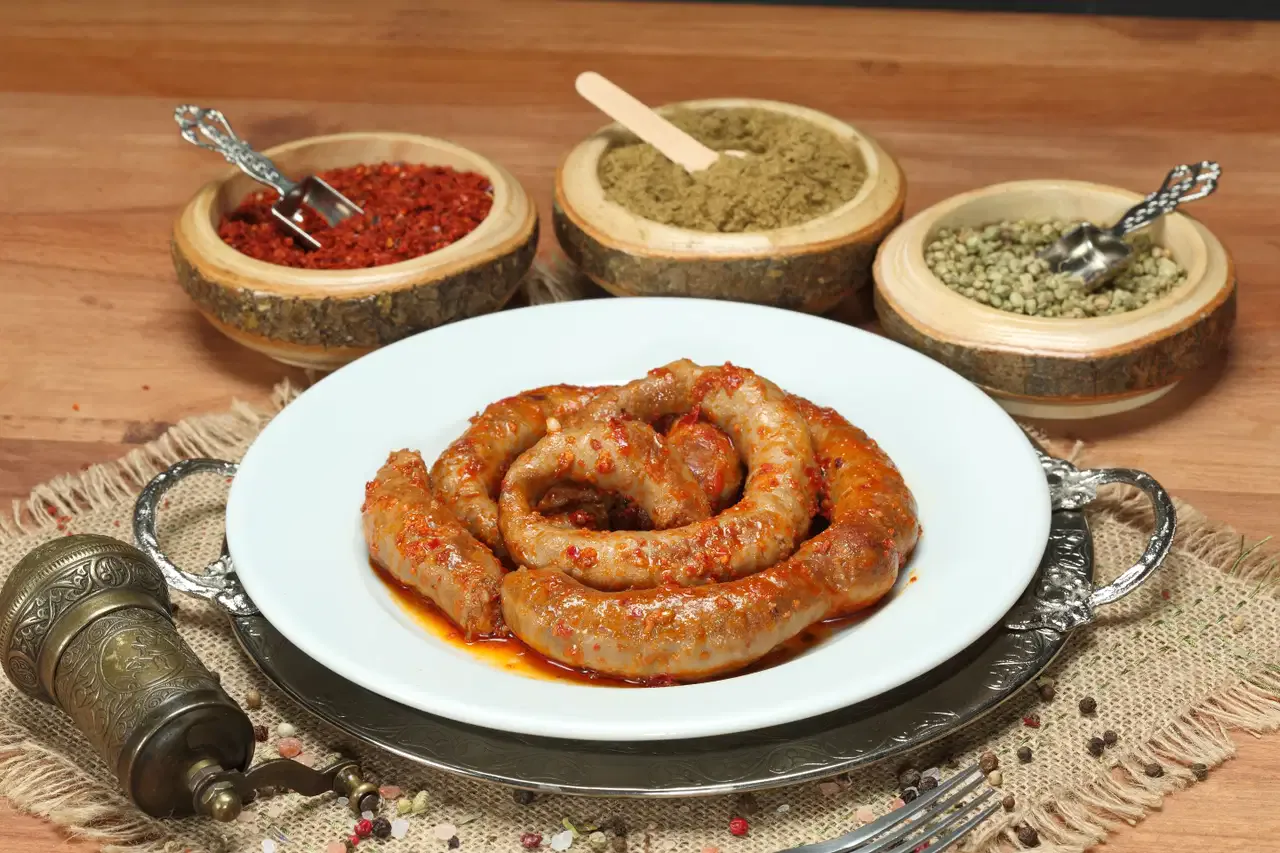
Mumbar dolması is a registered Gaziantep offal dish made by stuffing a cleaned lamb large intestine (called mumbar or bumbar in the Antep dialect) with a spiced filling and cooking it. The filling is fatty ground lamb with either bulgur or rice, seasoned with tomato and pepper paste, onion, garlic and spices. The stuffed casings are first boiled, then fried in butter until crisp and sliced into rounds to be served hot. It is a labour-intensive but striking dish of Gaziantep's nose-to-tail cuisine, in which no part of the animal is wasted — and it is most associated with Kurban Bayramı (the Feast of Sacrifice).
The identity of mumbar dolması springs from two textures coming together: the crispness of the fried casing on the outside, and the soft, spice-worked filling within. Behind it lies Gaziantep's deep-rooted offal (sakatat) tradition — a frugal cuisine where, after slaughter, no part of the animal goes to waste and everything from liver to intestine is turned into a flavour. This same logic has carried mumbar dolması, for many years, to the head of the city's feast and holiday tables.
What Is Mumbar Dolması and What Is in It?
Mumbar dolması is a regional Gaziantep dish made by stuffing a lamb large intestine — emptied, turned inside out and thoroughly washed — with a spiced ground-lamb and bulgur (or ground-lamb and rice) filling, boiling it first and then frying it in butter. Its character comes both from the crispness the casing gains as it fries and from the flavour of the spiced, hearty filling inside. It is a filling main course, sliced into rounds and served hot.
Core Components
- The Casing — Lamb Large Intestine (Mumbar / Bumbar): The body of the dish is a sheep/lamb large intestine, cleaned and washed turned inside out. To remove odour and tenderise it, it is soaked in vinegared water, then tied off at intervals to be made ready for stuffing.
- The Filling — Ground Lamb with Bulgur or Rice: The stuffing is made from fatty ground lamb/mutton with either bulgur or rice according to preference; coarse bulgur is the more traditional Antep choice. This pairing of bulgur and ground lamb also underpins many regional dishes such as İçli Köfte. The filling is seasoned with tomato paste, pepper paste, onion, garlic and spices (black pepper, red pepper flakes / the local isot) and balanced with salt.
How It Is Cooked: Boiled then Fried
Mumbar dolması is cooked in two stages. First the casings, stuffed with the filling and tied at the ends, are boiled in water until cooked through. Then these cooked casings are fried in butter or clarified butter (sadeyağ) until the exterior is crisp. Finally they are sliced into rounds and served hot. There is no grilling in the registered method; the signature of the dish is the softness of the boiling meeting the crisp outer surface that frying gives.
The History and Cultural Origins of Mumbar Dolması
Mumbar dolması is part of Gaziantep's deep-rooted offal and nose-to-tail culinary tradition. This approach springs from a frugal cuisine where, after slaughter, no part of the animal is wasted; the same logic behind Antep's offal kebabs such as Liver Kebab turns the intestine, too, into a prized flavour. The dish is firmly tied to Kurban Bayramı, when fresh intestines are abundant, and it has been known in the region for many years; it is not attached to a specific date or person.
Its Bond with Kurban Bayramı
The strongest association of mumbar dolması in Antep is Kurban Bayramı (the Feast of Sacrifice). The fresh intestines of the animals sacrificed during the holiday provide the most suitable raw material for this labour-intensive dish; so mumbar dolması becomes a symbol of the holiday table and of large family gatherings. Carried on in the city for many years, this custom is a deep-rooted tradition that brings the holiday's atmosphere of abundance and sharing to the table.
Mumbar dolması is registered with TÜRKPATENT under the name "Gaziantep Mumbar Dolması / Antep Mumbar Dolması" as a Mahreç İşareti (geographical indication of mark of source), No 821. The application was filed on 08.07.2020 and registration took place on 06.08.2021. The registrant is the Gaziantep Metropolitan Municipality (Gaziantep Büyükşehir Belediyesi).
The Mumbar Dolması Tradition and Ritual in Gaziantep
In Gaziantep, mumbar dolması is a dish that demands effort and skill. Cleaning the intestine one by one by hand, washing it and stuffing it with the filling is meticulous work; for this reason a good mumbar dolması is counted as the mark of an accomplished cook. Prepared especially at Kurban Bayramı, the dish is the crown of crowded family and feast tables; when this effort meets the holiday's culture of sharing and hospitality, the dish becomes all the more prized.
How It Is Served
Mumbar dolması is a main course eaten hot; after frying it is sliced into rounds and arranged on the plate. Its most frequent companion is plain or seasoned bulgur pilaf, and it is often eaten with garlic yogurt alongside. This trio balances the crispness of the fried casing, the heartiness of the spiced filling and the freshness of the yogurt all at once. Like Damat Dolması, another feast dish of Antep's dolma culture, mumbar dolması reaches its most prized state when served fresh, while still hot.
Why You Should Try It
A plate of mumbar dolması carries Gaziantep's frugal yet generous offal cuisine straight to the palate: the crispness of the fried casing on the outside, the hearty spice-worked filling within, and bulgur pilaf with garlic yogurt alongside come together. Its preparation takes effort, but the result is a powerful flavour belonging to Antep's holiday tables and unlike any other dish. The truest way to taste it is at an Antep feast, freshly made, hot and with bulgur pilaf.
Frequently Asked Questions
What is mumbar (bumbar)?
Mumbar — also known as bumbar in the Antep dialect — is the sheep/lamb large intestine. In mumbar dolması this intestine is emptied, turned inside out and washed, soaked in vinegared water and tied off at intervals, and used as a casing that is then stuffed with the filling.
What is in mumbar dolması?
The filling is made from fatty ground lamb/mutton with either bulgur or rice according to preference; coarse bulgur is the more traditional Antep choice. It is seasoned with tomato and pepper paste, onion, garlic and spices (black pepper, red pepper flakes / isot).
How is mumbar dolması cooked?
In two stages: the stuffed casings are first boiled in water, then fried in butter or clarified butter (sadeyağ) until the exterior is crisp; finally they are sliced into rounds and served hot. There is no grilling in the registered method.
Does mumbar dolması have a geographical indication, and when is it eaten?
Yes; it carries a TÜRKPATENT Mahreç İşareti (geographical indication) under the name "Gaziantep Mumbar Dolması" (No 821, registered 06.08.2021). It is prepared and eaten most of all at Kurban Bayramı, when fresh intestines are abundant, at holiday and family tables.