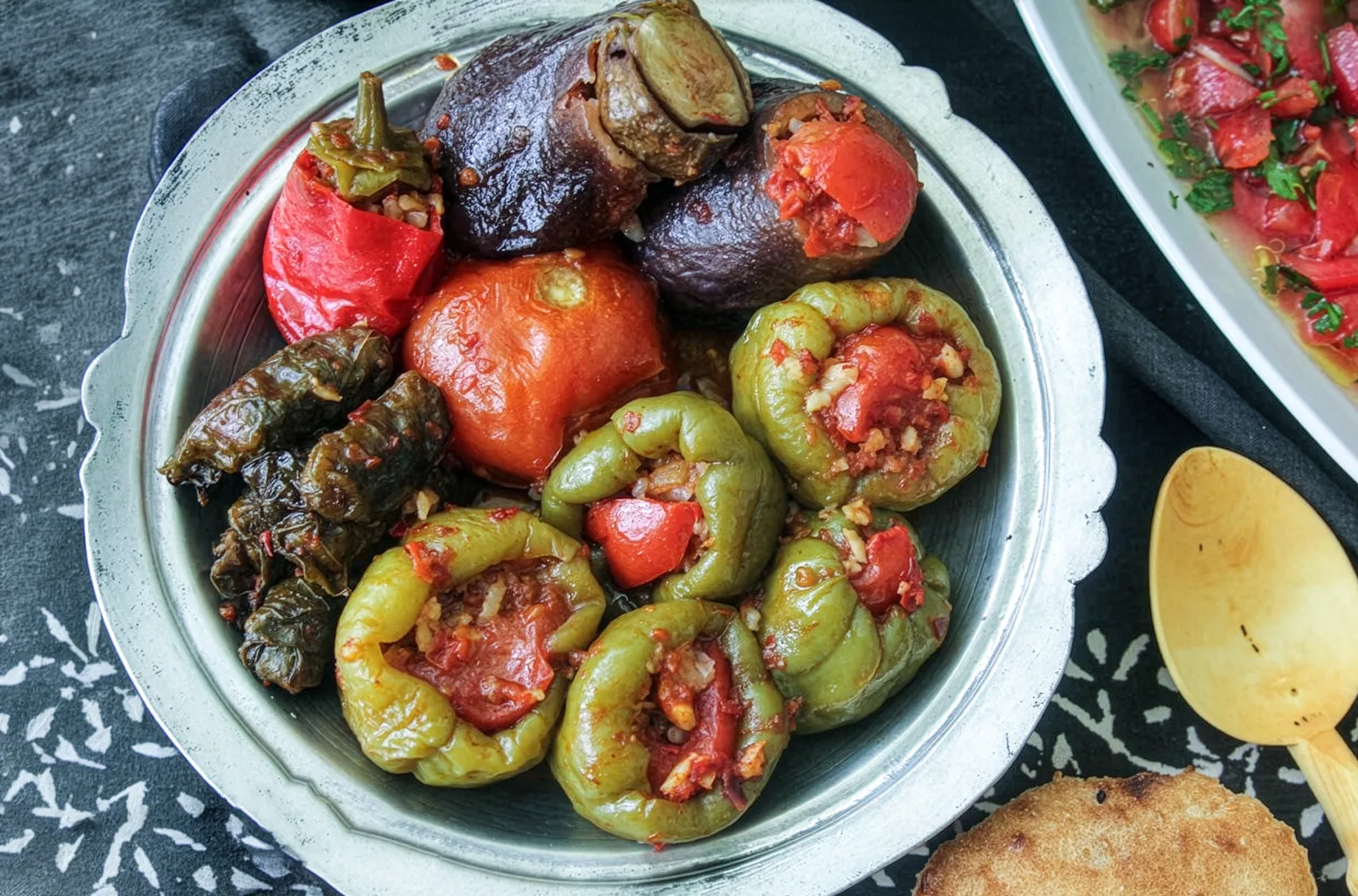
Nakışlı Dolma — literally "embroidered summer dolma" — is one of the most striking dishes of Gaziantep's summer table: a mix of differently coloured summer vegetables (eggplant, squash, peppers, tomato and grape leaves) stuffed with a meat-and-rice (or bulgur) filling and cooked together in a single pot. The dish's registered official name appears in three forms: Antep Allı Yeşilli Dolma (the "red-and-green" dolma), Antep Nakışlı Dolma (the "embroidered" dolma) and Antep Yaz Dolması (the "summer" dolma). The colourful sight of red peppers, green squash and purple eggplant lined up in one pot is exactly what earns it both the "allı yeşilli" (red-and-green) and "nakışlı" (embroidered, patterned) names.
This dolma is the dish not of a single vegetable but of summer's abundance. Whatever the garden gives — eggplant, squash, peppers, tomato, fresh or brined grape leaves — is brought together and cooked in one pot, so a filling and eye-catching, many-coloured plate reaches the table. The filling, kneaded with fatty ground meat, and the gentle sourness added during cooking with green plum, unripe sour grape (koruk) or sumac sour, give the dish a character distinctive to Antep cuisine. In 2021 Nakışlı Dolma was registered by TÜRKPATENT with a Geographical Indication (Mahreç İşareti), taking its place among Gaziantep's officially registered products.
What Is Nakışlı Dolma and What Is in It?
Nakışlı Dolma is a mixed dolma dish in which various summer vegetables — hollowed out or rolled — are filled with a meat filling and all cooked together in the same pot. What sets it apart from a single dolma is that the different vegetables are cooked not one by one but together, in a colourful arrangement. When it comes to the table, the red of the peppers, the green of the squash and grape leaves, the purple of the eggplant and the bright tone of the tomato appear all at once; this many-coloured look gives the dish its name.
Core Components
- Stuffed Summer Vegetables: The vegetables that form the "vessels" of the dish are eggplant, squash (including sakız and haylan squash; on its own it also features in other dolmas such as bean-stuffed zucchini), green and red peppers, tomato, and fresh or brined grape leaves. Depending on the locality, vegetables such as beet and cucumber may also join the mix. Each vegetable is hollowed out or wrapped to receive the filling.
- Meat Filling: The filling is made by kneading rice or bulgur, finely chopped onion, garlic, pepper paste and tomato paste, and spices together with ground meat. The registered specification calls for "preferably fatty ground meat" in the filling, and ground tail fat may be added as fat; in this respect Nakışlı Dolma is a meat dolma.
- Souring Agents: A gentle sourness is added to the dish during cooking with green plum, koruk (unripe sour grape) or sumac sour. This sour touch is one of the distinctive flavour signatures of Antep dolmas.
Why "Embroidered" (Allı Yeşilli / Nakışlı)?
All three names describe the same sight in different words. "Allı yeşilli" means red-and-green, that is, many-coloured; "nakışlı" means patterned, embroidered. The different-coloured vegetables lined up and cooked together in one pot form a many-coloured pattern on the plate, almost like a worked piece of embroidery — and this is where the name comes from. The name "yaz dolması" (summer dolma) points to its season: this is the dish of the time when summer vegetables are abundant. The official registration records these three names together, and they all describe the very same dish.
The History and Cultural Origins of Nakışlı Dolma
Nakışlı Dolma is part of Gaziantep's deep-rooted summer-dolma (yaz dolması) tradition. The habit of making good use of the vegetables that arrive in abundance from gardens and markets in summer — without wasting any — by cooking them all together into a single filling dish lies at the heart of this dolma. Gathering different vegetables in the same pot, rather than making each dolma separately, is a practical kitchen tradition that also celebrates summer's bounty. The dish has no single documented inventor or definite starting date; it is a shared product of Antep's summer cuisine, carried on through the generations.
The Many-Coloured Origin of the Name
All three names highlight the dish's most distinctive feature: its many colours. The names "allı yeşilli" and "nakışlı" describe the riot of colour the vegetables create on the plate, while "yaz dolması" describes its season. Because these names all belong to one dish, in Gaziantep — by whichever name it is called — the same colourful summer-table dish is meant. The registration document, too, officially recognises these three names together.
Nakışlı Dolma is registered by TÜRKPATENT as a Geographical Indication (Mahreç İşareti) (Registration No 790). The official registration recognises the dish under its three names together: "Antep Allı Yeşilli Dolma / Antep Nakışlı Dolma / Antep Yaz Dolması". The application was made on 04.07.2020 and the registration was finalised on 01.07.2021. The registrant is the Gaziantep Development Foundation (Gaziantep'i Geliştirme Vakfı).
The Nakışlı Dolma Tradition and Ritual in Gaziantep
In Gaziantep, Nakışlı Dolma is a dish of the summer months; it comes to the table in the season when vegetables are most abundant and most flavourful. The abundance of its preparation and its many-coloured appearance make it a dish of crowded tables and communal gatherings. It is frequently cooked for country outings — the local "sahre" trips to picnic spots — for spring–summer festivals such as Hıdırellez and Nevruz, and for weddings and family gatherings; it is a festive dish well suited to sharing and togetherness. When the colourful dolmas cooked together in one pot are served on a large tray or platter, they lend the table a mood that is at once filling and festive.
How It Is Served
Nakışlı Dolma is usually served with various vegetable dolmas together on one large platter, the colours of the peppers, squash, eggplant and grape leaves coming side by side on the plate. Serving yogurt alongside dolmas is a common custom at the local table; however, there is no single firm rule about whether the dish is eaten hot or cold, or whether yogurt always accompanies it. These details can vary from family to family and with the season; what matters is that the different vegetables are presented together, with a balanced sourness.
Why You Should Try It
Nakışlı Dolma brings together all the colours and flavours of a Gaziantep summer on a single plate: the different textures of eggplant, squash, peppers and grape leaves, the richness of the fatty meat filling, and the gentle sourness of koruk or sumac all reach the palate at once. Appealing to both eye and palate, this many-coloured dolma is one of the dishes that best expresses Antep's idea of "cooking summer's abundance all together." The truest way to taste it is in the summer season, at a crowded table, trying the different vegetable dolmas side by side.
Frequently Asked Questions
What is Nakışlı Dolma and which vegetables are in it?
It is a colourful Gaziantep summer dolma in which summer vegetables — eggplant, squash, green and red peppers, tomato, and fresh or brined grape leaves — are stuffed with a meat-and-rice (or bulgur) filling and cooked together in one pot.
Why is it called "allı yeşilli" or "nakışlı," and how many names does it have?
It has three names: Antep Allı Yeşilli Dolma, Antep Nakışlı Dolma and Antep Yaz Dolması. "Allı yeşilli" means red-and-green (many-coloured) and "nakışlı" means embroidered; when the differently coloured vegetables are cooked side by side in one pot, they form a many-coloured, embroidery-like pattern on the plate.
Does Nakışlı Dolma have a geographical indication?
Yes. It is registered by TÜRKPATENT as a Geographical Indication (Mahreç İşareti) (Registration No 790, 2021). Its official name appears in three forms: "Antep Allı Yeşilli Dolma / Antep Nakışlı Dolma / Antep Yaz Dolması."
When is Nakışlı Dolma made?
It is a dish of the summer season, cooked when vegetables are abundant. It is prepared especially for country outings (sahre), Hıdırellez, Nevruz, weddings and communal gatherings — crowded, festive tables.