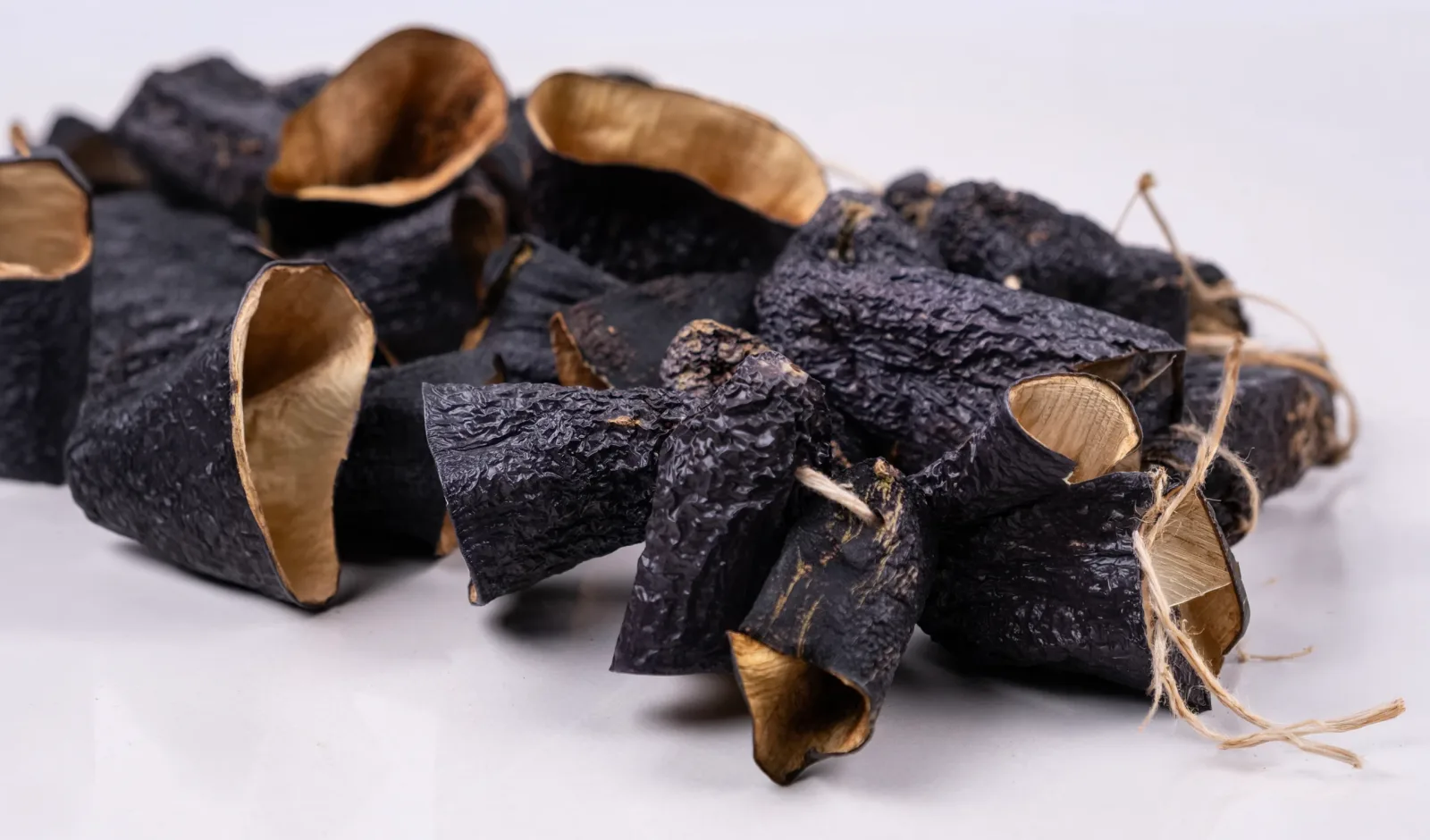
Dried eggplant is eggplant that is harvested in late summer and either halved or hollowed out, then strung on rope and dried in the sun and wind. Once dried and leathery, these eggplants are kept through the winter; when needed, they are softened in hot water and stuffed, forming the basis of Gaziantep's winter "kuru dolma" (dried stuffed eggplant). In Gaziantep the product is known as "Antep Kuruluk Patlıcanı"; "kuruluk" is the local term for fresh vegetables dried to be laid up for winter.
Dried eggplant is registered by TÜRKPATENT under the names "Antep Kuruluk Patlıcanı / Gaziantep Kuru Patlıcanı" as a Designation of Origin (No 376); the registration was made in 2018. This page deals not with a cooked dish but with the raw material — the dried eggplant itself. The tradition that turns fresh eggplant into a stored winter ingredient is perhaps the best-known link in Antep's deep-rooted kuruluk (dried-vegetable) culture. From the custom of stringing eggplants on rope to the rhythm of the season and the journey toward kuru dolma, this page sets out why dried eggplant holds a place of its own in Gaziantep cuisine.
What Is Dried Eggplant?
Dried eggplant is a preserved product made by harvesting fresh eggplants in late summer and either halving them or hollowing out their insides around the stem, then threading them on rope and leaving them to dry. The eggplants are slipped onto long strings in groups and hung so that they form rows; they are dried for several days in airy, wind-swept places. Because the inside is scooped out, the eggplant becomes a leathery, flexible pouch once dry — and it is exactly this hollow that lets it later be filled with a stuffing. The result is a dried ingredient with a shrivelled skin, light in weight and able to keep without spoiling for a long time.
Defining Characteristics
- Hollowed out or halved: The eggplants are washed; some are cut in half, while those meant for stuffing are hollowed out around the stem. Emptying the inside is what lets the eggplant become a fillable pouch once it has dried.
- Strung on rope: The prepared eggplants are threaded onto long strings in groups and hung in rows. This "stringing on rope" is the most familiar sight of dried eggplant, an image woven into the late-summer scenery of Antep.
- Sun- and wind-dried: The strings are left to dry in airy, wind-swept places. In suitable, windy weather the drying is finished within a few days; this natural drying is what allows the eggplant to be kept through the winter.
- Reconstituted in hot water: When it is to be used, the dried eggplant is soaked in hot water to soften it and bring back its flexibility. The softened pouch is then filled with a stuffing; this is the dried eggplant's true purpose in the kitchen.
Antep's Dried-Vegetable Tradition
Dried eggplant is part of Gaziantep's wide kuruluk (dried-vegetable) larder tradition. In Antep cuisine, summer is not only the season for eating fresh vegetables but also the season for preparing for winter: eggplant, pepper, squash, okra and many other vegetables are dried while plentiful and laid up for the cold months. In this way the table stays varied even in winter, when fresh vegetables grow scarce. Dried eggplant is one of the most visible and best-loved products of this drying culture; alongside other dried vegetables such as Dried Stuffing Pepper, it forms the backbone of Antep's winter table of stuffed dishes.
History and Geographic Origins
Drying vegetables to store them for winter is a very old household practice, dating from times when fresh produce could be had only in certain seasons. In the days before refrigeration, drying in the sun and wind the vegetables gathered in the abundant, cheap summer months was a sensible way both to avoid wasting the crop and to build up a reliable store for winter. Gaziantep's hot, dry summer climate and its wind-swept higher ground offered favourable conditions for this natural drying. Dried eggplant, too, is a product that has come down to the present within this tradition of preparing for winter, carried from one generation to the next.
Dried Eggplant and Fresh Eggplant
"Dried eggplant" is the dried form of fresh eggplant; under its registered name Antep Kuruluk Patlıcanı, it corresponds to the Designation of Origin (No 376) given directly to this raw material — the dried eggplant itself. It should not be confused with Nizip Eggplant, Gaziantep's registered fresh eggplant: one is the separate geographical indication of the fresh vegetable, the other of the dried product. Likewise the winter Stuffed Eggplant made with dried eggplant is a prepared dish; dried eggplant is the raw material for that dish.
Dried eggplant is registered with TÜRKPATENT under the names "Antep Kuruluk Patlıcanı / Gaziantep Kuru Patlıcanı" as a Designation of Origin No 376 (registered 2018). This record officially recognises the region-specific identity and preparation of the dried eggplant as a raw material. Dishes cooked with dried eggplant (such as kuru dolma) are separate entries; this page deals with the dried product itself.
Dried Eggplant in Gaziantep Cuisine
In Gaziantep, dried eggplant is a staple larder ingredient that stands in for fresh eggplant in winter. When fresh vegetables grow scarce in the cold months, the eggplants strung on rope and dried through the summer are taken down; softened in hot water and stuffed, they bring the taste of eggplant to the table even in winter. Dried eggplant thus acts as a bridge that ties the season to the table: it is the winter reward of summer's labour.
Which Dishes Use It?
The best-known use of dried eggplant in Gaziantep is the winter kuru dolma (dried stuffed eggplant): the eggplant pouches softened in hot water are filled with a rice or bulgur stuffing and cooked. In this way dried eggplant makes possible the winter counterpart of the Stuffed Eggplant prepared in the fresh season. At the Antep table, dried eggplant is most often spoken of together with other dried vegetables; for example, it is strung up alongside Dried Stuffing Pepper to make a mixed dried dolma. While Gaziantep's registered fresh eggplant, Nizip Eggplant, is the star of the fresh season, dried eggplant is that same vegetable carried into winter.
Why It Matters
What makes dried eggplant matter is not merely that it is a dried form of a vegetable, but that it gathers a whole culture of winter preparation and seasonal awareness into a single product. The labour of stringing it on rope, the natural drying done by sun and wind, and its revival in hot water in winter — all of these reflect the practical, season-minded mind of Antep cuisine, which "wastes nothing." That Antep Kuruluk Patlıcanı is registered with a Designation of Origin also officially recognises the region-specific identity of this dried product. Dried eggplant, in short, is a raw material both deep-rooted and distinctive, carrying Gaziantep's winter tradition of stuffed dishes into the present.
Frequently Asked Questions
What is dried eggplant?
Dried eggplant is eggplant that is hollowed or halved in late summer, strung on rope and dried in the sun and wind; it is kept through winter and is known as "Antep Kuruluk Patlıcanı."
How is dried eggplant dried?
The eggplants are hollowed out or halved, threaded onto long strings and hung in rows, then dried for several days in the sun and wind in airy, wind-swept places.
How is dried eggplant used?
When it is to be used, it is soaked in hot water to soften it; the softened pouch is then filled with a stuffing. Its best-known use is Antep's winter kuru dolma.
Does dried eggplant have a geographical indication?
Yes. Under the names "Antep Kuruluk Patlıcanı / Gaziantep Kuru Patlıcanı" it is registered as TÜRKPATENT Designation of Origin No 376 (registered 2018); this record protects the dried eggplant as a raw material.