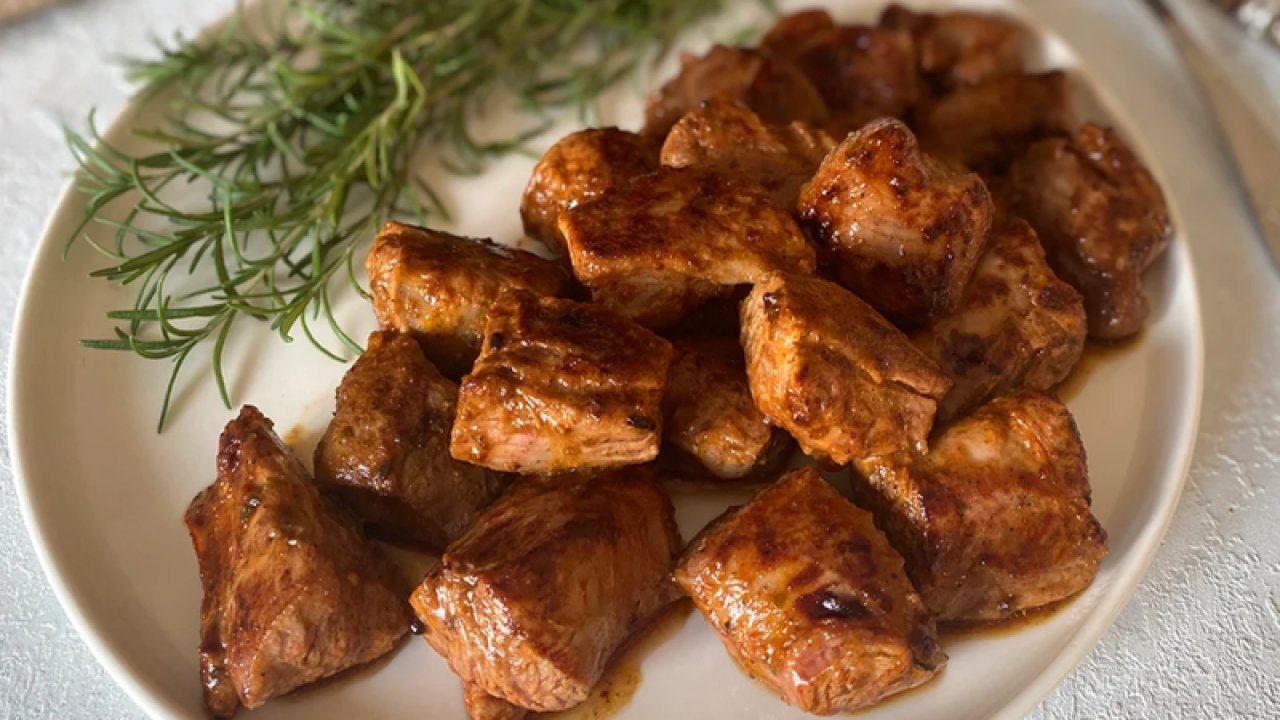
Küşleme kebab is a Gaziantep kebab made from the lamb tenderloin that runs along both sides of the spine — a fat-free, sinew-free cut of which only two pieces can be taken from a single animal — marinated in nothing but salt and olive oil and grilled over embers, with no spice and no sauce. The entire character of the dish rests on the quality of the meat and the discipline of the fire: no paste, no marinade, no spice to hide behind. On 9 February 2021 it was granted TÜRKPATENT Geographical Indication status (No. 664), placing it under official protection.
The logic of the dish sits at the opposite pole from the rich, mince-based kebabs at the other end of the Antep tradition. The aim here is not to layer flavour but to carry a single cut of meat to the plate without diminishing its own taste. In that sense küşleme is an unforgiving kebab, one in which the quality of the meat is laid bare beyond dispute.
This article examines the cut of meat that küşleme kebab depends on, its traditional ember technique, the background of its name and origin, and its place at the Gaziantep table.
What Is Küşleme Kebab and What Is in It?
Küşleme kebab takes its name directly from the cut of meat it uses. "Küşleme" is the local term for the two tenderloin strips that run along either side of the spine, in the middle of the lamb's back. Each piece is roughly two fingers thick, 17-18 cm long and 150-250 grams in weight. The fact that only two are obtained from one animal makes küşleme one of the most limited and most prized cuts of the lamb.
The distinguishing feature of this cut is that it is free of fat and sinew. Because the muscle is barely worked, the texture is exceptionally tender; it therefore needs neither long cooking nor a tenderising marinade. While küşleme kebab sits close to the classic shish kebab family, unlike mince kebabs it is a kebab in which whole pieces of meat are served on their own.
Core Components
The ingredient list of traditional küşleme kebab is among the shortest of all Antep kebabs:
- Lamb Küşleme (Tenderloin): The single defining component of the kebab is the küşleme cut from the lamb's back. Once the thin membrane over it is cleaned away, the meat is cut into large pieces. Its fat-free, sinew-free structure allows the kebab to cook quickly and with minimal intervention. The registration document defines the meat explicitly as lamb küşleme.
- Salt and Olive Oil: The meat is lightly marinated with measured salt and olive oil alone. The olive oil helps the meat cook over the embers without drying out; the salt brings the meat's own taste forward. The registered recipe gives salt in the range of 2-5 grams and olive oil 15-25 grams. This simplicity is not incidental — it is part of the kebab's definition.
- The Absence of Spice: The most decisive technical choice in küşleme kebab is the use of no spice and no sauce. No black pepper, no red pepper flakes, no cumin, no paste of any kind is added. The aim is to carry the meat's natural taste to the plate without masking it with other aromas; in this, küşleme stands directly opposite mince-based kebabs enriched with spice, such as simit kebab.
These three points make up almost the entire ingredient world of küşleme kebab. What defines the dish is not what is added to the plate, but what is deliberately left out.
The Geography of the Plate
On the plate, küşleme kebab takes the centre on its own; beside it sit charred peppers and tomatoes, thin pita bread, and a parsley-onion salad. These accompaniments are there not to change the kebab's taste but to give it a fresh balance. At the Antep table, küşleme is often served straight from the same mangal as other grilled cuts, such as liver kebab, hot off the coals.
The History and Cultural Origins of Küşleme Kebab
The origin of küşleme kebab must be read within Antep's kebab tradition, which rests on the butcher's cut and on the culture of the mangal. The dish leans not on a single documented moment of "invention" but on the practice of treating the lamb's most prized cut with a plain technique. Its name comes from that practice too: "küşleme" is a butcher's term that, in the region, names the loin tenderloin of the lamb directly.
The Name of the Cut, the Name of the Kebab
In and around Antep, küşleme is the name first of a cut of meat and then of the kebab made from it. In the language of butchery, küşleme is a term specific to lamb and mutton; the meat taken from the anatomically equivalent region of cattle is called antrikot or tenderloin. This distinction explains why traditional küşleme kebab is associated primarily with lamb: the name of the kebab is derived directly from the local name of the cut it uses.
The Tradition of Simplicity
Küşleme kebab represents one of the two poles of the Antep kebab tradition. At one pole stand the rich kebabs in which mince, pistachio and spice are layered; at the other stand the plain kebabs in which a single quality cut is brought to the embers with almost no intervention. Küşleme is among the purest examples of this second tradition; the master's skill is tested not in the paste but in choosing the right cut and managing the fire correctly.
Gaziantep Küşleme Kebab / Antep Küşleme Kebab was registered by TÜRKPATENT as a Geographical Indication on 9 February 2021. The registration number is 664, the application date 9 June 2020, and the applicant Gaziantep Metropolitan Municipality. The defining condition of the registration is that the lamb küşleme meat be grilled over embers with only salt and olive oil, with no spice or mixture added.
Its Place in the Antep Kebab Repertoire
Gaziantep is a kebab city with dozens of kebab varieties registered with TÜRKPATENT. Within that repertoire, küşleme belongs to the "whole-cut meat" category, and it represents a different end of the same table from the mince-based pistachio kebab. The same cuisine holds both the kebab that uses pistachio generously like a meat component and the küşleme that accepts no addition at all; this range shows the breadth of Antep kebab culture.
The Tradition and Ritual of Küşleme Kebab in Gaziantep
In Gaziantep, küşleme kebab is seen as "a dish for those who know their meat." Beneath its plain appearance lies a kebab that carries the quality of the meat directly to the palate; for that reason it is a plate on which both the master and the meat are tested.
The Discipline of the Mangal and the Embers
In traditional küşleme kebab, the meat is threaded onto angular skewers and grilled on a mangal where the charcoal has been brought fully to embers without being allowed to flame. The master turns all four sides of the kebab, cooking it without burning or drying it; the intended doneness is medium. When oak charcoal is preferred, the faint smoke from the embers becomes the meat's only "spice." Because it is a lean cut, küşleme does not forgive overcooking; this turns the kebab into a matter of precise timing.
The Respected Cut of the Kebab House
In Gaziantep's kebab-house culture, küşleme holds a respected place because of the scarcity and value of the cut. With only two pieces from one animal, it becomes a portion that is requested with care rather than ordered every day. For lovers of meat, küşleme is a touchstone by which they measure a restaurant's meat quality and its master's command of the fire.
Eaten with Plain Accompaniments
Küşleme kebab is eaten at the table with plain accompaniments: charred peppers and tomatoes, thin pita bread, a parsley-onion salad and sumac. These accompaniments add freshness without overpowering the kebab's taste. In the order of the Antep table, küşleme comes as the main course after the meze, and is eaten without losing its heat, just as it comes off the embers.
The Dish's Place in Antep Cuisine
In the local order, küşleme shares the same mangal tradition as long-rooted grilled kebabs such as the morning's altı ezmeli kebab; what sets it apart, however, is its trust in the simplicity of a single cut. Küşleme is the plate of a cuisine that believes the quality of the meat can carry a kebab on its own.
Why You Should Try It
A single bite of küşleme kebab sums up one pole of Gaziantep's view of the kebab: sometimes the best kebab is the one with the least added. In this kebab, where fat-free, sinew-free lamb tenderloin meets the embers, there is no intermediary other than salt, olive oil and smoke; what reaches the palate is the meat's own taste, directly. After coming to know Antep cuisine through the richness of mince and spice, küşleme reveals the same city's mastery in the opposite direction. For those who want to taste the quality of the meat exactly as it is, küşleme kebab is one of the most honest plates at the Gaziantep table.
Frequently Asked Questions
What is küşleme kebab?
It is a Gaziantep kebab made from the fat-free, sinew-free lamb tenderloin cut from beside the spine, marinated only in salt and olive oil and grilled over embers.
What ingredients are used in küşleme kebab?
Only lamb küşleme (tenderloin) meat, salt and olive oil are used. No black pepper, red pepper flakes, cumin or any spice or sauce is added.
Does küşleme kebab have a geographical indication?
Yes. Gaziantep Küşleme Kebab was registered by TÜRKPATENT as a Geographical Indication on 9 February 2021 (Registration No. 664).
How much küşleme meat does one lamb yield?
Küşleme is the two tenderloin strips on either side of the spine, so only two pieces come from one animal. This makes it one of the most limited and prized cuts of the lamb.
How is küşleme kebab served?
It is served hot off the mangal with charred peppers and tomatoes, thin pita bread, a parsley-onion salad and sumac; the intended doneness is medium.