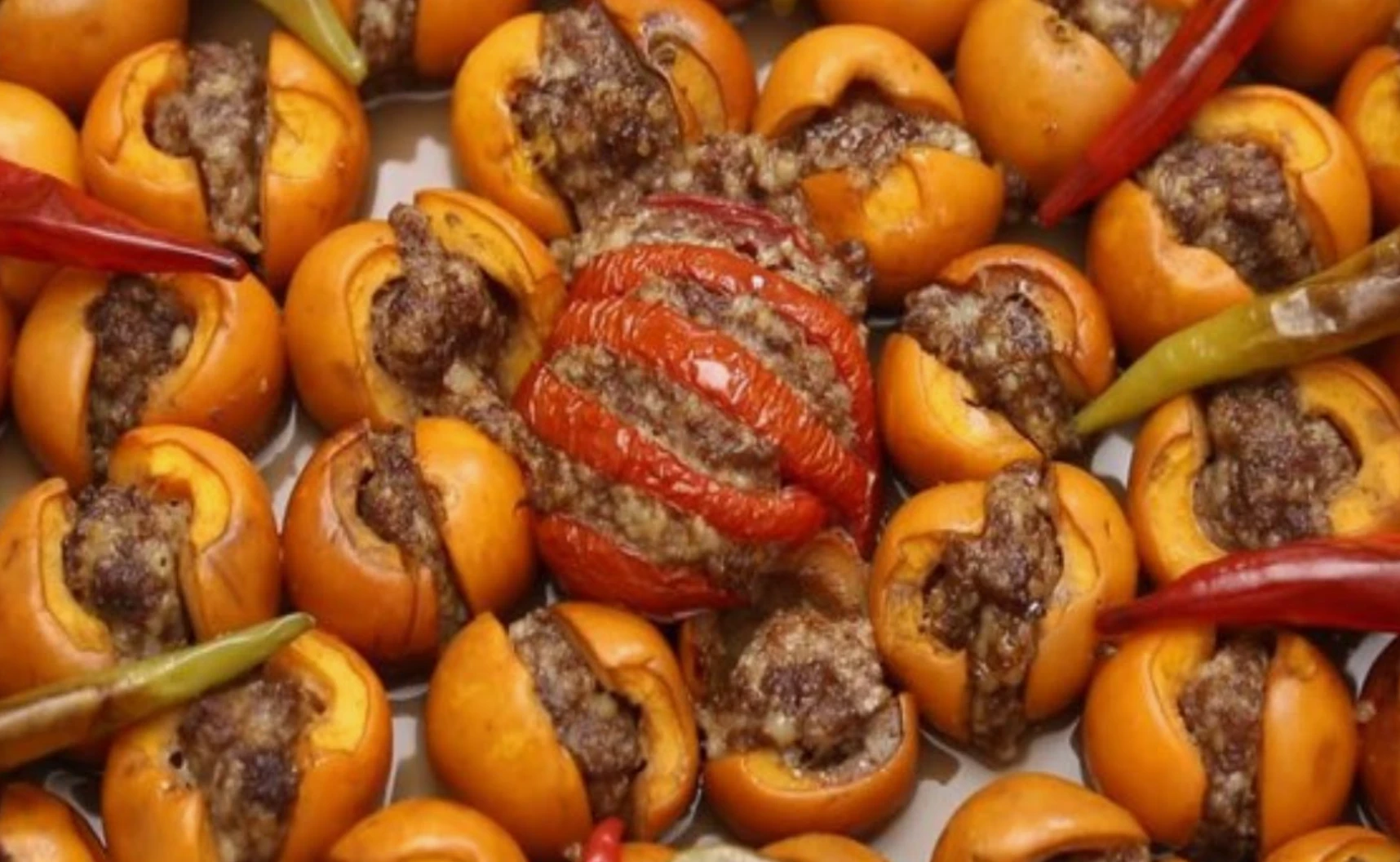
Loquat Kebab — known in Gaziantep as Yeni Dünya Kebabı — is one of Antep cuisine's most calendar-bound dishes, possible only for a few weeks each year. Made in late spring with fresh, not-yet-ripe loquats (medlar, Eriobotrya japonica) that still hold their tart edge, paired with fatty lamb mince, it is a kebab in which the fruit is no garnish: as it cooks, the loquat releases its juice into the meat and builds the plate's own sauce. In 2021 it was granted TÜRKPATENT Geographical Indication status (No. 743), placing it under official protection.
The character of the dish is born from two opposites reconciling on one plate: the weight of fatty, full-bodied lamb mince and the refreshing tartness of the sour loquat. As the meat cooks, the warmed fruit juice works into the mince; the result is a lightly sour, fruity flavour that forms on its own, with no separate sauce added.
This article explores the ingredients that define loquat kebab, its origin tied to a narrow season, its place in Gaziantep cuisine, and the ritual of how it is eaten at the table.
What Is Loquat Kebab and What Is in It?
Loquat kebab is one of the rare members of the kebab family built around fruit: meatballs of lamb mince are arranged together with halved, pitted loquats and cooked. Here the fruit is not an afterthought set beside the meat; it is an essential element that gives up its juice under heat, moistens the mince from within, and lends the plate its own tart-fruity sauce. In that sense the dish does not belong to the classic shish kebab tradition; it belongs to Antep's seasonal fruit-kebab tradition, alongside the autumn quince kebab that carries fruit to the meat table in the same way.
Core Components
Traditional loquat kebab has three essential components:
- Loquat (Medlar) Fruit: The signature of the kebab is the tart, large, fleshy and thin-skinned loquat, picked before it fully ripens. The fruit is wanted slightly sour rather than fully ripe and sweet, because it is this unripe stage that gives the kebab its refreshing acidity. The loquats are pitted and prepared so that a meatball can be set inside. There is no substitute fruit out of season; when loquats are unavailable, the kebab cannot be made.
- Fatty Lamb Mince: The meat is kebab-quality lamb with enough fat; traditional recipes favour fatty cuts such as the shoulder and breast of mutton or lamb. Rather than machine-ground meat, the lamb is hand-chopped with the zırh — the curved rocker blade also used for Gaziantep lahmacun — giving the mince a coarse, full body. The fat matters here: as it cooks it both keeps the meat from drying and joins the fruit juice to enrich the sauce on the plate.
- The Mixture: The mixture is kept plain. Almost nothing beyond salt and black pepper is added to the zırh mince; some home recipes also add garlic, finely chopped onion and pepper. The aim is to bring out the tart aroma of the fruit without masking it under spice. The mixture is formed into small meatballs.
The meatballs are cooked by one of two basic techniques: threaded onto skewers in a fruit-meatball-fruit sequence at spaced intervals and grilled over charcoal, or set in a tray with a meatball between two loquat halves and baked at 180-200°C. The plate is usually finished with a dusting of black pepper.
The Geography of the Plate
Loquat kebab is served on a plate or taken up over Antep's tırnaklı pide (dimpled flatbread). It is accompanied by an onion-parsley salad, roasted peppers and roasted tomatoes. These plain sides balance the fruity-sour character of the kebab without overpowering it; when the kebab is taken up over bread, the juice of fruit and meat soaks into the flatbread and ties the whole plate together.
The History and Cultural Origins of Loquat Kebab
The origin of loquat kebab is tied less to a particular date than to a particular season. The dish is a regional kebab long made in the part of the Gaziantep region where loquats grow, during the fruit's short harvest window. It is a typical example of Antep cuisine's reflex for making the most of a season — the habit of turning a briefly available product into a kebab while it is at its freshest and most aromatic.
A Tradition That Brings Fruit to the Meat Table
Antep cuisine is one of the few that uses fruit not only on the sweet side but at the meat table as well. Loquat kebab is the spring expression of this tradition; just as the autumn quince kebab works the season's fruit into meat, loquat kebab carries the brief late-spring fruit to the kebab by the same logic. In these kebabs the fruit serves as an acidity that balances the meat's fat and as a natural source of sauce.
An Identity Set by a Narrow Season
The loquat is fresh and tart for only a short time each year — roughly from May to mid-June in Gaziantep. This narrow window defines the kebab's whole identity: loquat kebab is not an "any-time" dish but a flavour made hurriedly when its season arrives and left to the next year once it passes. Because the fruit must be picked while still thin-skinned and tart, before it ripens and sweetens, the cooking window is squeezed into this short period as well.
Gaziantep Yenidünya Kebabı / Antep Yenidünya Kebabı was registered by TÜRKPATENT as a Geographical Indication on 30 April 2021. The registration number is 743, and the applicant is the Gaziantep Development Foundation (Gaziantep'i Geliştirme Vakfı). The product is listed in the geographical indication register under the "Meals and Soups" category.
The Place of the Loquat in Antep
The loquat ripens as one of the first fruits of spring in the Mediterranean and Southeastern climate. In Antep cuisine it is both eaten fresh and, in its tart stage, brought into meat dishes. Loquat kebab is the most distinctive culinary use of this fruit; it takes the loquat out of the role of a sweet snack and sets it directly into the body of a kebab. Much like the reflection of Antep's relationship with eggplant seen in eggplant kebab, loquat kebab moves a regional product to the centre of the kebab tradition.
The Tradition and Ritual of Loquat Kebab in Gaziantep
In Gaziantep, loquat kebab is awaited when its season comes — the dish that reaches the table the moment people say "the loquats are in." It is not an everyday kebab; it carries the sense of a seasonal reunion belonging to specific weeks of the year.
A Plate That Heralds the Season
In Antep, loquat kebab is taken as a herald of late spring. As the loquat appears in the markets, the kebab's season opens too; this short period is seized as a chance to make the most of the fruit at its freshest and most tart. The dish is remembered with a certain urgency to taste it before the season is gone, and in this way it becomes a calendar-bound table tradition.
The Balance of Fruit and Meat
The kebab's role at the table is to offer a refreshing balance beside heavier kebabs. Against rich, oily kebabs such as pistachio kebab or Ali Nazik kebab, the fruity acidity of loquat kebab refreshes the palate. This balance is an example of the Antep table's habit of thinking of the oily and the sour, the heavy and the light, side by side.
The Natural Sauce Meeting the Bread
During cooking, the juice released by the fruit joins the meat's fat to form a lightly sour sauce at the bottom of the plate. In Antep table manners this sauce is never wasted; the fruit juice and meat fat left on the plate are wiped up with pieces of tırnaklı pide or yufka bread. This is the concrete form, in loquat kebab, of the city's "leave nothing on the plate" culture.
The Dish's Place in Daily Cuisine
In the regional order, loquat kebab belongs not among the kebabs made year-round but among the seasonal specialties. It is the dish offered to guests, the one people ask "did you have it this year?", the one deferred to the next year when its season is missed; it belongs not to the daily routine but to the plate of late spring.
Why You Should Try It
A single bite of loquat kebab carries to the palate the close relationship Gaziantep cuisine keeps with the season: first comes the full taste of the lamb, then the tart, fruity juice of the loquat softened by cooking opens up, and finally the lightly sour sauce where the two meet on the plate appears. This is a kebab that can be made only for a few weeks of the year, with no equivalent in any other season. For anyone curious how Gaziantep uses fruit not in dessert but at the meat table, and how it turns a season into a flavour, loquat kebab is a plate to seek out when its season arrives.
Frequently Asked Questions
What is loquat kebab?
It is a seasonal Gaziantep kebab made in late spring; pitted, tart loquats (medlar) are arranged and cooked together with fatty lamb mince.
Why is unripe fruit used in loquat kebab?
The kebab's refreshing acidity comes from the fruit's unripe, tart stage. The loquat is therefore picked while still thin-skinned and sour, before it sweetens.
Does loquat kebab have a geographical indication?
Yes. Gaziantep/Antep Yenidünya Kebabı was registered by TÜRKPATENT as a Geographical Indication on 30 April 2021 (registration number 743).
When is loquat kebab made?
Only in the fruit's season; in Gaziantep it is made during the short window, roughly from May to mid-June, when loquats are fresh and tart.
How is loquat kebab served?
It is served on a plate or over Antep's tırnaklı pide, accompanied by an onion-parsley salad, roasted peppers and roasted tomatoes.