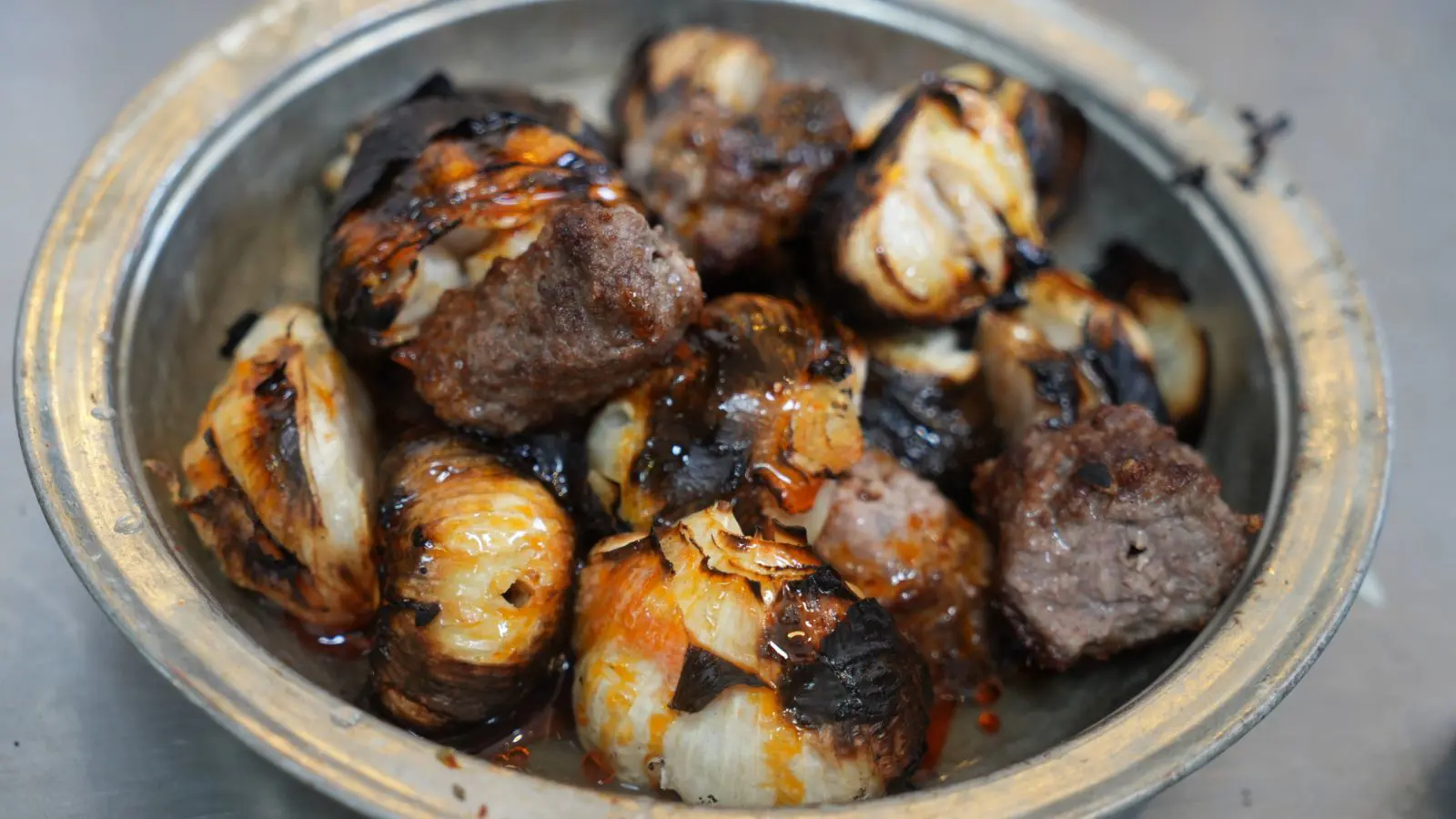
Garlic Kebab — Sarımsak Kebabı, known locally in Gaziantep as samırsak or samsak kebabı — is one of Antep cuisine's most season-bound kebabs: fresh whole heads of garlic, split lengthwise, threaded onto skewers with zırh-chopped lamb mince, or arranged on a tray and sent to the oven. What sets it apart from other kebabs is that garlic here is not a spice or a seasoning, but a main component carrying as much weight as the meat. In 2020 the dish was granted TÜRKPATENT Geographical Indication status (No. 592), placing it under official protection.
The character of the dish comes from the balance of two elements: fresh whole garlic that has not yet turned sharp, its cloves still juicy, and medium-fat lamb mince chopped with the zırh. As it cooks, the garlic sheds its raw pungency; it softens, turns faintly sweet, and meeting the fat of the meat, produces a flavour far gentler than raw garlic would ever suggest.
This article explores the ingredients that define garlic kebab, its origins in Gaziantep cuisine, and the ritual of a dish that fits into only a few weeks of the year.
What Is Garlic Kebab and What Is in It?
Garlic kebab is a kebab in which fresh whole garlic heads and lamb mince are threaded onto a skewer in alternation and cooked together. Here the garlic is not a flavour that accompanies the meat; it is a component cooked alongside it — on some plates taking up more room than the meat itself. It must be used fresh, because the whole balance of the dish rests on the garlic's juicy, faintly sweet state, before it has turned sharp.
Core Components
- Fresh Whole Garlic: The signature of the dish is fresh whole garlic — heads whose cloves have not yet separated, still juicy and not yet sharp in aroma. The local garlic varieties prominent in Antep's kebab culture form the basis of this dish; Araban garlic, grown in the Araban district, is among the products most closely identified with garlic kebab during this brief season. The heads are split lengthwise without cutting too deep at the stem, so the cloves stay attached.
- Zırh Mince: The meat component is mince obtained by chopping medium-fat lamb with the zırh, the curved rocker blade. The same zırh technique used in making Gaziantep lahmacun gives a coarse, full-bodied texture that machine-ground meat cannot replicate. The mince is kneaded with salt until it turns tacky, then divided into walnut-sized pieces.
- Seasoning: The mince is kept extremely simple: little more than meat, salt and the necessary amount of water. The aim is to bring out the garlic's own aroma without masking it with other flavours. At the end of cooking, diluted pomegranate molasses is drizzled over the kebab; this light acidity balances the soft, mellow taste of the garlic.
The split garlic and the walnut-sized pieces of meat are threaded onto skewers in alternation — one garlic, one piece of meat — or arranged on a wide tray from the rim toward the center. Cooking is done at a measured heat that softens the garlic without scorching it.
The Geography of the Plate
On the plate, garlic and meat sit side by side, often in the order they came off the skewer. The sour streaks of the drizzled pomegranate molasses fold into the fat of the softened garlic and the meat. The traditional service places plenty of yufka or pita bread alongside; the bread is used to wipe up the juices and garlic oil left in the dish.
The History and Cultural Origins of Garlic Kebab
The origins of garlic kebab lie in Gaziantep's seasonal relationship with fresh garlic. The dish is recorded as having been widely made in Gaziantep since the early 20th century. Locally it is also called samırsak kebabı or samsak kebabı; these pronunciations reflect the sound features of the Antep dialect.
A Kebab Defined by Its Season
What makes garlic kebab unique within Antep cuisine is that it is squeezed into an extremely narrow season. The dish can only be made while fresh whole garlic has juicy cloves and an aroma that has not yet turned sharp — a window that falls into just three to five weeks at the end of spring. Once the garlic matures and sharpens, the kebab can no longer be made. In this sense, garlic kebab is one of the most strictly season-bound kebabs in Antep cuisine.
Garlic's Bond with the City
Gaziantep and its surroundings are a region where fresh garlic grows in abundance; the fresh garlic of the Araban plain in particular is well known locally. This abundance made it possible to lift garlic out of the role of a handful of seasoning and carry it directly into the body of the kebab. Garlic kebab is one of the clearest expressions of that local abundance at the meat table; a kebab in which garlic is used so generously could only have emerged in a region where fresh garlic is plentiful.
Gaziantep Garlic Kebab (Gaziantep Sarımsak Kebabı) was registered by TÜRKPATENT as a Geographical Indication in 2020. The registration number is 592, and the registrant is the Gaziantep Club Association (Gaziantep Kulübü Derneği). The registration protects the dish's regional identity, built on fresh whole garlic and zırh-chopped lamb mince.
Part of the Antep Kebab Tradition
Within Antep's rich kebab repertoire, garlic kebab shares the same logic as kebabs that cook a vegetable together with meat — such as Eggplant kebab and Onion kebab: a vegetable or plant is turned into a component equal in weight to the meat. What sets garlic kebab apart is both that its main ingredient is garlic and that it can be made only during a short season.
The Tradition and Ritual of Garlic Kebab in Gaziantep
In Gaziantep, garlic kebab is awaited with longing when its season comes. Because it cannot be made for most of the year, it comes to the fore in homes and restaurants alike during the weeks when fresh garlic appears.
A Table That Announces Spring
Garlic kebab is seen in Antep as one of the dishes heralding the arrival of late spring. As fresh garlic reaches the market, interest in garlic kebab rises with it; this short period, running roughly from mid-May to the end of June, is the dish's only season. This seasonal limit turns it from a dish one can eat at any time into a flavour awaited once a year.
Two Ways of Cooking
Traditional kitchens cook garlic kebab in two ways. In the first, garlic and meat are threaded onto skewers and grilled over a measured charcoal fire on all sides; the skewers are then set to rest for a while at low heat in a deep pot with water at the bottom. In the second, garlic and meat are arranged on a tray, a little water is added, and the dish is baked in the oven. In both methods, resting the kebab at the end allows the garlic to be peeled more easily and to soften.
Respect for the Softening of the Garlic
The fundamental rule in cooking garlic kebab is neither to scorch the garlic nor to leave it raw. Cooked at a measured heat and then rested, the garlic loses its raw pungency entirely; it softens and turns faintly sweet. Thanks to this care, garlic — so strong in smell when raw — gives a far gentler taste once cooked. The light acidity of the pomegranate molasses drizzled on top is the final touch that balances this mellowness.
Why You Should Try It
A single bite of garlic kebab means meeting a flavour that has nothing to do with raw garlic: the oil of garlic softened and sweetened over the fire merges with the full taste of the zırh mince, and the light acidity of the pomegranate molasses completes the picture. What makes it special is that it can be made only during a few weeks of the year, in the short season when fresh whole garlic appears. For anyone who wants to know Gaziantep in its season and see how garlic, as the main ingredient of a kebab, turns into an entirely different taste, garlic kebab is a flavour well worth trying at the right time.
Frequently Asked Questions
What is garlic kebab and where is it from?
It is a seasonal kebab from Gaziantep cuisine in which fresh whole garlic is grilled on skewers or oven-cooked with zırh-chopped lamb mince. Here garlic is a main component equal in weight to the meat.
What is in garlic kebab?
It uses fresh whole garlic, medium-fat lamb mince chopped with the zırh, salt and water. At the end of cooking, diluted pomegranate molasses is drizzled over it.
Does garlic kebab have a geographical indication?
Yes. Gaziantep Garlic Kebab was registered by TÜRKPATENT as a Geographical Indication in 2020 (Registration No. 592); the registrant is the Gaziantep Club Association.
Why is garlic kebab made only for a few weeks each year?
The dish can only be made while fresh whole garlic has juicy cloves and an aroma that has not yet turned sharp — a window that falls into just three to five weeks at the end of spring.
How is garlic kebab cooked and served?
Garlic and meat are cooked on skewers over charcoal or on a tray in the oven, then rested. On the plate, garlic and meat sit side by side with pomegranate molasses, alongside yufka or pita bread.