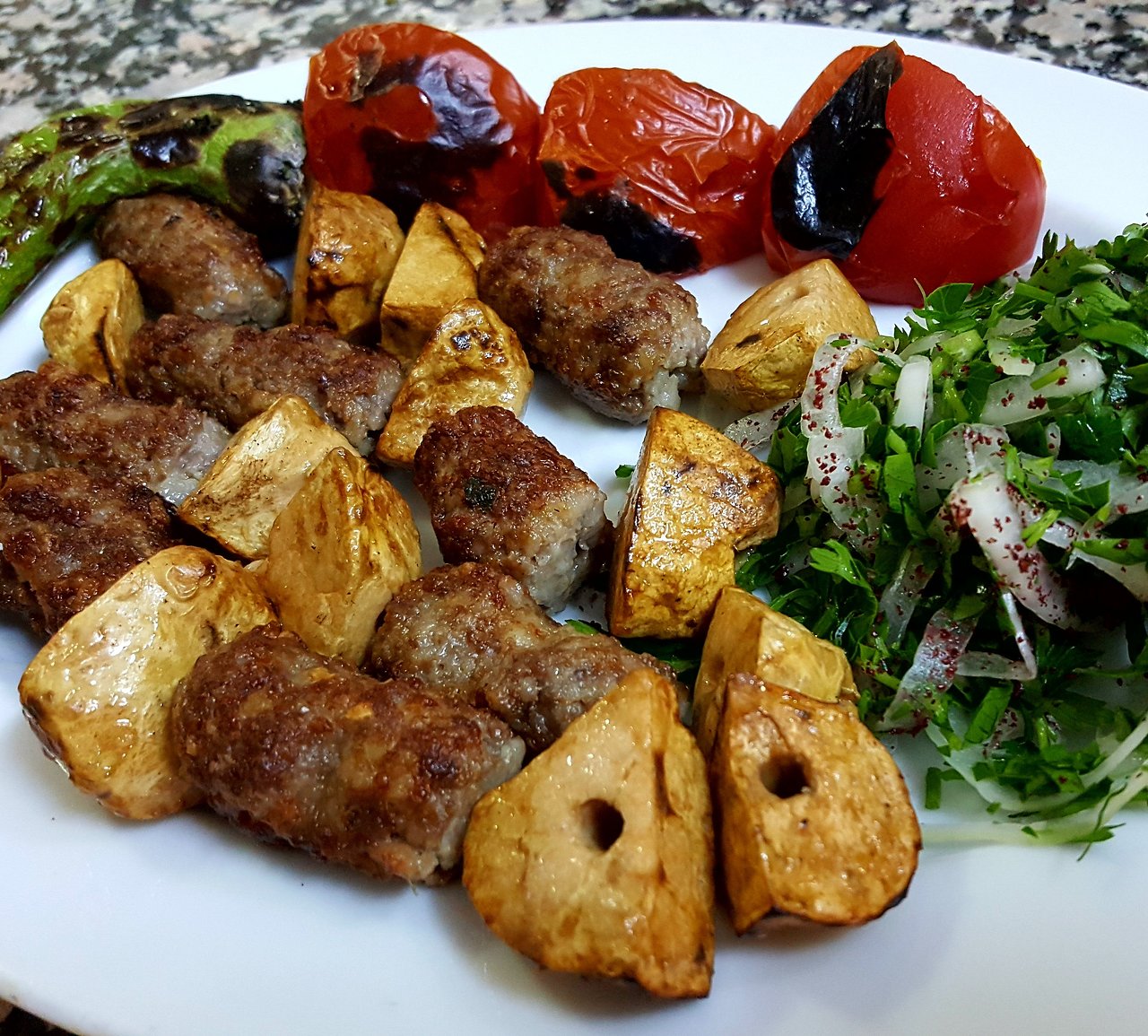
Desert truffle kebab — known in Gaziantep as Keme Kebabı — is one of the few dishes in Antep cuisine bound to the calendar. After the spring rains, the keme (locally domalan, botanically the desert truffle Terfezia bouderi) grows on its own beneath the soil; it is cut to walnut size, threaded alternately with fatty lamb onto skewers, and grilled over embers. Because this truffle cannot be cultivated and appears only between March and June, the kebab can be made only within that short window. In 2021 Gaziantep/Antep Keme Kebabı was granted TÜRKPATENT Geographical Indication status (No. 758), placing it under official protection.
The dish's character is born from a single contrast: the fatty, deep flavour of the meat against the earthy, faintly mushroomy, sponge-like flesh of the keme that drinks in moisture. The smoke of the embers works into both at once; the truffle absorbs the meat's fat, while the meat cooks without drying thanks to the truffle's moisture — a seasonal flavour entirely apart from an ordinary meat skewer.
This article explores the ingredients that define keme kebab, what the keme itself is, its origins in Gaziantep cuisine, and the ritual of a dish compressed into a few weeks each year.
What Is Desert Truffle Kebab and What Is in It?
Desert truffle kebab is a charcoal kebab in which meat and truffle share the same skewer; but here the truffle is not a side garnish — it is the main component that gives the kebab its name. Meat and keme are used in roughly equal measure. The real craft lies in fixing the soft, easily crumbling truffle firmly onto the skewer and grilling it over embers without letting it release too much liquid. In this sense, it is one of the purest examples of Antep's "use what the earth gives, in its season" kitchen reflex.
Core Components
Traditional keme kebab has two essential components and a few plain accompaniments:
- Keme (Domalan) Truffle: The signature of the dish is fresh keme drawn from beneath the soil. Botanically Terfezia bouderi, it grows in clusters 5–10 cm below the surface on terra rossa (red soil) and in oak woodland and grazing land. Before reaching the kitchen it is meticulously cleaned — its thin skin peeled and the truffle washed repeatedly until no grain of sand remains; rather than gouging it with a knife, masters scrape its surface thinly. It is then broken into walnut-sized pieces following its natural shape.
- Fatty Lamb: The meat side uses well-balanced fatty lamb, most often from the brisket. Whether reduced to mince with the zırh rocker-blade technique also used in Gaziantep lahmacun or cut into cubes, it is kneaded thoroughly with salt. If mince is used, hands are lightly moistened and the meat formed into walnut-sized pieces so they do not crumble on the grill. The meat's fat is what stops the truffle from drying out.
- Salt and Black Pepper: The seasoning is deliberately plain. Beyond salt, often only a pinch of black pepper goes in; the aim is to bring forward the keme's earthy, delicate aroma without burying it under spice. A little red pepper flake may also be added.
The skewering technique is the lifeline of the dish: each piece of keme is pierced with a thin conical awl used locally, or a fine skewer, turned slowly and always in the same direction so it does not crack. The skewer is arranged keme-then-meat and finished with keme at both ends.
The Geography of the Plate
The cooked kebab is served hot, straight on a plate or wrapped in lavash/dürüm bread. The traditional presentation pairs it with charred tomato and pepper — also seen alongside alti ezmeli kebab — a sumac, onion and parsley salad, and yogurt, and frequently with the geographically registered Antep tırnaklı pide.
The History and Cultural Origins of Desert Truffle Kebab
The history of keme kebab is the history not of a recipe but of a season. Because keme cannot be sown and emerges only under specific natural conditions, the kebab rests on a tradition thousands of years old: making use of what the region's people gather in spring. The TÜRKPATENT registration record likewise stresses the dish's "long-standing past" and the mastery its production demands.
The Earth's Seasonal Gift
Keme grows close to the surface in sandy, loose soil after the spring rains, so finding it is a matter of knowledge in itself. Because it does not announce itself above ground, foragers locate it by reading the swelling and cracking of the earth. This is a regional mastery passed down through generations; finding, cleaning and cooking the keme each demand a separate skill — the basis for the registration record's emphasis on "the link between geographical boundary and reputation."
A Desert Truffle's Rise to the Table
Keme is a truffle that ripens underground, close kin to the prized truffle of French cuisine, and in Türkiye it is known by regional names such as domalan, yeryaran, tumalan and dümbelek. Also gathered across various parts of Anatolia, keme is cooked as a stew or sauté in most areas, while Gaziantep drew it onto the skewer and the embers — a typical example of the city adapting every seasonal product to its own kebab technique.
Gaziantep/Antep Keme Kebabı was registered by TÜRKPATENT as a Geographical Indication (Mahreç İşareti) on 18 May 2021. The registration number is 758 and the application date is 2 July 2020; it was registered by the Gaziantep Development Foundation (Gaziantep'i Geliştirme Vakfı). The product is recorded under the "foods and soups" group, with its geographical boundary defined as the province of Gaziantep.
The Place of the Truffle in Antep Cuisine
Behind keme kebab lies Antep cuisine's tight bond with seasonality. The city's table does not stay the same all year; every product has its season, and in this calendar keme is the emblem of spring. The region has other keme preparations too, such as keme tavası (a pan sauté); keme kebab, however, is the most striking, interpreted through ember fire and meat.
The Tradition and Ritual of Desert Truffle Kebab in Gaziantep
Keme kebab is not available every day in Gaziantep; it is a flavour awaited when its season comes and set aside for the next spring once it passes. This scarcity turns it from an everyday meal into a small celebration.
The Short Window of Spring
The season runs from March to June, and that window shifts every year with the weather: a rainy winter brings keme in plenty, a dry one barely at all. For the people of Gaziantep, keme reaching the market is one of the signs that spring has truly arrived. The kebab is made within the few weeks when the truffle is freshest and most abundant; when the season closes, it comes off the menus too.
A Flavour Known to Those Who Find It
Because keme is gathered from the wild, it is both prized and price-volatile. In abundant years, tradesmen's restaurants feature keme kebab; in lean years the truffle grows expensive and the kebab becomes a more select offering. This positions it as a dish "not always to be found, but not to be missed when it is."
Embers and Plain Service
Keme kebab is traditionally cooked over coals reduced to embers, away from any flame; the skewer is turned constantly in the same direction so the dripping fat does not flare up. The service is deliberately plain: charred tomato and pepper, a tart salad, yogurt and warm bread. This restraint lets the keme's delicate, earthy aroma come forward on the palate, where heavy sauces would smother it.
The Dish's Place at the Antep Table
Unlike kebabs that can be made all year — such as pistachio kebab — keme kebab is season-bound, and in this way it represents a "moment" in Antep cuisine. It is offered to guests in spring, sought after with the question "did keme come out this year?", a kebab that adorns the table briefly and then yields its place to other flavours.
Why You Should Try It
A single bite of keme kebab carries Antep's bond with the season straight to the palate: first the fatty, full flavour of the ember-grilled meat, then the earthy, faintly mushroomy, sponge-soft texture of the keme. The two arriving together leave a calendar-bound palate memory entirely apart from the kebabs made year-round. If your path crosses Gaziantep in spring and you see keme kebab on the menu, know that you are facing the plate of a season that will last only a few weeks.
Frequently Asked Questions
What is desert truffle kebab and where does it belong?
It is a seasonal kebab native to Gaziantep, in which wild keme (domalan) truffle that grows underground in spring is threaded alternately with fatty lamb onto skewers and grilled over embers.
What is keme (domalan)?
Keme is a desert truffle, botanically Terfezia bouderi, that grows in clusters 5–10 cm below the soil; it cannot be cultivated and is only foraged from the wild in spring.
When is the season for desert truffle kebab?
Because keme appears only between March and June, the kebab is made only within that short window; when the season closes, it comes off the menus.
Does desert truffle kebab have a geographical indication?
Yes. Gaziantep/Antep Keme Kebabı was registered by TÜRKPATENT as a Geographical Indication (Mahreç İşareti) on 18 May 2021 (Registration No. 758).
How is desert truffle kebab cooked and served?
It is grilled over embers away from any flame, the skewer turned in the same direction, and served hot and plain with charred tomato and pepper, a tart salad, yogurt and warm bread.