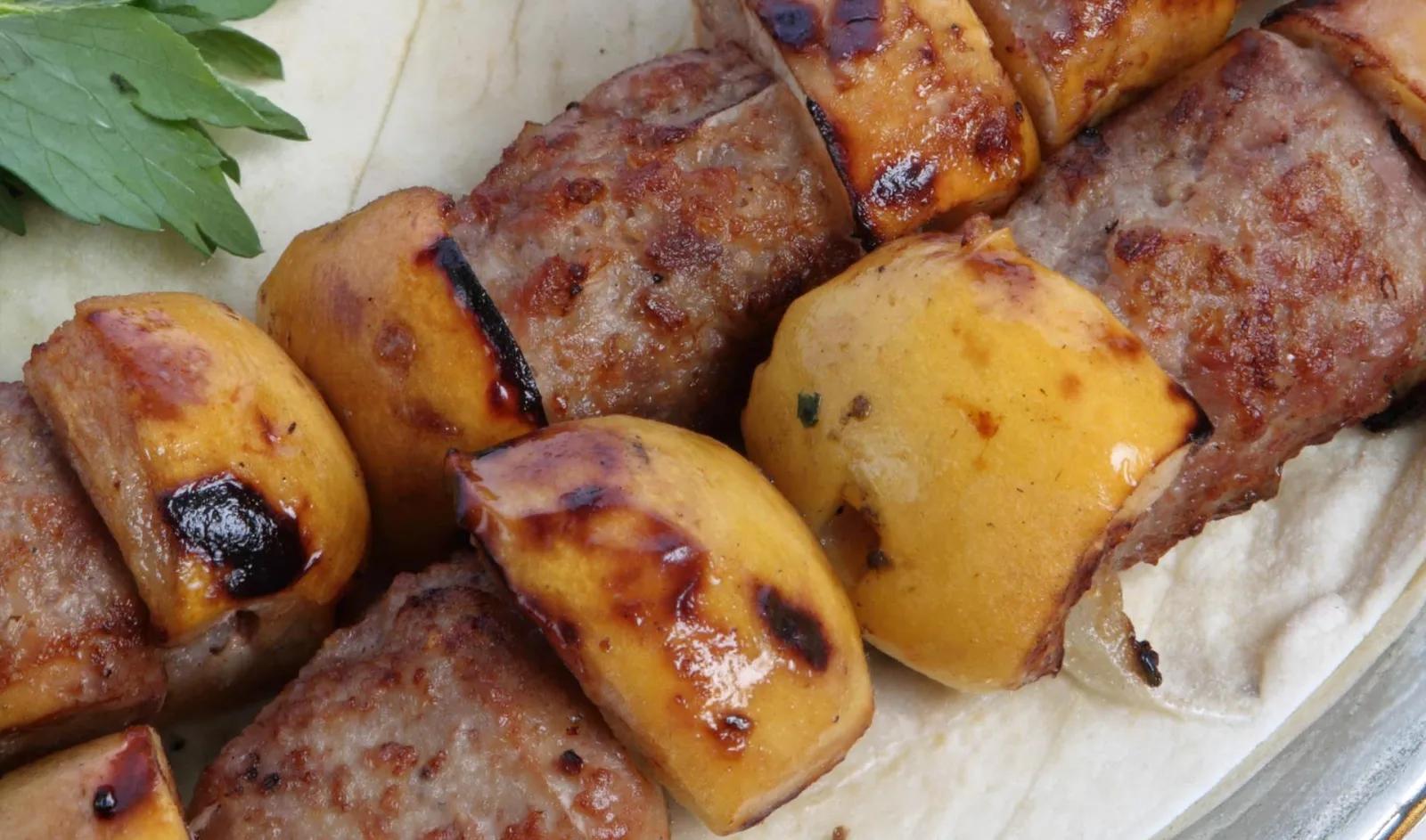
Apple kebab is one of Gaziantep cuisine's winter kebabs that places fruit beside the meat rather than in the dessert. Sour winter apples are cut into walnut-sized pieces, threaded one by one onto skewers with fatty lamb mince and grilled over charcoal; in another traditional method, the meat and apple are arranged in a tray and baked. Appearing in the months when the weather turns cold and apples are abundant and keep well, this kebab is a typical Antep interpretation that brings hot meat and a tart fruit together on the same skewer.
The character of the dish arises from the harmony of two seemingly opposite components: the firm, tart apple that keeps through the winter and the fatty richness of lamb mince cooked over fire. As it cooks, the apple softens and leaves a faintly sweet-sour note that balances the fat of the meat; the meat juices dripping over the skewer warm the apple from within.
This article explores the ingredients that define apple kebab, its origins in Gaziantep cuisine, and its place and ritual at the city's winter table.
What Is Apple Kebab and What Is in It?
Apple kebab is a fruit kebab in which pieces of sour apple are threaded alternately with fatty mince. Here the apple is not a garnish set beside the plate; it is a core component that shares the same fire as the meat, passing its aroma and juice into the meat as it cooks. The tartness of the apple acts as a natural counterweight to the fat of the lamb mince. In that sense, apple kebab belongs not to the classic vegetable-skewer tradition but to Antep's habit of folding fruit into meat — the same logic seen in other winter fruit kebabs such as quince kebab.
Core Components
Traditional apple kebab has three essential components:
- Sour Winter Apple: The signature of the dish is not the sweet summer apple but the firm, tart winter apple. These apples are washed, cored, and cut into walnut-sized pieces. The sour apple is chosen both because its texture is firm enough not to fall apart while cooking and because it carries the acidity needed to balance the fat of the meat; a sweet apple cannot perform this role and softens too easily under heat.
- Fatty Lamb Mince: The body of the kebab is lamb mince with a sufficient fat ratio. Traditional preparations add tail fat to the mince; the fat keeps the meat from drying as it cooks and seeps into the apple, warming the fruit from within. As in other mince-based Antep kebabs such as pistachio kebab and simit kebab, when the meat is hand-chopped with the curved zırh blade, the mixture gains a fuller, coarser texture.
- Salt and Spice: The mixture is kept as plain as possible. Usually only salt — and in some recipes a little black pepper — is added to the mince. The aim is to bring forward the sweet-sour aroma of the apple and the natural taste of the meat without masking them with spice. This restraint ties apple kebab to the regional kitchen's principle of "strong flavour from few ingredients."
Tomato and green pepper are often added between the pieces on the skewer; these vegetables both enrich the grilled aroma and add colour to the serving plate.
The Geography of the Plate
The cooked kebab is slid off the skewer onto thin bread. In the traditional presentation, the apple and meat pieces are wrapped into lavash or yufka bread as a dürüm roll and served with raw onion, green pepper, and ayran on the side. Serving it hot matters; the aroma the apple releases while warm fades as it cools.
The History and Cultural Origins of Apple Kebab
The origins of apple kebab lie in the old relationship Gaziantep cuisine has built between fruit and meat. In Antep's culinary tradition, fruit is often part of the main course rather than the dessert: sour-sweet fruits such as pomegranate, plum, quince, and apple have been used for centuries to bring balance and aroma to meat dishes. Apple kebab is this understanding carried onto the skewer.
The Fruit-Kebab Tradition
Gaziantep is one of the rare cuisines that defines the kebab not only by meat but also by seasonal fruit. In summer the meat meets eggplant; in winter it meets hardy fruits such as quince and apple. Within this tradition, apple kebab shares the same logic as quince kebab: a tart fruit balancing the fat of the meat and cooking together with it on the skewer. The ease with which fruit is used as a meat component is a direct result of the region's orchard culture and the abundance of its fruit.
A Kitchen of Winter
It is no accident that apple kebab is known as a winter kebab. Sweet summer apples are soft-textured and fall apart easily over fire; the sour apples stored through the winter, by contrast, are firm-textured, hold their shape while cooking, and carry the acidity needed beside the meat. For this reason, apple kebab developed as a winter dish that put the pantry's hardy apples to use during the cold months when vegetables and fresh fruit are scarce.
Its Place in the Regional Kitchen
Apple kebab belongs to the same family as vegetable kebab within Antep's broad kebab repertoire — kebabs that combine meat and a plant component on a single skewer. What sets it apart is that the plant component is not a vegetable but a sour fruit. In that sense, apple kebab is one of the winter-table examples of the city's habit of folding the produce of every season into meat.
The Tradition and Ritual of Apple Kebab in Gaziantep
In Gaziantep, apple kebab is less an everyday plate than a season-bound, remembered kebab. Because making it requires finding the right apple — that is, because it is tied to a particular season — it becomes a dish people talk about when it appears at the table.
A Kebab of the Winter Table
When the weather turns cold and the sour apples enter the pantries, apple kebab takes its place at Antep home and mangal tables. Served hot, the apple offers a sweet-sour aroma released in the cold weather that is in tune with the season. In this respect, apple kebab is seen as winter's regional answer to the summer kebabs.
Skewer and Tray: Two Ways of Cooking
Apple kebab has two basic cooking methods. In the first, a piece of apple and a piece of mince are threaded alternately onto the skewer and grilled over a mangal whose flame has died down to embers; this method brings out the grilled aroma. In the second, the meat is arranged in a tray together with the apple pieces, drizzled with fat, and baked; this method keeps the meat juices and the apple's aroma inside the tray. In the traditional preparation, once the kebab is cooked it is transferred to a pan or tray, heated fat and a little water are drizzled over it, the lid is closed, and it is gently steamed over low heat to soften.
The Bread-Wrap Tradition
At the Antep table, apple kebab is most often eaten with thin bread. The apple and meat pieces slid off the skewer are placed inside lavash or yufka bread and wrapped into a dürüm roll, with raw onion and green pepper added between them. This plain accompaniment completes the kebab without masking its own taste and lets the fat left on the plate be wiped up with the bread.
The Dish's Place in Antep Cuisine
Apple kebab is one of the least known but most characteristic examples of the city's fruit-kebab tradition. It is not an everyday meal but a dish prepared when its season comes around, offered to guests with the words "you must try this one too." In this respect, the dish is a concrete sign of the close bond Antep cuisine maintains with the seasons.
Why You Should Try It
A single bite of apple kebab carries to the palate the balance Gaziantep has built between fruit and meat: the fatty richness of the lamb mince meets the sweet-sour aroma of the sour apple softening as it cooks, and the two complete one another. This is a winter-specific kebab experience entirely unlike vegetable skewers. For anyone curious about how Gaziantep cuisine puts fruit to use not only in dessert but on the meat skewer as well, apple kebab is a regional flavour worth trying on a cold winter evening.
Frequently Asked Questions
What is apple kebab?
It is one of Gaziantep's winter fruit kebabs, in which pieces of sour winter apple are threaded alternately with fatty lamb mince and grilled over charcoal or baked with the meat in a tray.
Why is sour apple used in apple kebab?
The sour winter apple is firm enough not to fall apart while cooking, and its acidity balances the fat of the lamb mince; a sweet apple softens too easily under heat.
How is apple kebab cooked?
There are two methods: apple and mince are threaded alternately onto a skewer and grilled over a mangal of embers, or the meat and apple are arranged in a tray, drizzled with fat, and baked.
Why is apple kebab a winter kebab?
Because the firm sour apples are stored in the pantry through winter; these hardy apples are put to use in the cold months when fresh vegetables and fruit are scarce.
How is apple kebab served?
It is served hot; the apple and meat slid onto thin bread are wrapped into lavash or yufka as a dürüm, with raw onion, green pepper, and ayran on the side.