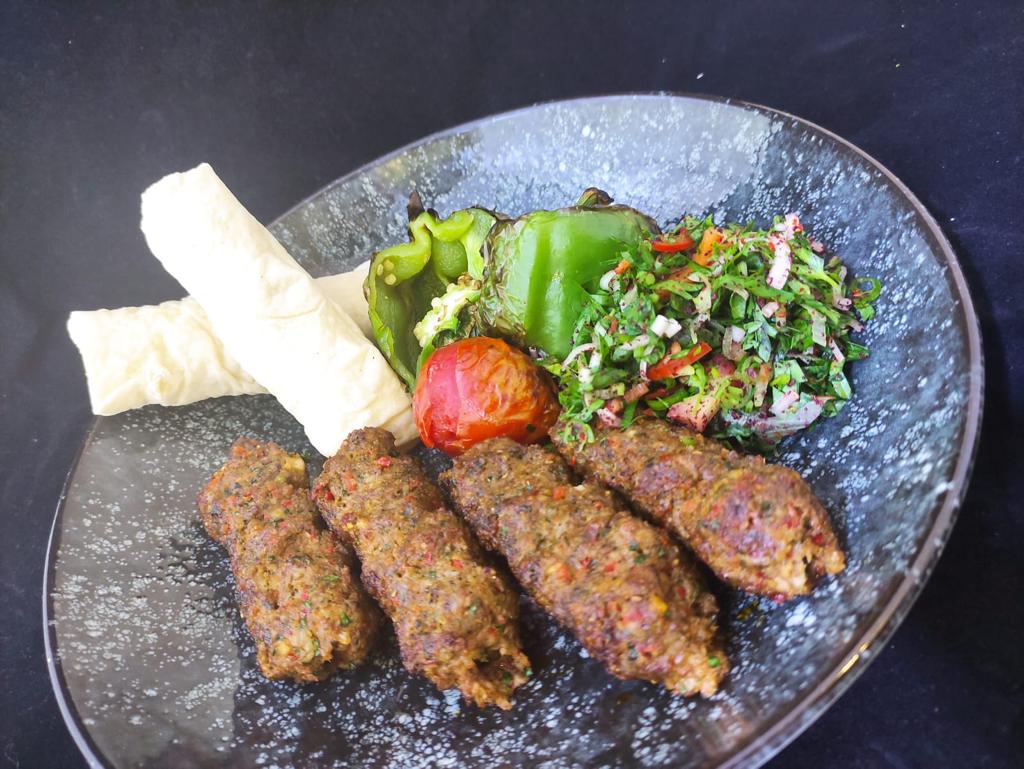
Vegetable kebab — known in Gaziantep as sebzeli kebap — is one of Antep's registered mince kebabs: fatty ground meat kneaded with fresh green garlic, parsley and red pepper, pressed onto skewers and grilled over charcoal. The "vegetable" in its name is not a garnish added to the plate, but the greens worked directly into the meat. The meat is balanced not by heavy spice but by the freshness of seasonal greens. Following an application filed on 28 June 2021, the kebab was placed under official protection on 31 January 2022 with a TÜRKPATENT Geographical Indication (No. 1015).
The character of the dish arises from two essentials: fatty mince from the breast cut and the fresh green garlic, parsley and red pepper folded into it. The result is a light, balanced kebab in which it is not spice but the sharp-yet-fresh aroma of green garlic that comes to the fore.
This article explores the ingredients that define vegetable kebab, the technique documented in its registration, its origins in Gaziantep cuisine, and its place at the table.
What Is Vegetable Kebab and What Is in It?
Vegetable kebab is a mince kebab in which chopped greens are worked into the meat and pressed onto skewers. The vegetables — fresh green garlic, parsley and red pepper — are not decoration but core components that shape the flavour and texture of the meat. As it cooks, green garlic softens its sharpness and leaves a faintly sweet depth; parsley brings freshness, and red pepper adds mild sweetness and colour. In the registration records the recipe is plain: mince, garlic, red pepper and parsley.
Core Components
Traditional vegetable kebab has four essential components:
- Fatty Mince: The body of the kebab is fatty mince, traditionally from the breast (döş) cut of male sheep. The fat keeps the meat from drying as it cooks and gives the kebab a full body. As in the hand-chopping tradition of Gaziantep lahmacun, preparing the meat correctly is regarded as the basic condition of regional kebab quality.
- Fresh Green Garlic: The signature of the dish is fresh green garlic; out of season, dried garlic is used instead. It lends the mince a sharp but not raw aroma that mellows on the grill. Garlic is a strong identity in Antep cuisine, and vegetable kebab reflects that garlic culture onto meat.
- Parsley and Red Pepper: Finely chopped parsley gives the mixture freshness and a green fragrance; one or two red peppers add colour and a mild sweetness. Both are drained of moisture first, because excess moisture makes it harder for the mince to cling to the skewer.
- Measured Spice: The mixture is kept plain: little goes in beyond salt, optional black pepper and a measured amount of chilli flakes. The aim is to bring the freshness of green garlic and parsley forward without masking it.
After resting for roughly half an hour, the mixture is divided into walnut-sized portions and pressed onto skewers with palm and finger pressure, drawn into a long, slender shape. On the plate it is usually accompanied by charred tomatoes and peppers and a sumac-dressed onion salad.
The Geography of the Plate
Vegetable kebab is served hot and traditionally arrives with thin lavash or regional pide baked in a stone oven. The kebab is slid off the skewer onto the bread; charred tomato, charred pepper and sumac-seasoned onion slices are placed alongside. The tangy onion and the acidity of the sumac balance the fat of the mince and refresh each bite.
The History and Cultural Origins of Vegetable Kebab
The origins of vegetable kebab lie in Gaziantep's mince-kebab tradition and the region's habit of folding greens into meat. In Antep cuisine, meat is rarely considered on its own; it is thought of together with the vegetable, green or fruit the season offers. Vegetable kebab is one of the plainest examples: not a rare ingredient but fresh green garlic and parsley, abundant in season, define its character.
Folding Greens into the Meat
Adding greens to mince is a deep-rooted tradition in Antep's kebab culture. Beyond diversifying flavour, it balances fatty mince with freshness. Vegetable kebab represents this approach, in which green garlic rather than spice stands out; in the region it is known as a kebab prepared often when its season comes.
An Identity Confirmed by Registration
The regional identity of vegetable kebab has also been secured by an official record. The registration requires the dish's ingredients, choice of meat and all stages of preparation to take place within the geographical boundaries of Gaziantep, making it part of the city's registered kebab repertoire.
Gaziantep/Antep Vegetable Kebab (Sebzeli Kebap) was registered by TÜRKPATENT as a Geographical Indication on 31 January 2022. The registration number is 1015, the application date 28 June 2021, and the file number C2021/000259. The registering body is the Gaziantep Development Foundation (Gaziantep'i Geliştirme Vakfı), and the product is recorded in the "Meals and soups" category. The registration requires all stages of production to take place within the geographical boundaries of Gaziantep.
Part of the Antep Kebab Tradition
Vegetable kebab shares the same tradition as other mince-based kebabs in Antep's rich repertoire, such as simit kebab. What sets it apart in this family is the vegetable aroma brought by the fresh green garlic and parsley folded into the mixture. The regional kitchen also has other interpretations where meat meets vegetable; eggplant kebab, for instance, layers meat with sliced eggplant.
The Tradition and Ritual of Vegetable Kebab in Gaziantep
Vegetable kebab is a season-linked kebab that finds a place both in home kitchens and at the kebab grill in Gaziantep. It appears more often when fresh green garlic is available; in that sense, it reflects a regional habit that follows the season of its ingredient.
The Kebab of the Season
Vegetable kebab is at its best when fresh green garlic is abundant and most aromatic, and for this reason it is known as a seasonal kebab; the freshness of green garlic defines its distinguishing character. Although it can be made with dried garlic out of season, the region holds that the true flavour is captured with fresh green garlic.
Charcoal Fire and the Skewer Technique
The essential technique is to press the mixture firmly onto the skewer and grill it evenly over charcoal, turning in the same direction. Resting the mixture for about half an hour helps the mince hold to the skewer. The meat is cooked not over high flame but over the measured heat of glowing charcoal; this seals the exterior while the interior cooks without drying and the greens keep their freshness.
Accompaniments at the Table
Vegetable kebab is not served alone; it comes with charred tomato, charred pepper, sumac-dressed onion and plenty of greens. Hot lavash or regional pide wipes up the fat of the kebab and the juices of the charred vegetables. These plain, tangy accompaniments balance the richness of the mince and let the aroma of green garlic come to the fore.
The Dish's Place in Antep Cuisine
In the regional order, vegetable kebab stands out not for show but for balance. Beside layered, long-prepared dishes such as Ali Nazik kebab, it is a more direct and plain mince kebab, bringing the simple meeting of meat and seasonal greens to the table. This plainness makes it a steady member of both everyday meals and kebab tables.
Why You Should Try It
A single bite of vegetable kebab carries Gaziantep's way of balancing meat with greens: the satisfying flavour of the mince, the cooked softness of fresh green garlic and the freshness of parsley arrive together. The charred tomato and sumac onion alongside refresh every bite, offering a balanced kebab without heavy spice. For anyone curious how Gaziantep flavours its kebab not only with spice but with the greens of the season, vegetable kebab is a regional taste well worth trying.
Frequently Asked Questions
What is vegetable kebab and where is it from?
It is one of Gaziantep's registered mince kebabs: fatty mince kneaded with fresh green garlic, parsley and red pepper, pressed onto skewers and grilled over charcoal.
What is in vegetable kebab?
Fatty mince from the breast cut, fresh green garlic, parsley, red pepper and measured spice. The vegetables are worked into the meat, not a garnish sprinkled on top.
Does vegetable kebab have a geographical indication?
Yes. Gaziantep/Antep Vegetable Kebab was registered by TÜRKPATENT as a Geographical Indication on 31 January 2022 (Registration No. 1015).
How is vegetable kebab cooked and served?
The mixture is pressed onto skewers and grilled over charcoal, turning in the same direction. It is served hot with lavash or pide, charred tomato, pepper and sumac-dressed onion.
Why is vegetable kebab a seasonal kebab?
Its true flavour is captured when fresh green garlic is abundant and most aromatic. Out of season it is also made with dried garlic.