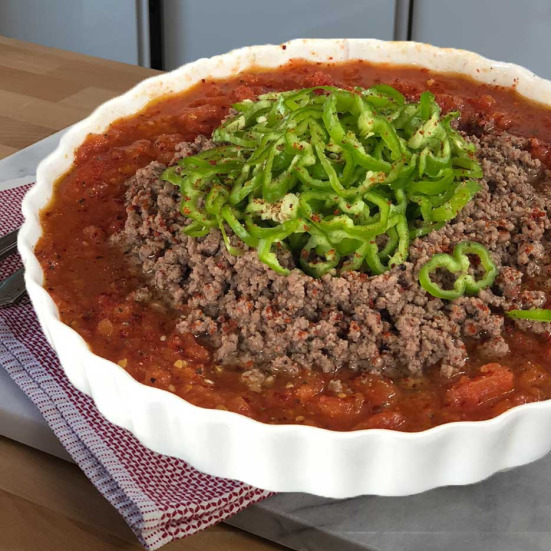
Yarım Tava is a plain yet characterful Gaziantep dish in which fire-charred, crushed tomatoes form a bed beneath meat fried separately in its own fat, the two joined in a copper pan. The "yarım" — meaning "half" — refers not to portion size but to the two main components being cooked apart and combined only on the plate. It is one of the rare plates in which Antep cuisine treats the tomato as a body ingredient rather than a garnish, and in 2022 it was granted TÜRKPATENT Geographical Indication status (No. 1076).
The dish's character is born from the contrast of two textures: the dense, sweet-and-sour bed of tomatoes smoke-scented over coals and crushed to a pulp, and the rich, oily taste of meat fried in butter until its juices reduce. The two are layered, not stirred — in each spoonful the freshness of the tomato and the fullness of the meat are felt first apart, then together.
This article explores the ingredients that define Yarım Tava, the logic behind its name, and its place at the Gaziantep table.
What Is Yarım Tava and What Is in It?
Yarım Tava is a pan dish in which fried meat is set upon a bed of charred, crushed tomatoes. Though it shares the meat culture of the kebab family, it is not a shish or grill; the meat cooks in a pan, in its own fat, not on a skewer. The ingredient that dominates by quantity is the tomato: the registered recipe uses roughly 600–800 grams of meat against 1–1.5 kilograms of tomatoes, placing the dish between "a meaty tomato dish" and "a tomato-rich meat dish."
Core Components
Traditional Yarım Tava has two essential layers and a few finishing touches:
- Charred Tomatoes: Ripe tomatoes are threaded onto skewers or halved and charred over coals for ten to fifteen minutes, then peeled, crushed to a pulp with a wooden mallet or knife, and salted. The signature of the dish is the faint smoky aroma the coals lend the tomato; raw or boiled tomato cannot deliver this depth. The pulp is spread across the base of a copper pan.
- Fried Meat: The meat is used as coarse mince or thin, leaf-cut pieces of male lamb. It is fried in a separate pan in butter, clarified butter (sadeyağ) or olive oil until the juices reduce and only the fat remains — roughly fifteen to twenty-five minutes — then seasoned and tipped over the charred tomato.
- Pepper and Spice: Black pepper is dusted over the plate and chopped green pepper scattered on top; red pepper flakes and parsley may be added to taste. Seasoning stays restrained, to balance the sweet-and-sour tomato and the oily meat without masking either.
The Geography of the Plate
Two layers sit one over the other, unstirred: charred tomato pulp below, fried meat above, with fresh bread alongside to wipe up the juices pooled at the bottom of the pan. In plates that share the same meat culture, such as vegetable kebab, the vegetables are integrated with the grill; in Yarım Tava the tomato is charred apart and forms a separate bed. The difference lies in this logic of "cooking separately."
The History and Cultural Origins of Yarım Tava
Yarım Tava is one of the meat-table expressions of Gaziantep's intense relationship with the tomato. In the region, the tomato is not merely a sauce or garnish but a staple that, charred and crushed, becomes a dish body in its own right. Yarım Tava is where this meets the kebab culture: meat and tomato, both touched by fire, prepared by separate methods and then joined.
The Technical Logic Behind the Name
The dish is called "Yarım Tava" because its components are cooked separately. While the tomato is charred and crushed on one side, the meat is fried in another pan; two "half" preparations unite on a single plate. The name describes the logic of making, not the presentation: where classic pan dishes cook the ingredients together in one vessel, Yarım Tava is defined by this separate preparation.
The Place of the Tomato in Antep Cuisine
Behind Yarım Tava lies the confidence Antep cuisine places in charring. Tomato, eggplant and pepper have for centuries been charred directly over fire here for a smoky aroma. Yarım Tava applies this culture to the tomato and unites it with meat.
Gaziantep / Antep Yarım Tava was registered by TÜRKPATENT as a Geographical Indication in 2022. The registration number is 1076, the date 13 April 2022, and the applicant the Gaziantep Development Foundation (Gaziantep'i Geliştirme Vakfı). The document defines the dish's regional features, including ingredient ratios, charring time and service in a copper pan.
The Tradition and Ritual of Yarım Tava in Gaziantep
In Gaziantep, Yarım Tava is eaten piping hot and does not tolerate waiting — one of the quick yet careful plates of both home kitchens and the region's eateries.
A Dish of Hot Service
The cardinal rule of Yarım Tava is that it must be served hot. The charred tomato and the fat of the meat balance each other only while the plate is hot; as it cools, the fat congeals and the texture grows heavy. So the dish is carried straight from the stove in its heat-retaining copper pan. Beside Antep's oilier kebabs — such as pistachio kebab — its tomato bed brings a sour freshness.
The Bread-Dipping Tradition
On an Antep table, Yarım Tava ends in a "bread-dipping" moment: the juices and fat at the bottom of the pan are wiped up with warm bread. This reflects the city's "leave nothing on the plate" ethic, also seen in dishes such as Ali Nazik kebab or liver kebab.
Its Place at the Antep Kebab Table
Yarım Tava shares the culinary tradition of Antep's mince-based kebabs. Though it might be set alongside minced plates such as simit kebab, what sets it apart is that the meat is fried rather than grilled, and the charred tomato forms a separate body — carrying mangal smoke to both, yet preparing each by a different method.
Why You Should Try It
A single spoonful of Yarım Tava tells Gaziantep's charring culture in one plate: first the smoky, sweet-and-sour charred tomato, then the fullness of meat fried in butter. The balance in which the tomato outweighs the meat sets it apart from classic meat plates and leaves an unexpected depth behind its plain appearance — for anyone curious how Antep cuisine transforms a vegetable with fire, it is a regional flavour well worth trying.
Frequently Asked Questions
What is Yarım Tava and where does it belong?
It is a Gaziantep dish of fire-charred, crushed tomatoes spread beneath meat fried separately in its own fat, the two joined in a copper pan.
Why is the dish called "Yarım Tava"?
The "yarım" (half) refers to the two main components — charred tomato and fried meat — being cooked apart and combined only on the plate, not to portion size.
Does Yarım Tava have a geographical indication?
Yes. Gaziantep / Antep Yarım Tava was registered by TÜRKPATENT as a Geographical Indication in 2022 (Registration No. 1076).
What is in Yarım Tava?
Charred tomatoes, separately fried meat, black pepper and green pepper. The registered recipe uses roughly 600–800 grams of meat against 1–1.5 kilograms of tomatoes.
How is Yarım Tava eaten?
It is served hot in a heat-retaining copper pan. The tomato and meat juices pooled at the bottom of the pan are wiped up with warm bread.